• Semi-Documentary Film Scores Copland Thomson & More

    Semi-Documentary Film Scores Copland Thomson & More

    by 

    in
    8 responses

    A “semi-documentary” is documentary-like, but allows staged or fictional elements, sometimes recreations or reenactments, sometimes flat-out embellishments, often with non-actors playing most of the roles. This week on “Picture Perfect,” enjoy music from four acclaimed examples.

    Aaron Copland, one of America’s most respected composers, was more active in film than most people realize. He even won an Academy Award in 1950, for his score to “The Heiress.”

    During the World War II, Copland was approached by the Office of War Information to score a brief film about the resettlement of European refugees in a rural Massachusetts town. The film was called “The Cummington Story” (1945). The music is rather interesting in that, having been written at the height of Copland’s “populist” phase, he employs melodies which were later fleshed out into more familiar concert works, such as the Clarinet Concerto and “Down a Country Lane.”

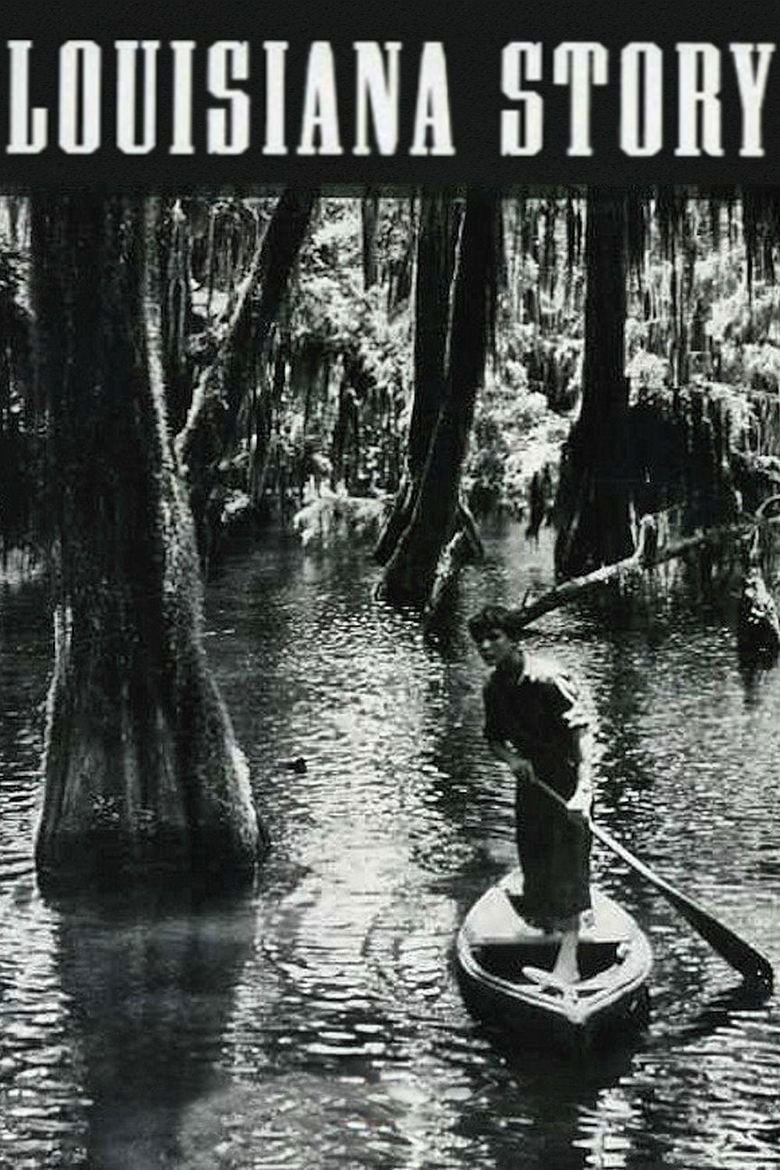
    Director Robert Flaherty’s “Louisiana Story” (1948) is often misidentified as a straight documentary. (Flaherty made the first commercially-successfully, feature-length documentary, “Nanook of the North,” in 1922 – itself later revealed to have been more of a docudrama.) However, the plot is entirely fictional, an idealized story of a Cajun family that reaps the rewards of oil drilling that takes place in an inlet behind its house. The film was shot on location in bayou country, using Cajun locals as actors, giving it a certain verisimilitude.

    Although it was selected for preservation in the United States film registry by the Library of Congress as being “culturally, historically or aesthetically significant,” and its script was nominated for an Academy Award, “Louisiana Story” acts as a kind of time capsule in its naiveté. Perhaps the most interesting aspect of the entire project is the film’s score, by American composer and revered critic of the New York Herald Tribune, Virgil Thomson. So far, it is the only film score ever to be awarded the Pulitzer Prize for Music.

    Like Copland and Thomson, Ulysses Kay is associated more with his works for the concert hall. Nevertheless, he wrote music for numerous television shows and documentaries in the late 1950s and early ‘60s. His first scoring assignment was for an experimental quasi-documentary called “The Quiet One” (1948), a film about an abused African American child and his subsequent coming of age. The film received an Oscar nomination for Best Story and Screenplay, and was listed as one of the ten best movies of the year by the New York Times and the National Board of Review. Kay, a long-time resident of Teaneck, NJ, was a rarity in the world film scoring, a composer of color.

    Finally, we’ll turn to Morton Gould and “Windjammer” (1958), the only film ever to be shot in the widescreen “Cinemiracle” format. “Windjammer” depicts the training cruise of a fully-rigged sailing ship, from Oslo, across the Atlantic, to the Caribbean, New York, and back home again. Its dreamy theme music is full of the romance of the high seas.

    Artistic truth is based on fact this week. I hope you’ll join me for an hour of selections from semi-documentaries on “Picture Perfect,” music for the movies, this Saturday evening at 6:00 EST, on WWFM – The Classical Network and wwfm.org.
  • Support Classical Music Keep WWFM on the Air

    Support Classical Music Keep WWFM on the Air

    by 

    in
    6 responses

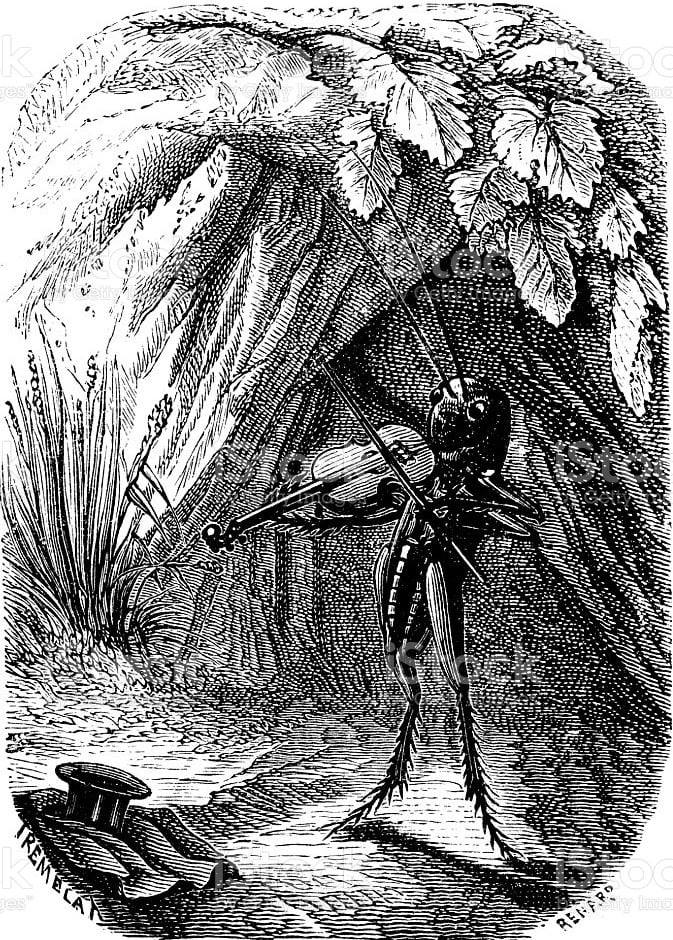
    There’s been frost on the pumpkins, but the last of the crickets fiddle still. Likewise, The Classical Network aims to continue to provide music all through the winter months. Help keep us warm and well-provisioned with your contribution today. In turn, we will do our best to make your listening environment homey and happy.

    On Day 5 of our “7 Days for $70K” membership campaign – a pop-up fundraiser designed to wrap-up before Thanksgiving – join us in giving thanks for great music on the radio. Make a donation today at 1-888-232-1212 or online at wwfm.org.

    Our gratitude is in our grace notes. Thank you for your support of WWFM – The Classical Network!

    https://wwwfm.secureallegiance.com/wwfm/WebModule/Donate.aspx?P=DEFAULT&PAGETYPE=PLG&CHECK=vOU2bz5JCWmgCDbf53nm9ezWDeZ%2beA1M


  • John Williams on PBS Tonight Star Wars Throwback

    John Williams on PBS Tonight Star Wars Throwback

    by 

    in
    2 responses

    To get you in the mood for tonight’s broadcast of John Williams’ Violin Concerto No. 2, on PBS’ “Great Performances,” here’s a throwback to Williams conducting selections from “Star Wars,” on “Previn and the Pittsburgh” (aired on March 26, 1978) – back when “Star Wars” was still fresh, and back when PBS was still PBS.

    Interesting to find that Williams had already done considerable tinkering in his concert arrangement of the “Throne Room and End Title” music. It was perfect in the movie, John! A lot of vim in the performance, though. The diptych opens with “Princess Leia’s Theme.”

    Anne-Sophie Mutter – the former Mrs. Previn – will be the soloist on tonight’s broadcast of the Violin Concerto No. 2, again with Williams conducting. The concert was filmed at Tanglewood in July. The program will also feature Andris Nelsons and the Boston Symphony Orchestra, performing music by Aaron Copland, Igor Stravinsky, and Jesse Montgomery.

    The show airs here at 9:00 PM EST. Consult your local listings. You’ll find an interview and promos here:

    Anne-Sophie Mutter Performs John Williams’ Violin Concerto

    *** BONUS! ***

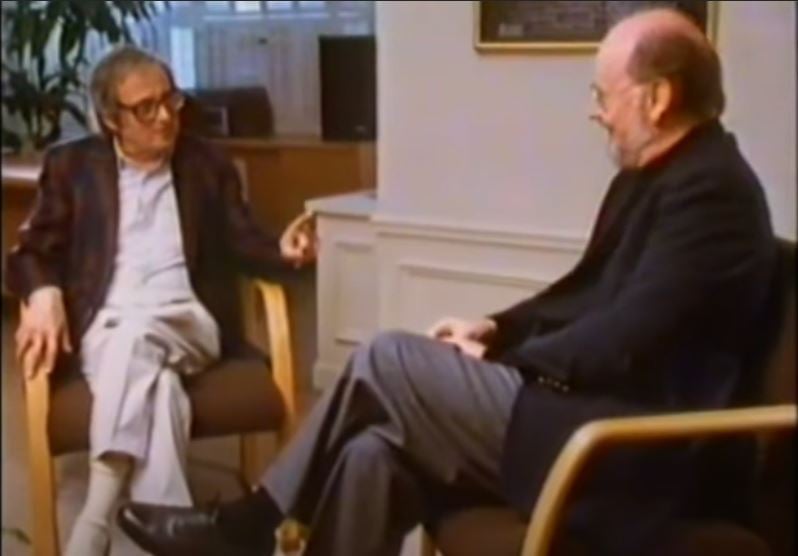
    Previn interviews Williams in 1988 (pictured), and Williams is in an unusually candid mood. The two were old friends, of course, who had already known one another for 30 years. I’d never actually never seen it before, and it’s terrific. Maybe Williams’ best interview.


  • Jules Verne’s Sci-Fi Film Renaissance

    Jules Verne’s Sci-Fi Film Renaissance

    by 

    in
    One response

    When Walt Disney let the cork out of the bottle on “20,000 Leagues Under the Sea” (1954), he inadvertently launched the “Decade of Verne” – a notion bolstered by Michael Todd’s star-studded “Around the World in 80 Days” (1956). “Around the World” was recognized with a shelf-full of Academy Awards, including one for Best Picture, and the luster of prestige was added to the glitter of box office gold.

    The rest of ‘50s and early ‘60s were punctuated by big screen adaptations of Jules Verne’s novels of adventure and scientific speculation. Verne was the very thing to lure viewers out of their living rooms, away from their television sets and back into theaters, as production designers and effects artists were given carte blanche to fill their canvases with eyepopping visuals.

    One of the more successful of these cinematic translations is “Journey to the Center of the Earth” (1959), inspired by Verne’s 1864 novel. Captain Nemo himself, James Mason, heads a ragtag scientific expedition – including a bumbling pupil, the widow of his scientific rival, a Norse giant and his pet goose – to the earth’s core, his observations alternating between wonder and Henry Higgins-like exasperation, as he ponders why a woman can’t be more like a man.

    Though the movie is absorbing and entertaining in a way that few spectacles are today, it requires an extra leap of imagination to comprehend what it would have been like to experience it for the first time in a movie palace, in Cinemascope, with Bernard Herrmann’s alternately ominous and thunderous score.

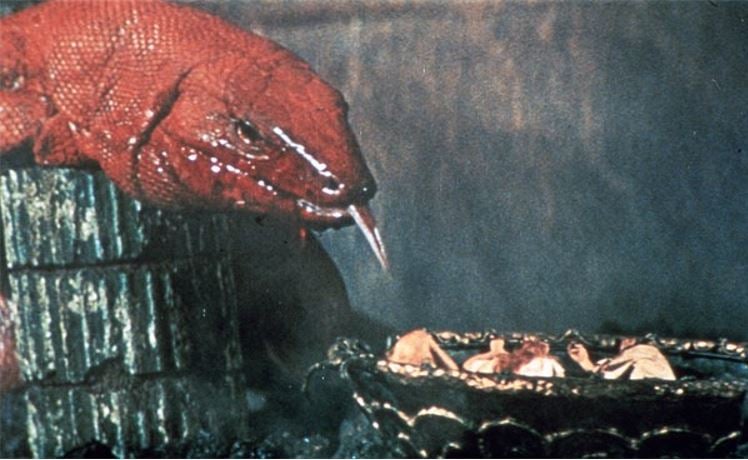
    Our discussion of the film is bound to be a rather thin substitute, but preparations are underway for Roy and I to go spelunking on the next Roy’s Tie-Dye Sci-Fi Corner. We’ll be skirting phosphorescent pools and fleeing giant lizards. Keep feeding us rope in the comments section, as we livestream on Facebook, this Friday evening at 7:00 EST!

    https://www.facebook.com/roystiedyescificorner


  • John Foulds’ Lost World Requiem Rediscovered

    John Foulds’ Lost World Requiem Rediscovered

    by 

    in
    One response

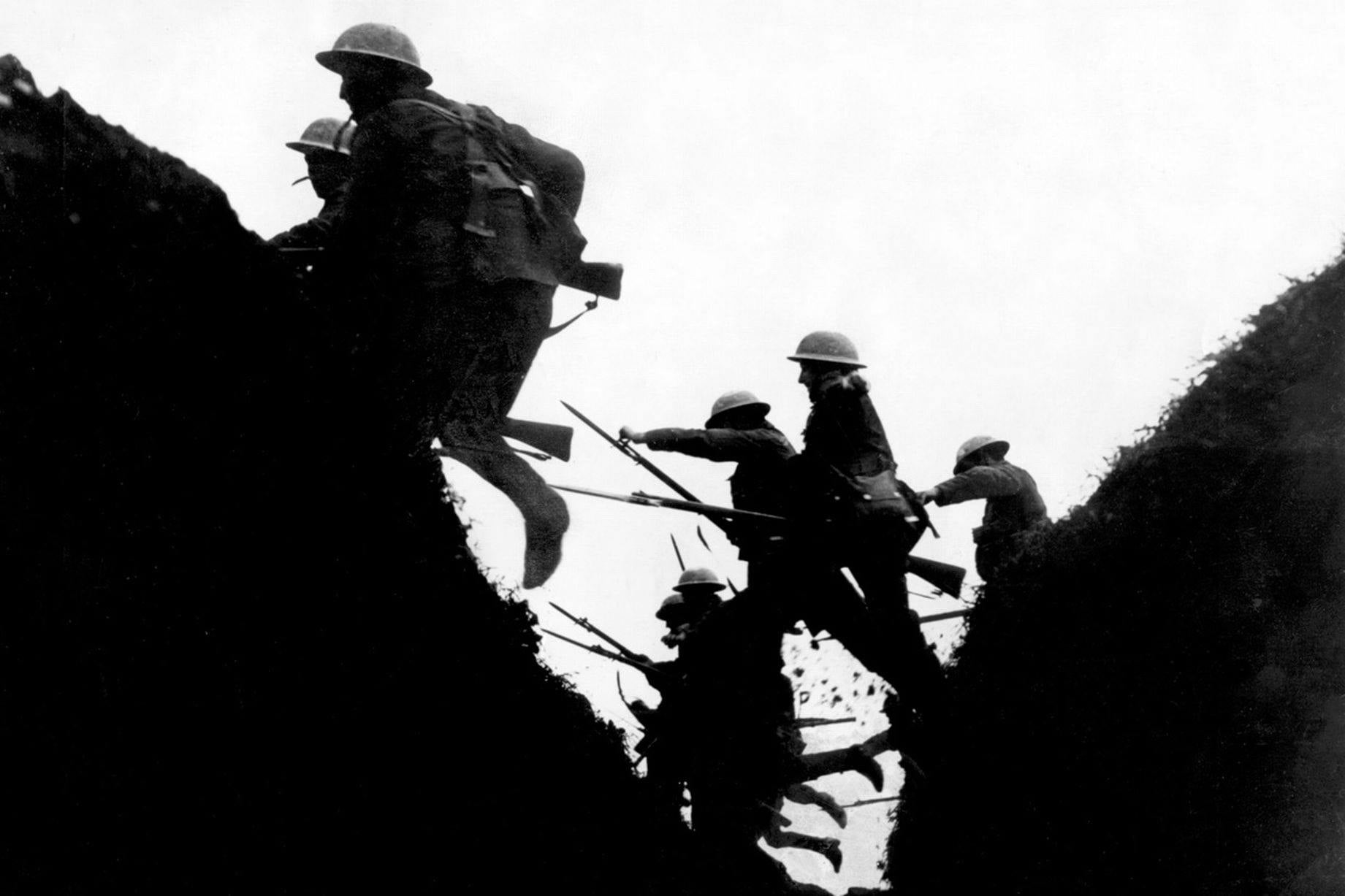
    It was on November 11, 1918 – the eleventh hour of the eleventh day of the eleventh month – that representatives of the Allied Forces and Germany sat down to sign the Armistice that concluded hostilities on the Western Front, formally ending the “War to End All Wars.”

    Five years later, John Foulds’ “A World Requiem,” conceived as a memorial to the dead of all nations, was given its first performance, on November 11th, 1923. The work was embraced by the public, though critical reaction was mixed. Subsequent performances took place from 1924 to 1926 as part of a Festival of Remembrance. After that, it lay unheard for some eight decades, until resurrected by conductor Leon Botstein.

    Botstein has dusted off more than his share of worthy curiosities over the years, though few more ambitious than “A World Requiem.” A performance of the 90-minute piece requires up to 1,250 musicians. The work’s world premiere recording, on the Chandos label, was taken from a live concert presented on Armistice Day 2007, at the venue in which the work was first heard, Royal Albert Hall London.

    The Requiem’s texts were derived from various spiritual sources by the composer’s wife, Maud MacCarthy, built on fragments from the Requiem Mass, as well as writings of John Bunyan and the Hindu poet Kabir. The overall tone is more Brahms than Britten. Part One of the oratorio promises peace and rest; Part Two conveys radiant visions of paradise.

    I had assumed that the work’s neglect had to do with the dual concerns of cost and evolving musical taste. However, around the time of the Requiem’s revival, it was discovered that performances may actually have been suppressed by the BBC, possibly at the instigation of Sir Adrian Boult – this despite the fact that Foulds donated all proceeds to the poppy appeal for the British legion. You can read more about the alleged “banning” of the Requiem here:

    https://www.manchester.ac.uk/discover/news/article/?id=3156

    Across the pond and closer to home, in 1954, at the urging of U.S. veterans, Armistice Day was renamed Veterans Day. Though the intent of the holiday is frequently confused with that of Memorial Day, Veterans Day is a time to honor ALL military veterans, not just those who died in service to their country.

    Foulds’ gargantuan oratorio could serve double-duty. Sadly, it is almost never performed at all.

    The oratorio falls into 20 movements (two parts subdivided into ten each) for soloists, massed choirs, including children’s choirs, large orchestra, offstage instrumentalists, and organ. A progressive tonal framework is spiced with quarter tones, cluster chords, and certain repetitive sequences.

    War’s the pity. Always remember, and thank you to those who served.

    Part I

    1 I Requiem – 8:44
    2 II Pronuntiatio – 4:05
    3 III Confessio – 5:46
    4 IV Jubilatio – 5:06
    5 V Audite – 7:04
    6 VI Pax – 3:53
    7 VII Consolatio – 5:08
    8 XIII Refutatio – 0:38
    9 IX Lux Veritatis – 1:19
    10 X Requiem 3:25

    45:08

    Part II

    1 XI Laudamus – 6:30
    2 XII Elysium – 6:24
    3 XIII In Pace – 3:17
    4 Hymn of the Redeemed – 4:37
    5 XIV Angeli – 3:27
    6 XV Vox Dei – 3:07
    7 XVI Adventus – 4:01
    8 XVII Vigilate – 2:03
    9 XVIII Promissio et Invocatio – 7:30
    10 XIX Benedictio – 1:41
    11 XX Consummatus 2:06

    44:50


Tag Cloud

Aaron Copland (93) Beethoven (95) Composer (114) Film Music (145) Film Score (143) Film Scores (255) Halloween (94) John Williams (195) KWAX (229) Leonard Bernstein (104) Marlboro Music Festival (125) Movie Music (160) Mozart (91) Opera (213) Philadelphia Orchestra (89) Picture Perfect (174) Princeton Symphony Orchestra (109) Radio (88) Ross Amico (244) Roy's Tie-Dye Sci-Fi Corner (290) The Classical Network (101) The Lost Chord (269) Vaughan Williams (105) WPRB (397) WWFM (881)

DON’T MISS A BEAT

Receive a weekly digest every Sunday at noon by signing up here


RECENT POSTS