• Dr Strangelove & Journey to Earth Movie Discussion

    Dr Strangelove & Journey to Earth Movie Discussion

    by 

    in
    6 responses

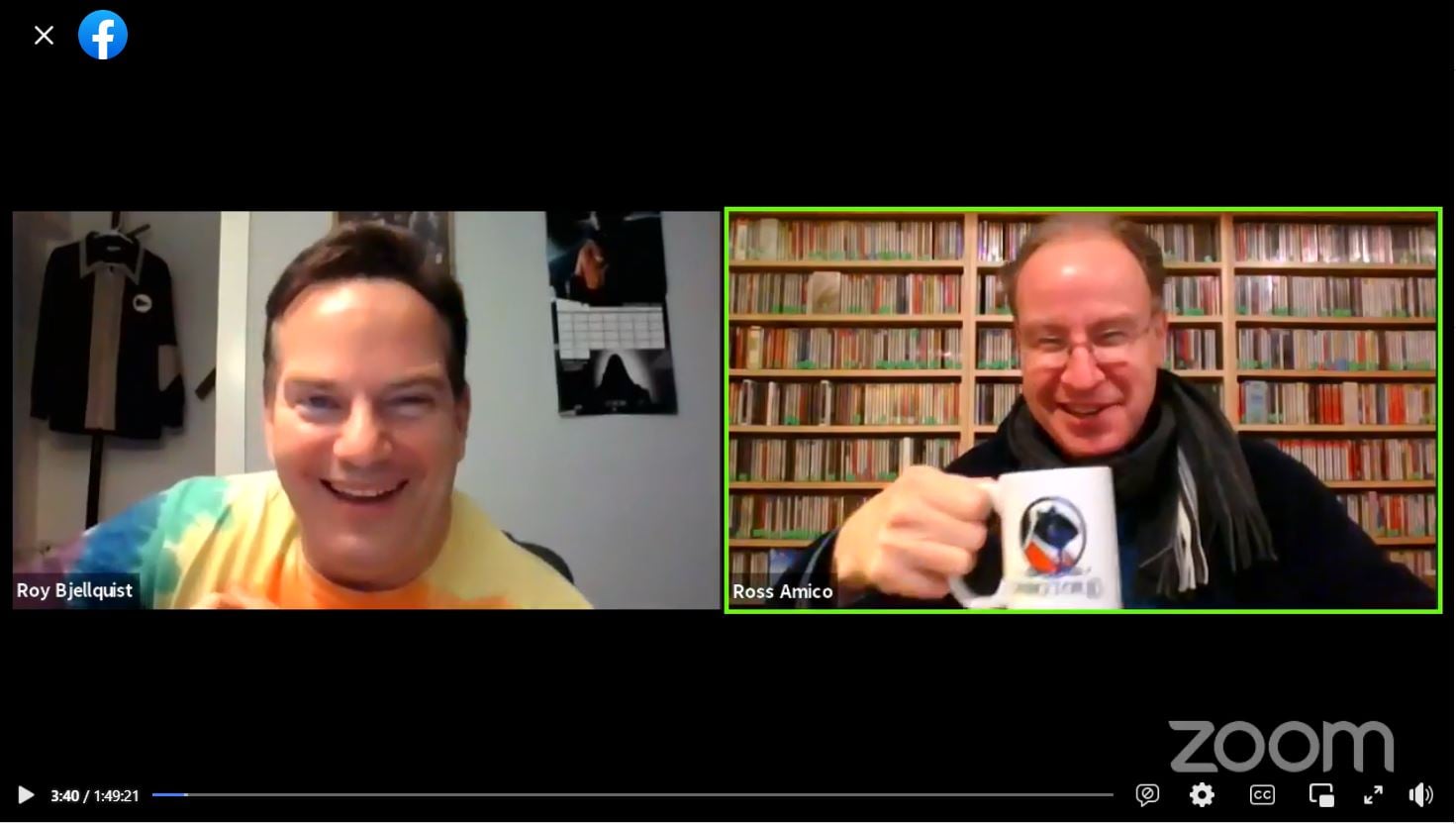
    If you’re wondering about my peculiar garb last night, it was not my intention to kick off the holidays with my Bob Cratchit impression. I’ve been trying to beat a sore throat the last couple of days. But a mug of tea with honey and lemon had me good-to-go for Roy and my discussion of “Dr. Strangelove” (1964). On the whole, the show got me out of my head and made for a cheering evening, especially some of the digressions, including an unexpected shout-out to Marlin Perkins!

    Next week, we “Journey to the Center of the Earth” (1959) with Jules Verne and James Mason. Composer Bernard Herrmann pulls out all the stops on this underground classic – quite literally, with cathedral organ and four electronic organs, alongside an obsolete Renaissance instrument called the serpent.

    Watch the movie, then join us for a subterranean chat, on the next Roy’s Tie-Dye Sci-Fi Corner. Monitor those monitor lizards (really rhinoceros iguanas) in the comments section. We’ll be carrying the torch when we livestream on Facebook, next Friday evening at 7:00 EST!

    https://www.facebook.com/roystiedyescificorner


  • Hollywood Writers Music on Film

    Hollywood Writers Music on Film

    by 

    in
    2 responses

    Words on the printed page captivate us so completely that it’s natural to assume that the lives of writers must be rich, full of incident, and very dramatic indeed. Surely that is sometimes the case. Who among us could keep up with a Byron or a Pushkin or a Poe?

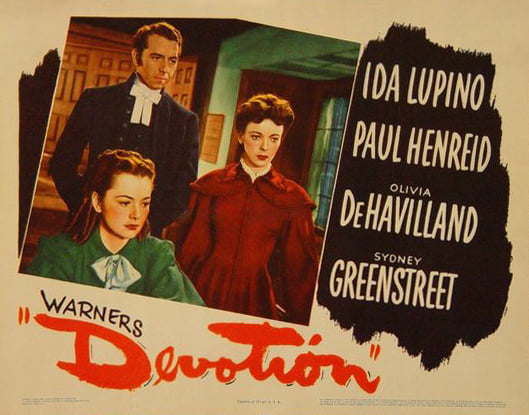
    Yet, with even the most outlandish writers, Hollywood for some reason often feels the need to fabricate. How else to explain “Devotion” (1943), Warner Brothers’ salute to the Brontës? Then again, the temptation must be strong to characterize the sisters who penned “Jane Eyre” and “Wuthering Heights” as tortured Romantics.

    Ida Lupino plays Emily, the creator of Cathy and Heathcliff, and Olivia de Havilland, Charlotte, who conceived Jane and Rochester. Nancy Coleman is their sister Anne, who wrote “The Tenant of Wildfell Hall,” and Arthur Kennedy, their dissolute brother Branwell. The film also features Sidney Greenstreet as William Makepeace Thackeray, Paul Henreid as an Irish priest, and – well, you get the idea. The casting, at times, strains credulity.

    However, the music by Erich Wolfgang Korngold is up to the composer’s usual high standard. Korngold himself became so enamored of one of its themes that he recycled it for use in the first movement of his Violin Concerto. This week on “Picture Perfect,” we’ll have chance to sample some of it.

    We’ll also hear selections from movies about Iris Murdoch (“Iris,” with music by James Horner), the Bard of Avon (“Shakespeare in Love,” with an Academy Award-winning score by Stephen Warbeck), and Samuel Clemens (“The Adventures of Mark Twain,” by Max Steiner).

    Writers are such characters, especially when they’re depicted on the big screen. Everything’s writ large, on “Picture Perfect,” music for the movies, this Saturday evening at 6:00 EDT, on WWFM – The Classical Network and wwfm.org.


  • Floral Clocks Françaix and Time Change

    Floral Clocks Françaix and Time Change

    by 

    in
    7 responses

    After several nights of frost, I suppose it’s pointless to try to figure out how to reset my floral clock. I hope you have more success tonight, as we “fall back” to standard time.

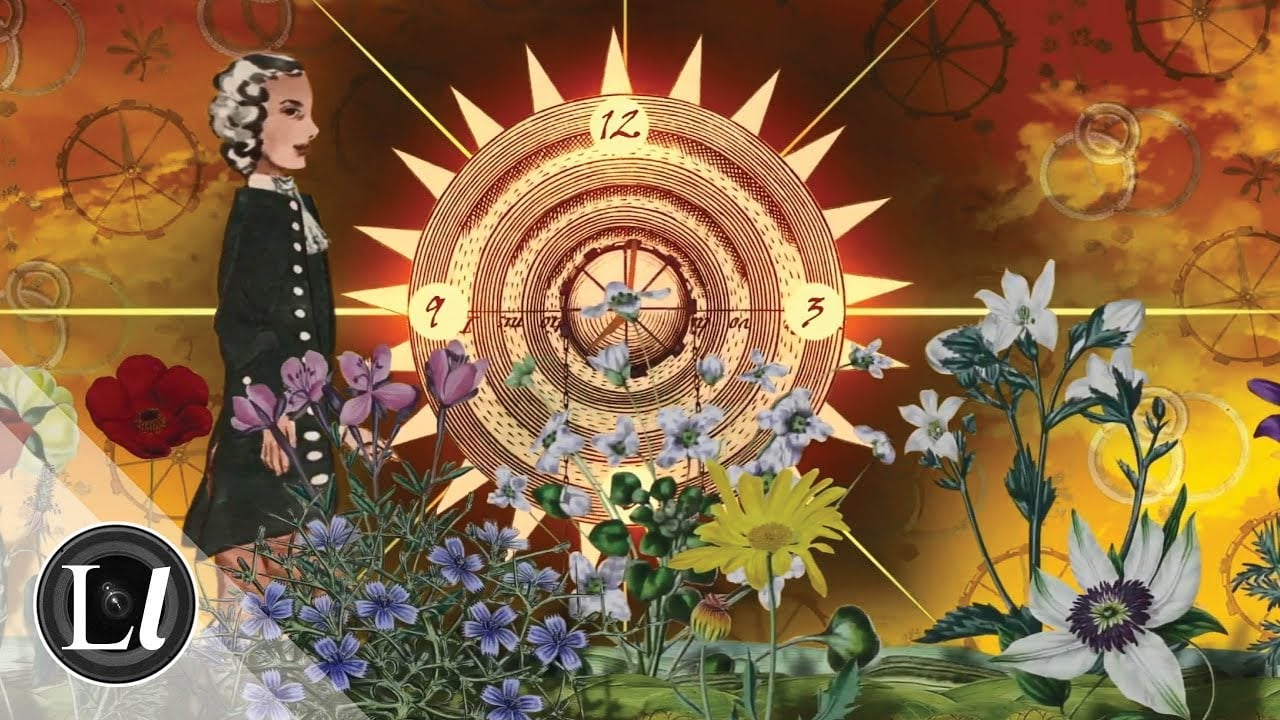
    Jean Françaix completed his “L’Horloge de flore” (“The Flower Clock”) in 1959, on a commission from principal oboist of the Philadelphia Orchestra, John de Lancie. The suite falls into seven movements, each of which corresponds with a flower whose blooms open at a certain time of day.

    The first floral clock was formulated by Carl Linnaeus back in 1748. His idea was “old school” and therefore, depending on vagaries of weather, season, and latitude, subject to many idiosyncrasies. One should never coordinate one’s schedule around a floral clock.

    The flowers in more recent clocks tend to be merely decorative, with large, mechanical hands making their way around a mostly floral face. Where’s the fun in that? I may as well just stick with my Kit-Cat clock.

    To further add to your fount of useless knowledge, Jean Françaix’s surname is of Flemish origin. He always pronounced the “x.” English-speaking radio announcers, on the other hand, almost always pronounce it in the French manner, as “Fron-SAY.”

    Over the years, I have used the “x” on most occasions. Unfortunately, then I wind up feeling sheepish about it and am compelled to explain, so that listeners don’t think I’m a total idiot. Just pedantic. I confess, there have been times when I haven’t felt like dealing with it and just said “Fron-SAY.” Lord knows, I’ve done more transparently idiotic things.

    Interestingly, I just learned that Michael Jackson had a floral clock at his Neverland Ranch (presumably of the more modern variety). Even a broken clock is right twice a day. When you wake up tomorrow morning and it’s still the middle of the night, just remember: the time change brings with it an extra hour of autumn!


    Françaix, “L’Horloge de flore”

    More about Carl Linnaeus’ Flower Clock

    Keep the “sex” in Françaix (said “Fron-SEX”)!


  • Mario Lavista 1943-2023 Mexican Composer

    Mario Lavista 1943-2023 Mexican Composer

    by 

    in
    2 responses

    Hasta la vista.

    Mario Lavista, the much-decorated Mexican composer, died yesterday at the age of 78.

    Lavista was born in Mexico City in 1943. He studied with Carlos Chávez and Jean-Étienne Marie, receiving additional instruction from Rodolfo Halffter, Nadia Boulanger, and Karlheinz Stockhausen, among others. He experimented with improvisation and electronic music, and applied that same curiosity in his quest for unusual timbres employing acoustic instruments and extended techniques. He founded and edited Pauta, one of the most significant music journals in Latin America. His sacred music was influenced by Medieval and Renaissance procedures. He also composed for theater and film.

    Lavista’s music is imaginative, beautiful and transporting. Gracias, Maestro, y que descanse en paz.


    “Cuaderno de viaje” for solo violin

    “Clepsidra” for orchestra

    “Danza Isorritmica” for percussion ensemble

    “Reflejos de la Noche” for string quartet

    “Maithuna” for voice and percussion

    “Responsorio In Memoriam Rodolfo Halffter” for bassoon, bass drums, and tubular bells

    Lavista plays “Jaula” on a prepared piano. Music begins at 1:36.


  • Sterling Hayden Easton PA? A Lost Encounter

    Sterling Hayden Easton PA? A Lost Encounter

    by 

    in
    5 responses

    Is it possible Sterling Hayden once poured me a drink at a party in Easton, PA? This would have been in the mid-1980s. My bosom chum Matt Anthony seems to think so. But I think by then surely I would have known who he was? Hayden was the hard-bitten noir antihero of John Huston’s “The Asphalt Jungle” (1950) and the title character in Nicholas Ray’s campy, kinky western “Johnny Guitar” (1954).

    Granted, at that point I may not have seen those movies, but I did see “Dr. Strangelove” (1964), which we’ll be discussing tomorrow night on “Roy’s Tie-Dye Sci-Fi Corner.” Hayden plays the rogue, cigar-chomping, machine gun wielding Brigadier General Jack D. Ripper, who hates commies, but sure does value his essence.

    Hayden himself was always a maverick. As early as 1941, he expressed dissatisfaction with Hollywood, calling himself more of a sailor than an actor. He enlisted in the U.S. Army, hoping to fight in World War II, but broke his ankle in basic training. Undeterred, he joined the Marines under an alias, and distinguished himself for his courage, running supplies and conducting rescue missions behind enemy lines.

    After the war, he intimated to the press that he thought it was his patriotic duty to return to the movies. It was an altruistic impulse that was not to last. In 1958, following a bitter divorce, he dropped out again. He defied a court order and took off with his four kids, sailing for Tahiti. Again, he considered himself a sailor, not an actor, and decided to make a go at writing. He had little patience for phonies and turned that same hard judgment on himself, considering himself a failure. Even so, somehow whenever he needed money, there always seemed to be a part waiting for him in Tinseltown.

    He was still active in the 1970s, appearing in “The Godfather” (1972) and in the television miniseries “The Blue and the Gray” (1982, as John Brown no less). It’s sobering to realize, at the time he played Capt. McCluskey in “The Godfather,” he was probably about my age! That may be one of the few times you’ll read the words “Hayden” and “sober” in the same paragraph. He died in Sausalito in 1986 at the age of 70.

    Anyway, I’ve always been fascinated by classic movies, even before I entered elementary school, and by 1985 I would have seen “Dr. Strangelove.” Granted, by that point, Hayden was notorious for having grown a castaway beard and basically living on a barge in Paris. When he wasn’t in the U.S., that is. He also kept homes in Connecticut and California.

    As I say, he hated Hollywood, but he loved money, and he was often in need of it. For all his bluster, on some level he probably also liked acting, since he continued to do theater toward the end of his life. Of course, he also had a few problems with the tax man.

    I’m thinking the best shot that there is any validity to this story of Hayden having poured me a shot is if he happened to be appearing in a show in the Lehigh Valley or New Jersey. Or possibly New York. But I can’t find any record of that being the case online. Does anyone have any recollection of it being so?

    The only other wrinkle is that the party was thrown by a showboat lawyer, who’d gained a degree of notoriety well beyond the boundaries of Easton. Who knows, maybe somehow he attracted the attention of a grizzled, malcontented movie star who didn’t give a damn if we happened to be under 21?

    Everything about life is stranger than fiction in “Dr. Strangelove.” We’ll chuckle about Stanley Kubrick’s doomsday comedy of errors, on the next Roy’s Tie-Dye Sci-Fi Corner. See to the purity of your essence in the comments section. It will be an Armageddon arms race, when we livestream on Facebook, this Friday evening at 7:00 EDT!

    https://www.facebook.com/roystiedyescificorner

Tag Cloud

Aaron Copland (93) Beethoven (95) Composer (114) Film Music (145) Film Score (143) Film Scores (255) Halloween (94) John Williams (195) KWAX (229) Leonard Bernstein (104) Marlboro Music Festival (125) Movie Music (160) Mozart (91) Opera (213) Philadelphia Orchestra (89) Picture Perfect (174) Princeton Symphony Orchestra (109) Radio (88) Ross Amico (244) Roy's Tie-Dye Sci-Fi Corner (290) The Classical Network (101) The Lost Chord (269) Vaughan Williams (105) WPRB (397) WWFM (881)

DON’T MISS A BEAT

Receive a weekly digest every Sunday at noon by signing up here


RECENT POSTS