• John Kinsella Irish Composer Dies at 89

    John Kinsella Irish Composer Dies at 89

    by 

    in
    4 responses

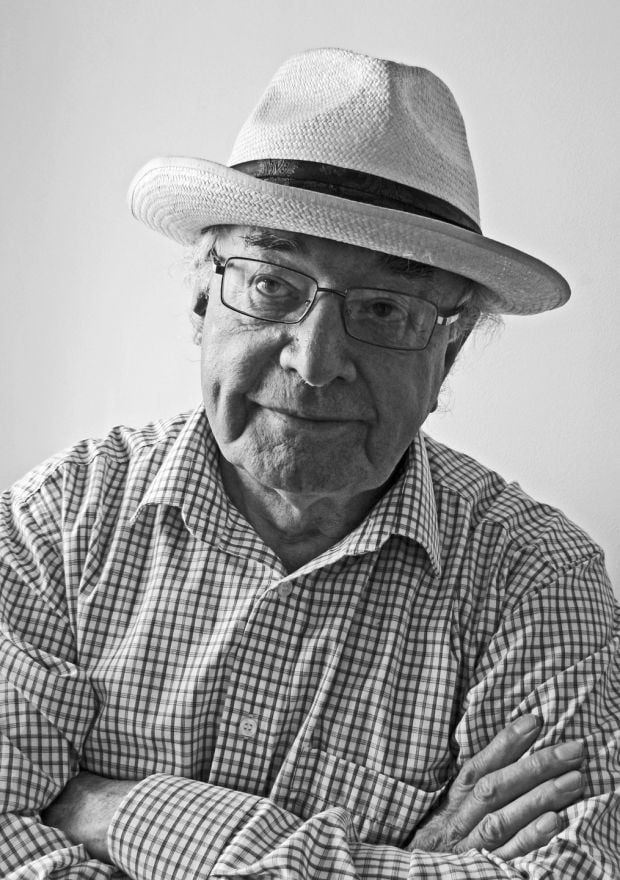
    Sorry to learn of the death of Irish composer John Kinsella. Kinsella died on Tuesday at the age of 89. His passing was announced yesterday. Kinsella was Ireland’s most prolific symphonist. His most recent symphony, the Symphony No. 11, written in homage to Sibelius, was given its debut by the RTÉ National Symphony Orchestra in November of 2019. He once commented that the summit of his life would be to have the work performed in Finland.

    Kinsella was born in Dublin in 1932. His burgeoning musical interests were fostered by his parents, his father (who worked for Guinness Brewery) buying him scores and acting as his guide to broadcasts they listened to together on the family radio – in the “magic corner,” as the composer described it. Though encouraged by a number of notable names in Irish music (Gerard Victory, Brian Boydell, and Proinnsías Ó Duinn, among others), Kinsella was largely self-taught as a composer. The core of his education was the study of scores and recordings, attending live concerts, and playing chamber music on the viola.

    In 1968, he was appointed senior assistant in the music department at RTÉ (Raidió Teilifís Éireann, or Radio Television Ireland).

    During the first phase of his career as a composer, he was attracted to European avant-garde techniques, with a particular fascination with serialism. But by the late ‘70s, he began to call into question the validity of everything he had thus far written.

    Following the completion of his String Quartet No. 3 in 1977, he completely stopped writing for a period of eighteen months in order to regroup. When again he put pencil to paper, it was with a determination to pursue his own creative voice, which would develop regardless of current trends. Few would have anticipated that Kinsella would make his greatest mark as a classical symphonist. He didn’t finish his First until the age of 52.

    With the completion of his Second, in 1988, he retired early from RTÉ (by then, he was Head of Music, and much involved with the RTÉ Symphony and RTÉ Concert Orchestra), in order to devote himself full-time to composition. In addition to his body of symphonies, he also leaves two violin concertos, a cello concerto, five string quartets, and many other chamber, instrumental, choral and vocal works.

    He was celebrated as a composer of stature throughout the British Isles. Recordings of his works have appeared on the Chandos, Naxos, Marco Polo, and Toccata Classics labels.

    Kinsella’s music has been featured on my Sunday night program, “The Lost Chord,” several times over the years, most recently on March 14, when I aired his Symphony No. 3, “Joie de vivre.”

    He was the younger brother of the poet Thomas Kinsella, now 93. Interestingly, my copy of “The Táin” is in the Kinsella translation. John too was inspired by the epic – frequently described as “The Irish Iliad” – to compose the orchestral work “Cúchullainn and Ferdia: Duel at the Ford.”

    RTÉ honored Kinsella today by resharing this broadcast on its website of his Symphony No. 11, in concert, coupled with a performance of Sibelius’ Symphony No. 3. Prokofiev’s “wild and witty” Piano Concerto No. 3 is merely icing on the cake.

    R.I.P. John Kinsella


    Symphony No. 4 “The Four Provinces” (1991)

    “Essay for Orchestra” (1980), soon to become the first movement of his Symphony No. 1

    Symphony No. 2 (1988)

    Symphony No. 9 for strings (2004)

    Violin Concerto No. 2 (1989)

    A selection from “Cúchullainn and Ferdia: Duel at the Ford” (1988)

    “Elegy for Strings” (2011)

  • Ennio Morricone Gone But Never Forgotten

    Ennio Morricone Gone But Never Forgotten

    by 

    in
    5 responses

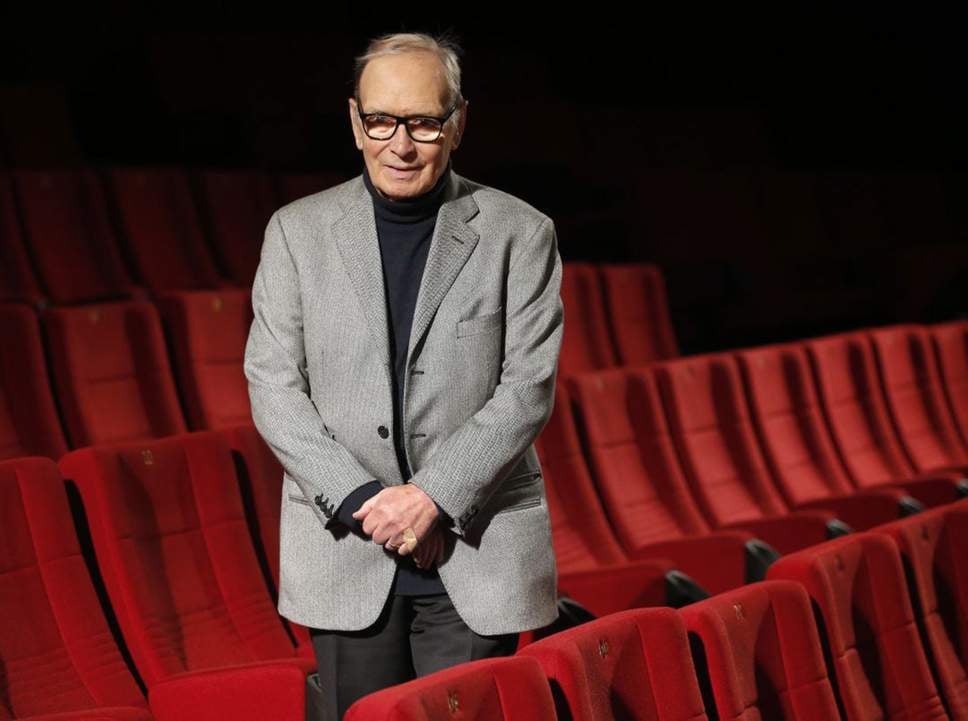
    Happy birthday, Ennio Morricone, gone but never forgotten.

    The composer of an estimated 500 film and television scores – perhaps the most prolific film composer of all time – Morricone died last year at the age of 91.

    Grazie, Maestro. You are greatly missed.


    Morricone celebrates his 90th birthday with the Orchestra and Chorus of the Accademia Nazionale di Santa Cecilia and music from “The Mission”

    “Once Upon a Time in the West”

    Vintage Morricone: “Two Mules for Sister Sara”

    A personal favorite

    Another, not to be confused with the oft-reissued “Il Gatto a Nove Code” – a completely different animal! Is that a mandolin and a muted trombone? Morricone always provided his own orchestrations.

    Conducting “Cinema Paradiso”

    Andrea Morricone conducts his father’s Concerto for Orchestra:

    Another concert work: “Esercizi for 10 Strings”

    Ricercare per pianoforte (thanks to Paul Moon)

    Easily his greatest hit

    “The Ecstasy of Gold.” I think I need to watch this movie NOW!!

    Far and away the best thing about “The Hateful Eight” (for which he received his only competitive Oscar)

    Morricone conducts “The Untouchables”


  • John Williams at 90 No Retirement Yet

    John Williams at 90 No Retirement Yet

    by 

    in
    8 responses

    John Williams will be 90 in February. He hasn’t composed a new film score since “Star Wars: Episode IX: The Rise of Skywalker” in 2019. In fact, he kind of intimated at the time that he would be retiring, leaving the window open to future Spielberg projects, perhaps, and the odd opportunity that would be too good to refuse. Essentially, that’s the position he’s been in now for years anyway. When you’re John Williams, you can pretty much do what you want.

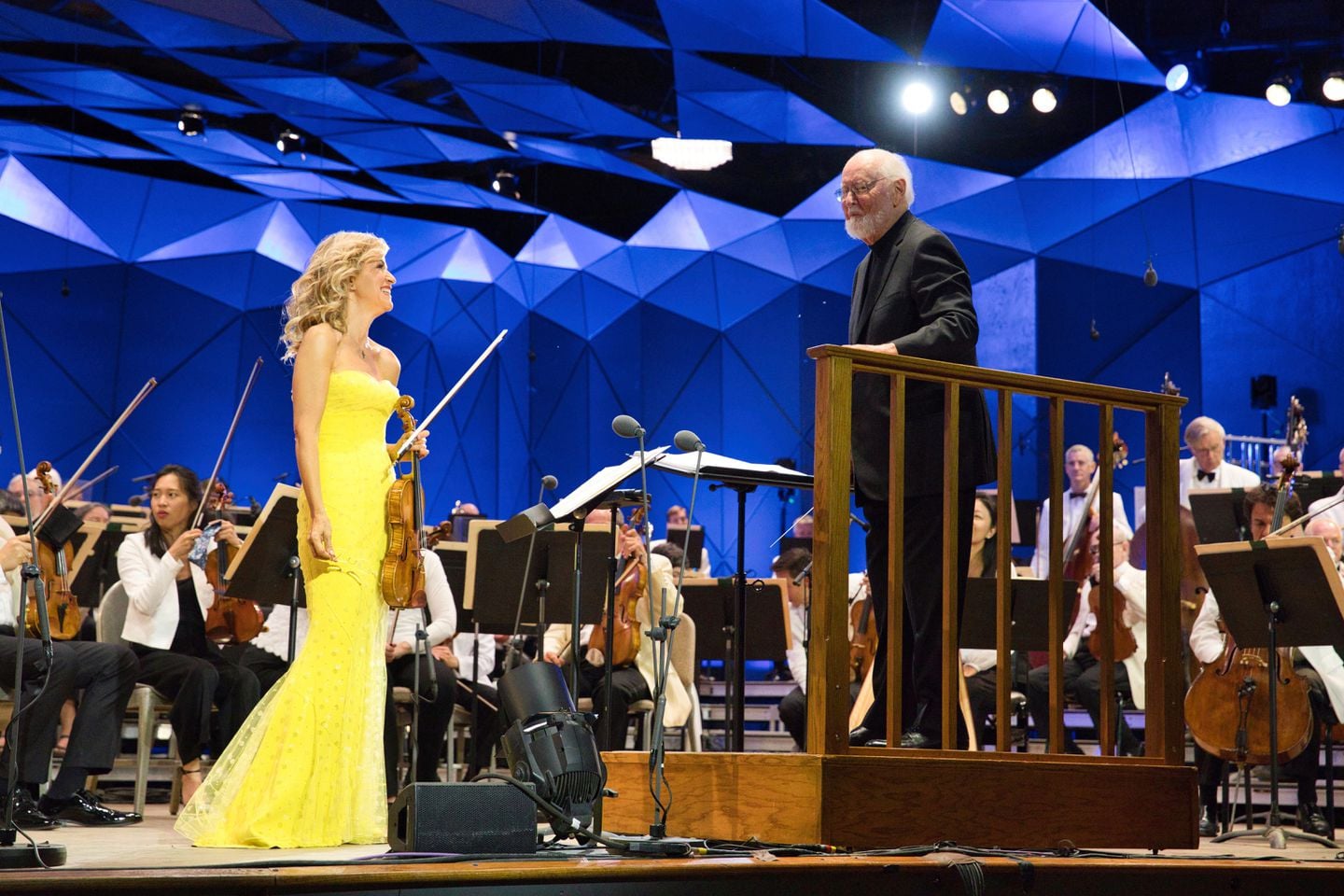
    The lack of film projects certainly doesn’t mean he hasn’t kept busy. In fact, Williams seems to be as active as ever, with a full schedule of conducting engagements and recordings. In particular, he’s being seen everywhere with Anne-Sophie Mutter, touring his new Violin Concerto (No. 2) and assorted film themes arranged for violin and orchestra. The audio for the concerto, in its Tanglewood debut (which took place on July 24), was available briefly on YouTube – long enough for me to share the link and listen to it a couple of times – but, alas, it has since been taken down. Thankfully, it’s been recorded for commercial release on compact disc, which still has not been the case for too many of Williams’ other concert works.

    If you’re interested and you haven’t heard it yet, PBS will be broadcasting the concert on “Great Performances” THIS FRIDAY EVENING AT 9:00 EST. Williams’ concerto will form the centerpiece of a program that will include Aaron Copland’s “Quiet City,” Igor Stravinsky’s “The Firebird Suite,” and Jesse Montgomery’s “Starburst,” with the Boston Symphony Orchestra conducted by Andris Nelsons. Williams will conduct the concerto with Mutter as soloist. Check your local listings. You’ll find an interview and promos here:

    Anne-Sophie Mutter Performs John Williams’ Violin Concerto

    In other recording news, Williams has been in the studio with Yo-Yo Ma and guitarist Pablo Sáinz Villegas (for whom he composed his concert piece “Rounds”). I’m hoping it will result in an album of more concert music. I know new arrangements of the film themes are popular, but I always find those types of records to be a little kitschy. (Sorry, Morricone.) Why do I need movie themes arranged for cello or violin, when I can already enjoy them as written? Regardless of my preferences, the orchestra on the new recording, whatever it contains, will be the New York Philharmonic.

    Williams was supposed to have begun scoring the latest Indiana Jones film – still being referred to simply as “Indy 5” – in the coming weeks, but now Disney has pushed the release date back a year, to 2023, to accommodate the crush of superhero movies that have been piling up, presumably, since the start of the pandemic. This means Williams may actually be scoring the film at the age of 90 or 91? Harrison Ford will be 81 at the time of the film’s new projected release date of June 30, 2023.

    On the bright side, that will take some of the pressure off Williams’ commitment to score Spielberg’s semi-autobiographical coming-of-age drama, “The Fabelmans,” which will be released next year.

    So, as he nears the end of his eighth decade, Williams is not just resting on his throne of gold, tabulating his mountains of royalties. It must be very rewarding indeed to be able to show up to packed houses all over the world and perform one’s own music to engaged listeners, paying top dollar to hear one conduct it. Well, he earned it. Have a great “retirement,” John Williams.


  • Sir Arnold Bax Celtic Tone Poems and More

    Sir Arnold Bax Celtic Tone Poems and More

    by 

    in
    11 responses

    If you’ll allow a labored pun, Bax is a composer I can really get behind.

    Sir Arnold Bax blazed his own trail in English music, for the most part forgoing both the pomp and circumstance of Sir Edward Elgar and the rustic folk song of Ralph Vaughan Williams. (Bax once quipped, “You should make a point of trying every experience once, excepting incest and folk dancing.”) Like Elgar, he found much to admire in the German Romantics, especially Wagner and Strauss, but he also made a careful study of Debussy.

    Sadly, he lacked the French master’s refinement when it came to some of his own queasy chromatic harmonies. Even after decades, I can’t say I’m entirely fond of the symphonies, which come off more like extended rhapsodies, clunkily strung together. As if Frederick Delius met Percy Grainger on a bad day. It is in his tone poems, his love of all things Celtic, and his colorful orchestrations that he is at his most gratifying.

    Bax wrote most of his piano music for Harriet Cohen, the magnetic virtuoso who captivated seemingly every English composer of her time. She and Bax engaged in a tempestuous affair that spanned some 40 years. His most famous work, the symphonic poem “Tintagel” (1917, orchestrated in 1919), was ostensibly inspired by the ruins of an Arthurian castle overlooking the turbulent Cornish seascape. But it’s widely understood that there’s a subtext to the piece: the erotic intensity of illicit lovers, who passed an especially ardent six weeks on vacation there.

    Also ravishing, for entirely different reasons, is the season-appropriate tone poem “November Woods” (1917)

    Bax’s “Elegiac Trio” (1916), for flute, viola and harp, appeared the year after Debussy’s trio for the same instrumental combination (which Bax may or may not have known). Its alluring melancholy emerged from a world at war. Bax was especially affected by escalating tensions between England and Ireland, which had just boiled over into violence with the Easter Rising.

    “Three Pieces for Small Orchestra” (1913; revised 1928), including “Evening Piece,” “Irish Landscape,” and “Dance in the Sunlight”

    A Bax rarity: The “Russian Suite” (1919), originally for piano. A delightful pastiche. This could be a great pops favorite, if anyone would actually program it. Quite unexpected, I’m sure, for anybody accustomed to Bax the dreamy impressionist. Its three movements are posted separately, so allow them to play through! You can thank me later.

    Bax was knighted in 1937. In 1942, he was appointed Master of the King’s Music (retitled, with the death of George VI in 1952, Master of the Queen’s Music). The appointment surprised many, since Bax was by no means an establishment figure.

    Happy birthday, Sir Arnold Bax!


    PHOTO: Bax and Cohen in Cornwall. Evidently there was time for reading, too.


  • Leonard Pennario LA Pianist Rediscovered

    Leonard Pennario LA Pianist Rediscovered

    by 

    in
    3 responses

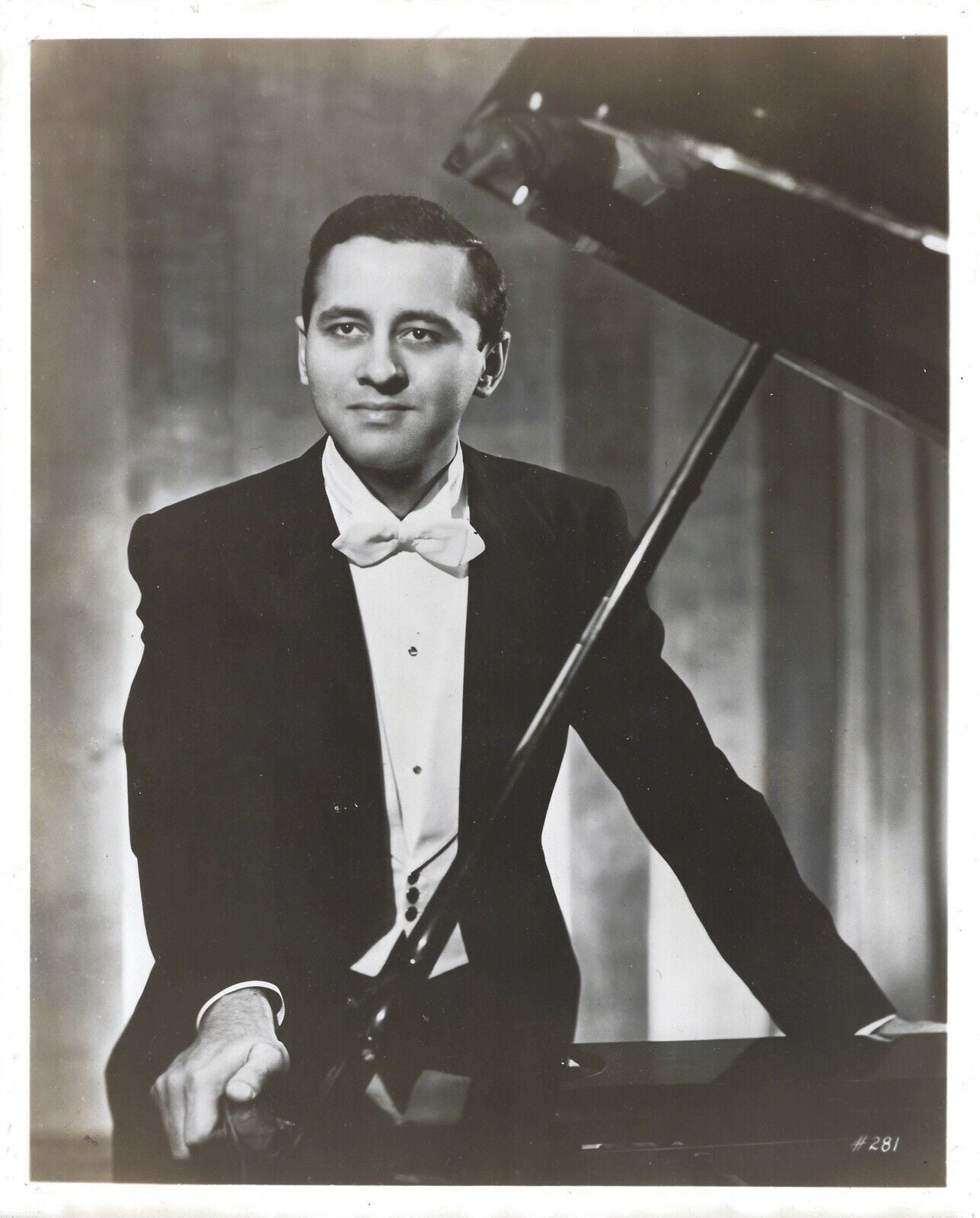
    At the age of 10, Buffalo-born Leonard Pennario moved with his family to Los Angeles. L.A. would remain his base of operations for the rest of his career. He made his first recordings for Capitol Records in 1950 (over 40 albums were pressed). By 1959, he was the best-selling American pianist.

    This Sunday night on “The Lost Chord,” we’ll hear highlights from Pennario’s Capitol catalogue, remastered for a 4-CD set on the MSR label. Tune in to enjoy his superlative interpretations of Prokofiev’s “Visions fugitives,” Ravel’s “La valse,” and the rarely-heard Piano Sonata by Miklós Rózsa.

    I’d love to tell you more – about Pennario’s remarkable development and early triumphs, his professional relationships with top-tier musicians and personal ones with Hollywood glitterati, his ambivalent reception by the critics and his excellence at bridge – but my eyes are watering so badly from a cold right now, I’m afraid you’re just going to have to listen to the show!

    I hope you’ll join me for “Go West, Young Man” – Leonard Pennario in Los Angeles – this Sunday night at 10:00 EST, on WWFM – The Classical Network and wwfm.org.


    Note that that’s STANDARD time. Hope you remembered to change your clocks!


Tag Cloud

Aaron Copland (93) Beethoven (95) Composer (114) Film Music (145) Film Score (143) Film Scores (255) Halloween (94) John Williams (195) KWAX (229) Leonard Bernstein (104) Marlboro Music Festival (125) Movie Music (160) Mozart (91) Opera (213) Philadelphia Orchestra (89) Picture Perfect (174) Princeton Symphony Orchestra (109) Radio (88) Ross Amico (244) Roy's Tie-Dye Sci-Fi Corner (290) The Classical Network (101) The Lost Chord (269) Vaughan Williams (105) WPRB (397) WWFM (881)

DON’T MISS A BEAT

Receive a weekly digest every Sunday at noon by signing up here


RECENT POSTS