• Classic Film & UFOs On Air Friday

    Classic Film & UFOs On Air Friday

    by 

    in
    6 responses

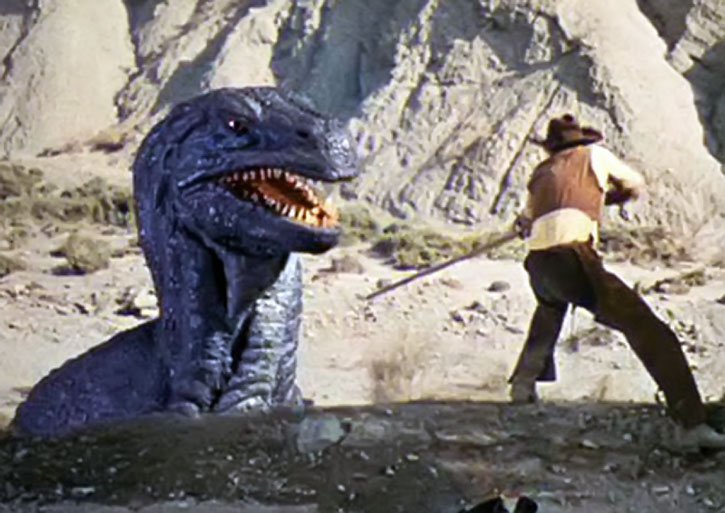
    You’re right. The idea of cowboys lassoing an Allosaurus so that they can show it off in their Wild West show is totally preposterous. But not to worry, we’ll rinse the taste out of our mouths with a three-way bull session devoted to a movie about extraterrestrials who fly around in ice cream cones.

    That’s right, it’s another Classic Ross Amico double feature!

    Join me this Friday evening at 6:00 EDT, for an hour of music from the western scores of Jerome Moross on “Picture Perfect” – including selections from “The Big Country,” “The Proud Rebel,” “The Jayhawkers,” and “The Valley of Gwangi” – on WWFM – The Classical Network and wwfm.org.

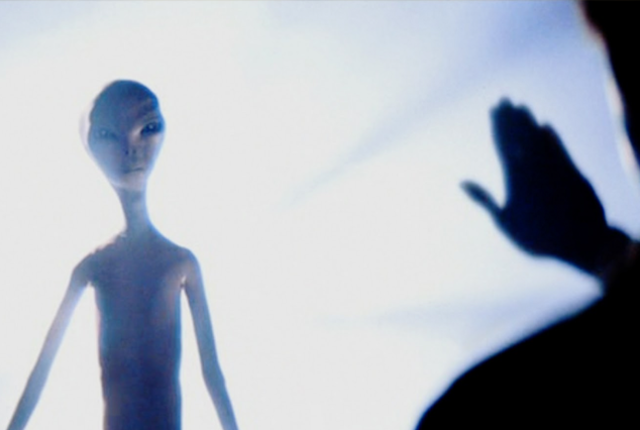
    Then at 7:00 EDT, Roy Bjellquist and I will be joined by Joe Metz (my cousin, whom I have not seen in about 35 years) for an in-depth discussion about a movie that influenced us all, Steven Spielberg’s UFO blockbuster “Close Encounters of the Third Kind.”

    You can bet your mashed potatoes that the hour will not pass without some discussion of music, which permeates the film on multiple levels.

    Catch the Facebook live-stream, and by all means, participate in the running commentary. We look forward to reading your thoughts and reactions.

    Roy’s Tie-Dye Sci-Fi Corner

    Watch us. Watch the skies. When we see you there, we’ll know, truly… we are not alone!


  • Close Encounters’ Hidden Musical Genius

    Close Encounters’ Hidden Musical Genius

    by 

    in
    6 responses

    Is “Close Encounters of the Third Kind” the most musical non-musical blockbuster ever made?

    I don’t know at what point I recognized Zoltán Kodály’s contribution to “CE3K.” It was certainly not as an 11-year-old boy, which is how old I was at the time I was first spooked and awed by Steven Spielberg’s UFO masterpiece. But somewhere along the way, Kodály took on more significance than simply an exotic-looking name on a chart.

    In addition to being one of Hungary’s most respected composers – with his friend, Béla Bartók, at the forefront of the whole Hungarian nationalist movement – Kodály was extremely influential in the field of music education. The hand signals employed by François Truffaut’s Claude Lacombe, when he addresses a conference of UFO scientists and researchers, correspond to specific musical tones. The signals are an integral part of the Kodály method, and they contribute to the film’s memorable climax. Millions who have never heard of Kodály outside the context of “CE3K” will be familiar with the five-signal sequence.

    Of course, music imbues just about every aspect of Spielberg’s storytelling. Composer John Williams went through over 300 permutations of the five-notes-to-a-theme before arriving at the now-iconic motive that ties the whole film together. There was no “aha! moment.” It was only after Spielberg learned there were over 130,000 possibilities that they just settled on a sequence they thought would be effective. A significant portion of the score for the last half hour of “CE3K” would be recorded in advance of the actual filming. It’s a rare luxury for composers to have a film cut to their music, as opposed to the other way around, but this is what was done, necessarily, for the film’s climactic encounter.

    At the time, Williams’ “CE3K” theme was widely parodied and likely as well recognized as his theme for “Jaws.” His score would be nominated for an Academy Award in 1978. He actually wound up losing to himself, for “Star Wars.” A banner year for John Williams!

    Interestingly, the composer tailored a cello solo specifically for Eleanor Aller Slatkin, formerly of the legendary Hollywood String Quartet. Aller was the widow of violinist Felix Slatkin and the mother of conductor Leonard Slatkin. She had been active in Hollywood since the 1940s, introducing Erich Wolfgang Korngold’s Cello Concerto in the film “Deception,” with Bette Davis and Claude Rains. Paul Henreid “played” the concerto onscreen.

    French pianist and educator Odette Gartenlaub, a Messiaen pupil and solfège authority who taught at the Paris Conservatory, has a cameo during the climactic extraterrestrial communication scene.

    And of course, “When You Wish Upon a Star” is heard on a music box early in the narrative, only to be picked up in Williams’ underscore during the film’s apotheosis. Spielberg said that he relied on the spirit of the song as a kind of guide for the overall feeling he wanted “CE3K” to convey.

    “Close Encounters” is a work of great humanity, wonder and hope. Is it any wonder that music would play such an important role? In a story in which so many of the human characters experience frustration in their spoken interactions, running up against all kinds of barriers to effective communication, the key to universal understanding turns out to be music. It is one of the most satisfying and uplifting movies about music ever made. Unusually, it also seems to get everything right.

    There were many experienced hands involved in the writing of the film, but in the end it was Spielberg who received the sole screen credit. Somebody really knew their music. I wonder who directed Spielberg to Kodály?

    For further reflections on “CE3K,” join Roy Bjellquist and me – with a special appearance by my brilliant cousin, Joseph R. Metz – on the next “Roy’s Tie-Dye Sci-Fi Corner,” to be live-streamed on Facebook this Friday evening at 7:00 EDT.

    https://www.facebook.com/roystiedyescificorner


    More about the Kodály Method here (with hand signals):

    And an interview with Kodály, in English!


  • Kolchak Night Stalker Classical Music Mystery

    Kolchak Night Stalker Classical Music Mystery

    by 

    in
    11 responses

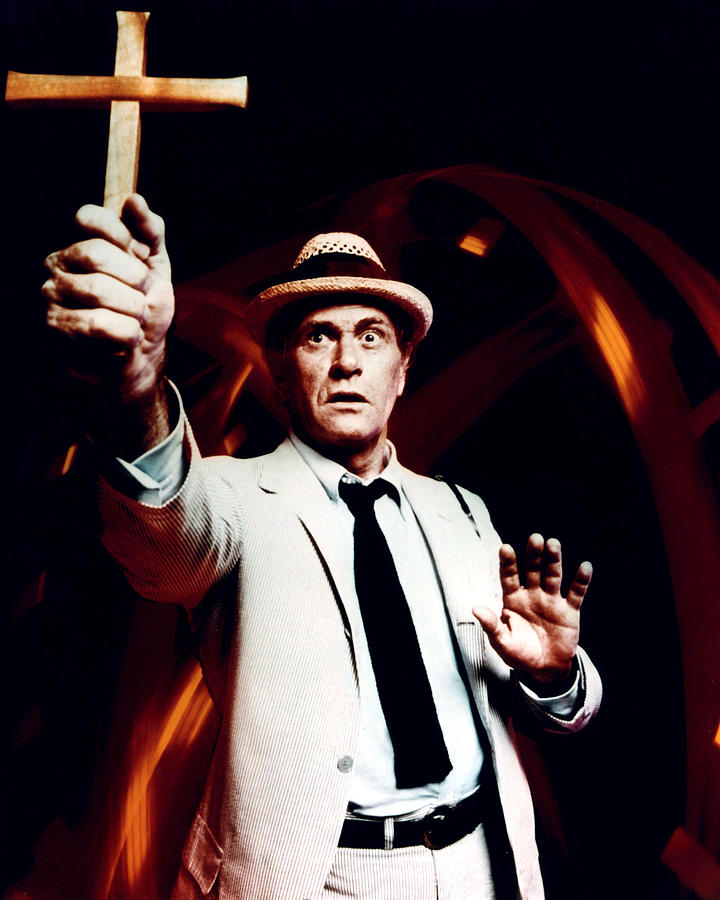
    Naturally, I am always curious to see how classical music is treated in popular culture. Imagine my delight, then, to find a conductor central to the plot of “Firefall,” an episode of “Kolchak: The Night Stalker,” which originally aired back in 1974.

    I’ve been working my way through the old “Kolchak” episodes, which feature Darren McGavin as a hardboiled reporter in rumpled seersucker, who has a nose for the mysterious and the supernatural in after-dark Chicago. McGavin is a hoot and unquestionably the main reason to watch the show, though Simon Oakland, as his editor, long-suffering Tony Vincenzo, plays exasperation well. The series ably walks the line between chills and camp. It is very 1970s – everyone looks horrible, the women are all stereotypes, and the monster make-up is cheesy to the extreme. Still, it has always appealed to the eight-year-old in me. And there’s something in it that still resonates in a world obsessed with conspiracies and cover-ups. Chris Carter claimed that “Kolchak” was a principal influence when he came to create “The X-Files.” He even attempted to resurrect the show itself, but it’s just not possible without an actor as quirky and knowing as McGavin, probably best recognized these days, thanks to annual TBS marathons, as Ralphie’s father in Jean Shepherd’s “A Christmas Story.”

    At any rate, this particular episode is about an orchestra conductor, Ryder Bond (played by Fred Beir), music director of the fictional Great Lakes Symphony – who, in his “nearly fatal devotion to punctuality,” cuts across a funeral line and riles the spirit of a murdered mobster, whose life’s passion happened to be classical music! This spirit manifests itself as Bond’s doppelganger, now determined to assume the conductor’s identity. Along the way, he immolates the orchestra’s concertmaster, for one, in an apparent “spontaneous combustion.” (“Now who will play the scherzo?” despairs Bond.) Kolchak, of course, is the only one who knows what’s going on. And he spends the episode, as he generally does, getting dressed down by his editor, roughed up by the police, and taken into custody for arson and in all likelihood bodysnatching. Does the story get written? Probably, eventually. The shows usually conclude with lonely shots of McGavin typing away in the deserted newspaper office, after hours. But will it go to press? Probably not. Not if Vincenzo has anything to do with it. But the truth is out there!

    As far as classical music is concerned, we learn from a crime scene witness that the orchestra is scheduled to play Prokofiev. There is a scene of Bond rehearsing Tchaikovsky’s Fourth Symphony, and another of him sitting at a piano, playing through some Mozart and making a sardonic remark about Chopin. One of Kolchak’s colleagues reveals that he plays the French horn (“Why am I not surprised,” remarks Kolchak), before namedropping Bach, Beethoven and Bernstein – mispronouncing the latter as “Bern-STEEN.” But fans of the show, of course, are there for the monsters.

    As an added bonus, every episode of “The Night Stalker” sports multiple guest stars, some veterans, some on their way up. So along the way to the final showdown with the vampire, werewolf, or extraterrestrial of the week, we encounter Dick Van Patten, Larry Storch, Scatman Crothers, Carolyn Jones, Mary Wickes, James Gregory, Jim Backus, Phil Silvers, Jackie Mason, Richard Kiel, and any number of others. In this instance, David Doyle, soon to be Bosley on “Charlie’s Angels,” turns up for a scene as an expert on flammables.

    The series is also notable for breaking in Robert Zemeckis and Bob Gale, who put their own memorable spin on the Headless Horseman (making him a motorcyclist!). Zemeckis and Gale later hit it big with “Back to the Future.”
    Zemeckis would win the Academy Award for Best Director in 1995 for “Forrest Gump.”

    McGavin pours himself some day-old coffee in “Kolchak: The Night Stalker”:


  • Max Steiner: Hollywood’s Epic Composer

    Max Steiner: Hollywood’s Epic Composer

    by 

    in
    8 responses

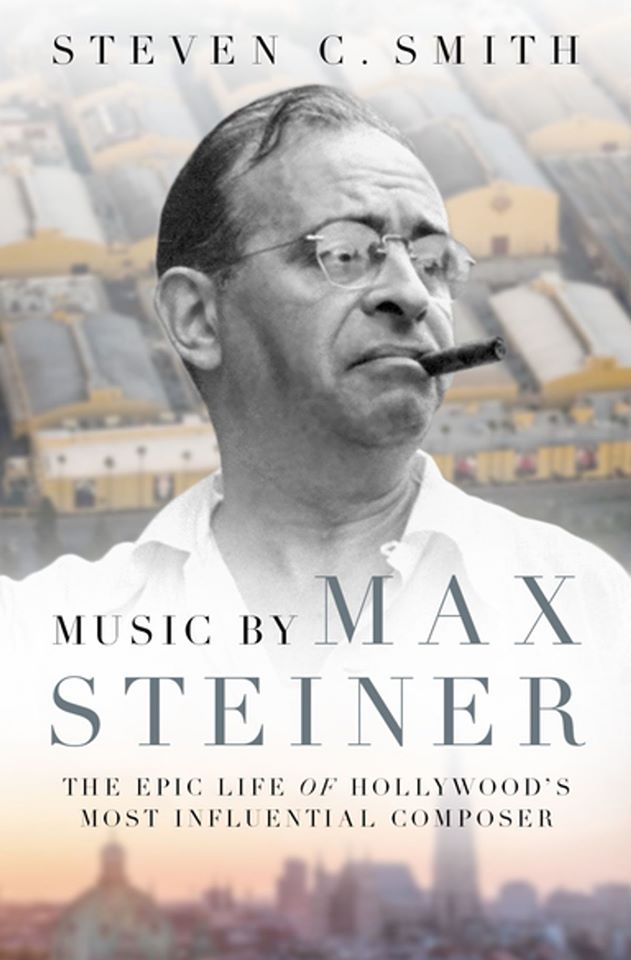
    It’s an unfortunate coincidence that I happened to finish this book on the anniversary of Olivia de Havilland’s death. De Havilland was one of the dozens of subjects interviewed or researched for this authoritative biography of Max Steiner, unbelievably the first full-length treatment of one of the movies’ most celebrated composers.

    Steiner might be said to have had one foot in Vienna and one on the Great White Way. His grandfather, for whom he was named, was a formative influence on the development of Viennese operetta, and his father, also very much involved with the theater, built an entertainment city within the city, which included among its wonders the Riesenrad, the giant Ferris wheel used so memorably in “The Third Man.” In the New World, Steiner worked as music director for the Gershwins, Jerome Kern, and others. But it was in Hollywood, at the dawn of talking pictures, that he was to make his greatest mark.

    Steiner pioneered the concept of the Wagnerian-Straussian underscore, in films such as “Bird of Paradise,” “King Kong,” and “She,” an approach that would set the industry standard for decades. Indeed, many of Steiner’s technical, if not musical, innovations are still employed in the process of adding music to film.

    You’d think that, for being such a powerful and lucrative asset to RKO, Warner Brothers, and David O. Selznick (for whom he scored “Gone with the Wind”), Steiner would have been better appreciated, even seen as indispensable – and to an extent he was, whenever a prestige picture needed a little added luster, or a middling one some emergency TLC.

    Sadly, the studio system began to crumble sooner than one might think. Already in the late ‘40s, contracts were not being renewed, and Steiner, in common with many of the legendary actors and directors he had worked with, all at once found himself a free agent. This meant that he had to scramble for much of his later work.

    Also, despite being well paid – or well enough, by the day’s standards – he had all sorts of drains on his income. An appreciation for the good life, several alimonies, the support of his parents, unchecked generosity, and a profligate child left him scrambling. In fact, he was nearly always saddled with enormous debt and literally working around the clock to meet impossible deadlines. This continued until a late-in-life miracle, the theme to “A Summer Place” becoming an unexpectedly popular hit, brought him financial security.

    But life is strife, and Steiner still had his share of personal miseries. He struggled with failing eyesight for his entire adulthood (he scored at least one of his films while legally blind, though thankfully cataract surgery brought him back to the point where he could at least see), and a rocky relationship with his son led the kind of heartbreak that is every parent’s nightmare.

    Music remained a refuge. Steiner was a man who clearly took joy in the act of composing, and he was a master at solving the puzzle of how to match just the right kind of music to a particular kind of film. His home life could be volatile, the hours were certainly terrible, but he kept up a playful, almost child-like disposition. His scores are peppered with outrageous puns and side-notes to his orchestrators, many of them of an astonishingly bawdy nature.

    While some of his music may seem a little old fashioned today, at times mawkish and even a little cartoon-like (“Mickey Mousing,” or matching music too closely to an onscreen action, was one of Steiner’s weaknesses), he was undeniably a force to be reckoned with. Personally, I still find his idiom highly attractive. There would be no “Star Wars” or “The Lord of the Rings” without Max Steiner.

    Steven C. Smith’s “Music by Max Steiner: The Epic Life of Hollywood’s Most Influential Composer” is published by Oxford University Press. The study is generously annotated, with a bibliography, for those of a scholarly bent, but also compellingly written, so as to satisfy the more casual reader. If you’re at all curious about the art of film scoring, or simply a classic movie buff – Steiner knew everyone from Johann Strauss II to Frank Sinatra – this book is for you.

    Smith is also the author of “A Heart at Fire’s Center: The Life and Music of Bernard Herrmann” (1991). Let’s hope it’s not another 30 years before he tackles Franz Waxman, Alfred Newman, or someone equally worthy!

    Oxford Academic (Oxford University Press)

  • Olivia de Havilland They Died With Their Boots On

    Olivia de Havilland They Died With Their Boots On

    by 

    in
    7 responses

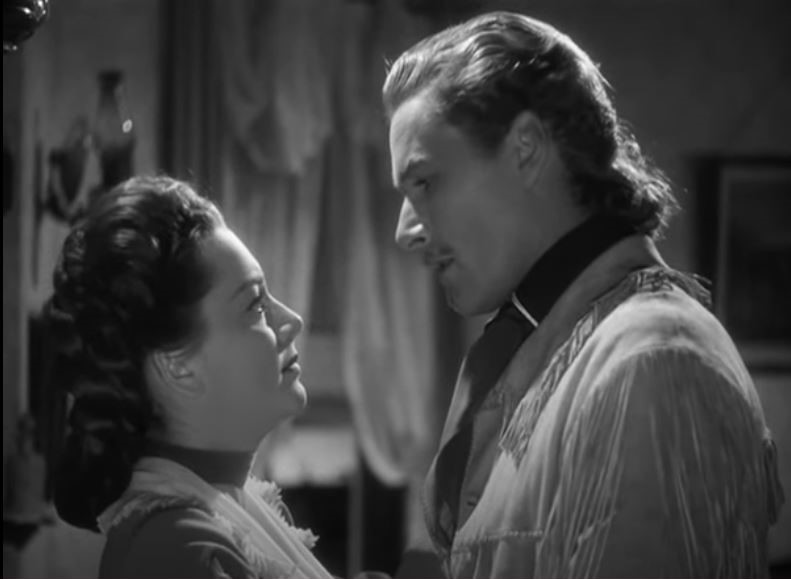
    Olivia de Havilland and Errol Flynn made eight films together. Everybody knows “The Adventures of Robin Hood,” but here’s a great scene from “They Died with Their Boots On” (1941), something of a whitewashed portrait of George Armstrong Custer.

    De Havilland was about to leave behind these types of roles, where she was relegated to “the girl” in boy’s adventure movies, and move on to meatier portrayals. But she never comes across as less than committed. Here she does an amazing job. She really does look as if she is about to lose it after Flynn delivers his big line.

    The film is given the grand Warner Brothers treatment, with plenty of gloss and a moving score by Max Steiner. This was the last time de Havilland and Flynn would ever work together. She may have had a premonition that this would be the case.

    De Havilland died yesterday at 104. This scene gets me every time.

    “Walking through life with you, ma’am, has been a very gracious thing.”


Tag Cloud

Aaron Copland (93) Beethoven (95) Composer (114) Film Music (145) Film Score (143) Film Scores (255) Halloween (94) John Williams (195) KWAX (229) Leonard Bernstein (104) Marlboro Music Festival (125) Movie Music (160) Mozart (91) Opera (213) Philadelphia Orchestra (89) Picture Perfect (174) Princeton Symphony Orchestra (109) Radio (88) Ross Amico (244) Roy's Tie-Dye Sci-Fi Corner (290) The Classical Network (101) The Lost Chord (269) Vaughan Williams (105) WPRB (397) WWFM (881)

DON’T MISS A BEAT

Receive a weekly digest every Sunday at noon by signing up here


RECENT POSTS