Sir John Barbirolli! Sir Arnold Bax! Harry T. Burleigh! Harriet Cohen! Antonin Dvořák! Robert Kajanus! Jean Sibelius! Johan Svendsen!
This all-star cast can only be enhanced by Jansons.
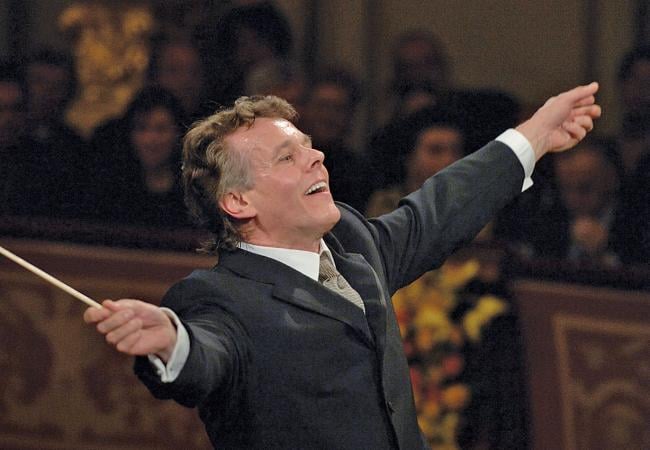
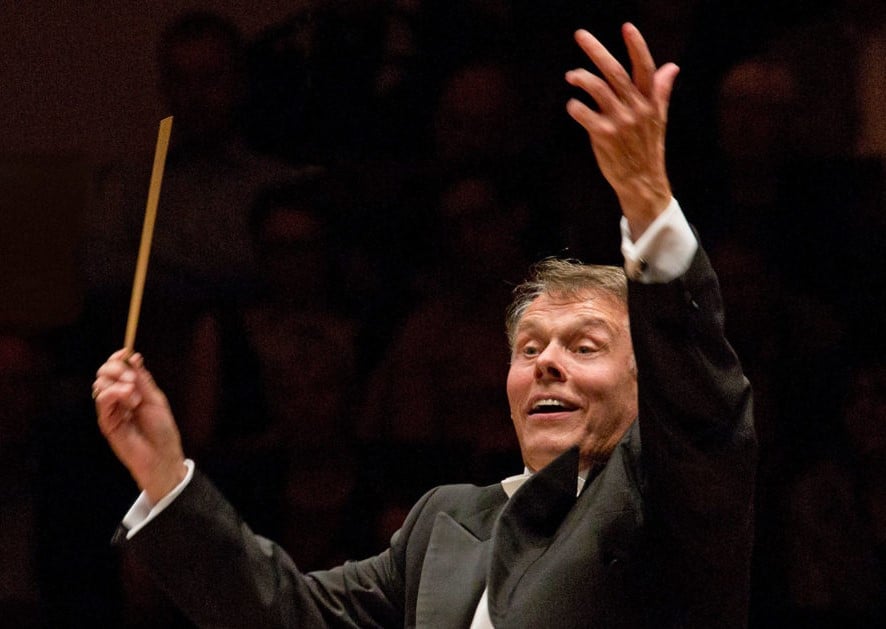
Conductor Mariss Jansons died on Saturday at the age of 76. I hope you’ll join me in celebration of his artistry and that of today’s birthday celebrants.
Ars longa, vita brevis is our motto, from 4 to 7 p.m. EST, on WWFM – The Classical Network and wwfm.org.
Jansons was born in hiding during the Nazi occupation of Latvia. His mother, the soprano Iraida Jansone, was smuggled out of Riga. His grandfather and uncle were not so lucky. Both were murdered by the Nazis.
It was Mariss’ father, Arvids Jansons, who introduced him to the violin. Arvids was selected by Yevgeny Mravinsky to serve as assistant conductor of the Leningrad Philharmonic. Mariss studied in Leningrad, Vienna and Salzburg (with Herbert von Karajan). Karajan wanted the young man as his assistant in Berlin, but the appointment was nixed by the Soviet authorities.
Instead, he became associate conductor of the Leningrad Philharmonic. In 1979, he was installed as music director of the Oslo Philharmonic. He became a familiar presence in London, as a guest conductor with the London Symphony Orchestra and principal guest conductor of the London Philharmonic.
In the United States, he served as music director of the Pittsburgh Symphony Orchestra, from 1997 to 2004. In 2003, he became chief conductor of the Bavarian Radio Symphony Orchestra. He held the post in Bavaria until his death.
He also served as chief conductor of the Royal Concertgebouw Orchestra, from 2004 to 2015. Twice, he conducted the internationally popular Vienna Philharmonic New Year’s Concert.
Jansons cheated death a second time when he survived a serious heart attack in 1996, while conducting a concert in Oslo. Prompt medical attention saved his life. It was the heart that would get him in the end.
Jansons died yesterday at his home in St. Petersburg. He leaves behind first-rate recordings of Tchaikovsky, Shostakovich and Sibelius, among others. He was 76 years-old. Though he struggled against ill-health, especially for the past year or so, he lived a full life in music, which is what he loved.
Jansons conducts the Symphony No. 2 by Johan Svendsen:
This Sunday night on “The Lost Chord,” it’s one more trip to the well, with well-played works of American composers rendered by Eugene Ormandy and the Philadelphia Orchestra.
Slake your thirst with selections from “Five Songs of William Blake” by Virgil Thomson, the Symphony No. 7 by Roy Harris, and “Four Squares of Philadelphia” by Louis Gesensway.
Gesensway was born in Latvia in 1906. A violin prodigy, he was one of the founders of the Toronto Symphony Orchestra. He came to Philadelphia at the age of 19, where he played under both Stokowski and Ormandy.
In his mid-20s, he took a leave of absence to study composition with Zoltán Kodály. “Four Squares of Philadelphia” was described by the composer as a “symphonic poem for large orchestra, narrator and street criers.”
The piece opens with a recitation of William Penn’s prayer, then continues with musical evocations of Washington Square (in early morning, during Colonial times, with street criers hawking their wares), Rittenhouse Square (on a bright and cheerful afternoon), Logan Square (with its fountains at dusk), and Franklin Square (at night, evocative of noisy bridge traffic, a side excursion into Chinatown, and musical interjections from the honky tonk joints located around the square in the 1950s).
Be there or be square. Eugene Ormandy serves up the last of the Thanksgiving leftovers. I hope you’ll join me for “All-American Ormandy III,” this Sunday night at 10:00 EST, on WWFM – The Classical Network and wwfm.org.
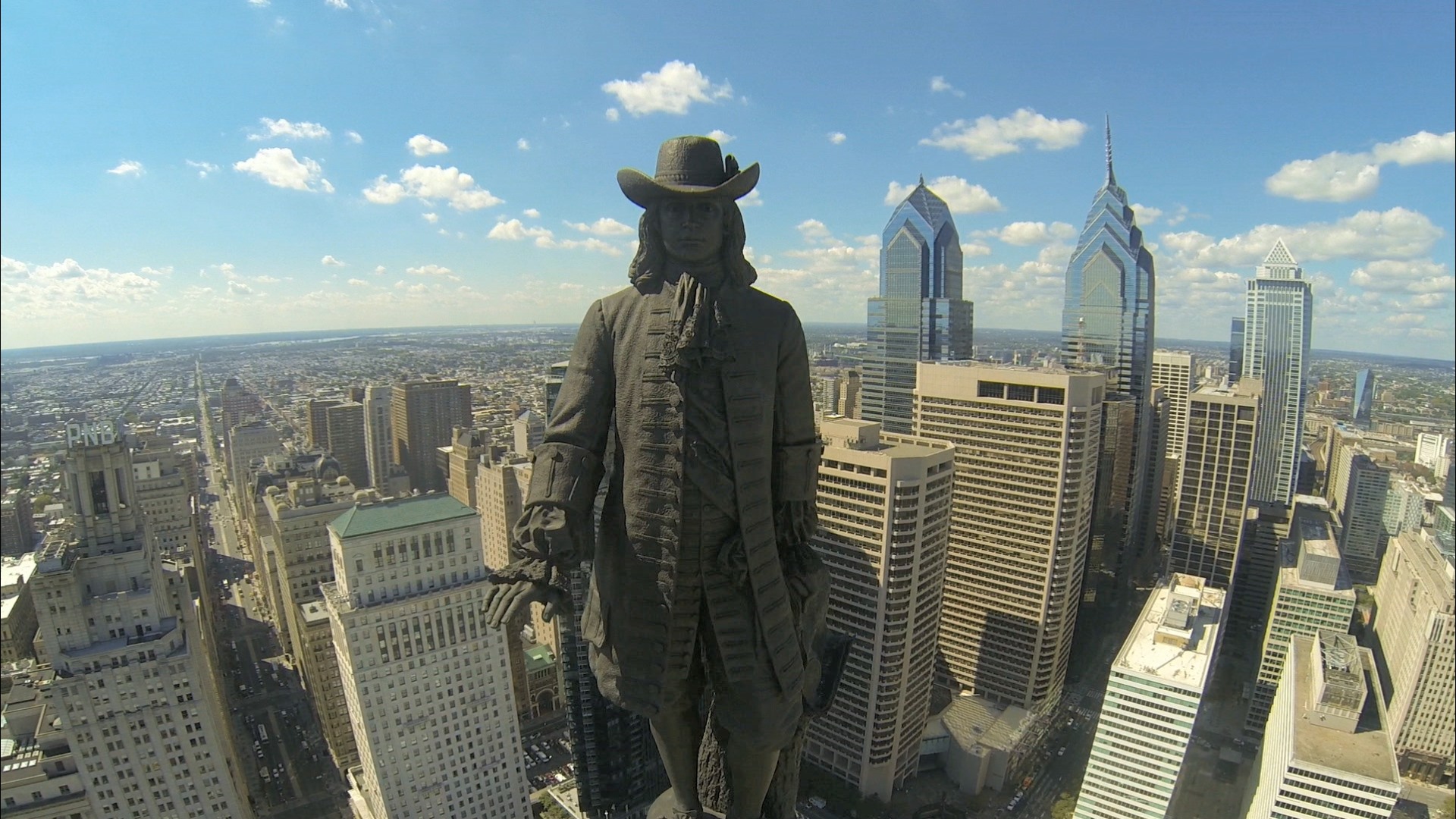
PHOTO: Statue of Penn, high atop the city he founded
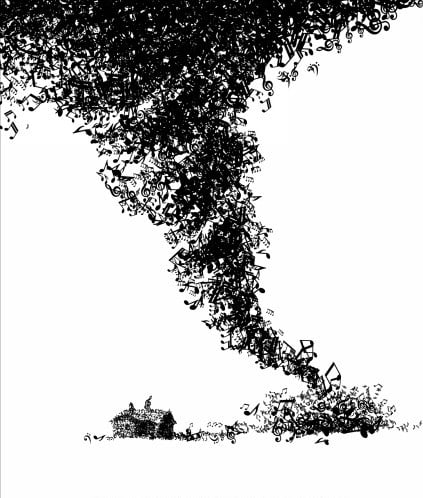
Force of nature that I am, my reportage is now churning up Tornado Alley. My story on Alicia Brozovich and Westminster Community Chorus, written for the November 20 edition of the Princeton weekly U.S. 1 Newspaper – PrincetonInfo, has been picked up by Times-Sentinel Newspapers in Kansas.
Brozovich, who hails from Conway Springs, Kansas, about 30 miles south of Wichita, is a graduate of Westminster Choir College and now on the faculty of Westminster Conservatory. Her debut as principal conductor of the Westminster Community Chorus may have come and gone, but the concert, in celebration of the 50th anniversary of the moon landing, is now archived on YouTube and the ensemble’s Facebook page, complete with associated projections and NASA media.
The choir will head to Carnegie Hall in May, to sing for choral music legend John Rutter.
In Easton, Pennsylvania, the phrase “Beat P’burg!” can have more than one meaning.
P’burg is short for Phillipsburg (New Jersey), home of the Stateliners, longtime rivals of the Easton Red Rovers. The two teams face off on the campus of Lafayette College in an annual holiday bloodsport, the nation’s oldest high school interstate Thanksgiving football game.
How intense is the rivalry? During the NFL strike of 1988, the game was selected for national broadcast, the first high school Thanksgiving contest ever to receive that honor. At a point, I could swear, one of the announcers forgot himself and was caught muttering, “This is some good sh*t.”
The broadcast has been posted on YouTube (follow the link below). Take a gander at the traditional Easton bonfire (around the 2-minute mark), which is set each year on the eve of the game. This fire can be seen for miles. Unfortunately, the way it is shot, it is difficult to deduce the scale. At the time of its lighting, the wood is piled as high as a house, frequently with a car or an outhouse balanced on top. Don’t ask me where they’re still able to find outhouses. This is Easton.
Do not confuse the bonfire with the garden variety campfire glimpsed at the 1-minute mark, which is only there to warm Easton students who sleep out the night before, in order to guard the wood from attempts by P’Burg to light it off early. One year, there was an actual assault with flaming arrows. In the weeks leading up to the game, mice and even pigs have been released in the halls of Easton Area High School with little maroon P’s painted on their backs.
I won’t tell you who won the 1988 contest, a classic Easton-P’Burg nail-biter, in case you want to watch it.
The coach was my high school history teacher, Bob Shriver. It’s sobering to think that all these kids are now around 50 years-old. Shriver is still around. I met him by chance at an Iron Pigs game this summer. You can hear the voice on the loudspeaker at the end of this video begging fans to keep off the field.
The game was televised a second time, for its 100th anniversary, on ESPN2 in 2006. On that occasion, Easton trounced its longstanding opponent, 21-7. Season championships are a big deal, of course, but the Thanksgiving game is a matter of pride, and both teams play with an impressive amount of heart. In all, Easton has taken the laurels 61 times, and Phillipsburg has been triumphant 42. There have been five ties. Unusually, one of these, from 1993, became the subject of a 2009 rematch, with players returning to take part in the Gatorade “REPLAY” series. On that occasion, Phillipsburg was victorious.
The rivalry dates back to 1905. Tickets are a hot commodity, and every year the stadium sells out in advance to 20,000 hyper-passionate fans, many of whom begin tailgating in the early daylight hours. In the good old days, it was possible take a stroll over to Lafayette Tavern to partake of some half-time refreshment. In recent years, once you leave the premises, you’re not allowed back in. Savvy fans know not to enter until they are fully fortified. Though bags are searched at the gates, it’s not exactly Checkpoint Charlie. I can’t imagine that there has ever been a year that liquor has not been smuggled in. Following the game, traffic, vandalism and vomit clog the trail down College Hill and back across the bridge to New Jersey. At some point, Lafayette College started boxing up its monuments.
The Easton-Phillipsburg Turkey Day game is first on this list of greatest high school football rivalries published in yesterday’s USA Today.
For the vanquished, Thanksgiving dinner loses all its savor. Needless to say, passions run high, and yesterday’s contest ended in a good old-fashioned donnybrook.
Still, I have to say, it is pretty thin brew next to the games of my youth, when fans would swarm Fisher Field to topple the goalposts. This, of course, would devolve into mini skirmishes that sent blood-spattered fans home to Thanksgiving dinner with loose-toothed smiles on their faces. As a native Eastonian, I know this, perhaps, better than I should.

One response