• Black Friday Escape Classical Music for the Wild

    Black Friday Escape Classical Music for the Wild

    by 

    in
    5 responses

    This week on “Picture Perfect,” for Black Friday, we flee “civilization” for the relative safety of the wilderness.

    We’ll hear music from “Born Free” by John Barry, “Hatari!” by Henry Mancini, National Geographic’s “Grizzly!” by Jerome Moross, and “The Jungle Book,” by Miklós Rózsa.

    I’d rather face Shere Khan than mall traffic. Join me for “The Call of the Wild,” this Friday evening at 6:00 EST, on WWFM – The Classical Network and wwfm.org.


  • Table Grace Thanksgiving Prayer

    Table Grace Thanksgiving Prayer

    by 

    in
    7 responses

    “Table Grace” by Matthew Brown. Ignore the visuals and just listen.

    Happy Thanksgiving, everyone.


  • Thanksgiving Classical Music: Dvořák & More

    Thanksgiving Classical Music: Dvořák & More

    by 

    in
    8 responses

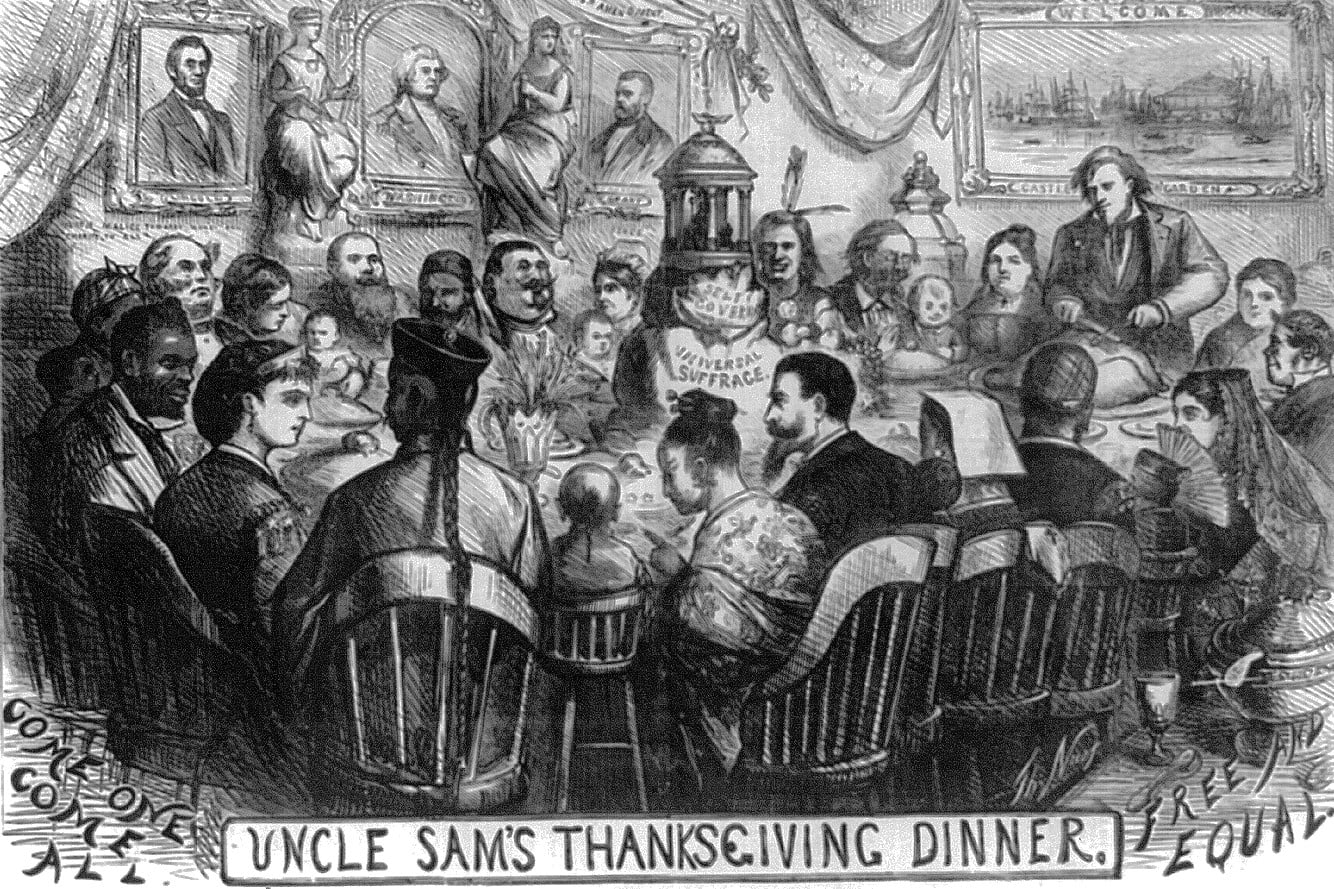
    Over the river and through the wood, to grandmother’s house we go…

    Who are we kidding? We’re not going anywhere.

    While you’re whiling away the hours in Thanksgiving traffic, I hope you’ll join me on The Classical Network, on this busiest travel day of the year, as I crown a late afternoon of American music with an hour calculated to put you in a thankful frame of mind.

    Sure, in the amount of time it takes you to get where you’re going, Antonin Dvořák very likely was able to cross the Atlantic, to assume the directorship of the newly-minted National Conservatory of Music in New York. Some of the composer’s most beloved works had their genesis in his stay in the United States – the “New World” Symphony and the Cello Concerto in B minor, among them.

    Of his chamber music, I imagine none of it is more frequently encountered than his “American” String Quartet in F major, Op. 96. Written during the summer of 1893, while the composer was on holiday in the Czech community of Spillville, Iowa, the work is beautiful and ingratiating to an extraordinary degree. What’s puzzling is why the composer’s equally beautiful and ingratiating String Quintet in E-flat major, Op. 97, composed in Spillville immediately after – and also sometimes identified as the “American” – has not achieved the same degree of popularity.

    We’ll get to enjoy it this evening, in a performance featuring a young Joshua Bell, who joins violinist Felix Galimir, violists Ulrich Eichenauer and Judith Busbridge, and cellist Wendy Sutter, at the 1989 Marlboro Music Festival.

    Dvořák’s underrated quintet will be flanked by two works by American composers.

    We’ll begin with Vincent Persichetti, who was born in Philadelphia in 1915. (He died there in 1987.) Although Persichetti seems to have had more of a lasting influence as a teacher – having molded legions of budding composers through his work at Combs College of Music, the Philadelphia Conservatory, and the Juilliard School – his own compositions are invariably well-crafted and certainly well worth listening to.

    Persichetti composed 15 serenades for a variety of instrumental combinations. We’ll hear the Serenade No. 10, from 1961. It was performed at Marlboro, by flutist Julia Bogorad and harpist Rita Tursi, in 1976.

    The hour will conclude with an 8-minute Woodwind Quintet by the dread Elliot Carter. Carter is the kind of composer who, for the six decades or so that comprised his artistic maturity, had a tendency to get lost in his own head. (He lived to 103 and wrote right up to the very end.) Not to worry: in 1948, he still had one foot in Audience Land.

    We’ll hear Carter’s quintet performed in 2006 by flutist Valérie Tessa Chermiset, oboist Winnie Cheng-Wen Lai, clarinetist Charles Neidich, bassoonist Martin Garcia, and hornist Wei-Ping Chou.

    Classic Ross Amico will be your co-pilot, on the next “Music from Marlboro.” Misery loves company, this Wednesday evening at 6:00 EST, on WWFM – The Classical Network and wwfm.org.

    Happy Thanksgiving, and safe travels!

    Marlboro School of Music and Festival: Official Page


  • Thanksgiving Classical Music WWFM

    Thanksgiving Classical Music WWFM

    by 

    in
    5 responses

    It is my hope that you’re just about off the roads by the time I’m on the air this afternoon. But in the event that you are stuck in traffic, there’s no reason you should endure it in silence. Drown out your invective, or that of your loved ones, with three hours of musical reminders of why we should all give thanks.

    If you’re lucky enough already to be home, perhaps you’re trying to get a leg up on tomorrow’s meal – or a drumstick, as the case may be. I’ve got plenty of music for you, too, to set the mood, while you’re in the process of setting the table. If the music makes your preparations that much more pleasurable, you can always send me a piece of pie.

    Either way, I am thankful to have you in the audience. There is no radio without somebody there to appreciate it. If you’ve supported The Classical Network recently with a financial contribution, thank you. If something I’ve played has touched you or caught your interest, thank you for that, as well. It’s important to me that these composers and these recordings endure.

    At 6:00, it’s another “Music from Marlboro.” I’ll supply a little cranberry sauce, with Antonin Dvořák’s “American” String Quintet (not to be confused with his more famous “American” QUARtet), along with some potatoes-and-gravy Vincent Persichetti and Elliot Carter.

    I hope you’ll join me for a late afternoon/early evening full of harvest, hymns and pilgrims, from 4 to 7 p.m. EST. It’s my way of wishing you a happy Thanksgiving, on WWFM – The Classical Network and wwfm.org.


  • Latin America Loses Composers Orrego-Salas Iturriaga

    Latin America Loses Composers Orrego-Salas Iturriaga

    by 

    in
    5 responses

    Latin America has lost two musical Methuselahs.

    The Chilean composer Juan Orrego-Salas died on Sunday at the age of 100. Orrego-Salas, born in Santiago in 1919, was founder of the Center for Latin American music at the University of Indiana. A student of Randall Thompson and Aaron Copland, he composed over 125 works – including six symphonies and two operas – and touched the lives of countless students. Orrego-Salas made his home in the United States since the 1950s.

    On Saturday, the Peruvian composer Enrique Iturriaga died at the age of 101. Iturriaga studied in Paris with Arthur Honegger, then returned to Lima to teach at the National Conservatory of Peru. Like so many Latin American composers of his generation, he beat a path through the thickets of 20th century modernism, employing as a kind of compass the folk music of his native land. Iturriaga taught at the National Conservatory for over 50 years, serving twice as its general director.

    Vaya con Dios, caballeros.


    Orrego-Salas’ Symphony No. 2 “To the Memory of a Wanderer” (1954)

    “Serenata Concertante” (1954)

    Interview with Orrego-Salas, including some great photos:
    https://nmbx.newmusicusa.org/juan-orrego-salas/

    Iturriaga’s “Pregón y Danza” (1952)

    “Las Cumbres” (1953)

    Documentary about Iturriaga:


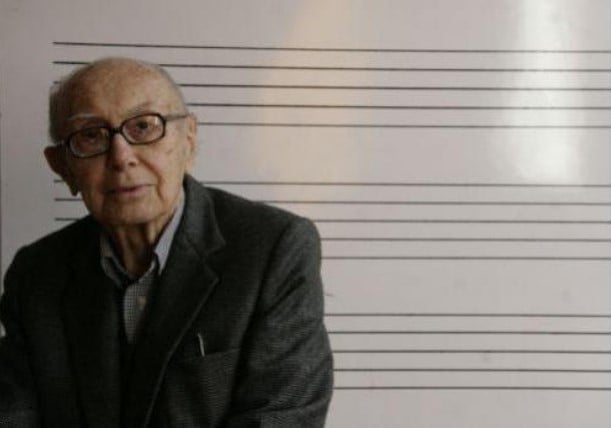
    PHOTOS: Iturriaga (top) and Orrego-Salas


Tag Cloud

Aaron Copland (93) Beethoven (95) Composer (114) Film Music (145) Film Score (143) Film Scores (255) Halloween (94) John Williams (195) KWAX (229) Leonard Bernstein (104) Marlboro Music Festival (125) Movie Music (160) Mozart (91) Opera (213) Philadelphia Orchestra (89) Picture Perfect (174) Princeton Symphony Orchestra (109) Radio (88) Ross Amico (244) Roy's Tie-Dye Sci-Fi Corner (290) The Classical Network (101) The Lost Chord (269) Vaughan Williams (105) WPRB (397) WWFM (881)

DON’T MISS A BEAT

Receive a weekly digest every Sunday at noon by signing up here


RECENT POSTS