31 DAYS OF HALLOWEEN (DAY 24)
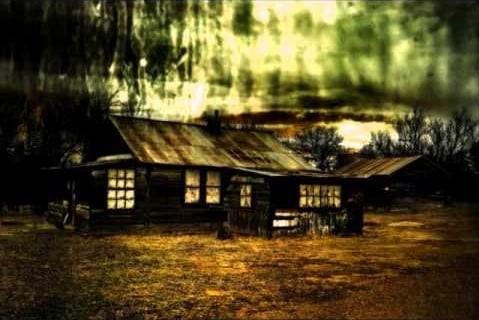
For the composer’s 90th birthday, George Crumb’s “A Haunted Landscape.”
by
31 DAYS OF HALLOWEEN (DAY 24)
For the composer’s 90th birthday, George Crumb’s “A Haunted Landscape.”

by
Halloween is only eight days away. On this week’s “Music from Marlboro” we’ll get into the spirit with some ghostly utterances by Beethoven and Henri Dutilleux.
Beethoven had already been dead for fifteen years at the time his star pupil, Carl Czerny, remarked that the slow movement of one of the piano trios reminded him of Banquo’s ghost. It turns out, Czerny may not have been all that far off the mark.
In 1808, while Beethoven was at work on his Piano Trio in D major, Op. 70, No.1, he was actually contemplating writing an opera on the subject of Macbeth. The words “Macbett” and “Ende” were scrawled near sketches for the Largo in one of his notebooks. Some scholars speculate that the composer may have been working out ideas for a projected scene with the three witches.
The mood is certainly ominous, heightened by eerie and mournful passages, sudden pauses and outbursts, and a kind of ghostly tremolo. Beethoven would abandon the opera, when his librettist, Heinrich Joseph von Collin (to whom he had dedicated the “Coriolan Overture”), begged off the project, thinking it too dark.
Allegedly, the “Ghost Trio” contains the slowest of all slow movements in Beethoven’s output. By some standards, it might also be said to be the most impressionistic. All the more appropriate, then, that we hear it coupled with Dutilleux’s “Ainsi la nuit” (“Thus the Night”).
Dutilleux’s seven-movement string quartet, meticulously crafted between 1973 and 1976, has often been described as Impressionist. However, subjectively speaking, it must be Impressionism by way of Guillermo del Toro. Let’s face it, folks, masterpiece or no, this “Night” can be a little creepy.
Dutilleux claimed he wrote the work after coming off intensive studies of the scores of Bartók, Webern, and yes, Beethoven. I think he may have been hitting the cheese plate a little too close to bed time.
We’ll hear a performance from the 2001 Marlboro Music Festival, with violinists Joseph Lin and Harumi Rhodes, violist Richard O’Neill, and cellist Marcy Rosen.
Beethoven’s “Ghost Trio” was performed in 2015, by pianist Dénes Várjon, violinist Michelle Ross, and cellist Brook Speltz, on tour in Washington, DC.
The first of this season’s Marlboro tours is already underway. Remaining performances will take place tonight, at the Perleman Theater in the Kimmel Center for the Performing Arts in Philadelphia; tomorrow, at the Freer Gallery’s Meyer Auditorium in D.C.; and Sunday, at Longy School of Music in Boston. On the program are works by Mozart, Beethoven and Brett Dean. For more information, visit marlboromusic.org.
Then join me for an hour of weird music and uncanny performances on the next “Music from Marlboro,” this Wednesday evening at 6:00 EDT, on WWFM – The Classical Network and wwfm.org.
Marlboro School of Music and Festival: Official Page
by
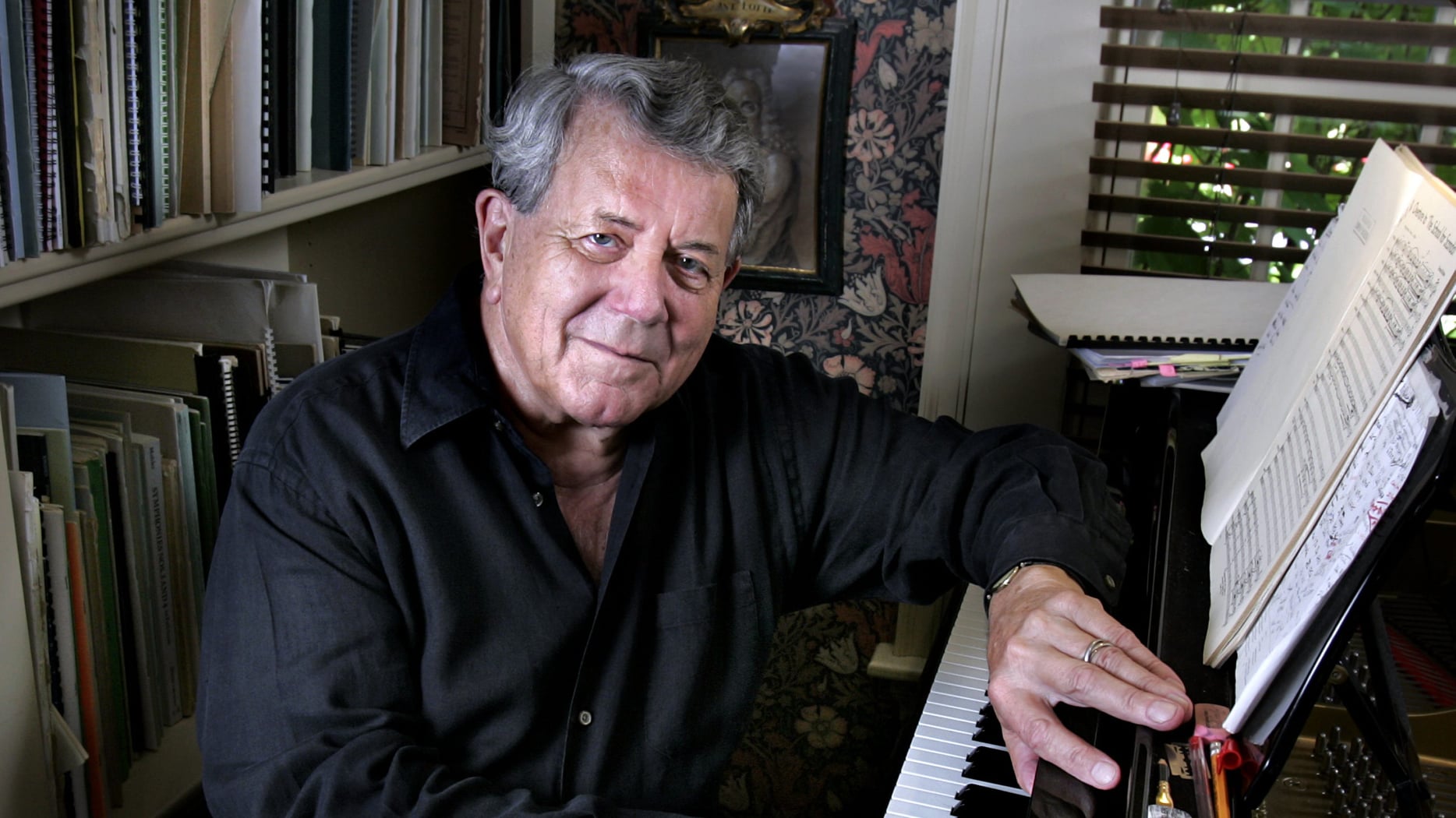
Coming up, between 4 and 6 p.m., we remember conductor Raymond Leppard (top), who died yesterday at the age of 92, and celebrate composer Ned Rorem, who is 96 years-old today.
At 6:00, it’s “haunting” music Beethoven and Henri Dutilleux (including Beethoven’s “Ghost” Trio), on “Music from Marlboro.”
Plenty to raise your spirits, from 4 to 7 p.m. EDT, on WWFM – The Classical Network.

by
31 DAYS OF HALLOWEEN (DAY 23)
For those of you in a hurry: at 23 seconds, here’s Charles Ives’ “Slugging a Vampire.”
If you have a bit more time (and fortitude), here it is in performance, coupled with Tristan Murail’s “Vampyr!” for electric guitar.
Jonathan Hoffman, “Down for the Count”
by
Charlatan. Visionary. Sinner. Saint. Showman. Superstar.
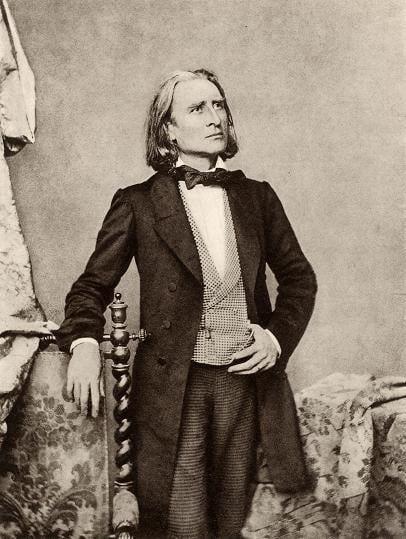
Franz Liszt’s prowess at the keyboard is still spoken of in tones of awe. This inventor of the modern piano recital lent spectacle and showmanship to Orphean musicality and transcendental technique. He tore through pianos as if they were made out of paper and reduced the ladies of Europe to skirmishes over his cigar butts or the calculated neglect of a glove.
He loved the attention. He loved the applause. He loved the women.
Then all at once he stopped. Liszt retired from the concert stage at the age of 35, returning thereafter only for charitable causes – for the relief of victims of fire and flood, in support of political refugees, and to raise money for a Beethoven monument in Bonn.
He may have been a man who savored all the privileges of his celebrity, but he was also an intellectual and an artist of the spirit. He was devoutly religious for his entire life – even taking minor orders and living in a cell in Rome for a few years at middle age – and he was unfailingly generous to others. He never took payment from any of his pupils, and selflessly promoted the work of Grieg, Smetana, Debussy, Saint-Saëns, Fauré, Borodin and many more.
Throughout his career, he was lambasted by critics for pandering to the mob. He was ridiculed as a charlatan and a hypocrite. He was shunned for his long-term relationships with two women who fled troubled marriages, and intrigued against by jealous rivals at the Weimar court for championing the works of Berlioz and Wagner.
He helped the latter, a political fugitive for his role in the 1849 Dresden uprising, to flee the country, and even endorsed Wagner’s marriage to Liszt’s (already married) daughter. Wagner’s “Tristan chord” would send shockwaves throughout Europe, changing music forever, but in actuality it was only one of the many innovations he borrowed from his father-in-law. Wagner may have been the greater composer, but Liszt was the idea man. He was the soil that allowed Wagner’s genius to flower.
Liszt was one of the most original musical thinkers of the 19th century. His influence rippled down the generations to color the thinking also of Ravel, Scriabin, and Schoenberg. “My sole ambition as composer,” he once pronounced, “is to hurl my lance into the infinite space of the future.”
The future is now, as we celebrate this wildly influential, yet still sorely underrated composer on his birthday with an afternoon of his music, including the epic and seasonally appropriate “A Faust Symphony.”
First, on today’s Noontime Concert, Mimi Stillman and Charles Abramovic will enchant in a program presented as part of Penn State Flute Day (January 13, 2019). They’ll share works by Philippe Gaubert, Daniel Dorff, Heidi Jacob (a world premiere), Francis Poulenc, Antonin Dvorak, and Vittorio Monti. Monti’s “Czardas” will act as a bridge to an afternoon of music by one of Hungary’s greatest masters.
We’ll provide an assist for Liszt, prefaced by a recital by stylish Stillman. Join me for music both notable and noble, from 12 to 4 p.m. EDT, on WWFM – The Classical Network and wwfm.org.
Learn more about Stillman and Abramovic’s upcoming concert of Bach masterworks, with the Dolce Suono Ensemble, at Philadelphia’s Old Pine Street Presbyterian Church, this Sunday at 3 p.m.:
Aaron Copland (93) Beethoven (95) Composer (114) Film Music (145) Film Score (143) Film Scores (255) Halloween (94) John Williams (195) KWAX (229) Leonard Bernstein (104) Marlboro Music Festival (125) Movie Music (160) Mozart (91) Opera (213) Philadelphia Orchestra (89) Picture Perfect (174) Princeton Symphony Orchestra (109) Radio (88) Ross Amico (244) Roy's Tie-Dye Sci-Fi Corner (290) The Classical Network (101) The Lost Chord (269) Vaughan Williams (105) WPRB (397) WWFM (881)
5 responses