For Geirr Tveitt’s birthday, a literal and figurative nightmare:
Tveitt was born in Bergen, Norway, in 1908. His family originally came from the Hardanger region. Each summer, they returned to Kvam to do farm work.
Tveitt would take up permanent residence in Hardanger in 1940. In the meantime, he studied music in Leipzig and Paris (with Honegger, Villa-Lobos, and Boulanger) and gained renown throughout Europe as a concert pianist, but it was his connection to the Norwegian countryside that would color most of his mature compositional output.
In 1970, a great tragedy stuck, when fire swept through Tveitt’s home, a farmhouse in Nordheimsund, destroying most of his unpublished manuscripts – 300 pieces, stored in wooden chests – fully 4/5ths of his compositional output. By extension, and not surprisingly, it also destroyed his ability to compose. He succumbed to alcoholism and died a broken man, with little hope of being remembered, in 1981.
Sadly, Tveitt did not live to see his reputation revived. In the intervening decades, musicologists have been able to piece together a number of these “lost” works, using as reference scattered orchestral parts and live concert recordings. Performances of these reconstructions have been widely distributed on the Naxos and BIS labels. The exceptional quality of what’s now available, and speculation over what’s been lost, is cause for a listener to share Tveitt’s heartbreak.
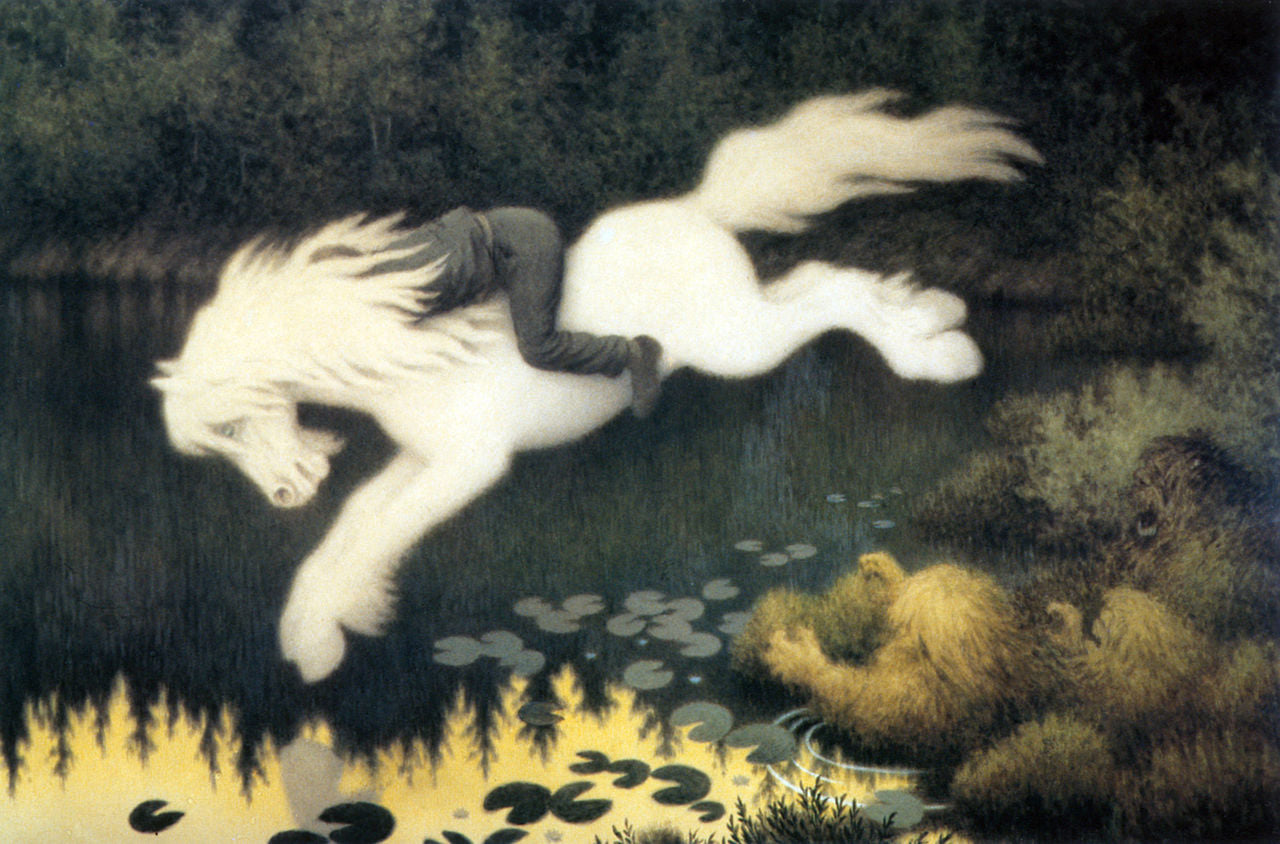
Tveitt’s symphonic poem “Nykken,” from 1956, is about a literal “night mare,” a white horse that lurks in a nocturnal wood near a silent pond. The beauty of the horse charms a hapless wanderer into attempting a ride. But the horse plunges into the depths of the pond, dragging its victim to a watery grave.
This week on “Picture Perfect,” with Halloween right around the corner, enjoy selections from John Williams’ music for “Harry Potter and the Sorcerer’s Stone,” “Harry Potter and the Chamber of Secrets,” and “Harry Potter and the Prisoner of Azkaban.”
La-La Land Records has compiled every last note as heard in the films, alternate takes, source music, trailer music and teaser ads, and a never-before-released concert suite – eight hours of music on seven CDs – remastered in a limited edition boxed set of 5000 copies.
John Williams is the last of the big screen wizards. Get ready for an hour of pure magic, this Friday evening at 6:00 EDT, on WWFM – The Classical Network and wwfm.org.
75 years ago today, three of the most promising composers of their generation were snuffed out in the gas chambers at Auschwitz. Pavel Haas, Hans Krása and Viktor Ullmann were all transported in cattle cars from Theresienstadt (Terezin), the Nazi propaganda camp, three days after their final concert on October 14. With them was the famed conductor Karel Ančerl, who had led the performances.
Immediately upon arrival, Krása, Ullmann and Ančerl were marked for death by Josef Mengele, while Haas was selected to join the forced laborers. Then all at once Haas began to cough. Ančerl was passed over and Haas was sent to be gassed in his place.
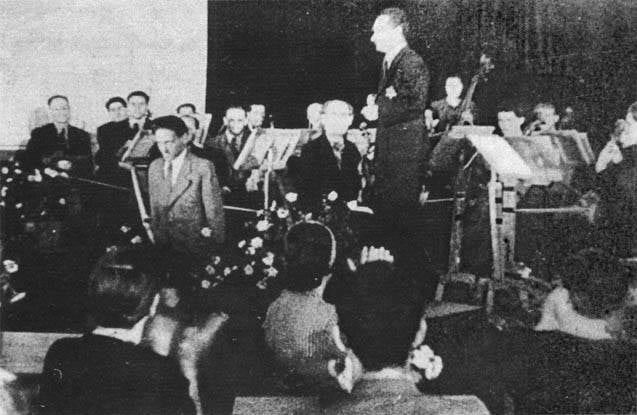
In the propaganda film “Theresienstadt,” Haas is shown taking a bow after a performance in Terezin of his “Study for String Orchestra,” a work he had written in the camp. Ančerl can be seen on the podium.
In the same film, children sing a selection from Krása’s opera “Brundibár.” When filming wrapped, having served their purpose, 18,000 prisoners, Haas and the children included, were deported to Auschwitz. By a large margin, most did not survive.
Haas had become despondent upon his arrival in Terezin. It was fellow composer Gideon Klein who urged him to continue to create. (Klein would die under unclear circumstances in 1945.) Haas wrote at least eight compositions during his internment. His “Study for String Orchestra,” rescued by Ančerl after the liberation of the camp, would become his best-known music. Haas was at work on a large-scale symphony at the time of his deportation. The surviving turso of the piece was orchestrated by Zdeněk Zouhar in 1994.
It was Ančerl himself who related the circumstances of Haas’ death to the composer’s brother after the war. Ančerl had lost his own family, his wife and a young son. He himself went on to a bright future. He became artistic director of the Czech Philharmonic in 1950, in which capacity he championed the great Czech composers and helped to foster a distinctly Czech sound in orchestral performance.
After the Warsaw Pact invasion, he left Czechoslovakia for Toronto, Canada, where he served as music director of the Toronto Symphony Orchestra until his death in 1973. None of it would have happened, if not for a quirk of fate.
Thirty years after his death, the music of Haas and his colleagues began to be performed with much more frequency. Much of it is now available in recordings. Listening to it, one can’t help but marvel at the will to create and to survive, even under the most horrific of circumstances, and lament at how history, musical and otherwise, might have been very different had those interned been allowed to live out their natural lives.
Here’s a clip of “Brundibár,” particularly affecting when we realize that few of the children survived:
Also, Haas’ “Study for String Orchestra”:
PHOTO: Pavel Haas, inadvertent savior of Karel Ančerl (also pictured), takes his final bow

3 responses