• Maurice Chevalier Birthday Throwback Thursday

    Maurice Chevalier Birthday Throwback Thursday

    by 

    in
    5 responses

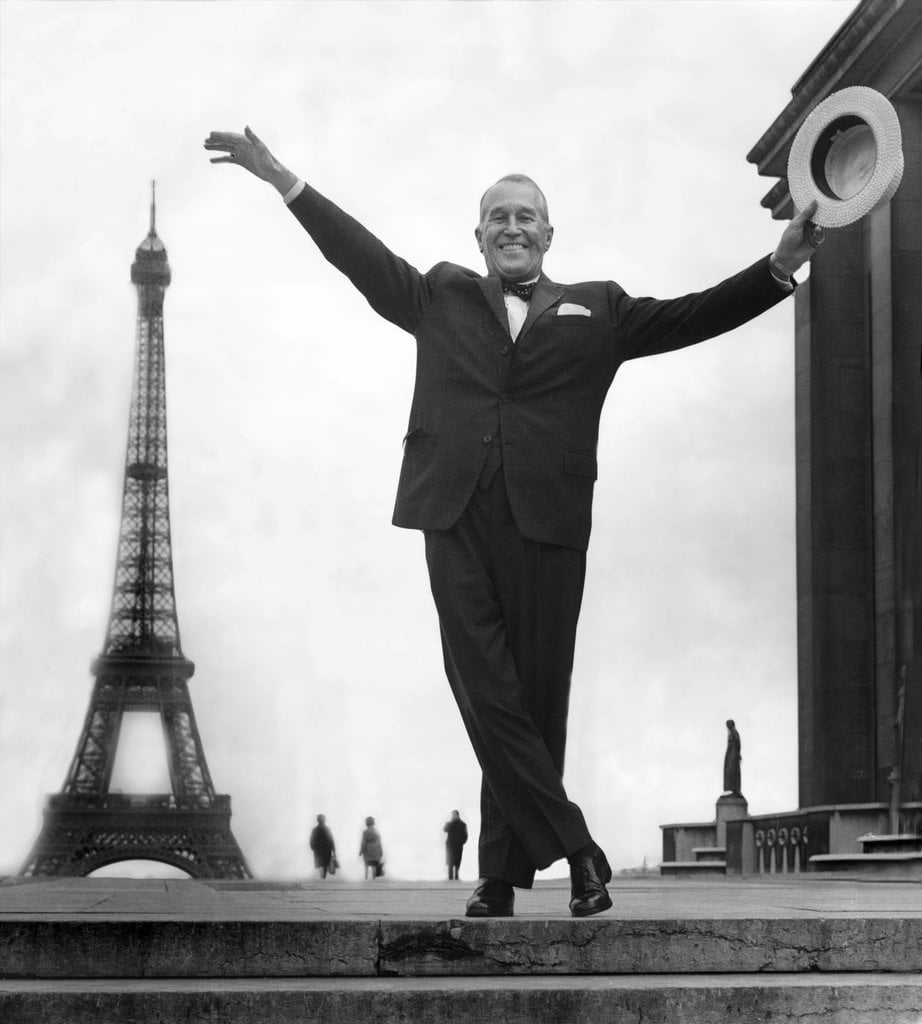
    THROWBACK THURSDAY: Happy birthday, Maurice Chevalier!

    Good luck getting these out of your head.

    “Mimi”

    “Isn’t it Romantic?”

    An abbreviated “Valentine”
    https://www.youtube.com/watch?v=JU2kMBZPGpw

    The stowaway Marx Brothers do their Chevalier impressions in an attempt to get off the boat in “Monkey Business” (1931). This routine had been used in at least two of their stage shows and one promotional film short.

    “Monkey Business” was banned in several countries, notably Ireland, over concerns that it fosters anarchic tendencies. God bless the Marxes. And thank you, Chevalier, for making even the worst days bright.


  • Clara Schumann: Genius, Wife, and Forgotten Composer

    Clara Schumann: Genius, Wife, and Forgotten Composer

    by 

    in
    8 responses

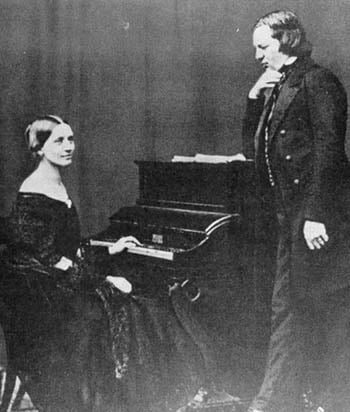
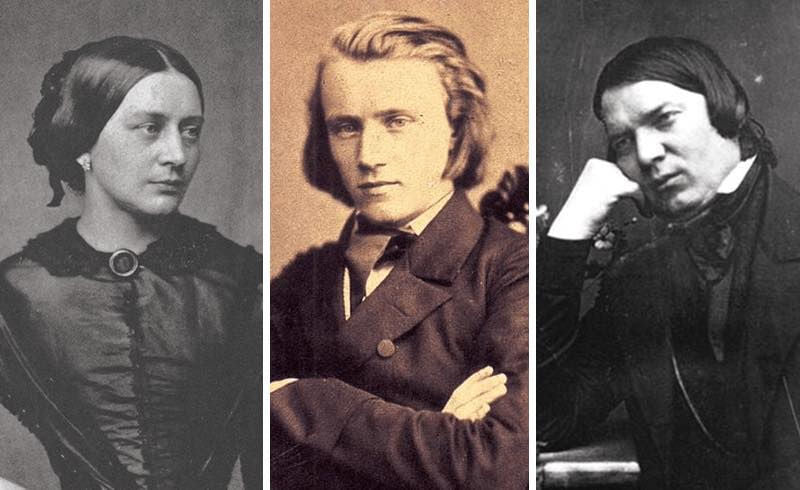
    Clara Schumann was a musician of impeccable taste. Her insights and opinions helped mold the artistic development of her husband and also to a great extent that of Johannes Brahms, who frequented the Schumann house from the age of 20 and became a life-long friend. She was also a pianist of genius. She performed publicly to great acclaim for over six decades. It was through concertizing that she supported her unstable husband and eight children. Later in life, she also became a revered teacher.

    Her acceptance as performer and pedagogue were highly unusual for a woman of her time. She was a child prodigy, the daughter of Friedrich Wieck, who also taught Robert Schumann. Under her father’s tutelage, she demonstrated a marked facility in composition. She was also a better pianist than Robert, who, according to some accounts, had managed to wreck one of his hands through the use of a finger-strengthening device (an assertion Clara denied.)

    Having enjoyed such a promising start, it’s heartbreaking, then, to read Clara’s comment, confided to her diary in 1839, at the age of 20, “I once believed that I possessed creative talent, but I have given up on this idea. A woman must not desire to compose – there never yet has been one able to do it. Should I expect to be the one?”

    It’s especially sad, since composing gave her such pleasure. “There is nothing that surpasses the joy of creation,” she wrote. “if only because through it one wins hours of self-forgetfulness, when one lives in a world of sound.”

    Fortunately for us, we have her Piano Trio in G minor, and on this week’s “Music from Marlboro,” we’ll have the pleasure of hearing it performed at the 2005 Marlboro Music Festival by pianist Ieva Jokubaviciute, violinist Julianne Lee, and cellist Judith Serkin.

    Clara would have been 26 at the time of her Trio’s composition. She passed the summer of 1846 on the isle of Norderney, where she accompanied her husband during his convalescence following an attack of neurasthenia. While there, compounding the Schumanns’ misfortunes, Clara suffered a miscarriage. The completion of her Trio must have seemed like an especially welcome escape. A year later, Robert composed his first piano trio, Op. 63, which bears some striking similarities to his wife’s creation.

    We’ll round out the hour with Robert Schumann’s “Andante and Variations,” from 1849. Though written soon after the back-to-back masterpieces of the Piano Quintet and Piano Quartet, both in the key of E flat major, Schumann was less pleased with his new work. Part of the problem was in its unusual instrumentation, which called for two pianos, two cellos, and horn. Early performances in the Schumann home were so loud, it may have contributed to the composer’s disgust with the piece.

    Schumann withdrew the work from his catalogue, later revising it for two pianos at the suggestion of Felix Mendelssohn. He also altered the structure of piece, which he ruthlessly cropped. It was Brahms and Clara Schumann who reappraised the value of his original thoughts and resurrected the work in the form he had initially intended, twelve years after the composer’s death, giving it its first public performance in 1868. It is in this version that the piece is now most often heard.

    We’ll hear it performed at the 1985 Marlboro Music Festival by husband-and-wife pianists Claude Frank and Lilian Kallir, cellists Melissa Meeli and Peter Stumpf, and hornist Julie Landsman.

    It’s an all-Schumann hour, in advance of the Clara Schumann bicentennial (which falls on Friday), on the next “Music from Marlboro,” this Wednesday evening at 6:00 EDT, on WWFM – The Classical Network and wwfm.org.

    Marlboro School of Music and Festival: Official Page

  • 9/11 Remembered A Personal Reflection

    9/11 Remembered A Personal Reflection

    by 

    in
    5 responses

    Around 9 a.m. A ringing telephone. Me, at work on my computer, somehow oblivious to the news. My friend on the line, informing me that a plane has crashed into the World Trade Center. I’m thinking a piper. I recall the plane that struck the Empire State Building in the 1940s. Terrible, but these things happen. Then she tells me one of the towers “fell over.” That propels me to the TV.

    September 11, 2001. Every year, I marvel at the passage of time. 18 years ago this morning, but still so vivid. I can’t even imagine what it was like to be there. I never really want to know.

    My parents were actually in the air at the time of the attacks, en route to China. They were traveling west, across Pennsylvania. At 10:03 a.m., United Airlines Flight 93 crashed near Shanksville, southeast of Pittsburgh. The phone lines were jammed. Nobody owned a cell phone. I knew my folks had to be okay, right? It was an uneasy wait until I learned that they had been grounded in Pittsburgh.

    Everyone has a 9/11 story. Some are more tragic than others. But the day touched us all and changed us as a people. It changed the world. Welcome to the 21st century.

    This afternoon on The Classical Network, I’ll offer a musical memorial, which will include Pulitzer Prize winner Kevin Puts, composer’s moving response to the attacks, as he processes expectancy, uncertainty and hope in his Symphony No. 2.

    We’ll also find solace in Philadelphia composer Robert Moran’s sublimely beautiful “Trinity Requiem,” commissioned by Music at Trinity Wall Street, the so-called “Ground Zero Church,” whose St. Paul Chapel was shielded from a falling beam by a sycamore tree.

    I’ve been celebrating the contributions of female composers this month to tie in with the Clara Schumann bicentennial on Friday. Today, we’ll hear Composer Alla Pavlova’s “The Old New York Nostalgia,” which features a movement titled “Lullaby for the Twins” – an allusion to the Twin Towers. The recording, by the way, will be conducted by Rossen Milanov, music director of the Princeton Symphony Orchestra.

    The horror and surreality of the attacks and their aftermath are perfectly reflected in Gloria Coates’ String Quartet No. 8, with its eerie approximations not only of plane engines but also a kind of emotional instability. I know it gives me a sinking feeling, and that’s pretty much how it was to experience 9/11.

    At 6:00 EDT, we’ll have more chamber music – by Clara Schumann and also her husband Robert – on the next “Music from Marlboro.” But from 4 to 6, we’ll remember 9/11. Music keeps us centered when faced with the unfathomable, on WWFM – The Classical Network and wwfm.org.


  • Brahms’ “A German Requiem” on The Classical Network

    Brahms’ “A German Requiem” on The Classical Network

    by 

    in
    4 responses

    Johannes Brahms had suffered a fair amount of loss at the time he embarked on his Requiem in 1865. His mother died in February of that year, and the death of his friend, Robert Schumann in 1856 also continued to resonate.

    On today’s Noontime Concert on The Classical Network, we’ll hear a performance of Brahms’ “Ein deutsches Requiem” by the New Jersey Master Chorale under the direction of William P. Gorton. Soprano Andrea Lauren Brown and baritone Timothy Renner will join organist Matt Smith and members of The Philadelphia Orchestra. The concert took place at Haddonfield United Methodist Church this past April.

    Brahms assembled the texts of the Requiem himself, eschewing the standardized Latin of the Roman Catholic Requiem Mass in favor of the vernacular German of the Luther Bible. He forgoes anything suggestive of terror, wrath, and hellfire, or even redemption through the sacrifice of Christ, to arrive at something more tender and humane. The modifications promote an atmosphere of solace and hope.

    Brahms may have titled his work “Ein deutsches Requiem” – “A German Requiem” – but there was nothing nationalistic intended by the designation. Rather he was suggesting something more direct and at the same time universal. In fact, he commented on one occasion that he would just as happily have called it “A Human Requiem.” The work is as much for the living, those who mourn, as it is for those who have passed.

    The second movement incorporates material composed as early as 1854, the year of Robert Schumann’s mental collapse and attempted suicide, when Brahms moved to Düsseldorf to be with Clara Schumann and her children. Brahms presented Clara with a four-hand piano version of the Requiem in 1866.

    Friday marks the 200th anniversary of Clara’s birth. We’ve been sampling some of her music during the course of my air shifts this month and celebrating the legacy of women composers in general. We’ll certainly continue in that vein this afternoon. Among today’s featured works will be the Piano Quintet No. 1 by Grazyna Bacewicz and the Violin Concerto of Margaret Brouwer.

    First, following close on the heels of the Requiem broadcast, we’ll enjoy a symphony dedicated to Brahms by his friend, Schumann student Albert Dietrich.

    I hope you’ll join me for “Ein deutsches Requiem” and more. In the end is our beginning, from 12 to 4 p.m. EDT, on WWFM – The Classical Network and wwfm.org.


    MÉNAGE À TRIPTYCH: Shoehorned between two Schumanns


  • Clara Schumann Bicentennial & Women Composers

    Clara Schumann Bicentennial & Women Composers

    by 

    in
    5 responses

    Friday marks the bicentennial of the birth of Clara Schumann. Though her achievements as a pianist and a teacher outstripped her success as a composer, she, it must be remembered, was the product of a time when women did not receive the same advantages, in terms of education, opportunity, and acceptance, as their male counterparts.

    Be that as it may, Schumann proved to be a dynamo, caring for a family of eight children and a mentally ill husband, while earning the respect of her peers as a musician of impeccable taste and one of the outstanding keyboard interpreters of her day.

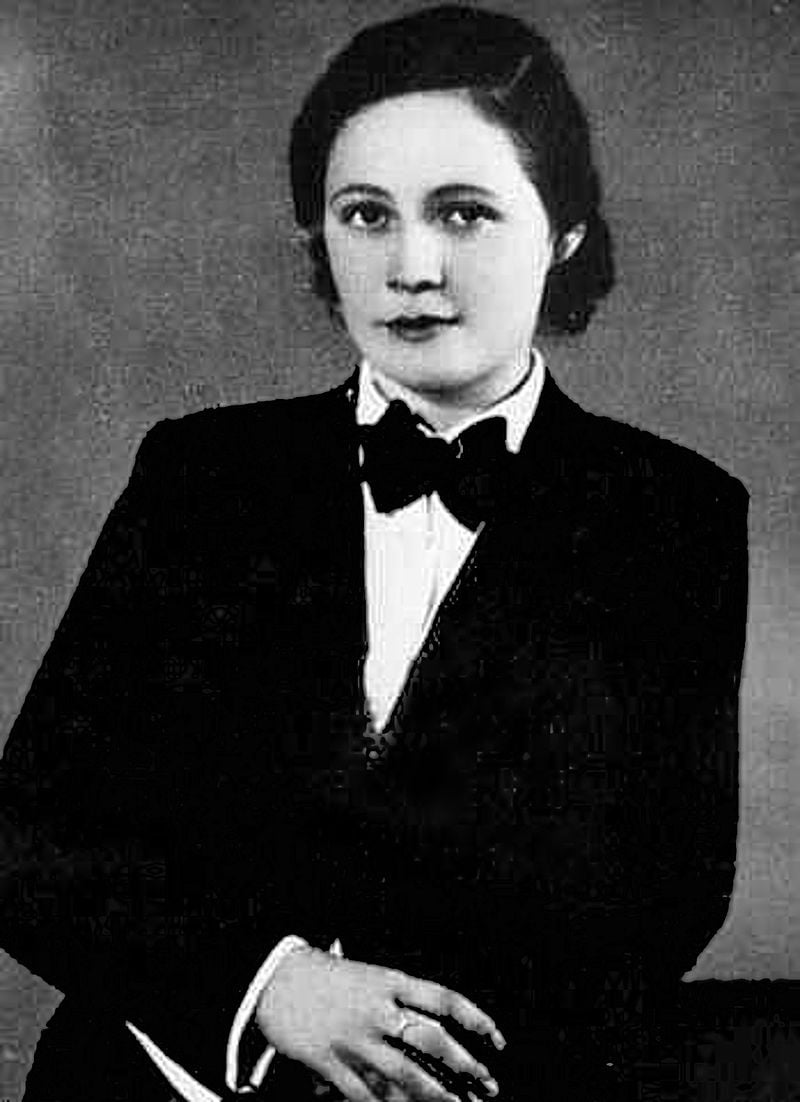
    To honor the contribution of women in music, I’ll be sharing recordings of works by female composers all month long, as part of my regularly scheduled air shifts. Tune in today to hear music by Vítězslava Kaprálová, Louise Talma, and Phyllis Tate.

    We’ll gain a little clarity for Clara, from 4 to 7 p.m. EDT, on WWFM – The Classical Network and wwfm.org.


    CLOCKWISE FROM LEFT: Vítězslava Kaprálová, Phyllis Tate and Louise Talma


Tag Cloud

Aaron Copland (93) Beethoven (95) Composer (114) Film Music (145) Film Score (143) Film Scores (255) Halloween (94) John Williams (195) KWAX (229) Leonard Bernstein (104) Marlboro Music Festival (125) Movie Music (160) Mozart (91) Opera (213) Philadelphia Orchestra (89) Picture Perfect (174) Princeton Symphony Orchestra (109) Radio (88) Ross Amico (244) Roy's Tie-Dye Sci-Fi Corner (290) The Classical Network (101) The Lost Chord (269) Vaughan Williams (105) WPRB (397) WWFM (881)

DON’T MISS A BEAT

Receive a weekly digest every Sunday at noon by signing up here


RECENT POSTS