• Napoleonic Wars on the Big Screen

    Napoleonic Wars on the Big Screen

    by 

    in
    4 responses

    There is a pithy quote you may have heard to the effect that England and America are two countries divided by a common language. The observation is sharp and spot-on, so naturally it has been attributed to two of the greatest wits of their day, George Bernard Shaw and Oscar Wilde. Yet these attributions are without verifiable foundation. (The closest Wilde ever came in print: “We really have everything in common with America nowadays except, of course, the language.”)

    Similarly, we all know what is meant by “Napoleon complex.” But did you know there is every possibility that Napoleon was not short? Like the commonality of language that divides the English and the Americans (and I know that Shaw and Wilde were Irish), it turns out that there may be some confusion over Napoleon’s actual height on account of two different systems of measurement that happened to use the same terms.

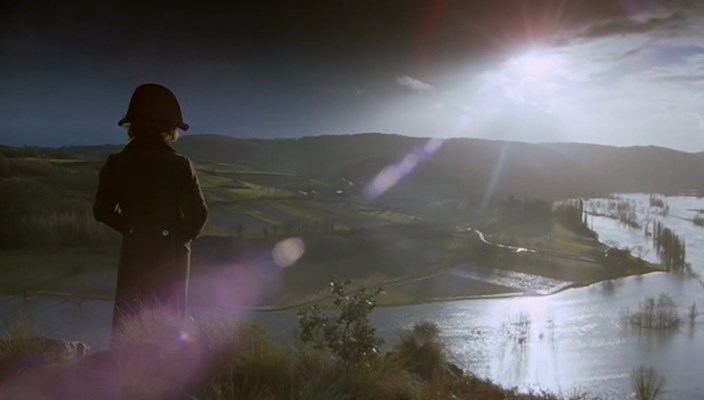
    Be that as it may, this week on “Picture Perfect,” with Bastille Day (July 14) right around the corner, we’ll surge to power on the allegedly diminutive shoulders of Napoleon Bonaparte. The focus will be on the Napoleonic Wars – which is to say, movies set, at least in part, between about 1803 and 1815.

    There is a lot of unlikely casting in these films. The first English language adaptation of Leo Tolstoy’s “War and Peace” (1956) stars Audrey Hepburn, Henry Fonda, and Mel Ferrer, with Herbert Lom as Napoleon. Lom is fine; but Henry Fonda? At least the music is by Nino Rota.

    Stanley Kramer’s “The Pride and the Passion” (1957) is loosely based on the novel “The Gun,” by C.S. Forester. Forester is best known for the nautical adventures of Horatio Hornblower – also set during the Napoleonic Wars.

    The film depicts the story of a British officer (Cary Grant) who is ordered to retrieve a large cannon from Spain. But before he can do so, he must lend assistance to the leader of the Spanish guerillas (Frank Sinatra!) in the transport of the weapon across 600 miles of treacherous ground to reclaim the city of Avila from the French. Further complications arise from their respective feelings for Sinatra’s mistress (Sophia Loren).

    The score is by Trenton-born George Antheil, self-proclaimed “bad boy of music.” Antheil achieved lasting notoriety as the composer of the raucous “Ballet Mécanique” in the 1920s. He would later embrace a more conservative language for his symphonies and for his music for the movies. Antheil composed over 30 film scores. “The Pride and the Passion” would be his last.

    Ridley Scott’s first feature, “The Duellists” (1977), is based on a story by Joseph Conrad. It relates the tale of an obsessive duellist (Harvey Keitel), who takes it as a personal affront when he is arrested by a fellow hussar (Keith Carradine) for crossing swords with the mayor’s nephew, whom he has fatally wounded. This sets the two men in a kind of combative pas de deux, a series of duels that spans the entire Napoleonic era. The sheer beauty of the film is matched by Howard Blake’s haunting score.

    Abel Gance’s “Napoleon” (1927) is widely regarded as one of the towering achievements in all of cinema. I’ve had the good fortune to see it on the big screen twice. However, it was with a new score by Carmine Coppola, the father of Francis Ford Coppola, who financed the film’s revival. The original score was by Arthur Honegger. Honegger was the famed French composer (of Swiss birth), who was one of the members of Les Six, a lose collective of artists that also included Francis Poulenc and Darius Milhaud.

    Gance’s epic was gargantuan at the time I saw it, in the 1980s – about four hours long. A more recent restoration places the film’s running time at 5 ½ hours. That’s still down from a 9 ½ hour version shown in 1927!

    The film is crowned by a celebrated triptych, for which the screen widens to accommodate the simultaneous projection of three reels – an extraordinary innovation for its time. “Napoleon” is full of such touches. Apparently, there had even been a sequence shot in 3-D, which was left on the cutting room floor. If you’re at all interested in the squandered potential of cinema, this is a film which must be seen in the theater.

    I hope you’ll join me for music from big movies set during the Napoleonic Wars. It will be a satisfying show by any measure, this Friday evening at 6:00 EDT, on WWFM – The Classical Network and wwfm.org.


    PHOTO: A brooding Harvey Keitel in the extraordinarily beautiful “The Duellists”

  • Gershwin’s Death & Lost Comedy Duo

    Gershwin’s Death & Lost Comedy Duo

    by 

    in
    8 responses

    It was on this date in 1937 that George Gershwin died after undergoing surgery to remove a brain tumor. The composer collapsed on July 9, when he tried to stand up, and slipped into a coma. Needless to say, it was an abrupt and shocking end to one of the most vital figures in American music.

    Here’s footage of Gerswhin playing “I Got Rhythm:”

    Gershwin speaks (a comparative rarity) and plays “Strike Up the Band.”

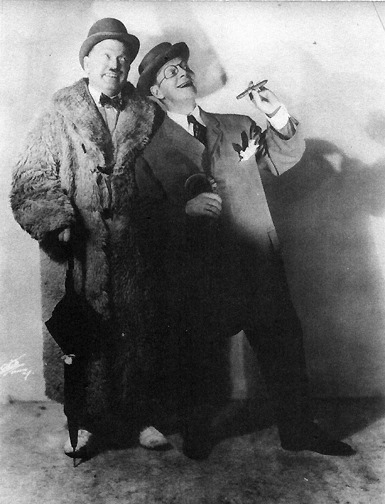
    The comedians are Clark and McCullough. Bobby Clark was the fast-talking wisecracker and Paul McCullough his laid-back sidekick. Like so many other comedy teams that graced stage and screen in the ‘20s and ‘30s, Clark and McCullough came up through vaudeville, and before that the circus(!).

    The cigar-smoking wise-acre was a real thing back then. Without the titles, I would have pegged the duo for Bert Wheeler and Robert Woolsey. More enduring examples of the stogie-wielding funnyman include George Burns, Milton Berle, and of course Groucho Marx. Groucho had his greasepaint mustache, and Clark had his painted-on glasses.

    Clark and McCullough made about three dozen film shorts and appeared in at least two features (one, “Two Flaming Youths,” with W.C. Fields). Their Broadway hit “The Ramblers” was filmed for Hollywood by Wheeler and Woolsey and released as “The Cuckoos.” Today, they are virtually forgotten.

    Clark and McCullough in “Odor in the Court:”


  • Aaron Rosand Violin Virtuoso Dies at 92

    Aaron Rosand Violin Virtuoso Dies at 92

    by 

    in
    5 responses

    “I never let setbacks put me down for long,” said Aaron Rosand. “I bounce back, and I fight back, and my inner confidence takes over. I know what I have to offer, and I am going to do it to the end of my days.”

    The inspirational violinist died on Tuesday.

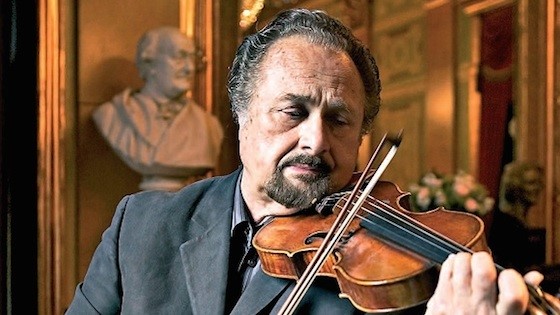
    Rosand studied at the Curtis Institute with Efrem Zimbalist and later taught there, from 1981 until his retirement only months ago. Rosand also taught at the Mannes School of Music.

    He recorded prolifically and had a fine career, but it could have been even better. Late in life, he went on record to confirm rumors that he had been undercut repeatedly by a jealous and powerful rival.

    At one point, Rosand had 75 concertos in his active repertoire. He claimed never to have forgotten a note. He singled out the Walton and Korngold concertos as two of his favorites. He was particularly proud of his recordings of Beethoven’s complete works for violin and his early recording of Sarasate showpieces.

    A great teacher and a great musician, he disliked exercise, but loved scotch, ice cream, and classic movies. Rosand was 92 years-old.


    Rosand plays Sarasate:

    https://www.youtube.com/watch?v=cyx4yFtyHU8

    Rosand the teacher:

    The secret of his success. Still sounding great at 80.


  • Mozart’s Gran Partita Marlboro Festival

    Mozart’s Gran Partita Marlboro Festival

    by 

    in
    4 responses

    “This was no composition by a performing monkey. This was a music I’d never heard. Filled with such longing, such unfulfillable longing. It seemed to me that I was hearing the voice of God.”

    In Peter Schaffer’s “Amadeus,” it is the work that threw Antonio Salieri into ecstasies. “On the page it looked nothing – just a pulse, bassoons and basset-horns, like a rusty squeezebox. Then suddenly, high above it, an oboe, a single note, hanging there unwavering, until a clarinet took it over and sweetened it into a phrase of such delight!”

    Salieri (the character) had difficulty reconciling such sublime music with its composer’s vulgar personality. By extension, it’s easy to imagine Salieri smiling ruefully at the incongruity of a work of such sustained beauty being identified by the equivalent of an 18th century typo – the “Gran Partita.”

    Wolfgang Amadeus Mozart’s seven-movement tour de force will be featured on this week’s “Music from Marlboro.” We’ll hear it performed by an all-star cast of twelve wind players – and a double bassist – under the direction of Marcel Moyse, from the 1975 Marlboro Music Festival.

    Moyse was Marlboro royalty. Alongside Rudolf Serkin and Adolf Busch, the legendary flutist cofounded the Marlboro Music School and Festival in 1951. A veteran of Paris’ Opéra Comique, he would instruct his wind players to emulate the phrasings of the human voice in song.

    This summer’s Marlboro Music Festival will take place from July 13 to August 11, as always on the campus of Marlboro College in Marlboro, Vermont. This weekend will include two concerts: on Saturday at 8 p.m., featuring music by Haydn, John Harbison, Schubert, and Beethoven; and on Sunday at 2:30 p.m., with music by Ernest Chausson, Mendelssohn, and again Beethoven. More information is available at marlboromusic.org.

    Learn more about Marcel Moyse, who worked with some of the greatest artists of his time, in this generous biographical sketch by Marlboro Senior Administrator Frank Salomon:

    From the Archives: Marcel Moyse

    Then tune in and have a gran’ ol’ time with Mozart’s “Gran Partita,” on “Music from Marlboro,” this Wednesday evening at 6:00 EDT, on WWFM – The Classical Network and wwfm.org.

    Marlboro School of Music and Festival: Official Page


  • Bora Yoon Premieres Orchestral Work at Princeton

    Bora Yoon Premieres Orchestral Work at Princeton

    by 

    in
    5 responses

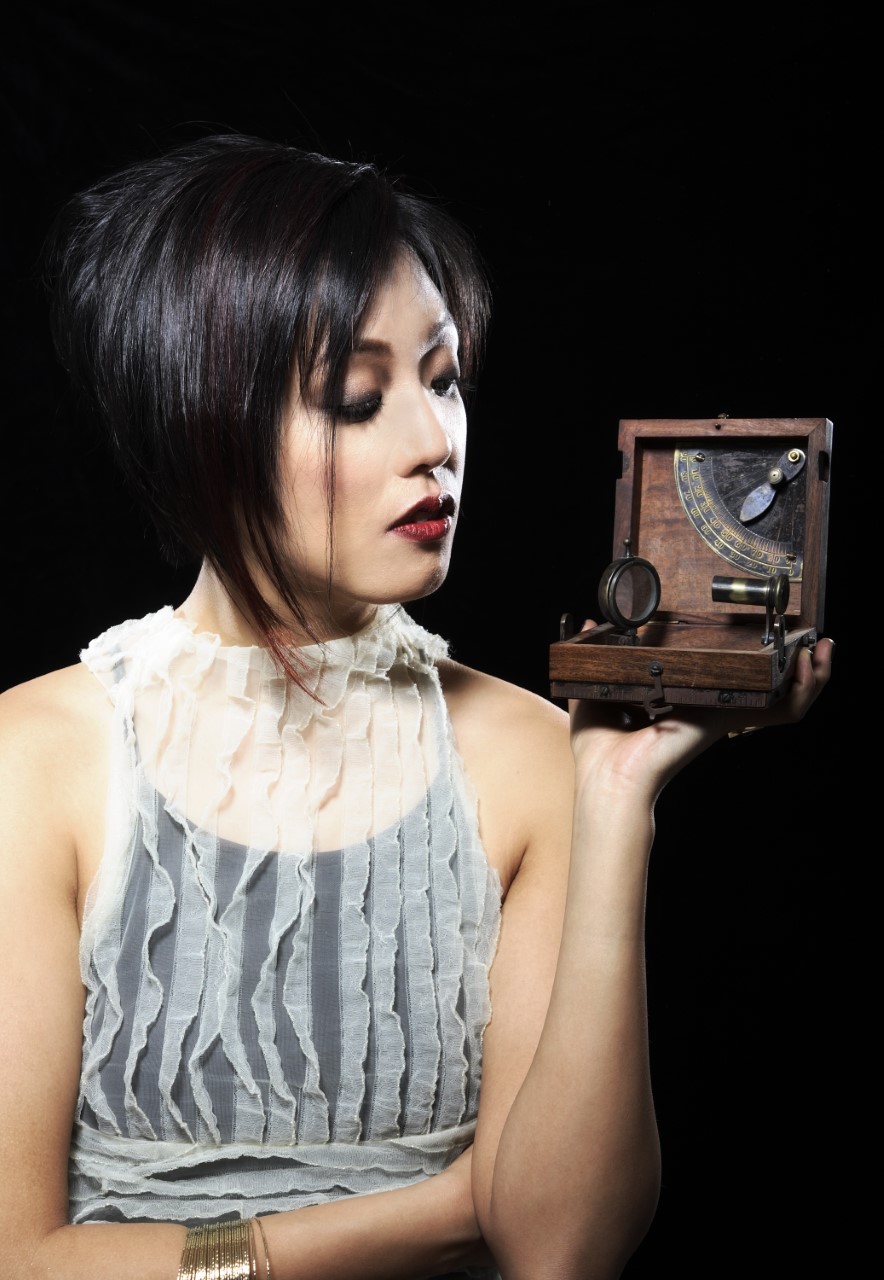
    When Bora Yoon’s “The Wind of Two Koreas” is performed at Princeton University’s Richardson Auditorium on Saturday, July 20, it will be unique among her body of works.

    Yoon, a doctoral candidate at Princeton University, describes herself as an interdisciplinary composer. Typically her works assimilate classical, electronic, and cross-cultural elements and employ unconventional instruments and technologies. In this instance, however, she will be taking a more traditional approach, though not to the detriment of exploring some of her usual artistic concerns.

    In her first purely orchestral piece, Yoon will continue to draw musical connections to her heritage as an American of Korean descent and all of the paradoxical tensions she finds therein. But she’ll also be measuring herself against the early works of Igor Stravinsky.

    Yoon’s new piece will be heard on a concert that is the public face of this year’s New Jersey Symphony Orchestra Edward T. Cone Composition Institute, which will be held from July 15 through July 20.

    The Cone Institute, now in its sixth year, brings together representatives of the New Jersey Symphony Orchestra and the Princeton University Music Department to offer four emerging composers a unique laboratory experience.

    You can read more about it, Yoon, and the concert, in my article in this week’s U.S. 1 Newspaper – PrincetonInfo, out today.

    https://princetoninfo.com/a-premiere-for-princeton-composers-symphonic-expression/


Tag Cloud

Aaron Copland (93) Beethoven (95) Composer (114) Film Music (145) Film Score (143) Film Scores (255) Halloween (94) John Williams (195) KWAX (229) Leonard Bernstein (104) Marlboro Music Festival (125) Movie Music (160) Mozart (91) Opera (213) Philadelphia Orchestra (89) Picture Perfect (174) Princeton Symphony Orchestra (109) Radio (88) Ross Amico (244) Roy's Tie-Dye Sci-Fi Corner (290) The Classical Network (101) The Lost Chord (269) Vaughan Williams (105) WPRB (397) WWFM (881)

DON’T MISS A BEAT

Receive a weekly digest every Sunday at noon by signing up here


RECENT POSTS