• Couperin & Neo-Classical Music Today

    Couperin & Neo-Classical Music Today

    by 

    in
    3 responses

    Everything old is new again this afternoon on The Classical Network.

    Join me for today’s Noontime Concert and a recital given in honor of the 350th anniversary of the birth of François Couperin. “François Couperin at 350” will be presented by Rebecca Pechefsky. Pechefsky performed selections from two of Couperin’s keyboard suites, in advance of her participation in all-Couperin marathon, which was held in Cambridge, UK, in November of last year.

    This broadcast concert was recorded at the chapel of Saint Bartholomew’s Church, 325 Park Avenue, in New York City, in September. Free Midtown Concerts are held at St. Bart’s every Thursday at 1:15 p.m. during the regular season, thanks in part to Gotham Early Music Scene, or GEMS.

    Immediately following today’s concert broadcast (circa 12:45), stick around for “Variations on a Theme by Couperin” by the Dutch composer Hendrik Andriessen. It will lead off an afternoon of music inspired by composers and characteristics of the Baroque and Classical eras. Some of it may be in the form of tributes or sets of variations; others will emulate the clean lines and leaner textures of the 18 century; others still could be pastiches or straightforward arrangements of works by earlier masters.

    Neo-baroque. Neoclassical. Everything’s Neo, from 12 to 4 p.m. EDT, on WWFM – The Classical Network and wwfm.org.


  • Birtwistle at 85 An Appreciation?

    Birtwistle at 85 An Appreciation?

    by 

    in
    6 responses

    Has Sir Harrison Birtwistle ever cracked a smile? One that isn’t at the expense of his audience, I mean?

    Today is Sir Harry’s 85th birthday. Despite sharing his fascination with Gawain, Punch, the Minotaur, Anubis, Orpheus, King Kong, and any number of other subjects that form the bases for his operas and concert works, I find he’s a composer whose music I have only ever moderately warmed up to.

    I vastly prefer the output of his contemporary and fellow former enfant terrible of the so-called Manchester School, Sir Peter Maxwell Davies. Late in life, Max may have been appointed Master of the Queen’s Music – you can’t get more establishment than that – but he never lost his impish glint. To some extent, it is that sense of mischief that makes even his earlier, more scandalous works somehow approachable.

    I don’t really need music to be “easy” or even tonal. There are times when I can put on a Birtwistle record and totally go with it. But I don’t know that anything he has written engenders much affection in me. This is not an objective assessment, of course, and perhaps you will react differently.

    Birtwistle has a local connection, by the way. He attended Princeton University on a Harkness Fellowship, beginning in 1965. There, he completed his opera “Punch and Judy,” which begins with Punch tossing his baby into the fire. This commences a murder spree that includes the stabbing of Judy, his wife. All this is presented in human form, making it much more disturbing than when enacted by puppets.

    Perhaps you will find something to latch on to in one of these pieces recommended by The Guardian.

    https://www.theguardian.com/music/tomserviceblog/2014/jul/15/harrison-birtwistle-80th-birthday-five-introductory-pieces

    If I had to recommend one with which to start, it would be “Earth Dances” from 1986. I confess, listening to it now, it is not as impenetrable as I remember it being. In fact, it actually kind of makes sense.

    There is something primordial in Birtwistle’s work, but it is not someplace I choose to live. At least the music has integrity, which I can’t always claim for some contemporary works of an easier-going disposition.

    See what you think. Here is Birtwistle’s “Earth Dances.”

    His music may not be the most conducive for wrapping up a work day, getting one through the afternoon commute, or enhancing the enjoyment of a cocktail hour, but we’ll see how I feel. One of his could be among the featured selections on my air shift today from 4 to 7 p.m. EDT, on WWFM – The Classical Network and wwfm.org.

    If so, hang in there – it’s also the birthday of British Light Music master, Ronald Binge!


  • Julian Bream Turns 86 WWFM Celebrates

    Julian Bream Turns 86 WWFM Celebrates

    by 

    in
    3 responses

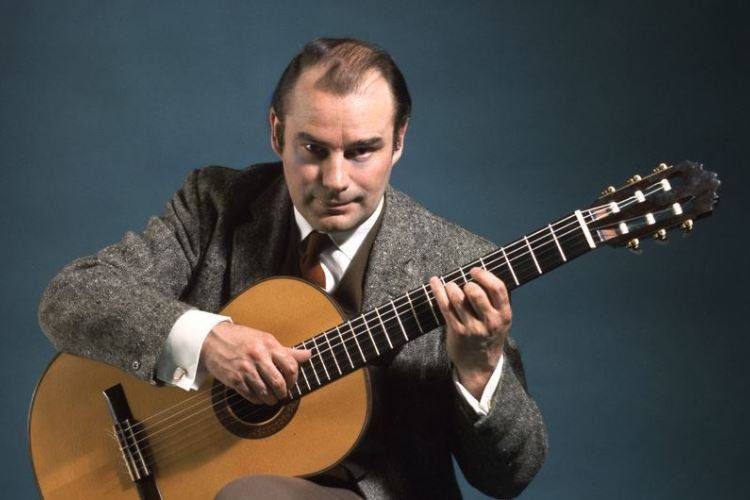
    Holy smokes! Julian Bream is also 85 today!

    So we’ll celebrate him AND Sir Hairy Birtwistle, also 85, among our featured artists, between now and 7:00 EDT, on WWFM – The Classical Network and wwfm.org.

    ERRATUM: Actually, Bream is 86. Wikipedia has got it wrong. Pardon my slipshod scholarship.


  • Forgotten French Orchestral Masters

    Forgotten French Orchestral Masters

    by 

    in
    5 responses

    Vive les orchestrateurs de musique classique français!

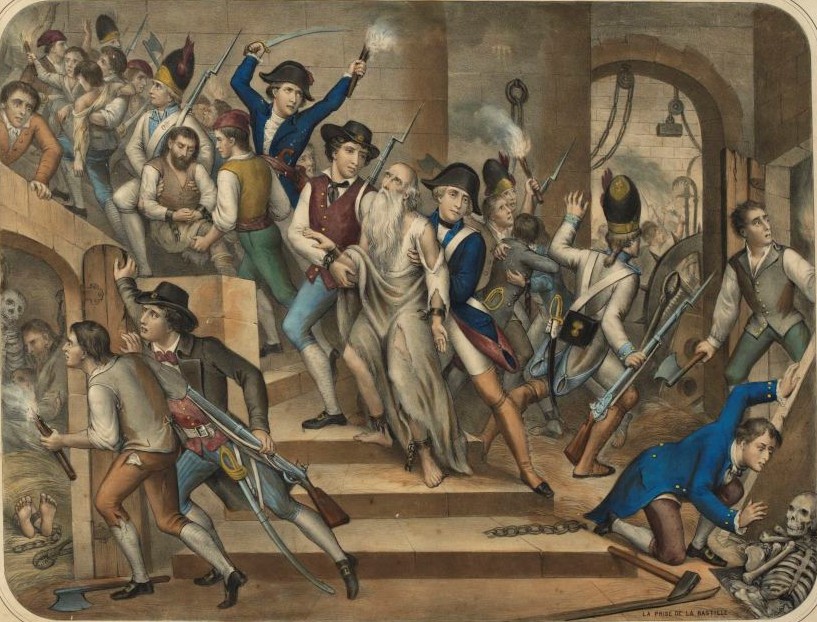
    This Sunday night on “The Lost Chord,” for Bastille Day, enjoy original works by figures who employed their skills as orchestrators in the service of more celebrated French composers.

    Henri Rabaud (1873-1949) was, variously, conductor at the Paris Opéra Comique, director of the Paris Opera, and director of the Paris Conservatory. For a season, he ever led the Boston Symphony Orchestra. Though he wrote several operas and two symphonies, as well as choral, chamber and instrumental music, Rabaud’s own original output is very seldom heard. However, his orchestration of Gabriel Fauré’s charming “Dolly Suite,” originally for piano four-hands, endures. We’ll hear Rabaud’s symphonic poem “La Procession nocturne,” inspired by Nicolas Lenau’s “Faust.”

    André Caplet (1878-1925) directed the Boston Opera from 1910 to 1914. He was gassed while serving in the First World War, which resulted in the pleurisy that plagued him for the remainder of his short life. Caplet died at the age of 44. His harp quintet, “Conte fantastique,” after Edgar Allan Poe’s “The Masque of the Red Death” is occasionally heard. But his tenuous grip on fame is really through his association with another composer, Claude Debussy, for whom he orchestrated “Children’s Corner,” “Clair de lune,” “Le Martyrdom de saint Sébastien” and “La boîte à joujoux.” Tonight we’ll have the opportunity to enjoy Caplet’s lovely Septet for Voices and String Quartet.

    Henri Büsser (1872-1973) acted as secretary to Charles Gounod. He also became a protégé and friend of Jules Massenet. At Debussy’s request, Büsser conducted the fourth performance of “Pélleas and Mélisande” and numerous performances thereafter. He died in Paris less than three weeks shy of his 102nd birthday! Büsser’s own output includes much music for the stage, including 14 operas, a ballet, and incidental music. Yet his name is kept alive principally as the orchestrator of Debussy’s “Petite Suite” and “Printemps.” He’ll be represented tonight by “Andalucia,” an original work for flute, on Spanish themes.

    Charles Koechlin (1867-1950) had many enthusiasms: medieval music, Bach, travel, stereoscopic photography, communism, pantheism, sports. He was especially interested in early film stars (he wrote works in tribute to Ginger Rogers, Douglas Fairbanks, Charles Chaplin, and Lillian Harvey) and the “Jungle Books” of Rudyard Kipling. Despite enjoying an astonishingly prolific career as a composer himself, Koechlin is associated in most people’s minds with his orchestration of Fauré’s “Pélleas and Mélisande.” He also worked as an orchestrator on Debussy’s “Khamma.”

    Koechlin’s series of orchestral works, inspired by Kipling, span most of his creative life. These were composed in a broad array of styles, encompassing impressionism, neo-classicism, polytonality, and even quasi-serialism. We’ll hear the last of his Kipling cycle, “Les Bandar-Log,” ostensibly about a barrel of chattering monkeys, but the term has also come to be used to describe anyone who irresponsibly prattles.

    I hope you’ll join me in liberating these overlooked composers from the Bastille of neglect on “French Connections,” this Sunday night at 10:00 EDT, on WWFM – The Classical Network and wwfm.org.

  • George Butterworth Beyond the Battlefield

    George Butterworth Beyond the Battlefield

    by 

    in
    4 responses

    As a classical music radio host of many years, it’s easy to fall back on the same biographical details whenever I come to announce a given composer’s works. This is especially true when the composer’s life contains some particularly lurid or poignant detail.

    But is it really fair to define someone by the manner of his or her death? After all, composers lived rounded lives like the rest of us, full of joys and sorrows. There must be some laughter even in a life weighted with misery, and tears in the make-up of any clown.

    So it was with George Butterworth. If we hear anything at all in the minute or two it takes to set up the broadcast of one of his works, it’s that Butterworth was cut down by a sniper during the Battle of the Somme at the age of 31. Of course, it doesn’t help that his compositions make one’s heart ache from their exquisite beauty.

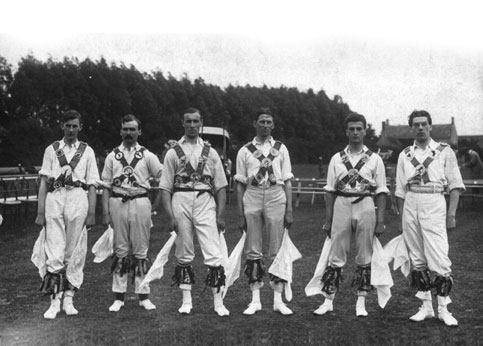
    In reading up on Butterworth in advance of celebrating the anniversary of his birth yesterday, I stumbled across this page and sat transfixed, as I viewed for the first time rare footage of him folk dancing with Cecil Sharp. It put a human face on this composer every bit as poignant as the idea of him being cut down in his prime. It’s especially amusing to see the two men get tangled up in their choreography and then continue on their merry way.

    https://www.warcomposers.co.uk/butterworthbio

    If you’re unfamiliar with Butterworth’s music, here are a few examples. Those inspired by the poems of A.E. Housman are especially poignant.

    The Banks of Green Willow:

    A Shropshire Lad (orchestral rhapsody):

    A Shropshire Lad (song cycle):


    PHOTO: Butterworth the morris dancer (second from left)


Tag Cloud

Aaron Copland (93) Beethoven (95) Composer (114) Film Music (145) Film Score (143) Film Scores (255) Halloween (94) John Williams (195) KWAX (229) Leonard Bernstein (104) Marlboro Music Festival (125) Movie Music (160) Mozart (91) Opera (213) Philadelphia Orchestra (89) Picture Perfect (174) Princeton Symphony Orchestra (109) Radio (88) Ross Amico (244) Roy's Tie-Dye Sci-Fi Corner (290) The Classical Network (101) The Lost Chord (269) Vaughan Williams (105) WPRB (397) WWFM (881)

DON’T MISS A BEAT

Receive a weekly digest every Sunday at noon by signing up here


RECENT POSTS