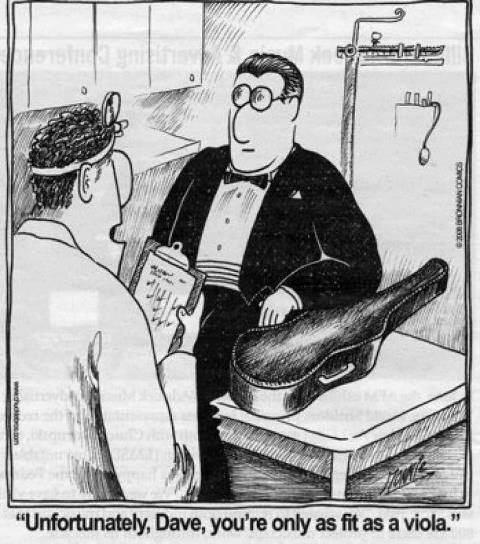
• Viola Power on The Classical Network Today!

    Viola Power on The Classical Network Today!

    by 

    in
    5 responses

    “Vioooooooooooola!”

    Once heard, the plaintive cries of Sergiu Celibidache are not easily forgotten.

    No doubt Celi would find solace, if only he could tune in for today’s Noontime Concert on The Classical Network, as Kristina Giles will perform selections from the 41 Caprices, Op. 22, by “the Paganini of the Viola,” Bartolomeo Campagnoli (1751-1827).

    The program is another presented by Gotham Early Music Scene, or GEMS. GEMS is a non-profit organization that supports and promotes artists and organizations in New York City generally devoted to Early Music.

    Giles’ recital was recorded at St. Bartholomew’s Church, 325 Park Avenue. Free concerts are held at St. Bart’s during the regular season on Thursdays at 1:15 p.m. For more information and a complete schedule of GEMS events, look online at gemsny.org.

    It’s long been my ambition to do a viola show, so stick around following today’s concert broadcast for an afternoon of works written for this much-derided instrument that, as stated in Giles’ program notes, is “usually lost in the middle harmonies of orchestral and chamber music.”

    We’ll hear concertos, chamber music, and more by Margaret Brouwer, Paul Hindemith, Joseph Joachim, Peter Lieberson, Bohuslav Martinu, Wolfgang Amadeus Mozart, Georg Philipp Telemann, and Ralph Vaughan Williams.

    Of course, in my ideal world, between selections I would love to share your viola jokes. But even if I don’t (and I probably won’t), please feel free to leave them in the comments section below.

    You’ll find abundant prototypes at Viola Central:

    https://violacentral.com/best-viola-jokes/

    BONUS! Bill McGlaughlin will share selections from “Harold in Italy” – composed at the request of Niccolò Paganini, who wanted to show off his new viola – as part of his week-long survey of the works of Hector Berlioz on “Exploring Music,” tonight at 7.

    In the meantime, we’ll give the viola some love, from 12 to 4 p.m. EDT, on WWFM – The Classical Network and wwfm.org.

  • Antheil & Grainger Birthdays on The Classical Network

    Antheil & Grainger Birthdays on The Classical Network

    by 

    in
    2 responses

    Trenton’s Bad Boy has a birthday!

    Join me this afternoon on The Classical Network as we pile gifts at the feet of original Trenton cracker George Antheil (1900-1959), self-proclaimed “Bad Boy of Music.” Antheil’s “Ballet Mécanique,” scored for player pianos, airplane propellers, siren and electric bells, inspired one of classical music’s great riots at its Paris premiere in 1926.

    Antheil would practice the piano with such ferocity that he would have to pause periodically to thrust his hands into two fish bowls filled with ice water. Before commencing a recital, he would ostentatiously remove a pistol from a silk holster in his jacket and place it atop the piano to send a message that he would brook no nonsense.

    Later, he became a Hollywood film composer, a war correspondent, the author of a column of advice to the lovelorn, an expert in endocrinology, and co-inventor, with actress Hedy Lamarr, of a frequency-hopping system for the guidance of Allied torpedoes that would become the basis for modern spread-spectrum communications technology.

    Wouldn’t you know it, it’s also the birthday today of another of music’s great eccentrics, Percy Aldridge Grainger (1882-1961).

    Grainger, born outside Melbourne, Australia, was an outstanding pianist and an innovative composer. He also happened to be obsessed with physical fitness. Rather than drive or take the train between towns and engagements, he preferred to jog. He was also known to throw a ball over one side of a house, and then race around the other side to catch it.

    Enamored of Nordic culture, he went out of his way to use only Anglo-Saxon words, avoiding in his letters anything of Norman or Latin origin. However, the dominance of German music rankled him, and he loved Duke Ellington.

    He was unusually close to his mother and developed sadomasochistic tendencies. He donated whips and blood-stained clothes to the Grainger Museum, which he founded in 1932. (His request to have his skeleton displayed – posthumously, of course – was denied.)

    Later, while living in White Plains, NY, he experimented with electronics and “machine music,” in a sense paralleling an obsession of Antheil, who besides “Ballet Mécanique,” wrote such works as “Airplane Sonata” and “Death of Machines.”

    Sadly, only the smallest portion of Grainger’s output is known by the general public, and he is celebrated as the composer of such trifles as “Country Gardens,” “Molly on the Shore,” and “Shepherd’s Hey.” But Grainger’s treatment of harmony and rhythm could be highly original. He was a brilliant musician, and wholly unconventional in more ways than one.

    Join me this afternoon for music by Antheil and Grainger. We’ll also remember Pulitzer Prize winner Michael Colgrass, who died on July 2 at the age of 87, with a selection from Boston Modern Orchestra Project (BMOP)’s new release “Michael Colgrass: Side by Side.” In addition, we’ll sample from the album “Gentle Winds” (issued on PARMA Recordings’ classical music imprint Navona Records), featuring music by Hopewell composer Samuel A. Livingston.

    Livingston is a clarinetist in The Blawenburg Band. The rain is expected to move out of the Princeton area by this afternoon, which means the first of the band’s summer lawn chair concerts should take place as scheduled at Hopewell Train Station tonight at 7:30 p.m. Tomorrow, Livingston will perform with the Blawenburg Dixieland Band at Mary Jacobs Memorial Library in Rocky Hill, from 6:30 to 8:15 p.m.

    I’ll be spinning the discs, rain or shine, today from 4 to 7 p.m. EDT, on WWFM – The Classical Network and wwfm.org.


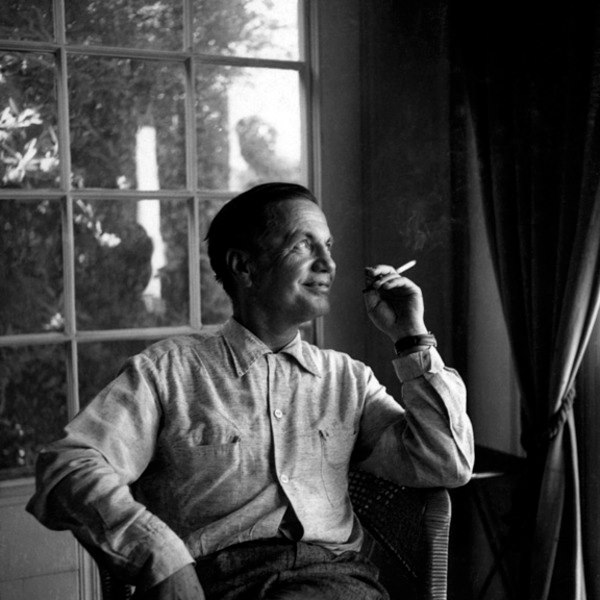
    Two peas in a pod: George Antheil, smoking, and Percy Grainger, smoking hot, in self-designed “toweling clothes”


  • Vintage Gershwin on the Radio This Sunday

    Vintage Gershwin on the Radio This Sunday

    by 

    in
    5 responses

    This Sunday night on “The Lost Chord,” we’ll cap the long Fourth of July weekend with an hour of vintage recordings of the music of George Gerswhin.

    Gershwin occupied a unique place in American music, rising from Tin Pan Alley scrapper to Broadway royalty. From there, he conquered the concert hall and even the opera house, with his blend of popular song, jazz, blues, spirituals and European classical forms.

    Like Franz Schubert a hundred years before, Gershwin managed to churn out an astonishing amount of music over a comparatively brief span. His songs, in particular, have been of enduring interest. His gift of lyricism and invention defied early critics as he bestrode the worlds of popular and classical music like an American colossus.

    Sadly, at the peak of his success, he died of a brain tumor at the age of 38.

    We’ll sample Gershwin’s artistry in recordings of the era, including several songs performed by Al Jolson, Fred Astaire and Ella Logan. (So many excellent recordings to choose from!)

    We’ll also hear the world premiere recording of “An American in Paris” – performed by the Victor Symphony Orchestra (really members of the Philadelphia Orchestra), with the composer himself on the celesta – and the Concerto in F, performed as part of a memorial concert at the Hollywood Bowl, with the composer’s friend, Oscar Levant, as soloist.

    Three of these recordings date from 1937, the year of the composer’s death. All are from his era.

    I hope you’ll join me for “Vintage Gershwin,” this Sunday night at 10:00 EDT, on WWFM – The Classical Network and wwfm.org.

    GERSHWIN BONUS! TUNE IN EARLY TO ENJOY MORE SONGS BY GERSHWIN ON “THE DRESS CIRCLE” AT 7 P.M!

    The Dress Circle – Public Radio Dedicated to the Performing Arts


    Fred Astaire singing “A Foggy Day (In London Town),” from “A Damsel in Distress”:


  • Michael Torke July Slow News Day

    Michael Torke July Slow News Day

    by 

    in
    3 responses

    Slow news day. Here’s Michael Torke’s “July.”


  • Copland’s Hollywood Struggles & Triumphs

    Copland’s Hollywood Struggles & Triumphs

    by 

    in
    5 responses

    The star-spangled glare of American music doesn’t just end with the Fourth of July fireworks. This week, on “Picture Perfect,” we’ll bask in the pyrotechnic after-glow of Independence Day with an hour of film music by Aaron Copland.

    Despite his reputation as the “Dean of American Composers,” and the eventual acceptance into concert halls of his film music classics “Our Town” and “The Red Pony,” Copland’s experiences in Hollywood were not all peaches and cream. After all, if you want to work in the film industry, you’ve got to expect that once in a while somebody’s going to mess with your work, even if you’re a Pulitzer Prize winner.

    In particular Copland was not very happy with what they did to his music for “The Heiress.” Carefully-crafted cues were chopped to ribbons, dialed down and rescored without his approval. William Wyler (“Wuthering Heights,” “Friendly Persuasion,” “The Big Country,” “Ben-Hur”) was a brilliant director, but he must have had a tin ear. His films consistently sported some of the best scores of their respective eras, and yet he mostly underappreciated, if not outright disliked, their music.

    “The Heiress” was made fresh off of Wyler’s runaway success with “The Best Years of Our Lives.” The film, based on Henry James’ “Washington Square,” was nominated for eight Academy Awards. It won four, including Oscars for Olivia De Havilland and for Copland’s score, which is so strong it manages to maintain its integrity despite all of the studio tinkering.

    Wyler insisted Copland work the song “Plaisir d’Amour” into the fabric of his music, which he artfully did in three cues. But that wasn’t good enough. Without Copland’s knowledge, the main title was replaced with a garish arrangement of “Plaisir,” which was also looped in for some of the love music. André Previn, in 1949 already one of Hollywood’s bright young talents, likened the return of Copland’s original thoughts following these interpolations to “suddenly finding a diamond in a can of Heinz beans.”

    When Copland’s contribution was recognized by the Academy, it was the only instance up to that time of a score being honored after being shorn of its main title, the part of a score that generally makes the biggest impression. Copland never bothered to collect his award. “The Heiress” would be the last time he would work in Hollywood.

    He did compose one more film score, however, for the 1961 independent film, “Something Wild,” which contains some of his most insistently non-commercial music. Occasionally brutal and often thrilling, its character is worlds away from the pastoral tranquility of “Appalachian Spring.” It’s a brilliant piece of work, yet it did not receive a commercial release until 2003.

    We’ll sample music from these two underappreciated classics, as well as from the controversial pro-Soviet film “The North Star;” also a bit from the 1939 World’s Fair documentary “The City.”

    Extend your holiday weekend with a cold cone of Aaron Copland classics on “Picture Perfect,” music for the movies, this Friday evening at 6:00 EDT, on WWFM – The Classical Network and wwfm.org.


Tag Cloud

Aaron Copland (93) Beethoven (95) Composer (114) Film Music (145) Film Score (143) Film Scores (255) Halloween (94) John Williams (195) KWAX (229) Leonard Bernstein (104) Marlboro Music Festival (125) Movie Music (160) Mozart (91) Opera (213) Philadelphia Orchestra (89) Picture Perfect (174) Princeton Symphony Orchestra (109) Radio (88) Ross Amico (244) Roy's Tie-Dye Sci-Fi Corner (290) The Classical Network (101) The Lost Chord (269) Vaughan Williams (105) WPRB (397) WWFM (881)

DON’T MISS A BEAT

Receive a weekly digest every Sunday at noon by signing up here


RECENT POSTS