• Peter Serkin & Marlboro Music Festival

    Peter Serkin & Marlboro Music Festival

    by 

    in
    6 responses

    For some reason, I always equate Peter Serkin in my mind with Peter Fonda. Perhaps it’s because he’s like the Easy Rider of pianists. At one point, he even totally dropped out, moving to Mexico and not playing for a couple of years. When he returned, as often as not, he was a kind of countercultural champion of modernist works (he was one of the founders of the new music ensemble Tashi). But he is, after all, his father’s son (sired by legendary pianist Rudolf Serkin), so Bach and Beethoven have been just as important to him as an artist and as a person.

    Hard to believe that Peter Serkin is 72 years-old today. On this week’s “Music from Marlboro,” we’ll hear a performance of Mozart’s Concerto for Two Pianos (the Piano Concerto No. 10), KV 365, with Peter, at 15, joined in music-making by his Marlboro co-founding father.

    Then we’ll keep our spirits high, as Pablo Casals conducts the Marlboro Festival Orchestra in Franz Schubert’s Symphony No. 5. Schubert was totally under the spell of Mozart at the time of its composition, remarking in his diary, “O Mozart! Immortal Mozart! what countless impressions of a brighter, better life hast thou stamped upon our souls!”

    This summer’s Marlboro Music Festival is about to enter its third weekend, with three concerts on the agenda. The festival’s annual town benefit concert will be held on Friday at 8 p.m., featuring music by Schumann, Stravinsky, Mozart, and György Kurtág. Marlboro co-directors Mitsuko Uchida and Jonathan Biss will appear on separate concerts on Saturday and Sunday. Uchida will be the pianist in Schumann’s Piano Quintet on a program which will also feature music by Schoenberg, on Saturday at 8 p.m. Biss will perform Dvořák’s Piano Trio in F minor on a concert which will also include works by Mozart and Marlboro composer-in-residence Jörg Widmann, on Sunday at 2:30 p.m. For complete listings and more information, visit marlboromusic.org.

    For today, musicians from the renowned chamber music festival take a break from playing chamber music. It’s a well-orchestrated program on this week’s “Music from Marlboro,” this Wednesday evening at 6:00 EDT, on WWFM – The Classical Network and wwfm.org.

    Marlboro School of Music and Festival: Official Page


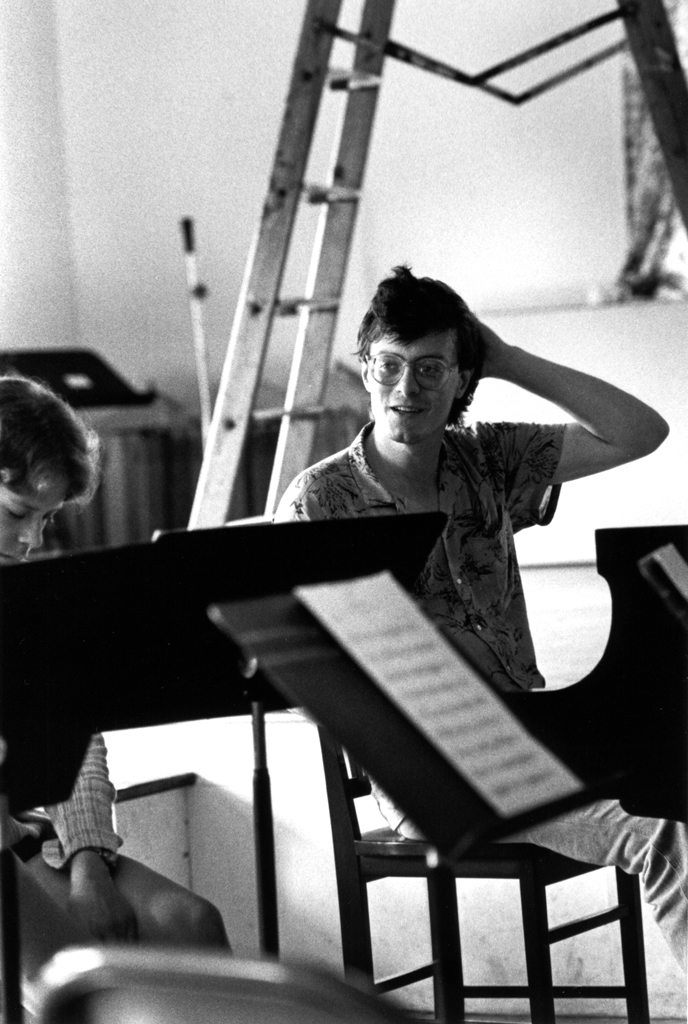
    PHOTO: Young Peter Serkin performs Mozart on today’s broadcast of recordings from the archive of Marlboro Music.
  • Angel Sings Bach on WWFM’s Noontime Concert

    Angel Sings Bach on WWFM’s Noontime Concert

    by 

    in
    4 responses

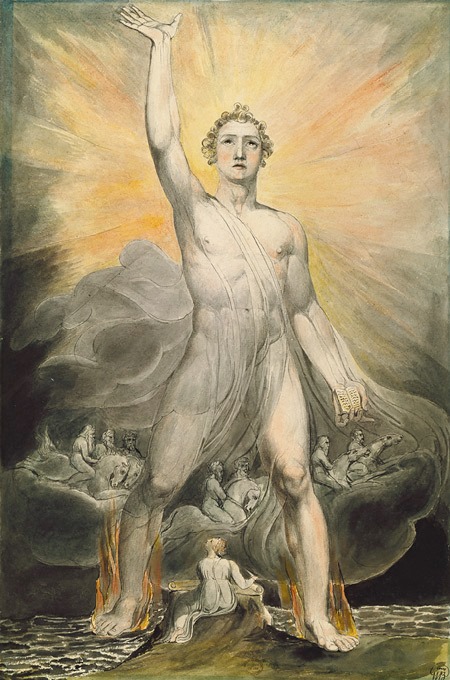
    Angel sings sacred songs on today’s Noontime Concert. Countertenor Ryland Angel, that is.

    He will be joined by organist Richard Erickson in works by Johann Sebastian Bach, Johann Anastasius Freylinghausen, and Johann Rudolf Ahle, collected in the “Schemellis Gesangbuch.” Georg Christian Schemelli published his songbook in Leipzig in 1736. His son, Christian Friedrich, was a student at the Thomasschule from 1733 to 1735 and later continued his studies at Leipzig University. Bach, of course, served as Thomaskantor from 1723 until his death in 1750.

    This concert was recorded at the chapel of Saint Bartholomew’s Church, 325 Park Avenue, in New York City, in October. Free Midtown Concerts are held at St. Bart’s every Thursday at 1:15 p.m. during the regular season, thanks in part to Gotham Early Music Scene, or GEMS. GEMS is a nonprofit organization that promotes and supports artists in New York City devoted to Early Music. You can learn more about Gotham Early Music Scene at gemsny.org.

    Following today’s concert broadcast, stick around for one of Anton Bruckner’s spiritually-infused symphonies, with the Vienna Philharmonic conducted by Bruckner pioneer Carl Schuricht.

    After last night’s storm, we can use all the help we can get. Put your hands together, between 12 and 4 p.m. EDT, on WWFM – The Classical Network and wwfm.org.


  • WWFM Stream Down Due to Power Outage

    WWFM Stream Down Due to Power Outage

    by 

    in
    8 responses

    FOR THOSE OF YOU ACCUSTOMED TO ENJOYING WWFM – The Classical Network VIA OUR INTERNET STREAM AT WWFM.ORG:

    It’s been brought to my attention by an online listener that he has been unable to connect to our stream. The reason for this is that the electricity is out at the college. We are broadcasting, thanks to a back-up generator, but unfortunately there is no internet. No lights or air conditioning, either. All in all, a sad state of affairs. We apologize for the inconvenience. Hopefully the power — and the streaming — will be back up soon. Thank you for your understanding!


  • Ben Johnston Microtonal Pioneer Dies at 93

    Ben Johnston Microtonal Pioneer Dies at 93

    by 

    in
    6 responses

    The pioneering microtonalist Ben Johnston has died at the venerable age of 93. Johnston, born in Macon, GA, in 1926, apprenticed with Harry Partch, whom he assisted in the construction and tuning of one-of-a-kind instruments fashioned from scrap. He then studied at Mills College with Darius Milhaud and, later in New York City, with John Cage. Cage encouraged Johnston to drop the idea of writing for newly created instruments and instead to focus on expanding the potentials and perceptions of more traditional sources.

    Johnston exceeded even Partch in his experiments with “just intonation,” a method of tuning based on the intervals of the harmonic series. For hundreds of years, equal temperament, in which the intervals of the chromatic scale are distorted to create major and minor scales, with the ability to modulate from key to key, has been the standard in Western music.

    However, to get something, you often have to give something up. The compromise of equal temperament is a finite system. Johnston (and Schoenberg before him) realized that by the 20th century the musical resources available through an adherence to equal temperament were on the verge of exhaustion. The exploration of microtones opened up new horizons by allowing for an expandable scale of more than forty divisions to an octave.

    Johnston’s great achievement was to take a radical concept and render it in such a way as to make it comparatively accessible to untutored listeners. The pay-off of his String Quartet No. 10 is the realization that (spoiler alert) the entire thing is constructed on the traditional melody “Danny Boy.” His String Quartet No. 4 is based on “Amazing Grace.”

    I’ll remember Johnston today, among my featured composers, during my afternoon air shift. We’ll also sample from a new release on Bridge Records, Inc., “Sonata Dementia,” consisting of works by Johnston’s mentor, Harry Partch. Satisfy your thirst for unusual music, between 4 and 7 p.m. EDT, on WWFM – The Classical Network and wwfm.org.


    The ensemble Partch performs “Sonata Dementia:”

    Those are some impressive mallets!


  • Cosmic Classics Moonwalk Anniversary

    Cosmic Classics Moonwalk Anniversary

    by 

    in
    4 responses

    This Sunday night on “The Lost Chord,” for the 50th anniversary of the first moonwalk, cap your weekend of lunar celebrations with an hour of music inspired by the cosmos.

    When Spanish master Joaquin Rodrigo was in the United States in 1970 to attend the world premiere of his “Concierto Madrigal” at the Hollywood Bowl, he decided to make a side-trip to Houston, where he visited what is now the Johnson Space Center. There, NASA saw to it that the composer, blind since the age of three, was introduced to astronauts and permitted to handle moon rocks.

    The experience left him with a powerful impression, so that when he was commissioned by the Houston Symphony Orchestra several years later to write a piece of music to celebrate the American Bicentennial, his thoughts returned to his friends at NASA and the idea of space exploration. The result was something worlds away – if you’ll pardon the expression – from his popular works for guitar: the symphonic poem “A la busca del más allá” (“In search of the beyond”).

    Another Spaniard inspired by extraterrestrial concerns was Enrique Granados, very well-known for his music for the keyboard. Perhaps Granados’ most unusual work is a concerto-of-sorts for piano, with choruses and organ, “Cant de les estrilles” (“Song of the Stars”). This music was composed as a vehicle for Granados himself and dedicated to the long-lived pianist, Mieczyslaw Horszowski, who died as recently as 1993 – one month shy of his 101st birthday.

    “Song of the Stars” was given its first performance in 1911, on the same program as the premiere of Granados’ enduring piano suite “Goyescas.” However, the manuscript would remain unpublished. Granados died in 1916, only a few years later, on a return trip from the United States, when his ship was torpedoed by a German submarine while crossing the English Channel.

    The manuscript found its way to New York in the 1930s, brought there by the composer’s son, who was lured by businessman and conductor Nathaniel Shilkret with the promise of publication. Legal entanglements ensued, involving other members of the Granados family. A fire in the 1960s was feared to have destroyed the work, and efforts by the family to recover the piece with the assistance of José Iturbi and Alicia de Larrocha came to naught.

    In 1982, Granados’ daughter enlisted the American pianist Douglas Riva to act as the family representative. Finally, an agreement was negotiated with Shilkret’s grandson, and the work was performed again for the first time in nearly 100 years. The unattributed Catalan text is said to be a response to the poetry of Heinrich Heine, about love and the stars, from the perspective of the stars themselves.

    Finally, we’ll round out the hour with music by contemporary Finnish composer Kaija Saariaho. Saariaho evokes both the mythological and astrological in her work for orchestra, “Orion,” from 2002. The piece falls into three movements: “Memento mori,” “Winter Sky,” and “Hunter.”

    Pour yourself some cosmos. Then look to the skies in wonder! Join me for “Creating Space,” this Sunday night at 10:00 EDT, on WWFM – The Classical Network and wwfm.org.


Tag Cloud

Aaron Copland (93) Beethoven (95) Composer (114) Film Music (145) Film Score (143) Film Scores (255) Halloween (94) John Williams (195) KWAX (229) Leonard Bernstein (104) Marlboro Music Festival (125) Movie Music (160) Mozart (91) Opera (213) Philadelphia Orchestra (89) Picture Perfect (174) Princeton Symphony Orchestra (109) Radio (88) Ross Amico (244) Roy's Tie-Dye Sci-Fi Corner (290) The Classical Network (101) The Lost Chord (269) Vaughan Williams (105) WPRB (397) WWFM (881)

DON’T MISS A BEAT

Receive a weekly digest every Sunday at noon by signing up here


RECENT POSTS