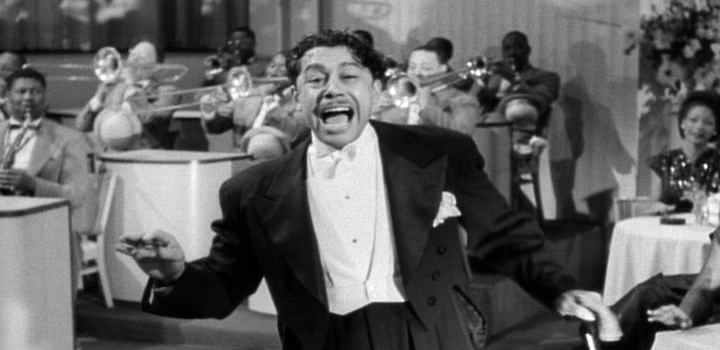
Q: Who could make Cab Calloway any cooler?
A: The Nicholas Brothers.
by
Q: Who could make Cab Calloway any cooler?
A: The Nicholas Brothers.
by
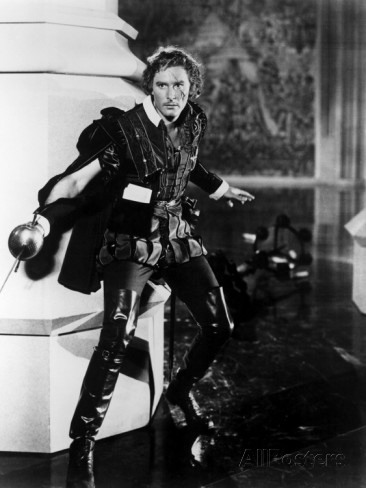
Is Erich Wolfgang Korngold my favorite film composer? Quite possibly, yes. In fact, he’s one of my favorite composers, period. Chalk it up to a childhood misspent in the company of Errol Flynn and Bette Davis.
I’m especially excited, then, that Korngold will be the focus of this year’s Bard Music Festival. The festival, now in its 30th year, will be held over two weekends – from August 9 through August 11, and August 16 through August 18 – at Bard College, in upstate New York. Concert programs, talks, and panel discussions will examine every aspect of Korngold’s output, including an ample representation of his film music and that of some of his colleagues.
This week on “Picture Perfect,” my guest will be conductor Leon Botstein, president of Bard College and co-director of the Bard Music Festival. Dr. Botstein will join me in previewing some of the festival’s highlights and providing commentary on this most fascinating composer, who, as one of classical music’s greatest prodigies, had one foot in Old Vienna and the other in New World Hollywood.
As a kind of special preamble to the festival, Korngold’s opera, “Das Wunder der Heliane” – “The Miracle of Heliane” – will be presented in a fully staged production, in its U.S. premiere, starting tonight and running through August 4, again on the campus of Bard College. Korngold’s most famous opera, “Die tote Stadt,” will be performed semi-staged, as the festival’s finale, on August 18. For more information, visit fishercenter.bard.edu.
Then strike for the shores of Dover! It’s an hour of Korngold’s film music on “Picture Perfect,” music for the movies, this Friday evening at 6:00 EDT, on WWFM – The Classical Network and wwfm.org.
Richard B. Fisher Center for the Performing Arts

by
May I obey all your commands with equal pleasure, sire!
Join me an hour earlier than usual today, as we’re on target to celebrate a lot of birthdays, including those of John Field, father of the nocturne; Franz Xaver Mozart, son of Wolfgang Amadeus; Serge Koussevitzky, famed conductor of the Boston Symphony Orchestra; Donald Voorhees, founding music director of the Allentown Symphony Orchestra; pianist, composer, and conductor Ernest Schelling (one-time music director of the Baltimore Symphony Orchestra); composer Tadeusz Baird; and pianists Alexis Weissenberg and Angela Hewitt.
There will also be a musical remembrance of cellist Anner Bylsma, who died yesterday at the age of 85.
At 6:00, it’s “Picture Perfect,” music for the movies. This week, it’s an all-Korngold hour, including music from two of the great Errol Flynn swashbucklers. Leon Botstein will remark on the composer and this year’s Bard Music Festival, of which Korngold is the focus. Botstein will conduct the U.S. premiere of Korngold’s opera, “Das Wunder der Heliane” – “The Miracle of Heliane” – tonight at Bard College, as preamble to the festival. Performances will run through August 4.
The festival proper will take place over two weekends, August 9 through 11, and August 16 through 18. For more information, visit fishercenter.bard.edu.
I’ll be splitting arrows with the precision of my bullseyes, this Friday from 3 to 7 p.m. EDT, on WWFM – The Classical Network and wwfm.org.
Richard B. Fisher Center for the Performing Arts

by
Today is the 50th anniversary of the death of American composer Douglas Moore. Does anyone remember him?
Moore was born into an old Long Island family that had lived there since the island’s settling in the 17th century. He attended, among other institutions, Yale University, where he earned two degrees; then he was off to Paris to study with Vincent d’Indy, Ernest Bloch, and Nadia Boulanger (lending credence to Ned Rorem’s famous observation, “Myth credits every American town with two things: A 10-cent store and a Boulanger student”).
Moore went on to serve as president of the National Institute and American Academy of Arts and Letters and director of music at the Cleveland Museum of Art. In 1926, he joined the faculty of Columbia University, where he remained until his retirement in 1962. With Otto Luening and Oliver Daniel, he cofounded the CRI (Composers Recordings, Inc.) label.
In addition to his work in the classical world, he also dabbled in the popular realm. He wrote the Yale fight song, “Goodnight, Harvard.” He also authored two books: “Listening to Music” (1932) and “From Madrigal to Modern Music” (1942).
As a composer, Moore must have seemed, even then, a little old-fashioned. He worked mostly in a Romantic idiom. Though sometimes hinting at American folk song and occasionally popular trends, his works lack the kind of zest evident in, say, Aaron Copland’s distillation of French neoclassicism into his much snappier frontier ballets. On the other hand, Moore enjoyed more success on the operatic stage than Copland ever did.
He collaborated with Stephen Vincent Benet on an adaptation of Benet’s short story, “The Devil and Daniel Webster.” (He would dedicate his Symphony No. 2 to Benet’s memory.) “Giants in the Earth” was the recipient of the Pulitzer Prize for Music in 1951.
But his most enduring and beautiful music might just be that for “The Ballad of Baby Doe,” which was championed and recorded by Beverly Sills.
Also, some may dimly recollect Howard Hanson’s performance of “The Pageant of P.T. Barnum,” part of Hanson’s series of recordings of American music set down with the Eastman-Rochester Orchestra for the Mercury label.
At the time of his death, Moore was 75 years old. Sadly, now, at a half century’s distance, it seems that Moore is less.
Douglas Moore introduces Beverly Sills in “The Willow Song” from “The Ballad of Baby Doe.”
by
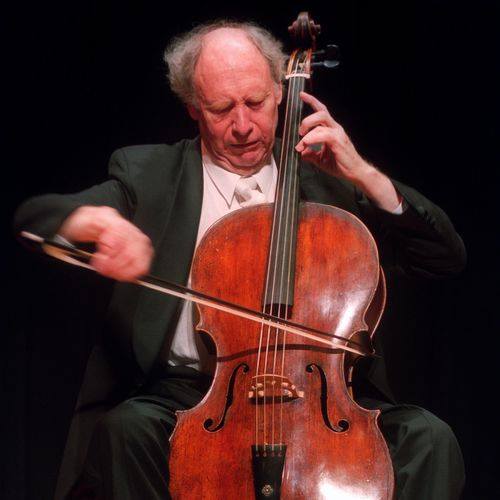
The cellist Anner Bylsma has died. Bylsma, one time principal cellist of the Royal Concertgebouw Orchestra, achieved world fame in the realm of historically informed performance, leaving behind many highly-regarded recordings made with the likes of Frans Brüggen, Gustav Leonhardt, and Jeanne Lamon. Together with his wife, the violinist Vera Beths, he founded the gut string ensemble L’Archibudelli. He was the first to record all six of Bach’s Suites for Unaccompanied Cello on a period instrument. Bylsma was 85 years-old.
Bylsma in Bach:
And rocking Anton Kraft:
I. https://www.youtube.com/watch?v=_4oOHIHK6WY
II. https://www.youtube.com/watch?v=BhukxUC8dSo
III. https://www.youtube.com/watch?v=VQ2yZaysuuI
Aaron Copland (93) Beethoven (95) Composer (114) Film Music (145) Film Score (143) Film Scores (255) Halloween (94) John Williams (195) KWAX (229) Leonard Bernstein (104) Marlboro Music Festival (125) Movie Music (160) Mozart (91) Opera (213) Philadelphia Orchestra (89) Picture Perfect (174) Princeton Symphony Orchestra (109) Radio (88) Ross Amico (244) Roy's Tie-Dye Sci-Fi Corner (290) The Classical Network (101) The Lost Chord (269) Vaughan Williams (105) WPRB (397) WWFM (881)
4 responses