• Toni Morrison Nobel Laureate Dies at 88

    Toni Morrison Nobel Laureate Dies at 88

    by 

    in
    6 responses

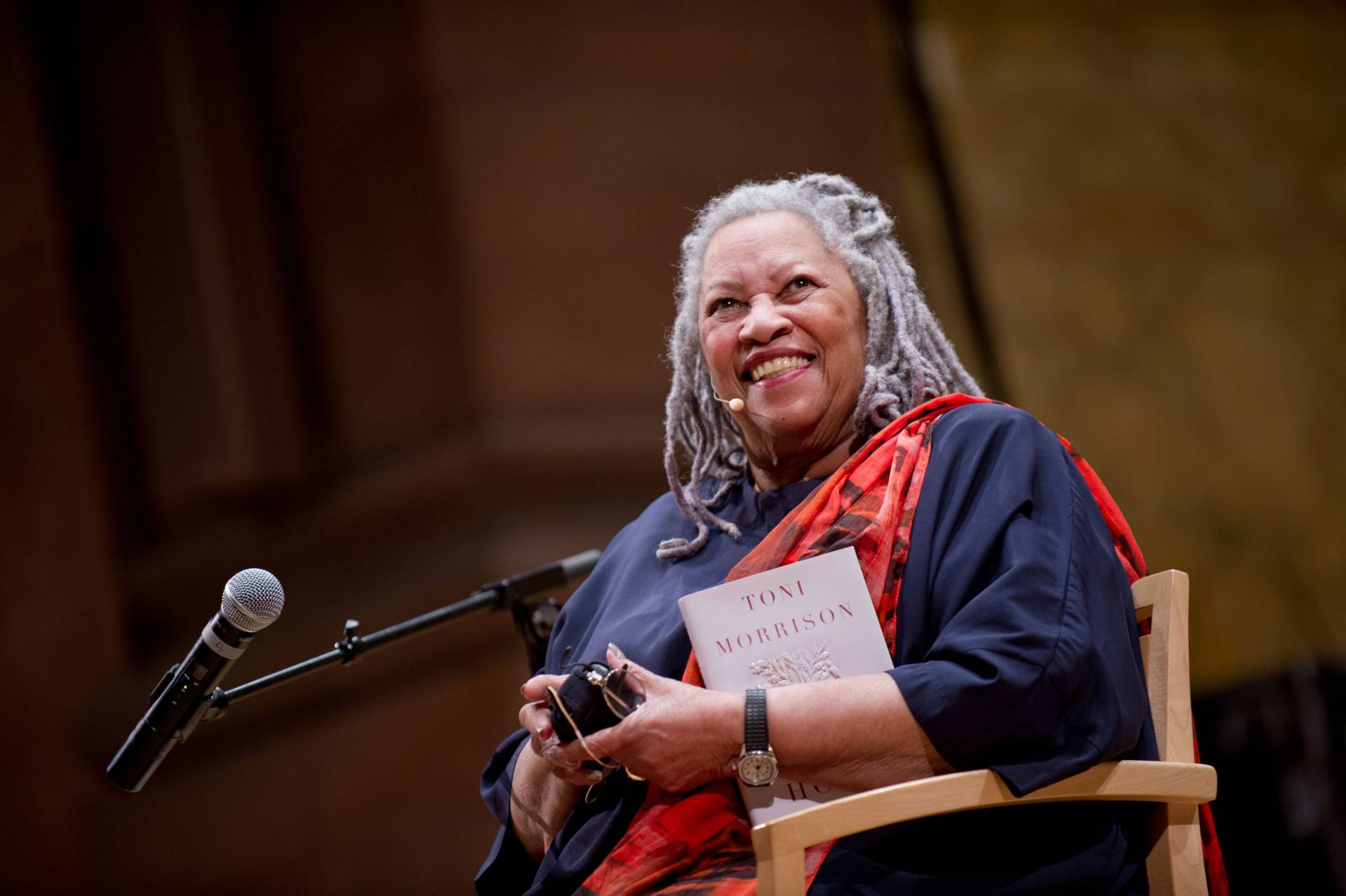
    Longtime Princeton University faculty member Toni Morrison has died. Morrison was the first African-American woman to be awarded the Nobel Prize for Literature (in 1993). The author of 11 novels, Morrison was also honored with a National Book Critics Circle Award for “Song of Solomon” in 1977 and the Pulitzer Prize for Fiction for “Beloved” in 1988.

    In addition to her work as a novelist, Morrison wrote the libretto for Richard Danielpour’s opera “Margaret Garner.” Garner was the runaway slave whose life inspired “Beloved.” She also provided the poems for André Previn’s song cycle, “Honey and Rue.” Kathleen Battle, moved by Morrison’s novel, “The Bluest Eye,” coordinated the commission and sang the work’s premiere. It was subsequently recorded by Deutsche Grammophon, together with Samuel Barber’s “Knoxville: Summer of 1915.”

    Morrison died yesterday. She was 88 years-old.


    Battle sings “Honey and Rue,” on texts by Toni Morrison:

    Denyce Graves and Gregg Baker in the Opera Company of Philadelphia’s production of “Margaret Garner:”


  • Sibelius Travel Mug Cool Design for Music Lovers

    Sibelius Travel Mug Cool Design for Music Lovers

    by 

    in
    3 responses

    Look what arrived over the weekend! Bound to inspire envy in anyone who espies me swilling from it, it’s my new Sibelius travel mug.

    When I imbibe from this cool-looking 20 oz. stainless steel vessel, I make the statement that I like my beverages austere, just like my symphonies.

    The snazzy, quasi-1950s design is by artist Irina Ivanova. A lot of her work is inspired by music and musicians. You’ll find more at her shop on society6.com.

    https://society6.com/irinaivanova

    or at her website

    https://iraivanova.wixsite.com/arti/portraits

    The vacuum seal delivers, keeping my joe hot and my shirts looking as fresh and pure as the unsullied snows of Lapland.

    Speaking of Sibelius, we’ll enjoy some of his music, as well as that of his fellow Finns, Tauno Pylkkänen and Oskar Merikanto, among my featured composers today, between 4 and 7 p.m. EDT, on WWFM – The Classical Network and wwfm.org.


  • British Composers Abroad on The Lost Chord

    British Composers Abroad on The Lost Chord

    by 

    in
    5 responses

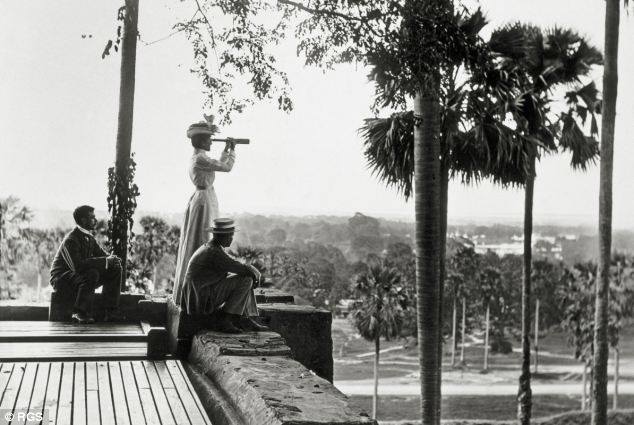
    This Sunday night on “The Lost Chord,” the only thing missing will be a dour Dame Maggie Smith, as we holiday on the Continent with the British. It’s an hour of music by English composers inspired by their travels abroad.

    Elisabeth Lutyens must have been a rather prickly personality herself. She wrote principally in a modified twelve tone idiom. While she despised the modal melodies of the English pastoralists (in reference to whose works, she coined the term “cow-pat music”), she was equally dismissive of strict serialism.

    It’s interesting that someone who made so many enemies could turn around and write a piece like “En Voyage,” a delightful suite of British Light Music. But I suppose it served to keep Lutyens in cucumber sandwiches.

    Lennox Berkeley met Benjamin Britten at a contemporary music festival in Barcelona in 1936. While there, the pair witnessed some Catalan folk dancing in a park. Britten jotted down some of the melodies onto an envelope, and the two composers worked closely to create an orchestral suite called “Mont Juic.”

    Finally, it was the remembrance of a trip to Upper Bavaria that inspired the Elgars to collaborate on a set of part-songs, which would be called “Scenes from the Bavarian Highlands.” Edward Elgar (not yet knighted), set texts of his wife, C. Alice Elgar. Three of the movements would later be published separately, in a purely orchestral version, much better known, as “Three Bavarian Dances.”

    Send word for the valet to pack up your steamer trunk. We’ll be “Channel Hopping,” with the English abroad, this Sunday night at 10:00 EDT, on WWFM – The Classical Network and wwfm.org.


  • Oldest Melody Found Armenian Roots

    Oldest Melody Found Armenian Roots

    by 

    in
    4 responses

    Early Music lovers take note. This is one of those items I’ve been sitting on, waiting for a slow news day. Well, that day is upon us – so here, without further ado, is the oldest known notated melody, attributed to ancient ancestors of the Armenians.

    This 3400 year-old toe-tapper was dedicated to the goddess of orchards. Now pardon me while I enjoy some peaches.

    World’s oldest surviving melody was composed by Armenian ancestors 3400 years ago


  • Australian Outback Film Music

    Australian Outback Film Music

    by 

    in
    8 responses

    G’day! This week on “Picture Perfect,” we’re off to the antipodes for an hour of music from films set in the Australian bush.

    Ealing Studios shot several movies there – three independently, and then two in collaboration with MGM. The first was “The Overlanders” (1946), told in semi-documentary style, about a wartime push to evacuate Australia’s Northern Territory, with its 5000 settlers and a million head of cattle, before an anticipated Japanese invasion. The music was by John Ireland. Despite its excellence, it would prove to be his only film score.

    Ealing’s final independent Australian venture was “Bitter Springs” (1950). The film tells the tale of an Australian pioneer family, which encounters problems with the local Aboriginal people when its headstrong patriarch denies access to a watering hole.

    The thematic material was by Ralph Vaughan Williams, who left it to composer and conductor Ernest Irving to arrange and orchestrate what he felt needed for the various cues. Vaughan Williams wrote his friend and colleague to express his pleasure with the finished product. Irving would soon receive the dedication of Vaughan Williams’ Symphony No. 7, the “Sinfonia Antartica” (itself derived from RVW’s film score to Ealing’s “Scott of the Antarctic”).

    Both of these films, “The Overlanders” and “Bitter Springs,” are essentially westerns set in the Australian outback. From a little closer to our own time, we’ll hear music from another film which was unapologetic in its use of American western motifs, “Quigley Down Under” (1990).

    The film starred Tom Selleck as an American cowboy, hired by an Australian rancher, played by Alan Rickman, allegedly to shoot dingoes; however, he soon finds that the rancher’s real purpose is to rid the land of Aborigines – a proposition Quigley naturally rejects, setting up the film’s conflict.

    The score is by Basil Poledouris, a composer who has achieved cult status for his work on films like “Robocop” and especially “Conan the Barbarian,” though he never really seemed to receive the recognition the deserved. He did, however, win an Emmy for his score to “Lonesome Dove.”

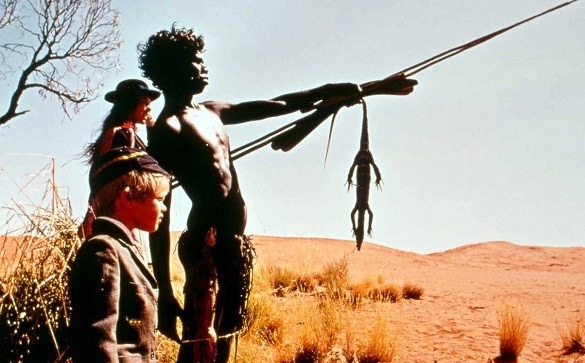
    Finally, we’ll have just a bit from John Barry’s haunting score to Nicholas Roeg’s “Walkabout” (1971), in which two British children find themselves stranded in the bush and survive only through the aid of a young Aborigine.

    We’re heading down under and out back this week, on “Picture Perfect,” music for the movies, this Friday evening at 6:00 EDT, on WWFM – The Classical Network and wwfm.org.

Tag Cloud

Aaron Copland (93) Beethoven (95) Composer (114) Film Music (145) Film Score (143) Film Scores (255) Halloween (94) John Williams (195) KWAX (229) Leonard Bernstein (104) Marlboro Music Festival (125) Movie Music (160) Mozart (91) Opera (213) Philadelphia Orchestra (89) Picture Perfect (174) Princeton Symphony Orchestra (109) Radio (88) Ross Amico (244) Roy's Tie-Dye Sci-Fi Corner (290) The Classical Network (101) The Lost Chord (269) Vaughan Williams (105) WPRB (397) WWFM (881)

DON’T MISS A BEAT

Receive a weekly digest every Sunday at noon by signing up here


RECENT POSTS