• Armstrong Gibbs Underrated British Composer

    Armstrong Gibbs Underrated British Composer

    by 

    in
    5 responses

    I’m not going to strong-arm anyone into liking Armstrong. It’s easy enough to fall in love with the easy charm and seductive melodies of Armstrong Gibbs.

    Cecil Armstrong Gibbs (1889-1960) is mostly known for his songs. He studied composition with Ralph Vaughan Williams at the Royal College of Music. Nevertheless, he is often dismissed for gravitating toward musical forms that could easily be described as “slight.”

    He did contribute his share of British Light Music, to be sure, but he also wrote symphonies. The second of these, the “Odysseus Symphony,” for soloists, chorus, and orchestra, is clearly cut from the same cloth as Vaughan Williams’ “A Sea Symphony.”

    It was Princess Elizabeth – the current Queen Elizabeth II – who requested of Armstrong a piece for her eighteenth birthday. The result was this gorgeous miniature, called “Dusk,” which became one of Gibb’s best-known works.

    Happy birthday, Armstrong Gibbs!


  • Sea Captain Movie Music Sail WWFM

    Sea Captain Movie Music Sail WWFM

    by 

    in
    4 responses

    Taste the lash, and prepare to be keelhauled!

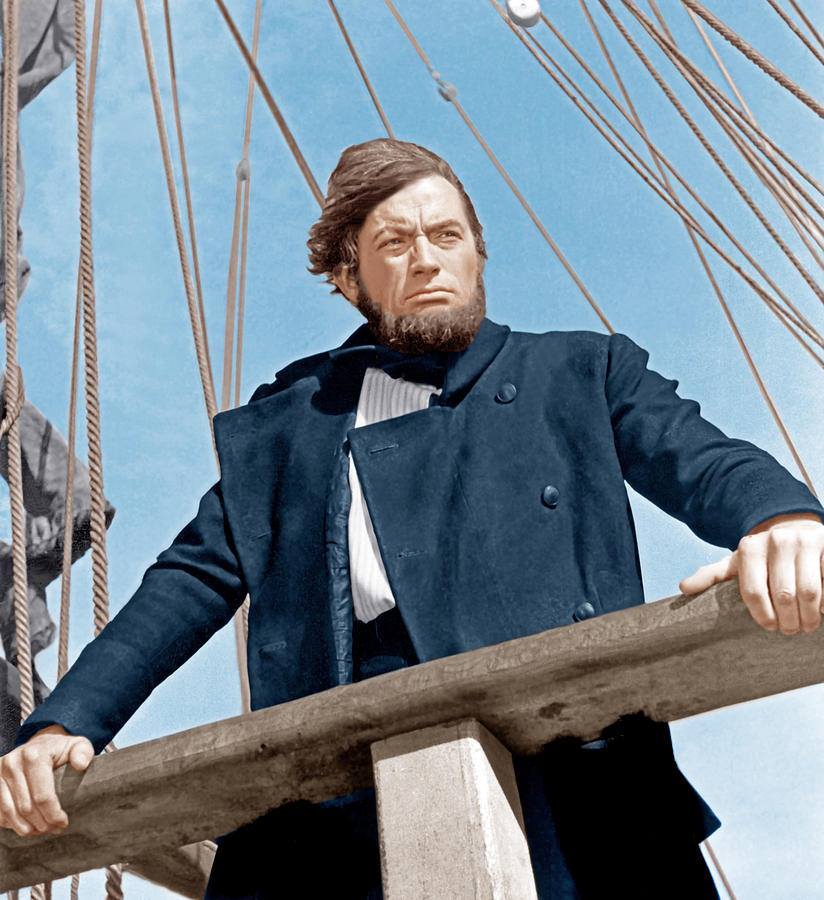
    This week on “Picture Perfect,” we stand tall against tyrannical sea captains, with music from “The Sea Wolf” (by Erich Wolfgang Korngold), “Moby Dick” (Philip Sainton), “The Caine Mutiny” (Max Steiner), and “Mutiny on the Bounty” (Bronislau Kaper). Strawberries will be pilfered and arms distributed among the crew, this Friday evening at 6:00 EDT, on WWFM – The Classical Network and wwfm.org.


    CAPTAINS OUTRAGEOUS (clockwise from left): Gregory Peck as Captain Ahab, Edward G. Robinson as Wolf Larsen, Humphrey Bogart as Captain Queeg, and Trevor Howard as Captain Bligh


  • Victor Young Forever The Composer Remembered

    Victor Young Forever The Composer Remembered

    by 

    in
    3 responses

    He may have died in 1956, but his music is forever Young. Victor Young was born in Chicago on this date in 1900.

    The composer of “Stella by Starlight” and “When I Fall in Love” was classically trained and thoroughly drilled: a violinist from the age of 6, he studied at the Warsaw Imperial Conservatory and found employment (following further training on the piano at the Paris Conservatory) while still a teen in the Warsaw Philharmonic Orchestra.

    His talent was admired by Czar Nicholas II, but his ability to capitalize on the connection was sharply curtailed as Russia boiled over into revolution, and Young barely escaped with his life. He fled to Warsaw and then Paris, and he didn’t stop running until he reached the United States.

    Here, he acted as a conductor and arranger of popular music. He was responsible for transforming Hoagy Carmichael’s “Stardust,” which had previously been played as an up-tempo dance number, into a romantic ballad, which secured its status as a mega-hit. “Stardust” went on to become one of the most-recorded songs of all time.

    In the mid-‘30s, Young made the move to film, where his gift for melody served him well. Over the course of the next two decades, he received 22 Academy Award nominations. Twice, he was nominated four times within a single year. Young holds the record for the most nominations prior to a win.

    Unfortunately, the honor of Oscar gold would be bestowed posthumously. His score for “Around the World in 80 Days” was recognized in 1957. Young died of a cerebral hemorrhage in November of 1956.

    In 20 years, he managed to compose 300 scores, among them those for “Reap the Wild Wind,” “The Glass Key,” “The Palm Beach Story,” “For Whom the Bell Tolls,” “The Uninvited,” “State of the Union,” “A Connecticut Yankee in King Arthur’s Court,” “Sands of Iwo Jima,” “Samson and Delilah,” “Rio Grande,” “The Greatest Show on Earth,” “Scaramouche,” “The Quiet Man,” “Shane,” “Three Coins in a Fountain” and “Johnny Guitar.”

    In 1960, he received a star on the Hollywood Walk of Fame. In 1970, he was inducted into the Songwriters Hall of Fame.

    Happy birthday, Victor Young. What you might have accomplished had you lived to be old!


    Nat King Cole singing “When I Fall in Love”

    “Scaramouche” (1952)

    “The Quiet Man” (1952)
    https://www.youtube.com/watch…

    “Around the World in 80 Days” (1956):


    PHOTO: Orson, Bing and Young


  • Schubert’s Bittersweet Farewell at Marlboro

    Schubert’s Bittersweet Farewell at Marlboro

    by 

    in
    One response

    Blissful days, you are eternally past!

    On this week’s “Music from Marlboro,” as this year’s Marlboro Music Festival approaches its final weekend, we’ll partake of an hour of bittersweet musings, courtesy of Franz Schubert. Even at the best of times, Schubert’s emotional equilibrium could be extraordinarily sensitive to change. But the works of his final year seem especially intimate – confessional, even.

    Is the melancholy traveler borne out to sea in “Auf dem Strom” (“On the River”) actually parting from life? The narrator is cut off from all human contact. He is unable to hear songs from the distant shore. His memory of his beloved is intense, even as she grows increasingly distant. The text, by Ludwig Rellstab, was originally intended for Beethoven, but Beethoven died before he could set to work on it.

    We’ll hear a performance of this remarkable art song from the 1960 Marlboro Music Festival, featuring soprano Benita Valente, hornist Myron Bloom, and pianist Rudolf Serkin.

    Faced with his own mortality, Schubert reacted as only Schubert could, by churning out masterpiece after masterpiece: two piano trios, three piano sonatas, the String Quintet in C, the song cycle “Schwanengesang,” and “The Shepherd on the Rock,” alongside assorted smaller works, all within the span of only six months. It’s an extraordinary act of defiance, or perhaps acceptance, of the inevitable.

    The haunting second movement of his Piano Trio No. 2 in E-flat major was written just as he received the news that his illness was beyond cure and that the end was near. The music holds the tragic and the romantic in devastating balance.

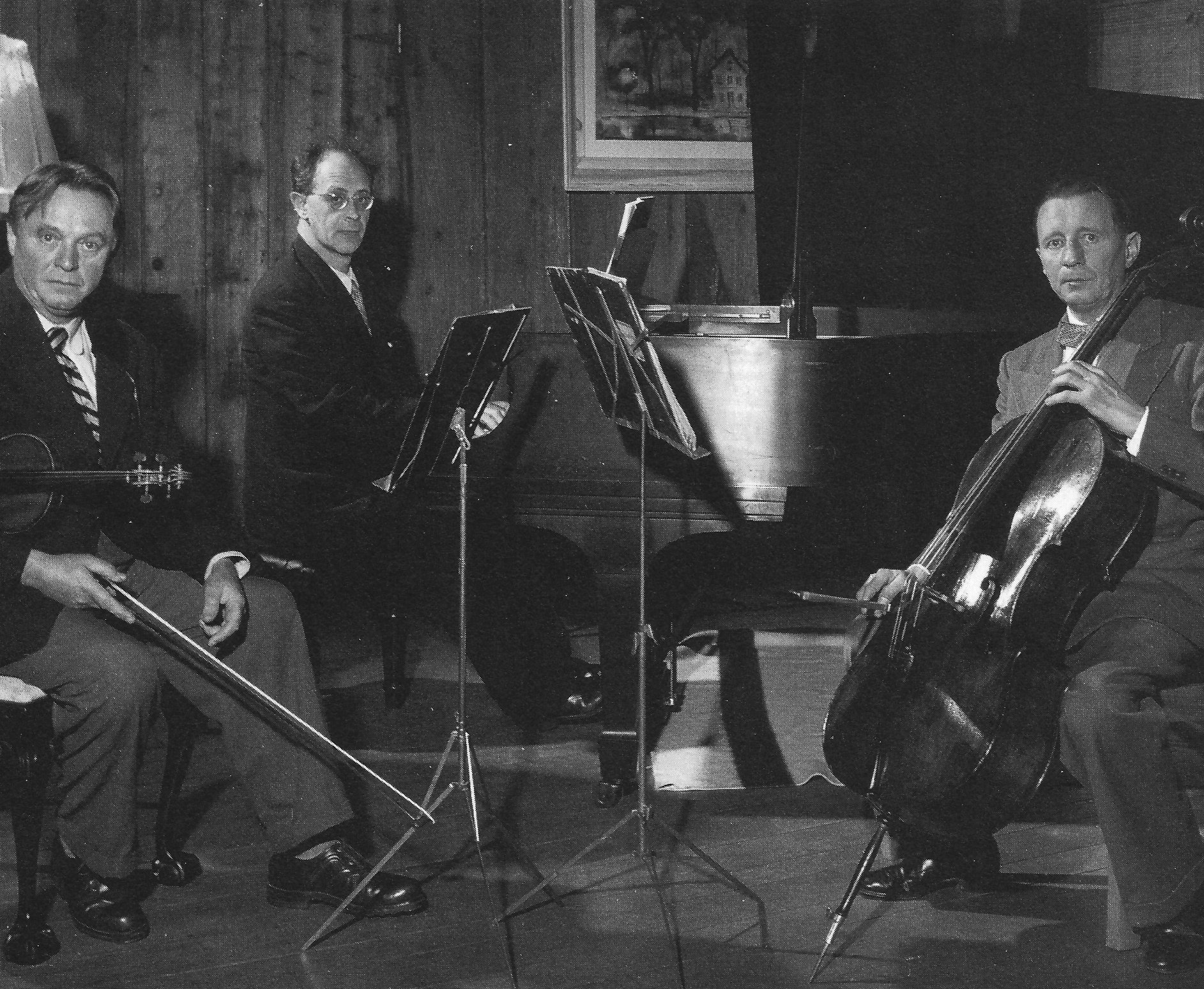
    The entire trio will be heard in a recording made in Brattleboro, VT, all the way back at the beginning, on October of 1951, featuring Marlboro cofounders, pianist Rudolf Serkin, violinist Adolf Busch, and cellist Herman Busch.

    By coincidence, tomorrow, August 8, is Adolf Busch’s birthday. What better way to celebrate than to remember him making music with those he loved?

    Both of these works, by the way, were presented on the only public concert devoted exclusively to Schubert’s music during the composer’s lifetime. The concert was held on the first anniversary of Beethoven’s death, March 26, 1828. Schubert himself would be dead only eight months later, at the age of 31.

    For more information on the concluding weekend of this summer’s Marlboro Music Festival, and its three valedictory concerts, visit marlboromusic.org.

    All good things must come to an end, on the next “Music from Marlboro,” this Wednesday evening at 6:00 EDT, on WWFM – The Classical Network and wwfm.org.

    Marlboro School of Music and Festival: Official Page


    PHOTO: Rudi and the Busches


  • Ryland Angel Bach on The Classical Network

    Ryland Angel Bach on The Classical Network

    by 

    in
    3 responses

    On today’s Noontime Concert on The Classical Network, it’s the Second Coming of Ryland Angel.

    You may recall, violent thunderstorms swept through the region on a Monday night two weeks ago, leaving many of us without power. While the station was able to continue to broadcast, thanks to a back-up generator, certain aspects of our daily operations, which we all generally take for granted – such niceties as light, air conditioning, phones, and internet – were out.

    Unfortunately, this meant that relevant sound files were temporarily inaccessible, so the Tuesday concert had to be postponed. But we’ll give it another shot today. Of course, there are more storms in the forecast, but at this point they don’t appear to be all that threatening. Famous last words?

    As for content, just to refresh your memory:

    Countertenor Ryland Angel will be joined by organist Richard Erickson in works by Johann Sebastian Bach, Johann Anastasius Freylinghausen, and Johann Rudolf Ahle, collected in the “Schemellis Gesangbuch.” Georg Christian Schemelli published his songbook in Leipzig in 1736. His son, Christian Friedrich, had been a student at the Thomasschule from 1733 to 1735 and later continued his studies at Leipzig University. Bach, of course, served as Thomaskantor from 1723 until his death in 1750.

    The concert was recorded in October at the chapel of Saint Bartholomew’s Church, 325 Park Avenue, in New York City. Free Midtown Concerts are held at St. Bart’s every Thursday at 1:15 p.m. during the regular season, brought to you in part to Gotham Early Music Scene, or GEMS. GEMS is a nonprofit organization that promotes and supports artists in New York City devoted to Early Music. You can learn more about Gotham Early Music Scene at gemsny.org.

    Following today’s concert broadcast, stick around for one of Anton Bruckner’s spiritually-infused symphonies, with the Vienna Philharmonic conducted by Bruckner pioneer Carl Schuricht.

    Hopefully I am not again tempting Fate by appropriating this image of Blake’s “Angel of the Revelation.” Ryland Angel was born on Saint Cecilia’s Day, so here’s hoping the patron saint of music is in our corner.

    The music will be heavenly, the performances revelatory, between 12 and 4 p.m. EDT, on WWFM – The Classical Network and wwfm.org.


Tag Cloud

Aaron Copland (93) Beethoven (95) Composer (114) Film Music (145) Film Score (143) Film Scores (255) Halloween (94) John Williams (195) KWAX (229) Leonard Bernstein (104) Marlboro Music Festival (125) Movie Music (160) Mozart (91) Opera (213) Philadelphia Orchestra (89) Picture Perfect (174) Princeton Symphony Orchestra (109) Radio (88) Ross Amico (244) Roy's Tie-Dye Sci-Fi Corner (290) The Classical Network (101) The Lost Chord (269) Vaughan Williams (105) WPRB (397) WWFM (881)

DON’T MISS A BEAT

Receive a weekly digest every Sunday at noon by signing up here


RECENT POSTS