• City Mouse Country Mouse Movies

    City Mouse Country Mouse Movies

    by 

    in
    5 responses

    There are of course many, many movies about “city mice” and “country mice” – those from the city displaced to a rural setting and those from the country dazzled by the city. These often take the form of fish-out-of-water comedies. But a trip the country can also be restorative, or even have redemptive qualities. Though in the end, more often than not, the central characters return to their place of origin.

    “Witness” (1985) employs elements of both “city mouse” and “country mouse.” The plot is set in motion by the witness of a murder by an Amish boy at Philadelphia’s 30th Street Station. The investigation reveals a vein of corruption in the Philadelphia Police Department, forcing a wounded detective, John Book (played by Harrison Ford), to lay low among the Amish. There are certainly comic elements, but also fascinating dramatic possibilities, in throwing together these figures from two very different cultures.

    The music was by Maurice Jarre. Jarre is best known for his scores presented on large orchestral canvases, for films like “Lawrence of Arabia” and “Dr. Zhivago.” But by the 1980s, he was experimenting with electronic music in films like “The Year of Living Dangerously,” “Mosquito Coast,” and “Dead Poets Society.” The approach worked particularly well in “Witness.”

    Another police thriller, “On Dangerous Ground” (1952), throws together a detective with definite anger management issues (played by Robert Ryan) with the backwoods father of a murder victim (played by Ward Bond) for a wild mountain manhunt. Ryan finds redemption through his interactions with the suspect’s blind sister, played by Ida Lupino. Bernard Herrmann wrote the music. If you find yourself trying to identify the solo string instrument, it’s actually a viola d’amore, an instrument rarely heard outside of the Baroque.

    “George Washington Slept Here” (1942), based on the play by Moss Hart and George S. Kaufman, is a “fixer-up” comedy, kind of a precursor to “Mr. Blandings Builds His Dream House” and “The Money Pit,” with perhaps a touch of “Green Acres” thrown into the mix. Jack Benny and Ann Sheridan play a Manhattan couple fed up with city living. They transport their family to a dilapidated Bucks County farmhouse, with predictably disastrous results.

    The somewhat cartoonish music is by English-born composer Adolph Deutsch, one of the less remembered names of Hollywood’s Golden Age, although he scored such high profile films as “The Maltese Falcon” and “Some Like It Hot.” His is an old fashioned approach – at any moment you might expect to hear a “sad trombone” – but it’s wholly appropriate in a film that features abundant pratfalls.

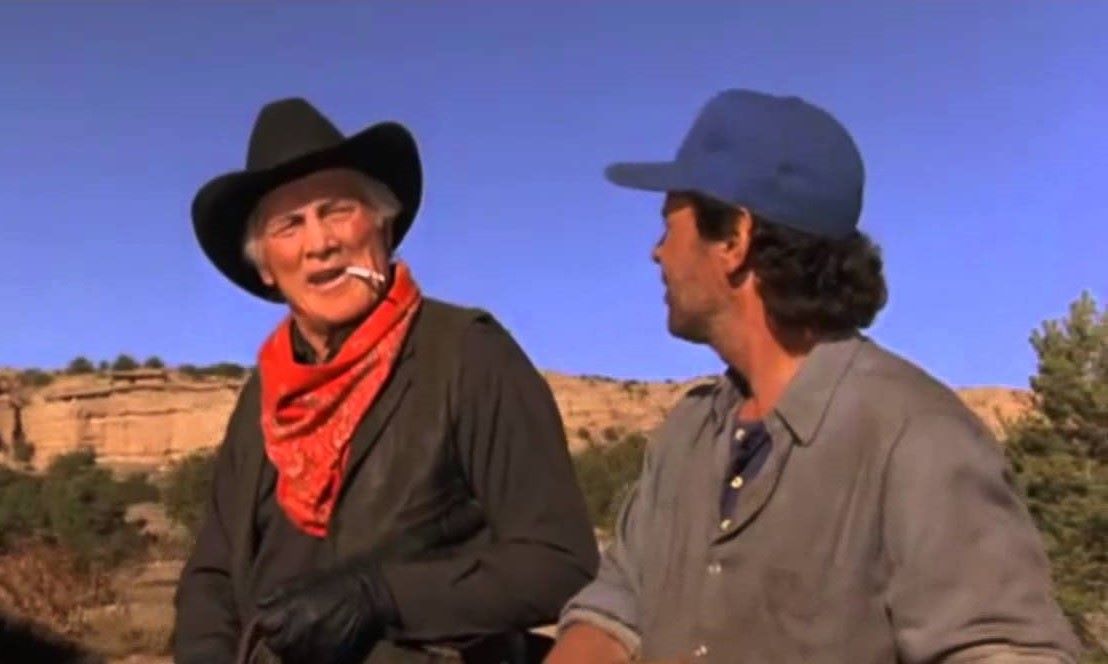
    Finally, the Billy Crystal comedy “City Slickers” (1991) is built on the premise of three middle-aged Manhattanites who find renewal and purpose at a kind of cowboy fantasy camp. Jack Palance gives an Oscar-winning performance as the intimidating trail boss. The music is by Marc Shaiman. Shaiman has also written for Broadway. He may be best known for his scores for the musicals “Hairspray” and “The Book of Mormon.”

    Whether you’re on the lam or on the lamb, the fresh air will do you good, as “city mice” go to the country this week, on “Picture Perfect,” music for the movies, this Friday evening at 6:00 EDT, on WWFM – The Classical Network and at wwfm.org.


  • Leif Kayser Danish Composer Centenary

    Leif Kayser Danish Composer Centenary

    by 

    in
    7 responses

    Composer, organist, pianist, conductor, priest, husband, teacher – Leif Kayser was certainly a multifaceted individual.

    Born in Copenhagen on this date in 1919, Kayer began his studies at the Royal Danish Academy of Music in 1936. In Stockholm, he studied composition with Hilding Rosenberg and conducting with Tor Mann. In 1941, he made his debut as a pianist, in Copenhagen, and as a conductor, in Gothenburg.

    As a composer, he emerged as one of Denmark’s most promising young symphonists. However, following theological studies in Rome, Kayser was ordained in 1949. He largely abandoned concert music – but you can’t keep a good composer down.

    Over time, he began to write for the organ and gradually he produced another symphony. He served as pastor and organist of St. Ansgar Roman Catholic Cathedral until 1964. Then he left the Church to marry and to teach at his alma mater, the Royal Danish Academy of Music.

    Kayser died in 2001. He is still regarded as one of the leading organ composers of Denmark.

    We’ll remember Leif Kayser, on the 100th anniversary of his birth, with a performance of his Symphony No. 2. It will serve as the spire atop a cathedral in sound, as we also observe the birthdays today of Antonín Vranický (1761-1820), Anton Eberl (1765-1807), and Carlos Chávez (1899-1978).

    That will be me in the cowl, enacting the ol’ switcheroo with David Osenberg, from 4 to 7 p.m. EDT, on WWFM – The Classical Network and wwfm.org.


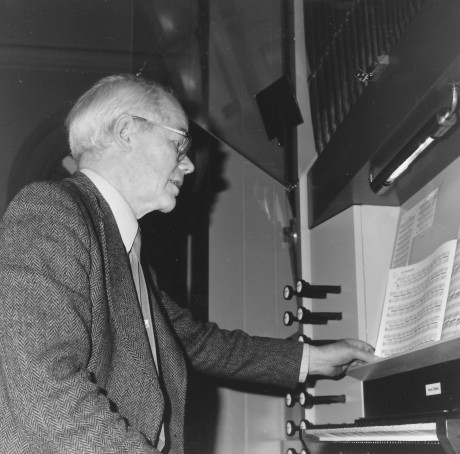
    PHOTO: Kayser pulls out all the stops for his centenary


  • Brahms’ Intense Piano Quintet at Marlboro Music

    Brahms’ Intense Piano Quintet at Marlboro Music

    by 

    in
    4 responses

    Don’t expect anything too drowsy on this week’s “Music from Marlboro,” when the focus will be on Johannes Brahms’ unusually intense Piano Quintet in F minor.

    This is not music of wistful reflection. The quintet is often tempestuous and even tragic, fueled by all the passion and earnestness of an excitable young man. Brahms began his quintet in 1862. He was 29 years-old.

    That’s not to say the composer ever teeters over into sentiment or excess of a kind common to his fin-de-siècle successors. Even in his 20s, Brahms was too much himself ever to allow that to happen.

    Instead he takes the prototype of the piano quintet – established by his friend and mentor, Robert Schumann – and fashions it into something unsettled and at times downright sublime. We are in the presence of something great, but also perhaps a little terrifying.

    This masterpiece of Brahms’ early maturity began life as a string quintet, written under the spell of Schubert’s famous Quintet in C. Brahms showed the work in this form to Clara Schumann and his friend, the violinist Joseph Joachim. Both were full of praise, at least at first, but gradually their compliments became outpaced by their suggestions. Joachim, in particular, admired the work’s power, but confessed he found little in it to charm.

    Undaunted, Brahms took the piece and arranged it for two pianos in 1863-64, consigning the original version, for strings alone, to flames of woe. This two-piano reworking was more politely than enthusiastically received, and Clara, thinking it sounded more like a transcription now than an original composition, begged him to recast it once more.

    The third time proved to be a charm. The resulting quintet, which achieved its final state in the summer of 1864, was met with resounding acclaim. At last, the piece had arrived at a perfect marriage of expression and form.

    While Brahms retains the classical poise for which is so well known, he stiffens the sinews and conjures the blood, so to speak. In fact, there are times when he ratchets up the tension so effectively it seems the music might just fly off the rails.

    We’ll hear an exciting performance from the 2007 Marlboro Music Festival, featuring pianist Richard Goode, violinists Augustin Hadelich and Benjamin Beilman, violist Samuel Rhodes, and cellist Amir Eldan.

    Proceed at your own risk. Safety gear will not be provided, on this week’s “Music from Marlboro,” this Wednesday evening at 6:00 EDT, on WWFM – The Classical Network and wwfm.org.

    Marlboro School of Music and Festival: Official Page


  • Marlboro Music Change Beethoven Tchaikovsky Sextets

    Marlboro Music Change Beethoven Tchaikovsky Sextets

    by 

    in
    9 responses

    MAY I HAVE YOUR ATTENTION, PLEASE!

    Last minute programming change for this week’s “Music from Marlboro:”

    Due to circumstances beyond our control, we will not be able to bring you Brahms’ Piano Quintet in F minor, as previously announced. In its place, we’ll lose ourselves in wild abandon over Beethoven’s Sextet for Winds in E-flat major, Op. 71, and Tchaikovsky’s Sextet for Strings in D minor, “Souvenir de Florence.”

    I hope you’ll join me for the joy of sextets on the next “Music from Marlboro,” this Wednesday evening at 6:00 EDT, on WWFM – The Classical Network and wwfm.org.

    Marlboro School of Music and Festival: Official Page


  • Strings Music Festival Steamboat on WWFM

    Strings Music Festival Steamboat on WWFM

    by 

    in
    8 responses

    Once again, we’re off to a Rocky start. But that’s not necessarily a bad thing, when you consider we’re talking about the Rocky Mountains and the Strings Music Festival Steamboat Springs, CO.

    On today’s Noontime Concert on The Classical Network, enjoy highlights from a recital given by Cliburn silver medalist Kenny Broberg. The program will include César Franck’s Prélude, Fugue et Variation, Op. 18; Beethoven’s Piano Sonata No. 24 in F major “À Thérèse;” and Bach’s Toccata in C minor, BWV 911. We’ll also hear pianist Benjamin Hochman perform Bach’s French Suite in G major, BWV 816.

    The Strings Music Festival is a summer series that presents music of the highest quality in a picturesque mountain setting. Each year, a genre-spanning lineup is performed by classical musicians from the nation’s top orchestras and chart-topping contemporary artists, all of whom appear in an intimate 569-seat pavilion nestled at the base of the mountains around Steamboat Springs.

    This summer will mark Strings’ 32nd season. The festival’s nearly 60 events will embrace orchestral and chamber music, instrumental soloists, world music, blues, jazz, rock, a youth and family series, and free community programs.

    The opening classical concert will take place on June 22 and will feature Wagner’s “Siegfried Idyll,” Grieg’s “Holberg Suite,” and Beethoven’s Symphony No. 4. The orchestra will be conducted by Michael Sachs. For more information and a complete schedule, look online at stringsmusicfestival.com.

    Following today’s concert broadcast, stay tuned for more mountain music. Among the featured works will be Carter Pann’s “Slalom” – inspired by a family skiing trip to Steamboat Springs!

    Go tell it on the mountain. We’ll present quite a range, from 12 to 4 p.m. EDT, on WWFM – The Classical Network and wwfm.org.


Tag Cloud

Aaron Copland (93) Beethoven (95) Composer (114) Film Music (145) Film Score (143) Film Scores (255) Halloween (94) John Williams (195) KWAX (229) Leonard Bernstein (104) Marlboro Music Festival (125) Movie Music (160) Mozart (91) Opera (213) Philadelphia Orchestra (89) Picture Perfect (174) Princeton Symphony Orchestra (109) Radio (88) Ross Amico (244) Roy's Tie-Dye Sci-Fi Corner (290) The Classical Network (101) The Lost Chord (269) Vaughan Williams (105) WPRB (397) WWFM (881)

DON’T MISS A BEAT

Receive a weekly digest every Sunday at noon by signing up here


RECENT POSTS