• WFLN Philadelphia Airchecks Jill Pasternak & More

    WFLN Philadelphia Airchecks Jill Pasternak & More

    by 

    in
    7 responses

    My recent posts about Jill Pasternak have prompted me to go back and search out a few air checks of WFLN that I’d been able to find online. WFLN served as Philadelphia’s only full-time classical music radio station since 1949. Pasternak, who was hired in 1986, was the one tasked with bidding farewell, before the frequency’s changeover to a contemporary pop format, on September 5, 1997.

    At the link below, you’ll find her in happier times, sitting in for Bill Shedden and hosting “Evening Concert” on August 20, 1989. Jill introduces music by Balakirev, Tchaikovsky, and Rachmaninoff. (The audio cuts off shortly after she announces Rimsky-Korsakov’s “Scheherazade.”)

    On the same page, there’s a sound file of Frank Kastner hosting on October 22, 1989. Kaster was the announcer who signed on the station on March 14, 1949 (his 25th birthday), playing Brahms’ “Academic Festival Overture,” Rachmaninoff’s Piano Concerto No. 2, and Sibelius’ Symphony No. 2 from 78 rpm records. The playlist here consists of Léo Delibes’ “Coppélia” (in progress) and Ralph Vaughan Williams’ Partita for String Orchestra (sadly, cutting off before the end).

    WFLN (Philadelphia) Evening Concert

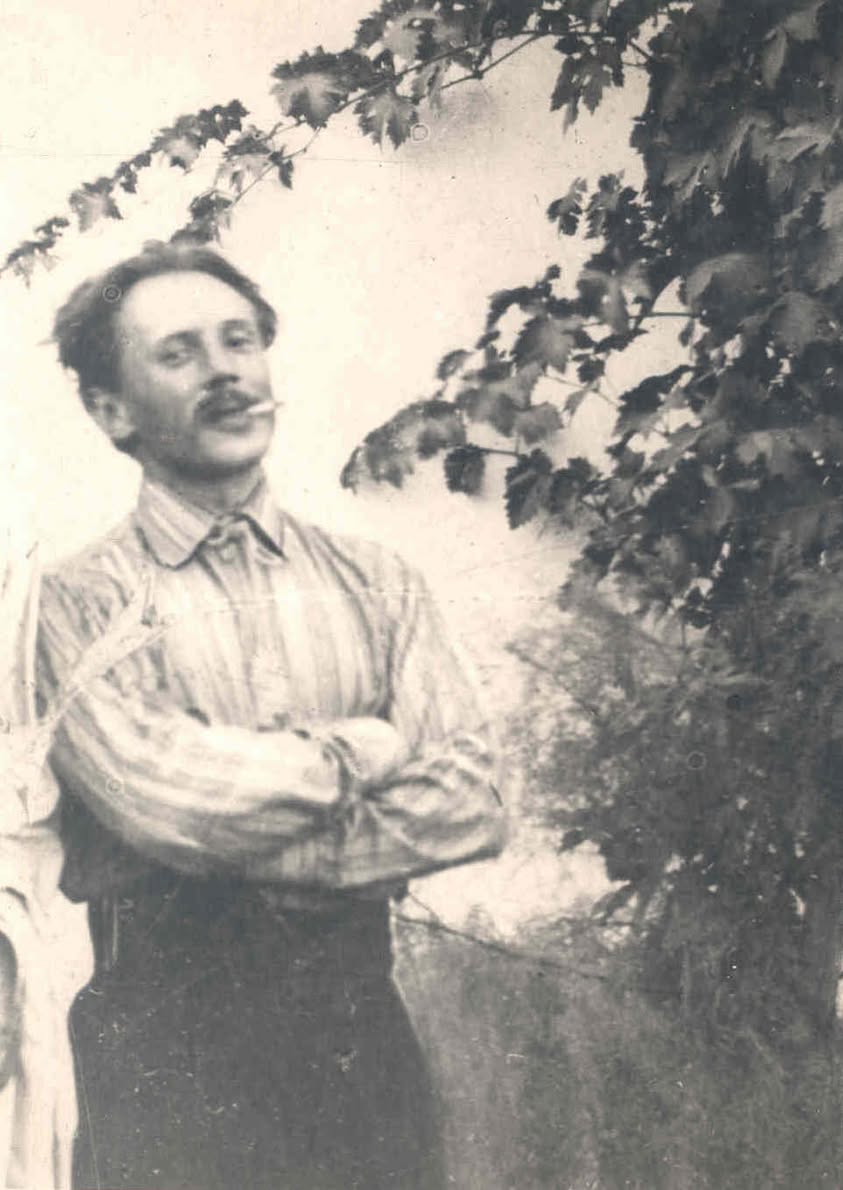
    PHOTO: Representatives of the WFLN crew in 1997, Jill Pasternak kneeling in front. I also recognize Mark Pinto (left), Dave Conant (obscured), Frank Kastner (with mustache), Charles Lee (white hair), Jack Moore (white jacket), Bill Shedden (blue shirt). Anyone know the others?


  • Remembering WFLN Philadelphia’s Lost Classical Station

    Remembering WFLN Philadelphia’s Lost Classical Station

    by 

    in
    5 responses

    My post on July 28 about the passing of WRTI radio host Jill Pasternak stimulated some interesting reader comments and a lot of personal memories about Jill’s former employer, the late, great WFLN, Philadelphia’s full-time classical music station for nearly 50 years. I am a nostalgic person by nature, so it’s easy for me to get lost for hours sometimes obsessively googling favorite subjects from the past. WFLN flourished largely in the days before the internet, so every nugget is hard-won and savored to the fullest. I wish there were more out there. But I am always digging.

    Yesterday, David Nethermark Carson left a message on the Pasternak post. He was WFLN’s chief engineer for a time in the 1950s. That reminded me of this blog I stumbled across a few years ago by former WFLN host Gordon Spencer, who also goes way back. It occurs to me, I may never have mentioned it or shared the link. There’s not much to it, only a few entries, but it offers some valued glimpses of the Wild West days of Philadelphia’s now-lamented classical music station. Since WFLN was sold in 1997 (28 years ago???), the sixth largest city in the United States has been without a full-time classical music broadcast outlet.

    WRTI, as Temple University’s former full-time jazz station, now divides its schedule between jazz and classical. Interestingly, I learn from Spencer’s reminiscences that at one time WFLN offered jazz as well.

    Spencer died in 2018 at the age of 84. His entries are prefaced with a remembrance by his wife.

    https://stationbreaks2bygordonspencer.umkc.edu/


  • Montemezzi’s Lost Opera A Rediscovery

    Montemezzi’s Lost Opera A Rediscovery

    by 

    in
    2 responses

    If opera will not come to the middle of the mountain, the middle of the mountain will come to opera!

    Today marks the 150th anniversary of the birth of Italo Montemezzi (Montemezzi, if I am not mistaken, literally translating as “half-mountain”).

    A representative of that vast artistic lineage of one-hit wonders, Montemezzi is pretty much known for his opera “L’amore dei tre re” (“The Love of Three Kings”), which one might assume from the title to be a heartwarming Christmas piece about the three Magi, along the lines of Gian Carlo Menotti’s “Amahl of the Night Visitors.” If so, one would be mistaken.

    “L’amore dei tre re” is an overheated historical tragedy, centering around a love triangle – perhaps even a ménage à quatre – in which everyone winds up dead or inconsolable. Another great night at the theater! Only in opera does one set foolish, deadly traps to ensnare the guilty, only to have the scheme backfire horribly.

    “L’amore dei tre re” opened at La Scala in 1913 to mixed reviews. But what do the Italians know about opera? When it made its way abroad, it became an international success. In the U.S., it was hailed as “the best operatic work coming from Italy since Verdi’s ‘Falstaff.’” In 1918, it was sung at New York’s Metropolitan Opera by Enrico Caruso, Claudia Muzio, and Pasquale Amato.

    Alas, the mania for “The Love of Three Kings” proved to be but a flare. The opera had its moment, but after World War II, frequency of performances declined to the point where now, if it’s ever done at all, it’s an event.

    Unabashedly decadent, coyly erotic, dramatic, and dreamlike, “Three Kings” may be Italian, but it was written by a composer who had assimilated broader musical influences. The score cranks up the heat, in kind of a mélange of Wagner, Strauss, and Debussy.

    It won’t turn up very often at your friendly neighborhood opera house. Happily, there’s a fine recording of the work in modern sound (i.e. stereo), featuring Anna Moffo, Placido Domingo, and Cesare Siepi.

    That said, here’s an interesting document from the Met in 1941, with the composer conducting on a broadcast introduced by Milton Cross!

    In 1948, the New York Times described “L’amore dei tre re” as “a tone poem for voices and orchestra,” lauding it as “the most poetic and aristocratic of Italian operas” and declaring of its composer, “He never descends beyond the loftiest level.”

    Not bad! Where is it now?

    We’ll keep a candle in the window for you on your sesquicentenary, Italo Montemezzi.


  • Martinů and His World Bard Music Festival

    Martinů and His World Bard Music Festival

    by 

    in
    5 responses

    Here’s a little teaser about the 35th Bard Music Festival, “Martinů and His World,” which will take place at Bard College in Annandale-on-Hudson, NY, August 8-10 and 14-17.

    https://www.facebook.com/reel/1247374413423449

    As a bonus, I’m also including links (below) to a few works that will be featured on this year’s concerts, to give you an idea what to expect. Of course, a lot of other composers’ music will be performed, as well. This is Martinů AND HIS WORLD, remember. The programs come pretty fast and furious at Bard. It’s a lot to take in, but you know I’ll do my best to report here on what I can.

    If the promo’s music bed intrigues you, it’s from “The Frescoes of Piero della Francesca.” The audio is excerpted from an earlier Bard concert, but the work itself is not scheduled for this year’s festival. All the same, I’ll include a link to that too.

    But first, more about the Bard Music Festival:

    Bard Music Festival

    Fisher Center at Bard


    Nonet

    Cello Sonata No. 3

    “La revue de cuisine” (ballet about kitchen utensils!)

    Symphony No. 6 “Fantaisies symphoniques”

    “The Epic of Gilgamesh”

    “Les fresques de Piero della Francesca”


  • Dog Days of Summer Music Playlist

    Dog Days of Summer Music Playlist

    by 

    in
    6 responses

    This week on “Sweetness and Light,” we’ll be lounging around the water bowl with our legs out. It’s music for the dog days of summer.

    When I was a kid, I remember hearing about “the dog days” and wondering what that was supposed to mean, exactly. I assumed it must have been when all the dogs were as flat or extended as possible (now known as splooting). Let sleeping dogs lie!

    Later, I wondered specifically when that period was supposed to be. Before the internet, I surmised it must have been the hottest period of summer; and I suppose, more or less, I was correct.

    It wasn’t until adulthood that I learned the dog days are an actual span that coincides with the heliacal rise of Sirius – the “Dog Star.” Heliacal rise is a fancy way of saying that the star becomes visible above the eastern horizon just before sunrise. In other words, it’s the morning star.

    Modern sources are a little fast and loose with the astrological ties. The dates might as well come printed on the calendar, as in the English-speaking world, the dog days are now inflexibly July 3 to August 11.

    Be that as it may, unsurprisingly, the dog days got me thinking about… wait for it… DOGS. More specifically, dogs and music. I hope you’ll join me today for a playlist of canine classics by Arthur Pryor, Peter Schickele, Sir Edward Elgar, George Gershwin, Walter Piston, and Daniel Dorff.

    It will have you panting for more!

    Better have some Milk Bones and a lint roller handy for “Sweetness and Light,” this Saturday morning at 11:00 EDT/8:00 PDT, exclusively on KWAX, the radio station of the University of Oregon!

    Stream it wherever you are at the link:

    https://kwax.uoregon.edu/


Tag Cloud

Aaron Copland (93) Beethoven (95) Composer (114) Film Music (136) Film Score (143) Film Scores (255) Halloween (94) John Williams (195) KWAX (229) Leonard Bernstein (103) Marlboro Music Festival (125) Movie Music (151) Mozart (88) Opera (208) Philadelphia Orchestra (89) Picture Perfect (174) Princeton Symphony Orchestra (108) Radio (88) Ross Amico (244) Roy's Tie-Dye Sci-Fi Corner (290) The Classical Network (101) The Lost Chord (268) Vaughan Williams (103) WPRB (396) WWFM (881)

DON’T MISS A BEAT

Receive a weekly digest every Sunday at noon by signing up here


RECENT POSTS