The organist Peter Hurford has died. His Bach, Poulenc, and Saint-Saëns recordings have long been a part of my life. Stop with the deaths of the musical giants already!
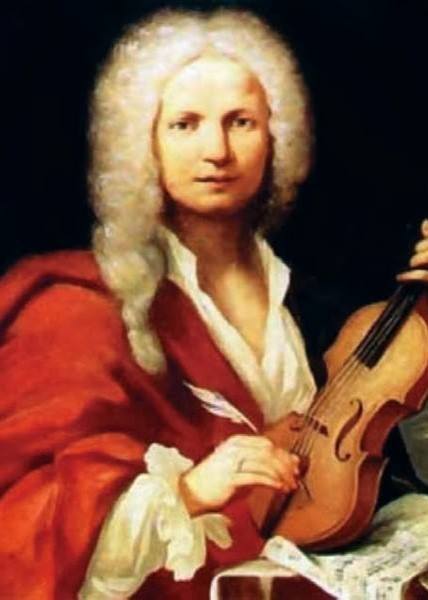
Today is the anniversary of the birth of Antonio Vivaldi. The Red Priest. Igor Stravinsky once quipped that Vivaldi wrote the same concerto 500 times. We’ll only have time for three.
We’ll also celebrate conductor Bernard Haitink on his 90th birthday, and remember three great musicians who died in the past four days: conductor, pianist, and composer André Previn, organist Peter Hurford, and choral director Joseph Flummerfelt.
We’ll see Red and we’ll see blue, from 4 to 7 p.m. EST, on WWFM – The Classical Network and wwfm.org.
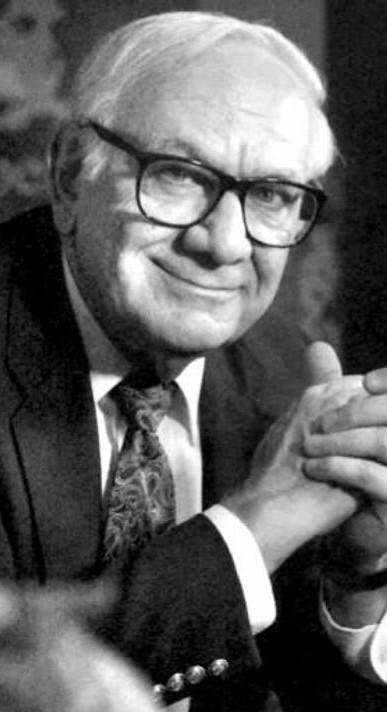
American composer Dominick Argento died on February 20 at the age of 91. Acclaimed particularly for his vocal works, Argento was awarded the Pulitzer Prize for Music for his song cycle, “From the Diary of Virginia Woolf,” in 1975. This Sunday night on “The Lost Chord,” I’ll offer a remembrance of the man and his achievements.
Argento was born in York, PA, to Sicilian immigrant parents, who were inn-keepers and restaurateurs. However, it was in the Twin Cities that he would flourish. He became a professor of music at the University of Minnesota and one of the founders of what is now Minnesota Opera.
He was recognized as a master of modern opera, the most significant American operatic composer between Gian Carlo Menotti in the 1950s and Philip Glass in the 1970s. His success is all the more remarkable, considering Argento spent virtually his entire career very far away from the artistic centers on either coast.
Largely self-taught as a child, he was accepted into the Peabody Conservatory, after service in WWII. There, among his teachers, were Nicolas Nabokov and Hugo Weisgall. Later, he continued his studies with Luigi Dallapiccola in Florence. Howard Hanson, Bernard Rogers, and Alan Hovhaness were also important mentors. Argento received his doctorate from the Eastman School in 1958. He then moved to Minneapolis, where he lived for the next six decades, summering in Florence with his wife, the soprano Carolyn Bailey.
In Minneapolis, he worked closely with the newly-formed Guthrie Theatre. His local successes attracted national nation and led to commissions from major opera houses from all over the country. His song cycles were championed by some of the great singers, including Frederica von Stade, Janet Baker, and Håkon Hågegard. “Casa Guidi,” a song cycle on texts of Elizabeth Barrett Browning, was recorded by Von Stade and received a Grammy Award in 2004 for Best Contemporary Classical Composition.
Beginning in the early ‘70s, Argento also devoted himself to choral music, in large part because of his association with Philip Brunelle and the Plymouth Music Series of Minneapolis’ Plymouth Congregational Church.
In common with Benjamin Britten, Argento’s musical language could be, on occasion, a little quirky, yet always he strove for accessibility. Among his own students were Libby Larsen and Stephen Paulus.
We’ll hear music from one of his 14 operas, “The Dream of Valentino,” from 1993. Accordionist William Schimmel will strut and slither in “Valentino Dances.”
That will be followed by “Six Elizabethan Songs” from 1958. Originally scored for voice and piano, it was subsequently arranged by the composer in 1962 for voice and Baroque ensemble. The added colors of flute, oboe, violin, cello, and harpsichord lend the work a kind of refracted authenticity, conjuring a loosely apposite sound world to the individual texts by Thomas Nash, Samuel Daniel, William Shakespeare, Henry Constable, and Ben Johnson. The performance will be by Patrice Michaels and the Rembrandt Chamber Players.
Finally, Argento was composer laureate of the Minnesota Orchestra, having been commissioned to write no less than seven works for the ensemble. We’ll hear “A Ring of Time,” conceived for the 1972-73 season, the orchestra’s 70th anniversary. Argento considers different measurements of the passage of time – the seasons of the year and the times of the day – in the work’s four movements: “Spring,” “Summer,” “Fall,” and “Winter.” The Minnesota Orchestra will be conducted by Eiji Oue.
Time has passed for Domenick Argento. I hope you’ll join me for an hour of musical remembrances on “Argento Mementos,” this Sunday night at 10:00 EST, on WWFM – The Classical Network and wwfm.org.
This Sunday night on “The Lost Chord,” I’ll be honoring the late American composer Dominick Argento. Argento died on February 20 at the age of 91. Join me for his “Valentino Dances,” “Six Elizabethan Songs,” and “A Ring of Time.” It’s an hour of “Argento Mementos,” this Sunday night at 10:00 EST, on WWFM – The Classical Network and wwfm.org.
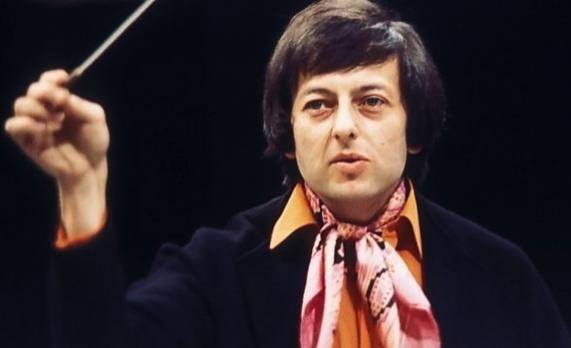
It’s been impressive and heartwarming to observe the outpouring of affection for André Previn the past couple of days. Previn, of course, died on Thursday at the age of 89.
A fabulous and frequently stunning musician, he was not only a top conductor, but also a fine pianist – fluent in both the classical and jazz worlds – a talented composer, totally without pretense, a crackerjack writer of film scores and musical arrangements, an author, an entertaining raconteur, and a sly wit. He was a true Renaissance man, like Leonard Bernstein, though he tended to play his cards a little closer to the vest. His love life could be a little over the top – he was married five times – and who knows, if he had come up in the age of Twitter, maybe he would have taken more of a beating.
Previn never achieved the level of public adulation that Lenny did, which is why the tsunami of love from all quarters kind of comes as a surprise to me. A pleasant surprise, granted. Criticisms of some of his musical performances were akin to damning with faint praise. On the other hand, when he was on, he was really on. The man could conduct the tar out of Rachmaninoff, Vaughan Williams, Prokofiev, Shostakovich, and William Walton, and he could surprise in his easy mastery of composers such as Richard Strauss.
I was lucky enough to see him conduct live twice. In 1995, he led a luminous performance of Vaughan Williams’ Symphony No. 5, with the Curtis Symphony Orchestra, which he recorded with the ensemble shortly thereafter. As is generally the case – Curtis is one of the top conservatories in the world – the students played like gods.
Later, I saw him lead the Philadelphia Orchestra, in 2009. On the program was Mozart’s Piano Concerto No. 24 and Strauss’ “Symphonia Domestica.” It was a shock to realize at that point that Previn was 80, and it was with concern that I watched as he stepped with evident care onto the stage, as if he were living the famous Danny Kaye routine. It was painful to see, and one of those instances where you wonder if the conductor is even going to make it to the podium.
The Mozart may not have been transcendent, but it was still a joy to hear him play (he conducted from the keyboard), even if some of the facility was diminished; but the Strauss, which he conducted from a chair, was as assured as it had been when he made his knock-out recordings of the complete tone poems with the Vienna Philharmonic.
I was also fortunate enough to interact with him twice. The first time was wholly by chance. It was in the early ‘90s, a day like any other day, and I walked out of my apartment building in Philadelphia to encounter André Previn passing on the street. Startled, I said the first thing that popped into my head – which was, I am embarrassed to report, “Maestro! Good to see you!” To which he replied with a wry smile, “Good to see you, too.”
It was on 18th Street, below Spruce. He was heading south into a residential neighborhood, where he must have been staying, because at the time there was nothing else in that direction. Of course, I lived a block and half from the Curtis Institute.
The second time was an actual conversation, in which we got to talk music. It was in the late ‘90s or early 2000s, and Previn was engaged in recording a couple of Korngold albums. I know it was after he did the symphony, but it may have been before he recorded the film scores, both for Deutsche Grammophon. He remarked that he would love to record the complete “Die tote Stadt” with Renée Fleming, but it was a matter of getting their schedules to mesh. Can you imagine? Unfortunately, it never came to pass. I also asked him why he didn’t include the overture in his otherwise fine recording of Korngold’s “Much Ado About Nothing.” His answer, again with that smile: “I didn’t know there was an overture!”
Because of the timing of his death, it’s been hard to engineer a proper tribute, but I will be working Previn’s recordings into my air shifts over the coming week. So you’ll have a good chance of encountering his artistry if you tune in on Monday from 4 to 7 p.m., Tuesday from 1 to 4 p.m., and Wednesday from 4 to 6 p.m. In fact, I am planning to make the playlist on Tuesday all-Previn, encompassing his talents as conductor, pianist, and composer.
On Friday at 6 p.m., “Picture Perfect” will focus on his work in the film industry. He was involved with 50 movies, and on top of everything else won four Oscars.
Then next Sunday night, February 10, on “The Lost Chord,” I’ll present an hour of his original concert music, at 10 p.m.
All times are EST, and all shows can be heard on WWFM – The Classical Network and at wwfm.org.
Finally, Patrick Jonathan reminded me of this classic Morecambe and Wise sketch with “Mr. Preview” conducting the Grieg Piano Concerto. As an American, it is my only exposure to Morecambe and Wise, but it has the reputation of being the ne plus ultra of the team’s career.


One response