• Chopin Brouwer Saint David and Previn on WWFM

    Chopin Brouwer Saint David and Previn on WWFM

    by 

    in
    7 responses

    There’s so much going on, and I’ve got only two hours to touch on everything today on The Classical Network!

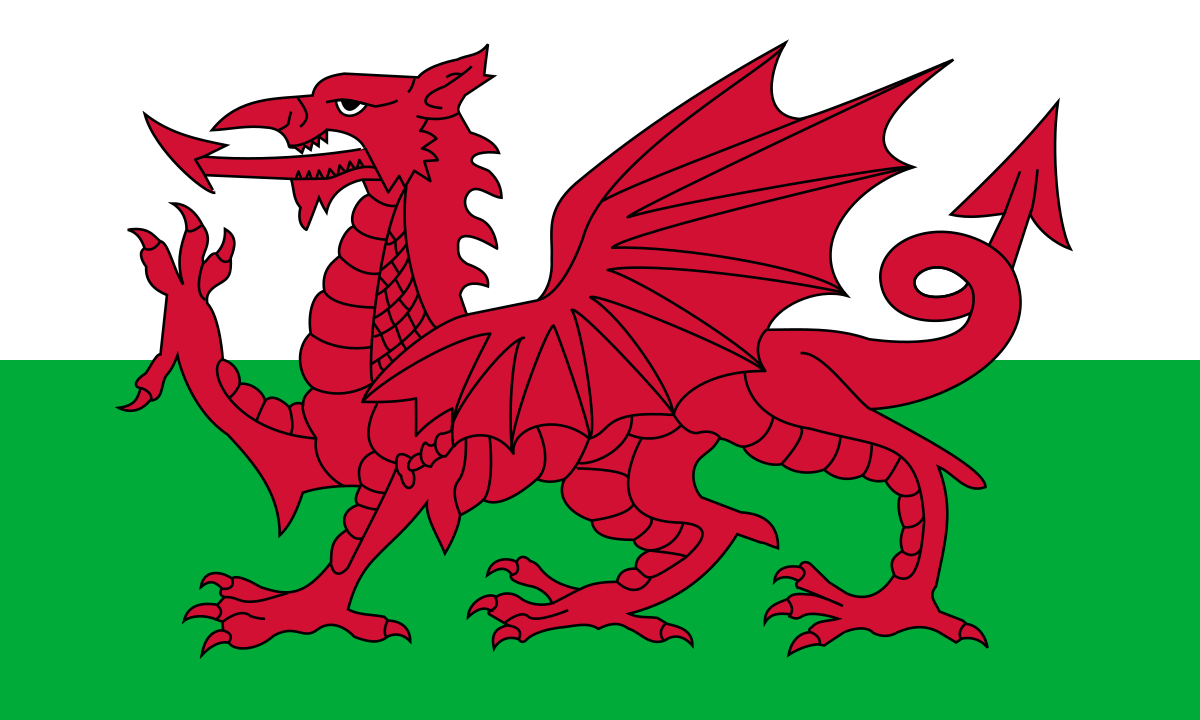
    To begin with, March 1 is the anniversary of the birth of Frederic Chopin. You can’t ignore that. It’s also the 80th birthday of Cuban composer and guitarist Leo Brouwer. AND it’s the feast day of Saint David, the patron saint of Wales.

    And let me express my regret right away to any of you of Welsh descent: I had fully intended to do a “Picture Perfect” (this evening at 6:00) made up entirely of music from movies set in Wales. However, because of some last-minute editing issues – I had not anticipated having to jettison half of my recorded script for this week’s edition of “The Lost Chord” on account of having chosen way too much music for my memorial to the late Dominick Argento (to air Sunday at 10:00 p.m.) – I am falling back on an encore broadcast of PP from three years ago.

    It’s still a good show (“Behind-the-Scenes Hollywood”), and timely, as it runs so close upon the heels of Oscar. Listen in for music by Franz Waxman (“Sunset Boulevard”), David Raksin (“The Bad and the Beautiful”), Dominic Frontiere (“The Stunt Man”), and Ludovic Bource (“The Artist”).

    In the meantime, I will do my best to include a few works by Welsh composers, between 4 and 6 p.m. It is also, after all, the birthday of the Welsh harpist John Thomas.

    And of course, we lost André Previn yesterday. It pains me to have to postpone a proper memorial – he was such a superb and versatile musician – but you can tune in next week for all-Previn playlists on both “Picture Perfect” and “The Lost Chord.” In the meantime, Previn will be represented on every one of my weekday air shifts, including this afternoon’s.

    I’ll do the best that I can, with my abbreviated Friday, from 4 to 6 p.m. EST. Don’t forget, “Picture Perfect” is on the way at 6! My weekend will be well-earned today, on WWFM – The Classical Network and wwfm.org.


  • Philly Inquirer’s Feline Future

    by 

    in
    7 responses

    This cat definitely has a future with the Philadelphia Inquirer.


  • Mendelssohn & Reger: Bridging Worlds at Marlboro

    Mendelssohn & Reger: Bridging Worlds at Marlboro

    by 

    in
    5 responses

    On this week’s “Music from Marlboro,” we’ll have music by two undersold composers who seemed trapped between two worlds.

    While Felix Mendelssohn and Max Reger were very much figures of their respective times, they both found abundant inspiration in music of the past, frequently the distant past. In addition, they often gave the impression of being just a little tentative when it came to exploring musical trends of the present.

    Common to both was an overarching respect for the works of Johann Sebastian Bach. It was Mendelssohn, of course, who at the age of 20 would engineer the first modern performance of Bach’s “St. Matthew Passion.”

    Reger composed a lot of fugues and sets of variations, fancying himself the heir of Beethoven and Brahms; but also, in his own gargantuan, overbaked way, modeling himself on the Baroque’s most outstanding genius.

    Though both Mendelssohn and Reger subsumed romantic characteristics into their music, neither did so at the expense of traditional forms. There are exceptions to every rule, as they say, but generally speaking Mendelssohn’s more emotional utterances seemed to flow most convincingly in the works of his early maturity.

    When he came to write his String Quartet in A minor, it was not Bach but Beethoven who was foremost in his thoughts. The composer was 18 years-old at the time of Beethoven’s death in 1827. He was clearly intoxicated by the Master’s late quartets, which had only recently been published.

    Though certainly influenced by Beethoven, Mendelssohn’s own essay in the form is quite at odds with the introspection of Beethoven’s Op. 135. In contrast, he infuses his own quartet’s Classical structure with a passionate Romanticism. That the synthesis would be so successful is hardly surprising from a teenaged marvel who, within the last two years, had already written an astonishing Octet for Strings and the overture to “A Midsummer Night’s Dream.” In his quartet, Mendelssohn also explores the possibilities of cyclic form more exhaustively than just about any other composer before César Franck.

    We’ll hear the Quartet in A minor performed at the 1995 Marlboro Music Festival by violinists Lisa-Beth Lambert and Hiroko Yajima, violist Annemarie Moorcroft, and cellist Sophie Shao.

    There are times when Reger’s music can be beyond rigorous. In fact, it might be better termed “Regerous.” Perhaps the craziest exemplar of vertiginous Teutonic counterpoint, he could write organ music of such density that the individual voices get lost in a tangle, deep inside a knot, somewhere in an impenetrable thicket.

    However, on two pianos, it all seems to make sense. The program will begin with a 1977 performance of Reger’s “Introduction, Passacaglia and Fugue,” Op, 96, performed by Marlboro stalwart Luis Batlle and a 19 year-old Yefim Bronfman.

    Were they born too late, or merely uneasy with the more progressive impulses of their times? Quiet your head and enjoy the music. I hope you’ll join me for works by Reger and Mendelssohn on the next “Music from Marlboro,” this Wednesday evening at 6:00 EST, on WWFM – The Classical Network Network and wwfm.org.

    Marlboro School of Music and Festival: Official Page


  • Marian Anderson Birthday Celebration

    Marian Anderson Birthday Celebration

    by 

    in
    3 responses

    Arturo Toscanini lauded hers as “a voice that comes once in a hundred years.”

    Join me as we celebrate the Lady from Philadelphia, Marian Anderson, on her birthday, with a 1939 recording of Brahms’ “Alto Rhapsody,” featuring the Philadelphia Orchestra conducted by Eugene Ormandy.

    1939 was the same year, you’ll recall, as her ultimate demonstration of turning lemons into lemonade: when Anderson was barred from performing at Constitution Hall by the Daughters of the American Revolution, on account of her race, she sang instead from the steps of the Lincoln Memorial – to 750,000 people on the mall and a national radio audience estimated in the millions.

    Anderson’s Brahms performance will be just one of the highlights of a birthday-heavy afternoon, which will also include music and/or performances by Louis Coerne, Mirella Freni, Viktor Kalabis, Gidon Kremer, Morten Lauridsen, Lotte Lehmann, Sir Hubert Parry, and Wilhelm Peterson-Berger.

    Your presence will be your present, from 4 to 6 p.m. EST. Then stick around for a party favor in the form of Max Reger and Mendelssohn, on “Music from Marlboro,” following at 6, on WWFM – The Classical Network and wwfm.org.


  • Sibelius Beethoven & Starry Inspiration

    Sibelius Beethoven & Starry Inspiration

    by 

    in
    3 responses

    It’s easy to be seduced by a platitude of one’s own creation, especially when it also happens to double as a bon mot. Cassius must have been rather puffed up at his own cleverness when he observed, “The fault, dear Brutus, is not in our stars, but in ourselves.” Yet just because something sounds good or has the ring of truth doesn’t necessarily mean that it’s so.

    When you join me for today’s Noontime Concert on The Classical Network, you will learn that the impetus for the creation of both Jean Sibelius’ Sonatina for Violin and Piano, Op. 80, and Beethoven’s “Razumovsky” Quartet, Op. 59, No. 2, lay at least in part in their composers’ fascination with the heavens.

    Though Sibelius was enthralled by the violin from an early age – he even entertained thoughts for a time of becoming a concert virtuoso – he was 50 years-old by the time he composed his sonatina in 1915. According to an entry in his diary, his nights were filled with dreams of his childhood and his youthful ambitions to become a world-class violinist. He notes that these childhood memories were very much tied up with “the sky of my childhood and stars… lots of stars.”

    If we’re to believe Beethoven pupil Carl Czerny, stars are also at the heart of Beethoven’s quartet of 1806. Allegedly, the composer was inspired to write the slow movement while contemplating the heavens.

    If stars had any influence over neglected Czech composer Zdenek Fibich, it was in the form of star-crossed love, at least for a time. Fibich’s wife died in childbirth when he was in his early 20s. He then married her sister, and though the union lasted for 20 years, he ultimately found true happiness only with a former student, who became the inspiration for many of his mature works. Fibich’s Piano Quintet in D major, Op. 42, of 1893 actually dates from the waning years of his second marriage.

    Fibich was also star-crossed in that he failed to embrace the Czech nationalism of his older contemporaries, especially Antonin Dvořák, and it is probably for this reason more than any other that his music tends not to be remembered. I think you’ll be very pleased to make the acquaintance of Fibich’s quintet. The work exists in two versions: the more frequently encountered instrumentation for piano and strings, and the version we’ll hear this afternoon for the striking combination of piano, violin, clarinet, horn, and cello.

    The heavenly performances will be by superstars of the Lenape Chamber Ensemble: violinists Cyrus Beroukhim and Emily Daggett Smith, violist Catherine Beeson, cellist Arash Amini, clarinetist Alan R. Kay, hornist David Jolley, and pianist Marcantonio Barone. To learn more about this Bucks County-based institution (established by Mary Pitcairn in 1975), visit Lenape’s website, at lenapechamberensemble.org.

    There will be plenty of time – and of course space – for more stellar music following today’s Noontime Concert broadcast. We’ll probe a galaxy of cosmic selections, from 12 to 4 p.m. EST, on WWFM – The Classical Network and wwfm.org.


    IMAGE: Brutus sees stars


Tag Cloud

Aaron Copland (93) Beethoven (95) Composer (114) Film Music (145) Film Score (143) Film Scores (255) Halloween (94) John Williams (195) KWAX (229) Leonard Bernstein (104) Marlboro Music Festival (125) Movie Music (160) Mozart (91) Opera (213) Philadelphia Orchestra (89) Picture Perfect (174) Princeton Symphony Orchestra (109) Radio (88) Ross Amico (244) Roy's Tie-Dye Sci-Fi Corner (290) The Classical Network (101) The Lost Chord (269) Vaughan Williams (105) WPRB (397) WWFM (881)

DON’T MISS A BEAT

Receive a weekly digest every Sunday at noon by signing up here


RECENT POSTS