• Black Panther Score Wins plus a Superman Memory

    Black Panther Score Wins plus a Superman Memory

    by 

    in
    3 responses

    No Jerry Goldsmith. No John Williams. No Max Steiner. Alexandre Desplat already won twice in the past five years.

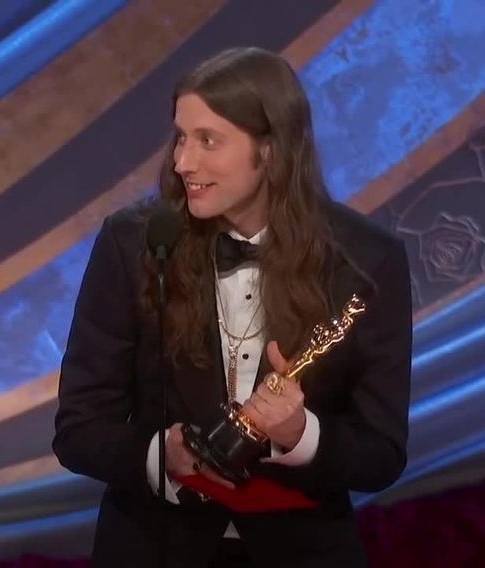
    So the Academy Award for Best Original Score went to Swedish composer Ludwig Görannson for his work on “Black Panther.”

    Actually, there was some John Williams, during the “In Memoriam” segment, for which Gustavo Dudamel conducted the wheat field music from “Superman.” Here’s how it was heard in the movie.

    Which reminds me, why did no one tell me that Albert Finney died???


    Music from “Black Panther,” who by the way was one of my favorite comic book characters when I was a kid, so don’t think I’m hating on T’challa!


  • Classical Music Today WWFM

    Classical Music Today WWFM

    by 

    in
    7 responses

    If you’ve a hankering to hear a symphony by Otakar Ostrčil or a concerto by Boris Papandopulo, you’ve come to the right place.

    We’ll also celebrate the birthdays today of pianists Rena Kyriaku and Dame Myra Hess and legendary tenor Enrico Caruso, with perhaps a little Armin-Louis Couperin tossed into the mix.

    I’ll be a little mixed up myself, between 4 and 7 p.m. EST, on WWFM – The Classical Network and wwfm.org.


  • William Grant Still’s Enduring Symphony

    William Grant Still’s Enduring Symphony

    by 

    in
    2 responses

    Still’s waters run deep.

    As someone with an insatiable appetite for American symphonies composed during the first half of the 20th century, I try not to miss a performance or even a radio broadcast of music by Roy Harris, William Schuman, or Aaron Copland. But for as much as I adore these composers, the American symphonies that delight me the most, off the top of my head, are Charles Ives’ 2nd, Howard Hanson’s 2nd (the “Romantic”), and William Grant Still’s 1st (the “Afro-American”). I never get tired of listening to these, and they move me like few others.

    I am only too happy to include Still’s symphony, then, as a kind of capstone to my four-part survey of the landmark Black Composer Series – newly reissued (after 40 years!) as a 10-CD boxed set by Sony Classical – this Sunday night on “The Lost Chord.”

    The “Afro-American Symphony,” composed in 1930, is informed by African-American spirituals, the blues, and syncopated banjo-like riffs. Indeed, a banjo actually turns up in the work’s third movement.

    To me, the symphony has always been a kind of “portrait of the artist as a young man.” (Still was born in Woodville, Mississippi, and grew up in Little Rock, Arkansas.) In this respect, it puts me in the mind somewhat of Virgil Thomson “Symphony on a Hymn Tune,” which similarly draws on hymns and folk songs of his boyhood in Kansas City, Missouri.

    But Still’s music comes across as more personal, more sincere, and certainly less self-consciously “modernist.” It goes straight to my heart and then gets in my head so that it literally disturbs my sleep. It’s one of the great American symphonies. The concert suites from George Gershwin’s “Porgy and Bess” remain popular, but some enterprising music director should give the “Afro-American Symphony” a shot, because I know audiences will love it.

    There is a solid Gershwin connection. Still quotes the melody of “I Got Rhythm” in the third movement of his symphony. And for good reason. It’s actually his! According to Eubie Blake, Gershwin was in the audience during one of Still’s performances in the pit band for Blake’s revue “Shuffle Along.” Still’s improvisation became the basis for Gershwin’s hit tune. (Blake was quick to add that the appropriation was probably inadvertent.)

    The “Afro-American Symphony” is now the best-known piece in the Black Composers Series, which originally appeared on vinyl between 1974 and 1978. But at the time of the recording’s original release that was by no means definitively the case. The only previous recording of the work, made by Karl Krueger and the Royal Philharmonic Orchestra, was available only through mail-order subscription. Exposure to this gem of a symphony, then, was comparatively limited.

    Thankfully, there have been a number of recordings since, but for me none match the commitment and loving attention to detail of the performance in this set, with Paul Freeman conducting the London Symphony Orchestra.

    Also included on tonight’s program will be “Markings,” by Ulysses Kay, composed in 1966 to the memory of Dag Hammerskjöld, secretary general of the United Nations. Called “the greatest statesman of our century” by John F. Kennedy, Hammarskjöld was killed in a plane crash in Zambia en route to ceasefire negotiations during the Congo Crisis of 1961. Hammarskjöld was awarded a posthumous Nobel Peace Prize.

    We’ll conclude on an “up” note, with the lively “Danse Nègre” from the “African Suite” of 1898, by Afro-English composer Samuel Coleridge-Taylor.

    I hope you’ll join me for the grand finale of my month-long survey of highlights from CBS Records’ forward-looking Black Composers Series – “Black to the Future, Part IV” – this Sunday night at 10:00 EST, on WWFM – The Classical Network and wwfm.org.

    #BlackHistoryMonth


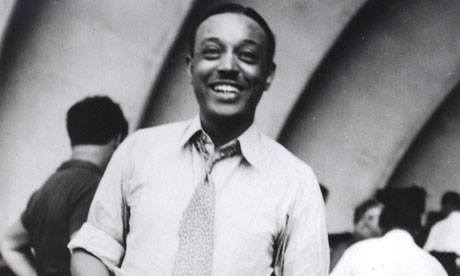
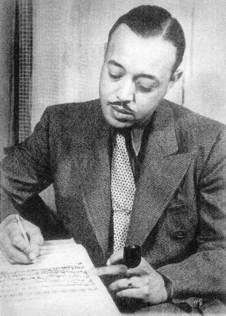
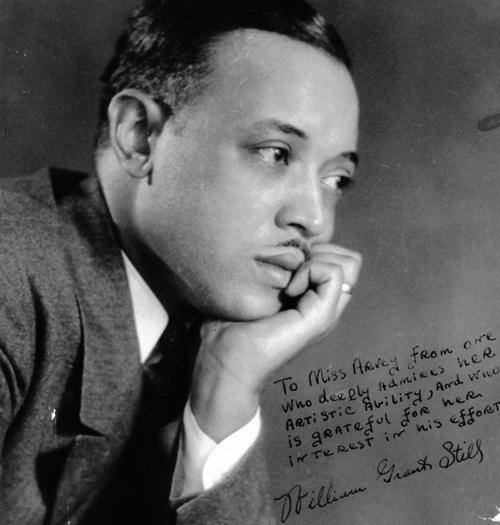
    PHOTO: William Grant Still at the Hollywood Bowl

  • William Grant Still & Black Composers in NJ

    William Grant Still & Black Composers in NJ

    by 

    in
    4 responses

    It’s a banner day for William Grant Still in the Trenton-Princeton area.

    As I posted only a short while ago, Still’s “Afro-American Symphony” will be the featured highlight on “The Lost Chord,” tonight at 10:00 on WWFM The Classical Network and wwfm.org, as I conclude my month-long survey of highlights from the reissued Black Composers Series on Sony Classical.

    Another of Still’s symphonies – the much less frequently heard (read NEVER) Symphony No. 4, subtitled “Autochthonous” – will be performed by the Capital Philharmonic of New Jersey at Trenton’s Patriots Theater at the War Memorial this afternoon at 4:00. The concert will also include the recently rediscovered Violin Concerto No. 1 by Florence Price and, as an added bonus, Adolphus Hailstork’s “Celebration.”

    My preview of this exciting program is in the current edition of U.S. 1 Newspaper – PrincetonInfo. I know I posted about it earlier in the week, but I thought it would be helpful to mention it again, not least because the last time I failed to notice that I didn’t include a link until about five hours after! So here it is again.

    https://princetoninfo.com/african-american-composers-shine-in-trenton/

    The so-called “Dean of Afro-American composers,” Still lived from 1895 to 1978. He was a “first” in many ways. His was the first symphony written by a black composer to be performed by a major orchestra (the New York Philharmonic). He was the first to be given the opportunity to conduct a major orchestra (the Los Angeles Philharmonic, at the Hollywood Bowl). His opera, “Troubled Island,” became the first to be produced by a major company (the New York City Opera). His works were performed internationally by the Berlin Philharmonic, the London Symphony Orchestra, the BBC Symphony, and the Tokyo Philharmonic.

    Similarly, Florence Price, who lived from 1887 to 1953, was the first African-American woman to be recognized as a symphonic composer, and the first to have her music performed by a major orchestra (the Chicago Symphony). Her violin concerto was among a stash of manuscripts rescued from her dilapidated summer home as recently as 2009. This afternoon’s performance by the Capital Philharmonic will be the work’s East Coast premiere, and possibly only the second time it has ever been heard in public.

    This is the rare concert that is more than just a concert.

    Tickets are still available through the orchestra’s website, capitalphilharmonic.org.


  • Black Composers Series on WWFM

    Black Composers Series on WWFM

    by 

    in
    6 responses

    It’s music by the so-called “Dean of Afro-American composers” tonight on “The Lost Chord.”

    William Grant Still’s “Afro-American Symphony” (1930) will be heard alongside Ulysses Kay’s “Markings” (1966), an elegy for secretary general of the United Nations Dag Hammerskjöld, and Samuel Coleridge-Taylor’s lively “Danse Nègre” from the “African Suite” (1898).

    I hope you’ll join me for the grand conclusion of my month-long survey of highlights from the landmark Black Composers Series of 1974-1978, newly reissued in a handsome 10-CD boxed set, thanks to Sony Classical, on “Black to the Future, Part IV,” this Sunday night at 10:00 EST, on WWFM – The Classical Network.

    But if you find the siren song of Oscar is simply too strong to resist, you can always catch the show later in the week as a webcast, along with previous installments from the series, at wwfm.org.


    PHOTOS (clockwise from left): William Grant Still, Ulysses Kay, and Samuel Coleridge-Taylor


Tag Cloud

Aaron Copland (93) Beethoven (95) Composer (114) Film Music (145) Film Score (143) Film Scores (255) Halloween (94) John Williams (195) KWAX (229) Leonard Bernstein (104) Marlboro Music Festival (125) Movie Music (160) Mozart (91) Opera (213) Philadelphia Orchestra (89) Picture Perfect (174) Princeton Symphony Orchestra (109) Radio (88) Ross Amico (244) Roy's Tie-Dye Sci-Fi Corner (290) The Classical Network (101) The Lost Chord (269) Vaughan Williams (105) WPRB (397) WWFM (881)

DON’T MISS A BEAT

Receive a weekly digest every Sunday at noon by signing up here


RECENT POSTS