• Price & Still Overcoming Barriers in Trenton

    Price & Still Overcoming Barriers in Trenton

    by 

    in
    3 responses

    American composers have always had it tough. And in the golden age of American classical music, composers of color had it especially bad.

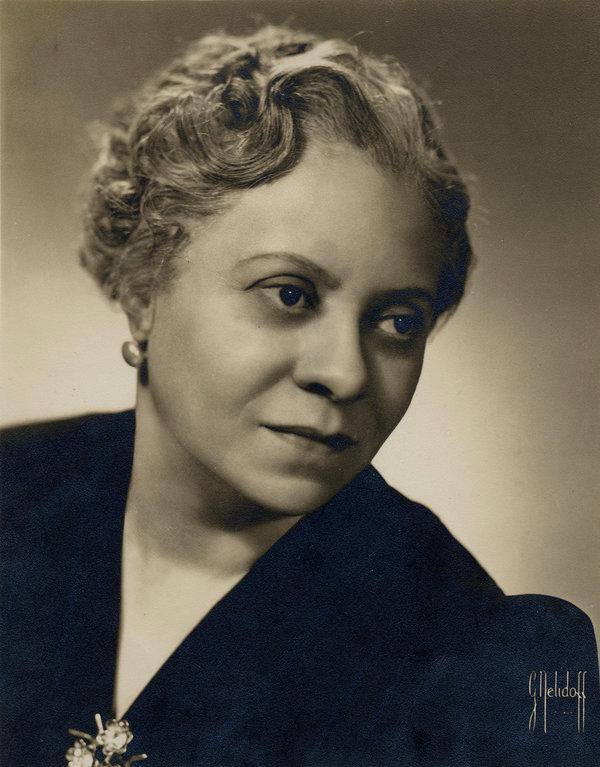
    Two of them will be featured on an ambitious program to be performed by the Capital Philharmonic of New Jersey at Trenton’s Patriots Theater at the War Memorial this Sunday at 4 p.m. Daniel Spalding will conduct Florence Price’s Violin Concerto No. 1, with Samuel Thompson the soloist, and William Grant Still’s Symphony No. 4 “Autochthonous.”

    Both Price and Still were limited in some respects because of the color barrier. Even so, it’s amazing – and inspiring – to learn just how far they were able to make it in an era well before the Civil Rights Movement strove in earnest to level the playing field.

    Find out more about them, including the story of the miraculous recovery of Price’s concerto from her semi-collapsed house, as recently as 2009 – and the definition of “autochthonous” – in my article in this week’s U.S. 1 Newspaper – PrincetonInfo, out yesterday. I got so busy, I forgot to let everyone know!

    https://princetoninfo.com/african-american-composers-shine-in-trenton/

    BONUS: Tune in to hear Daniel Spalding chat about the concert with David Osenberg this afternoon at 4 p.m. EST, on WWFM – The Classical Network and wwfm.org.


  • Stravinsky Grieg Boulez Marlboro Music

    Stravinsky Grieg Boulez Marlboro Music

    by 

    in
    9 responses

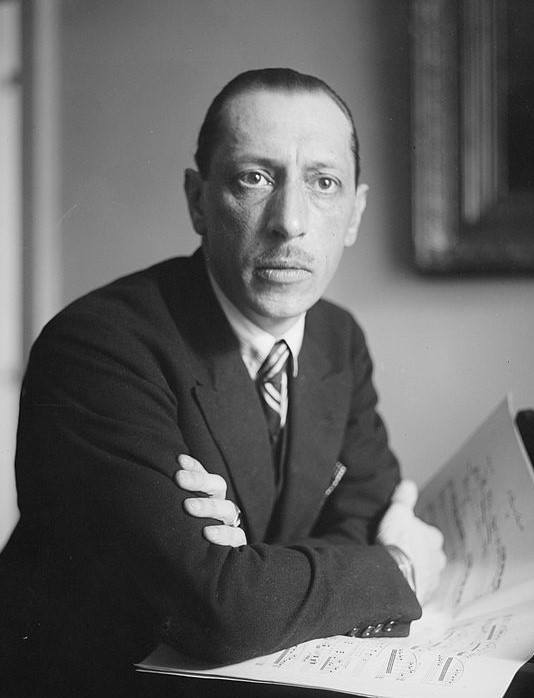
    When Igor Stravinsky unveiled his “Four Norwegian Moods” in 1945, Pierre Boulez was appalled. Stravinsky had been a kind of god to him. The young man had been dissecting the score to “The Rite of Spring” under Olivier Messiaen at the Paris Conservatory. That the Master who had revealed to the world the unvarnished brutality of “The Rite” had retreated to a pastiche of Edvard Grieg, of all people – it was unforgivable. Boulez and his classmates booed vigorously.

    Boulez must be spinning in his grave right now, as Stravinsky and Grieg will reunite for this week’s “Music from Marlboro.”

    With a wintry mix in the forecast, our featured work for the hour will be Grieg’s String Quartet in G minor. Grieg wrote his quartet in 1877-78 while living on a farm in Hardanger. It’s a rare long-form piece from a composer generally typecast as a miniaturist.

    From his letters, we know that Grieg was frustrated by his propensity for shorter works. “Nothing that I do satisfies me,” he wrote, “and though it seems to me that I have ideas, they neither soar nor take form when I proceed to the working out of something big.”

    In addition to giving Grieg the opportunity to flex his creative muscle, the quartet may also reveal something of autobiographical significance. The work opens with a motto lifted from one of Grieg’s songs, “The Minstrel,” on a text by Henrik Ibsen. The poem tells of Hulder, a spirit from Norse mythology, who dwells in waterfalls and lures aspiring musicians with the promise to reveal art in music. However, in return for this invaluable gift, Hulder robs its recipient of both happiness and peace of mind.

    Claude Debussy was also dismissive of Grieg’s music, which he famously derided as “pink bonbons filled with snow.” (What is it about the Norwegian’s music that could have so galled the Gauls?) That said, it has been convincingly demonstrated that Debussy owed more than a little to Grieg in the writing of his own String Quartet in G minor and in some of his piano miniatures.

    We’ll hear a performance of the Grieg quartet from the 2002 Marlboro Music Festival, featuring violinists Ayano Ninomiya and Sharon Roffman, violist Teng Li, and cellist David Soyer.

    Beyond its overt Norwegianisms, what really put Boulez over the edge about the “Four Norwegian Moods” was Stravinsky’s embrace of neoclassicism. Boulez, an austere disciple of the serialist techniques advocated by Arnold Schoenberg and his circle, would later conduct and record Stravinsky’s very neoclassical “Pulcinella.” Perhaps he softened his stance somewhat in light of Stravinsky’s late conversion to the serial cause.

    In any case, one wonders what Boulez would have made of the “Octet for Wind Instruments.” Composed in 1922, this is the work with which Stravinsky really threw down the gauntlet as neoclassicism’s foremost champion.

    We’ll hear it performed at Marlboro in 1968 by flutist Paula Robison, clarinetist Larry Combs, bassoonists Sol Schoenbach and Thomas Woodhams, trumpeters Henry Nowak and Ronald Anderson, and trombonists John Swallow and Richard Rodda, all directed by Leon Kirchner.

    The weather outside is frightful. Cozy in with an abominable bouillabaisse for Boulez, on the next “Music from Marlboro,” this Wednesday evening at 6:00 EST, on WWFM – The Classical Network and wwfm.org.

    Marlboro School of Music and Festival: Official Page

  • Classical Music Today on The Classical Network

    Classical Music Today on The Classical Network

    by 

    in
    5 responses

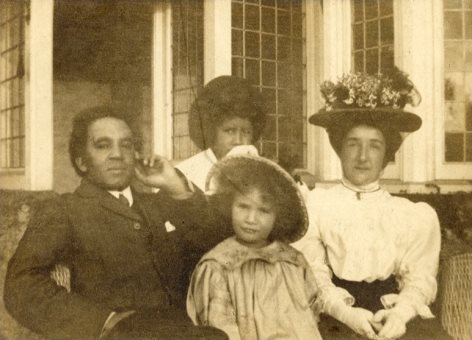
    Afro-British composer Samuel Coleridge-Taylor (1875-1912) scored his biggest hit with “Hiawatha’s Wedding Feast.” The cantata became something of a cultural phenomenon between the wars. Sir Malcolm Sargent led performances of the piece annually, from 1928 to 1939, in a costumed, semi-ballet version, featuring close to a thousand performers. Unfortunately, the composer did not live to enjoy his success, nor did his heirs receive any royalties, as he had sold the music outright (for 15 guineas – about $2160 US).

    We’ll get a taste of “Hiawatha” at 2:00 this afternoon on The Classical Network. “Hiawatha’s Wedding Feast” is the first part of a larger oratorio, “The Song of Hiawatha.” A complete recording, released on the Argo label back in 1992, features a rising star by the name of Bryn Terfel – but it is Arthur Davies who sings the work’s hit tune, “Onaway! Awake, Beloved!”

    Antonin Dvořák was also very much enamored with Longfellow’s most famous poem. It’s said that he jotted the theme for the slow movement to his Sonatina for Violin and Piano, Op. 100, onto his starched cuff during a visit to Minnehaha Falls. The melody became popularized as “Indian Lament.” Dvořák wrote the Sonatina with his children in mind. We’ll hear it performed by brother and sister Gil and Orli Shaham.

    Then stay tuned at 3:00 for William Levi Dawson’s epic “Negro Folk Symphony.” The work was introduced by Leopold Stokowski and the Philadelphia Orchestra in 1934. Dawson revamped the piece in 1952, following a trip to West Africa. It was Stokowski who made the world premiere recording of the symphony, in its revised and expanded form. We’ll hear it played in a fine modern recording by the Detroit Symphony Orchestra conducted by Neeme Järvi.

    If you happened to miss David Baker’s Cello Sonata this past Sunday night on “The Lost Chord,” tune in today for his “Jazz Suite for Clarinet and Symphony Orchestra: Three Ethnic Dances.” Clarinetist Alan Balter will perform with the Akron Symphony Orchestra.

    The afternoon will commence with today’s Noontime Concert, featuring members of the Dolce Suono Ensemble. The group’s flagship trio will present a mix of classics and commissions. The “classics” are by Mendelssohn and Martinu, and the “commissions” were fulfilled by Jeremy Gill and Zhou Tian. The broadcast will conclude with an arrangement of Leonard Bernstein’s “Candide Overture.” Flutist and founding artistic director Mimi Stillman will be joined by cellist Nathan Vickery and pianist Charles Abramovic. The concert took place on October 14 at Trinity Center for Urban Life, 22nd and Spruce Streets, in Philadelphia.

    Dolce Suono’s next concert, “Rediscoveries,” will take place tomorrow night at 7:00, again at Trinity Center for Urban Life. That program will include works by three American masters who were revered at mid-century, but whose music in recent decades has fallen into comparative neglect – Irving Fine, William Schuman, and Norman Dello Joio. Also on the program will be works by Elliot Carter, Leonard Bernstein, Shulamit Ran, and the late Katherine Hoover. For more information, look online at dolcesuono.org.

    If you’ve a tooth for “sweet sound” (or “dolce suono”), satisfy the craving from 12 to 4 p.m. EST, on WWFM – The Classical Network and wwfm.org.


    PHOTO: Coleridge-Taylor and his family, wife Jessie and children Gwendolyn and Hiawatha (rear)


  • José White’s Lost Chord

    José White’s Lost Chord

    by 

    in
    5 responses

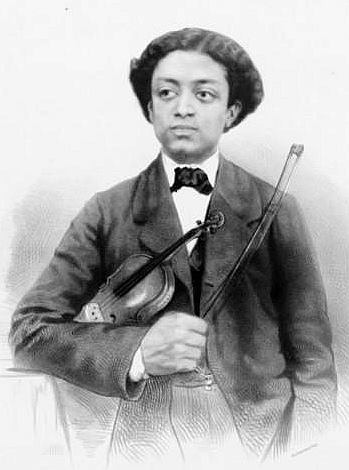
    His name is as romantic as his music. Tune in tonight to enjoy the Violin Concerto in F-sharp minor from 1864 by José Silvestre de los Dolores White y Lafitte (a.k.a. José White). A cello sonata from 1973 by David Baker and some orchestral miniatures from 1948 by Roque Cordero round out this week’s installment of “The Lost Chord,” the third of four parts devoted to highlights from the compact disc reissue of CBS Records’ visionary Black Composers Series. Join me for “Black to the Future, Part III,” this Sunday night at 10:00 EST, on WWFM – The Classical Network and wwfm.org.


  • Presidential Music for Presidents Day

    Presidential Music for Presidents Day

    by 

    in
    One response

    Hail to the Chiefs!

    I hope you’ll join me today on The Classical Network for my annual trip to the Hall of Presidents. We’ll hear works inspired by Thomas Jefferson, Chester A. Arthur, Theodore Roosevelt, John F. Kennedy, Richard Nixon, and of course Washington and Lincoln.

    This year, there will be a few new additions to the assembly of animatronic executives.

    Abraham Lincoln inspired more music than can be crammed down a stovepipe hat. Though I already devoted an afternoon to our 16th president on his actual birthday (February 12), I’ve since unearthed a major work I haven’t played before: “Letters from Lincoln,” by Michael Daugherty. As the title suggests, Daugherty builds his character portrait of the Illinois Rail-Splitter using the president’s own words. We’ll hear it sung by Thomas Hampson.

    Composer Victoria Bond has written four “portraits of presidential character.” “Soul of a Nation” was released last year on an Albany Records compact disc. Each of the orchestral pieces that make up the album includes parts for narrator and instrumental soloist. The title track incorporates a violin for Thomas Jefferson, “The Indispensible Man” a clarinet for Franklin Delano Roosevelt, “The Crowded Hours” a trumpet for Theodore Roosevelt, and “Pater Patriae” a flute for George Washington. I’ll select one of these for airplay this afternoon.

    Once again, we’ll celebrate Washington (born February 22) with Virgil Thomson’s naïf ballet “Parson Weems and the Cherry Tree,” a Bicentennial commission, George Antheil’s rousing concert overture, “McKonkey’s Ferry (Washington at Trenton),” and John Lampkin’s “George Washington Slept Here.”

    To commemorate an American president closer to our own time, Peter Lieberson composed his “Remembering JFK” for the 50th anniversary of the Kennedy inauguration. The moving narration, compiled from the president’s own words will be delivered by Richard Dreyfuss. Where have all the statesmen gone?

    And to get us ready for The Princeton Festival’s production of John Adams’ “Nixon in China” in June, we’ll listen to “The Chairman Dances.”

    As an added curiosity, Chester A. Arthur disliked “Hail to the Chief” so intensely that he asked John Philip Sousa to write a replacement anthem. We’ll find time for that too.

    There won’t be any junk mail for you to sift through, and you can’t go to the bank. You might as well get those white sales out of the way early. You’ll want to be back in time to settle in for music inspired by the presidents for #PresidentsDay, from 4 to 7 p.m. EST, on WWFM – The Classical Network and wwfm.org.


Tag Cloud

Aaron Copland (93) Beethoven (95) Composer (114) Film Music (145) Film Score (143) Film Scores (255) Halloween (94) John Williams (195) KWAX (229) Leonard Bernstein (104) Marlboro Music Festival (125) Movie Music (160) Mozart (91) Opera (213) Philadelphia Orchestra (89) Picture Perfect (174) Princeton Symphony Orchestra (109) Radio (88) Ross Amico (244) Roy's Tie-Dye Sci-Fi Corner (290) The Classical Network (101) The Lost Chord (269) Vaughan Williams (105) WPRB (397) WWFM (881)

DON’T MISS A BEAT

Receive a weekly digest every Sunday at noon by signing up here


RECENT POSTS