• Sergei Taneyev Honest Russian Composer

    Sergei Taneyev Honest Russian Composer

    by 

    in
    4 responses

    Never one to hold back or sugar-coat the truth, Sergei Taneyev (1856-1915) could be brutally honest and in fact generally was. He managed to offend every one of the musicians of the Mighty Handful (Mily Balakirev, Alexander Borodin, César Cui, Modest Mussorgsky, and Nikolai Rimsky-Korsakov) with his blunt assessments. Yet somehow Peter Ilych Tchaikovsky, who was probably the most sensitive composer in all of Russia, actually went out of his way to invite Taneyev’s criticism, even when it threw him into fits of despair.

    On this week’s “Music from Marlboro,” we’ll have music by this most forthright of Russian composers, alongside a delightful caprice by a Frenchman, based on Danish and Russian airs.

    Tchaikovsky valued Taneyev’s keen insight and transparent honesty, perhaps in part because he knew, as Taneyev’s teacher at the Moscow Conservatory, that Taneyev was equally hard on himself. Also, there was little doubt of his disciple’s devotion. Taneyev was the soloist in the Moscow premiere of Tchaikovsky’s Piano Concerto No. 1, and in the Russian premiere of his Piano Concerto No. 2. After Tchaikovsky’s death, Taneyev completed several of his master’s works from sketches left in various states of completion, including the Piano Concerto No. 3. In turn, Tchaikovsky dedicated his symphonic fantasy, “Francesca da Rimini,” to Taneyev.

    Taneyev entered the Moscow Conservatory at the age of nine. His characteristic diligence and impeccable craftsmanship revealed themselves early, and through their application he rose quickly in the estimation of his professors. Tchaikovsky rated Taneyev as Russia’s greatest master of counterpoint and questioned if there was anyone, even in the West, who could match him in this regard.

    When Tchaikovsky resigned his post at the conservatory in 1878, Taneyev was appointed in his place to teach harmony and orchestration. Soon, he was also teaching piano and composition. Finally, he served as the conservatory’s director from 1885 to 1889. Among his own pupils were Sergei Rachmaninoff, Nikolai Medtner, and Alexander Scriabin. (FUN FACT: Taneyev died in 1915 after catching pneumonia at Scriabin’s funeral.)

    For the most part, Taneyev’s life was as orderly as his music. He never married; all his needs were tended to by his childhood nanny. He even managed to remain oblivious when the wife of his friend, Leo Tolstoy, basically threw herself at him. He preferred study to relaxation, passing countless hours poring over volumes on natural and social science, history, mathematics, Plato and Spinoza. He also taught himself Esperanto.

    Perhaps he could have used a little of Tchaikovsky’s spontaneity, both in his life and in his music. Tchaikovsky was more of an impulsive artist, always allowing his creativity and emotion to lead the way, while Taneyev tended to hold his raw materials in balance, carefully considering his ideas and themes, subjecting them to intensive analysis before committing them to manuscript. For as dry as that may sound, his music is still rewarding to listen to!

    Taneyev’s String Quintet in G major, Op. 14, dates from 1901. We’ll hear it performed at the 2005 Marlboro Music Festival by violinists Lily Francis and David Bowlin, violist Yu Jin, and cellists Michael Nicholas and David Soyer.

    By way of introduction, the program will open with a “Caprice on Danish and Russian Airs” by Camille Saint-Saëns (1835-1921). Scored for flute, oboe, clarinet, and piano, the work was composed for a series of concerts organized by the Russian Red Cross that were held in St. Petersburg during Easter Week, 1887. The piece was dedicated to the the Tsarina, Maria Feodorovna, formerly Princess Sophie Frederika Dagmar, daughter of the King of Denmark – hence, Saint-Saëns’ use of Danish and Russian themes.

    We’ll hear it performed at Marlboro in 1968 by pianist Ruth Laredo, flutist Paula Robison, oboist John Mack, and clarinetist Larry Combs.

    No doubt Taneyev would decline my invitation – and he wouldn’t hesitate to tell me why – but there is nothing to keep us from reckless enjoyment of the next “Music from Marlboro,” this Wednesday evening at 6:00 EST, on WWFM – The Classical Network and wwfm.org.

    Marlboro School of Music and Festival: Official Page


    PHOTO: Tell us what you really think, Sergei.

  • Italian Escape on The Classical Network

    Italian Escape on The Classical Network

    by 

    in
    2 responses

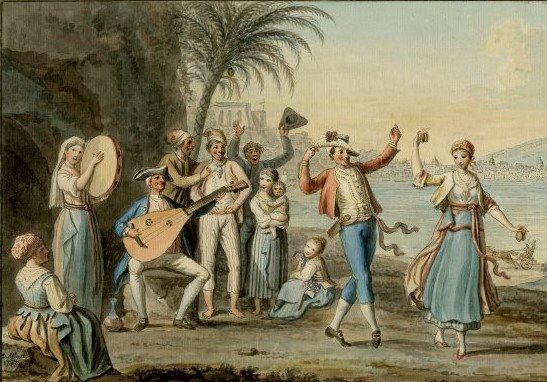
    With rain and snow and impending frigid temperatures in the forecast for this week for the immediate listening area, we find a welcome escape in today’s Noontime Concert on The Classical Network, as we’re off to sunny Italy with Tempesta di Mare – Philadelphia Baroque Orchestra.

    Though no doubt aptly named (Tempesta di Mare = storm at sea), the group will present “A Tale of Two Italian Cities,” with musical selections from Venice (by Antonio Vivaldi, Giovanni Legrenzi, and Dario Castello) and Naples (by Alessandro Scarlatti, Andrea Falconieri, and Francesco Mancini).

    Then, to take us up to 2:00 – how could I possibly resist? – we’ll hear Franz Liszt’s tale of two Italian cities, from the second volume of his “Years of Pilgrimage,” “Venezia e Napoli,” with the great pianist Lazar Berman.

    The centerpiece of the afternoon will be Henri Sauguet’s Symphony No. 2, subtitled “Allégorique,” a winter-to-winter traversal of the four seasons that employs an atmospheric chorus and orchestra. The 90-minute work has been danced and presented as a straightforward oratorio. An early radio broadcast even incorporated the sounds of nature.

    The forecast may be soggy, but the music will be Sauguet. We emerge from winter, if only fleeting, from 12 to 4 p.m. EST, on WWFM – The Classical Network and wwfm.org.


  • Westminster Choir Homecoming Concert Tonight

    Westminster Choir Homecoming Concert Tonight

    by 

    in
    5 responses

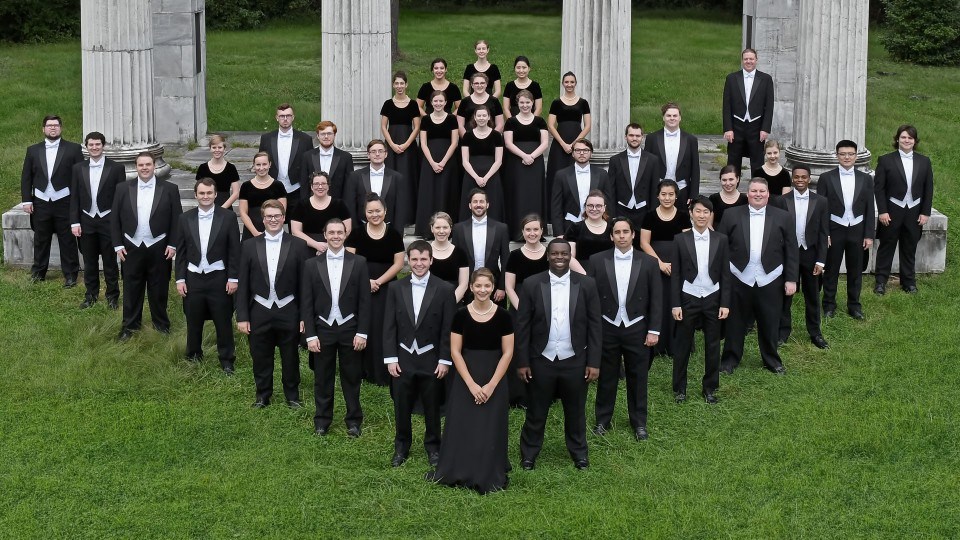
    When you’ve got a nasty cold, all you want to do is come home. It’s rather fortunate for me, then, that tonight will be WWFM’s annual broadcast of Westminster Choir’s Homecoming Concert. The program will be heard live, coming your way from Princeton University’s Richardson Auditorium, starting at 7:30 p.m.

    Joe Miller will lead the world-renowned Westminster Choir of Westminster Choir College in works of Ēriks Ešenvalds, Ted Hearne, Dan Messé, and Claudio Monteverdi, as well as a selection of traditional American folk songs and spirituals. I’ll be sticking around a little later than usual to man the board and to provide the fill music, following the concert, up until 10 p.m.

    You can listen to a preview of the program with Joe Miller and founding “Sounds Choral” host Marjorie Herman here:

    https://www.rider.edu/events/westminster-choir-homecoming-concert-2019

    Of course, I’ll be spinning the platters, as usual, beginning this afternoon at 4 p.m. I hope you’ll join me as I observe the birthday anniversaries of Johann Ernst Bach, Frederic Lamond, Vittorio Rieti, Arthur Rubinstein, Sir John Tavener, and Gregor Joseph Werner.

    And I wouldn’t be the least bit surprised if we also hear music by William Alwyn, Johann Sebastian Bach, Mario Castelnuovo-Tedesco, Franz Liszt, Ottorino Respighi, and Camille Saint-Saëns, with a couple of send-offs to organist Jean Guillou and composer Michel Legrand, both of whom died over the weekend.

    I’ll be sure to have plenty of tissues and lozenges on hand. I invite you to come home to great music, from 4 to 10 p.m. EST, on WWFM – The Classical Network and wwfm.org.


  • Marcel Tyberg Holocaust Composer Rediscovered

    Marcel Tyberg Holocaust Composer Rediscovered

    by 

    in
    6 responses

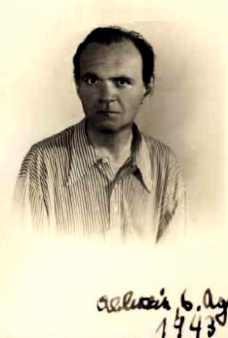
    Marcel Tyberg was a forgotten casualty of the Holocaust. Targeted because of his Jewish ancestry (a mere 1/16th of his make-up), Tyberg was deported to Auschwitz, where his death was recorded on New Year’s Eve, 1944.

    His music alone should not have attracted unfavorable attention from the authorities. Quite apart from the modernism being explored by many of the composers interned in the “artists’ camp” of Terezin – a musical language the Nazis branded “degenerate” – Tyberg’s symphonies are very much in the Austro-German romantic tradition.

    Nevertheless, his output was revived only in the last decade or so, thanks in large part to conductor JoAnn Falletta. This week on “The Lost Chord,” learn about the extraordinary journey of Tyberg’s scores from wartime Italy to 21st century Buffalo.

    Tyberg lives again, through his Symphony No. 3, on “Resurrection Symphony,” this Sunday night at 10:00 EST, on WWFM – The Classical Network and wwfm.org.


  • WWFM Mozart Campaign Thanks & Figaro Sunday!

    WWFM Mozart Campaign Thanks & Figaro Sunday!

    by 

    in
    6 responses

    Thank you to all of you who contributed to yesterday’s Mozart campaign. It’s because of listeners just like you that we at WWFM are privileged to be able to do what we love to do – share great music with the community. And that community is huge! Yesterday, someone called in all the way from Nikiski, Alaska.

    Unfortunately, we still came up considerably short of our projected goal, which means that we’ll have to come back and do it again sooner than we had hoped. If you had been meaning to contribute and did not have an opportunity to do so, you may still donate online at wwfm.org.

    Tomorrow (Mozart’s actual birthday), the “Sunday Opera” will be devoted to a special presentation of “The Marriage of Figaro,” hosted by Michael Kownacky and David Osenberg. The performance, captured at the 1962 Glyndebourne Festival, will feature Heinz Blackenburg as Figaro and Mirella Freni as Susanna. Silvio Varviso will conduct. If you find you like it, the recording is still available as one of our thank you gifts. Search for it under the thank you gift drop-down box, when you make your online contribution.

    There are also options to obtain all of the offered Mozart recordings as a bundle, with or without the handsome and durable WWFM tote bag.

    Again, thank you for all that you do to help keep great music on the air on WWFM – The Classical Network.


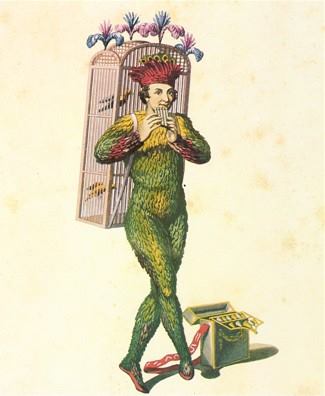
    As a token of my gratitude, please enjoy this duet from “The Magic Flute” rendered by actual birds:


Tag Cloud

Aaron Copland (93) Beethoven (95) Composer (114) Film Music (145) Film Score (143) Film Scores (255) Halloween (94) John Williams (195) KWAX (229) Leonard Bernstein (104) Marlboro Music Festival (125) Movie Music (160) Mozart (91) Opera (213) Philadelphia Orchestra (89) Picture Perfect (174) Princeton Symphony Orchestra (109) Radio (88) Ross Amico (244) Roy's Tie-Dye Sci-Fi Corner (290) The Classical Network (101) The Lost Chord (269) Vaughan Williams (105) WPRB (397) WWFM (881)

DON’T MISS A BEAT

Receive a weekly digest every Sunday at noon by signing up here


RECENT POSTS