• Ballet Ambivalence Balanchine Stravinsky & More

    Ballet Ambivalence Balanchine Stravinsky & More

    by 

    in
    2 responses

    I have always had been ambivalent about the ballet. On the one hand, I am quite enthusiastic about attending live performances of works written specifically for the stage, especially those by 20th century masters (Stravinsky, Prokofiev, Hindemith). On the other, I am generally put off, at least in theory, by choreographers employing in their programs pre-existing works that have nothing at all to do with the dance. When I look at an advertisement for the ballet, and I see a triple bill featuring “George Balanchine’s Piano Concerto,” and there is no indication anywhere of who the actual composer is, I have less than no interest in attending and even feel inclined to fury. But I guess that’s what happens when you’re someone who puts the music first.

    I understand, if I am to be objective (which I seldom am), that that’s not what dance is about. It’s also certainly not about story. How many evening-length ballets have I endured in which the “plot,” such that it is, has run its course by the end of the second act? There really is no purpose for Act III, except to have everyone leap about in a series of interminable divertissements. I learned this lesson early, at my first “Nutcracker” (mercifully a two-acter), when I discovered that most of the famous music underscored the less-than-thrilling-for-children-everywhere second part. Don’t get me wrong, I have grown to love “The Nutcracker,” but I love it most when imaginative choreographers find ways to tie the events of Act II into the narrative set up in Act I. As a boy, I was all about the Mouse King. It was only later, after I hit puberty, that the Act II pas de deux became indispensible. After all, there is no love like doomed love. But why is this music for the Sugar Plum Fairy and her consort so ardent? Doesn’t it make more sense to tie it back in to Clara (as some choreographers thankfully have)?

    But I digress.

    I admit, dogma is a dangerous thing, and there have been notable exceptions to my aversion to ballet set to music not intended for the dance. I was very pleasantly surprised, for instance – especially after having endured his horrible “Nutcracker,” with its stupid candy cane hula hoops – by Balanchine’s “A Midsummer Night’s Dream,” which I recall as compelling and often brilliant. In the end, however, I admit I am not really qualified to assess dance. So I’ll just shut up and play the music.

    Today is Balanchine’s birthday, so I thought I’d spend the bulk of the afternoon spinning records of some of the works he introduced and/or choreographed. My heart is with the commissions, of course, so we’ll hear Stravinsky’s “Apollo,” Prokofiev’s “The Prodigal Son,” and Hindemith’s “The Four Temperaments,” alongside splashy arrangements by Hershy Kay (which I am less enthusiastic about) after works of Gottschalk and Sousa. I also have a vintage recording of Antal Dorati conducting Vittorio Rieti’s arrangement of “Cotillon,” after Chabrier, if I can lay my hands on it, which Balanchine choreographed for the Ballets Russes de Monte-Carlo.

    First, it’s another Noontime Concert from Gotham Early Music Scene, or GEMS. Concordian Dawn will present a program titled “Fortuna Antiqua et Ultra,” medieval music illustrative of the ever-turning Wheel of Fortune and the consolation of hope.

    We’ll be wheeling and pirouetting from 12 to 4 p.m. EST, on WWFM – The Classical Network and wwfm.org.


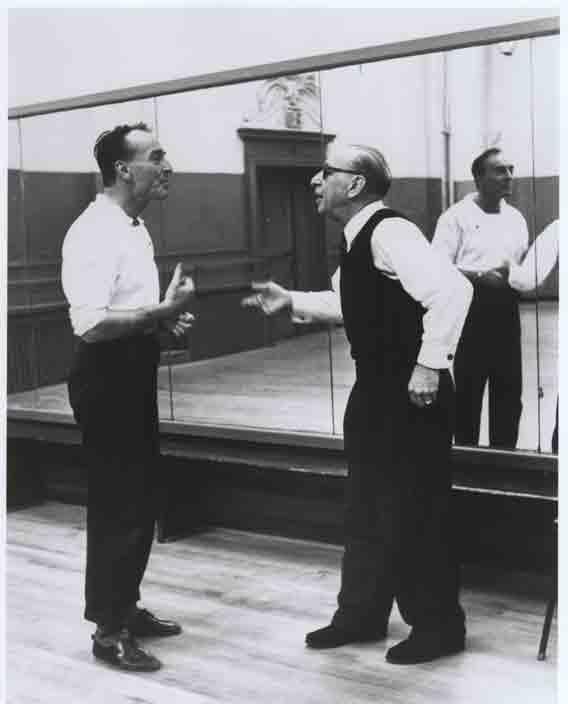
    PHOTO: Balanchine and Stravinsky

  • MLK Day Music Inspired by King’s Words

    MLK Day Music Inspired by King’s Words

    by 

    in
    5 responses

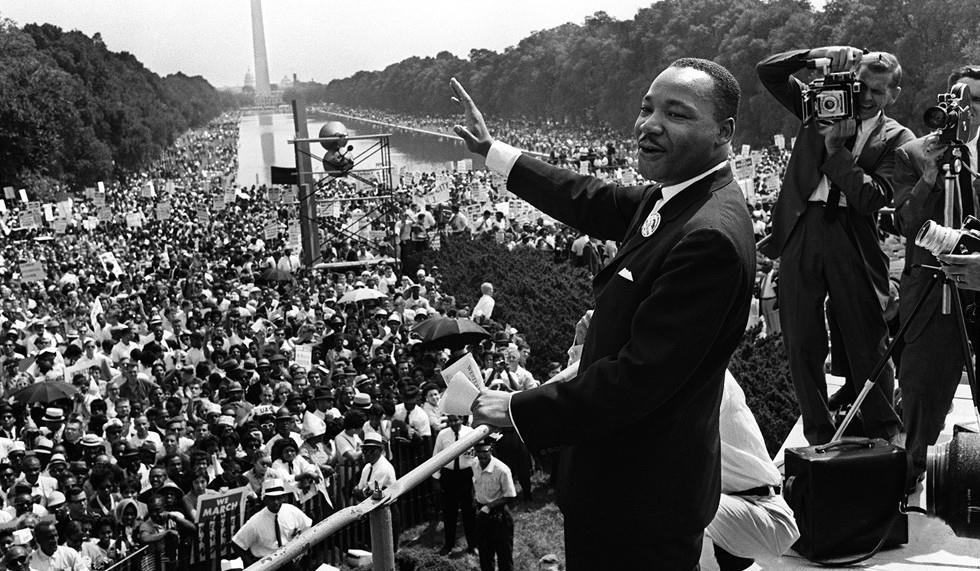
    “You don’t have to see the whole staircase. Just take the first step.”

    So said Dr. Martin Luther King, Jr. On this MLK Day, we’ll hear at least two works inspired by King’s speeches.

    “New Morning for the World: Daybreak of Freedom,” by the Pulitzer Prize winner Joseph Schwantner, has become something of a contemporary classic. My preferred performance of the piece is from an out-of-print LP, featuring narration by former Pittsburgh Pirate Willie Stargell. However, last year I played a digital recording, with Raymond Bazemore and the Oregon Symphony conducted by James DePreist. This year, I thought we’d give a try to Vernon E. Jordan, Jr., and the National Symphony Orchestra conducted by Leonard Slatkin. You’ll be able to hear it in this afternoon in the 4:00 hour.

    Then at 6:00, I’ll be sharing a recording of Adolphus Hailstork’s inspiring oratorio “Done Made My Vow,” which also incorporates texts from King’s speeches, with the Baltimore Symphony Orchestra and Morgan State University Choir.

    In between, we’ll mark the birthday anniversaries of Placido Domingo, Henri Duparc, Nikolai Golovanov, Antonio Janigro, and Alexander Tcherepnin.

    The music is King, on this MLK Day, from 4 to 7 p.m. EST, on WWFM – The Classical Network and wwfm.org.


  • Rediscovering Ulysses Kay: A Neglected American Voice

    Rediscovering Ulysses Kay: A Neglected American Voice

    by 

    in
    4 responses

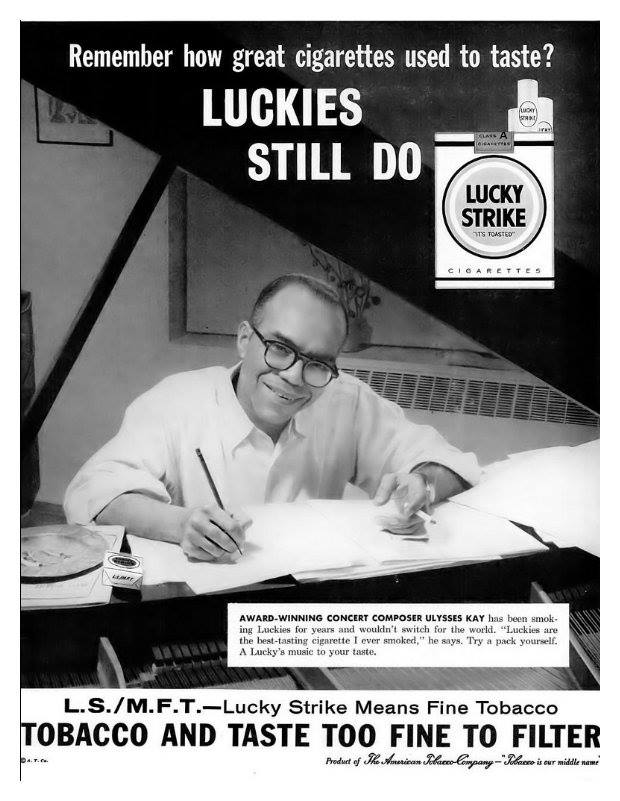
    Regrettably, the music of Ulysses Kay is under-represented in the current catalogue. His delightful “Six Dances for String Orchestra,” probably the lightest music he ever wrote, has been available sporadically on the Vox label, though always badly in need of a new recording. This Sunday night on “The Lost Chord,” we’ll hear one of those dances as part of an hour devoted to Kay’s music.

    Born in Tuscon, AZ, in 1917, Kay was the nephew of jazz musician King Oliver. His uncle encouraged him to study music formally. Likewise, he received moral support from William Grant Still, then recognized as the “Dean of Afro-American Composers.” Kay attended the University of Arizona, before heading on to the Eastman-School, where he studied with Howard Hanson and Bernard Rogers. Also influential were studies with Paul Hindemith at the Berkshire Music Center, and then Yale.

    Kay served in the United States Navy during World War II. He then continued his studies at Columbia with Otto Luening. A recipient of multiple scholarships, grants and awards, he was able to live and study abroad, in Rome, where he attended the American Academy, for several years.

    From 1953 to 1968, he worked for BMI. He was then appointed professor at Lehman College of the City University of New York, where he remained until his retirement, two decades later. A longtime resident of Teaneck, NJ, he composed orchestral, chamber, choral and instrumental works, and five operas. He died in 1995 at the age of 88.

    In addition to that dance for strings, we’ll also hear Kay’s work for trumpet and piano, “Tromba,” from 1985; a long out-of-print LP of his “Concerto for Orchestra,” recorded in 1953; and a suite from his film score to “The Quiet One,” from 1947. A quasi-documentary about an abused African American child and his subsequent coming of age, “The Quiet One” received an Oscar nomination for Best Story and Screenplay, and was listed by the New York Times and the National Board of Review as one of the ten best movies of 1948.

    I hope you’ll join me for “Giving Kay His Say,” this Sunday night at 10:00 EST, on WWFM – The Classical Network and wwfm.org.


    An interview with Kay conducted by Bruce Duffie:
    http://www.bruceduffie.com/kay.html


    PHOTO: Kay gets Lucky!


  • Rosemary Brown: Medium or Musical Genius?

    Rosemary Brown: Medium or Musical Genius?

    by 

    in
    5 responses

    The medium is the message.

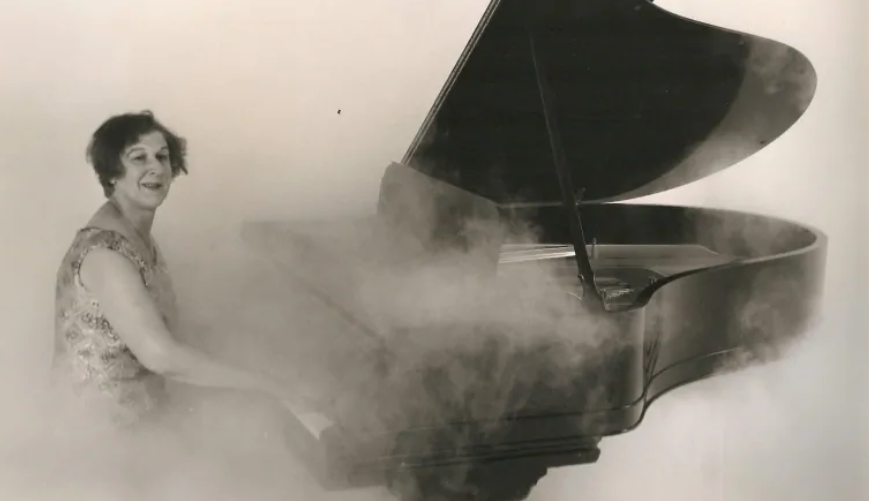
    Does anyone remember Rosemary Brown? Brown was the English spiritualist who claimed that the great composers were still very much active and dictating posthumous works to her.

    At the age of 7 (circa 1923), Brown claimed to have been confronted by a curious specter with long white hair and a flowing cassock. The specter prognosticated that one day he would make her famous. It was ten years before she stumbled across an old photograph and realized that what she had encountered was no less than the shade of Franz Liszt.

    Brown was born into a family of alleged psychics. Both her parents and grandparents claimed extrasensory powers. Brown took up the piano at the age of 15. Her period of study is unclear, as she seems to have changed her story over the decades, but she would have us believe she was basically a dilettante with little formal training.

    Then, in 1964, the ghost of Liszt reappeared and she began “transcribing” new works by the great composers – Bach, Mozart, Beethoven, Schubert, Schumann, Chopin, Brahms, Grieg, Debussy, Rachmaninoff, and Stravinsky. And Liszt, of course. These included two symphonies she attributed to Beethoven, a new “Fantaisie-Impromptu” by Chopin, and a 40-page sonata by Schubert.

    She claimed that some of the composers directed her hands on the keyboard (Chopin and Liszt); others sang (Schubert) or dictated notes (Bach and Beethoven). All of them communicated in English.

    Skeptics abounded. A number of critics and musicologists dismissed the new compositions as substandard pastiches, claiming that the great composers tended to reinvent themselves and push boundaries, while these freshly “dictated” works offered nothing of the sort.

    Some psychologists attributed the phenomena to extraordinary activity on the part of Brown’s subconscious, with the medium essentially reworking and synthesizing all the music she had been exposed to as a child.

    Still, they had to admit it was impressive. Over the course of her life, Brown produced hundreds of such pieces. One expert described it as “the most convincing case of unconscious composition on a large scale.”

    Respected concert pianists Howard Shelley, Peter Katin, Cristina Ortiz, and John Lill have all included these perhaps spurious works on their programs.

    Brown died in 2001. Whether or not she herself is now dictating is anyone’s guess.


    Rosemary Brown’s obituary in The Guardian:
    https://www.theguardian.com/news/2001/dec/11/guardianobituaries

    Brown meets the Amazing Kreskin (she makes her appearance 9 minutes in; she plays at 12:30):

    Documentary on Brown from 1976:


  • Alfred Newman’s Tyrone Power Swashbucklers

    Alfred Newman’s Tyrone Power Swashbucklers

    by 

    in
    4 responses

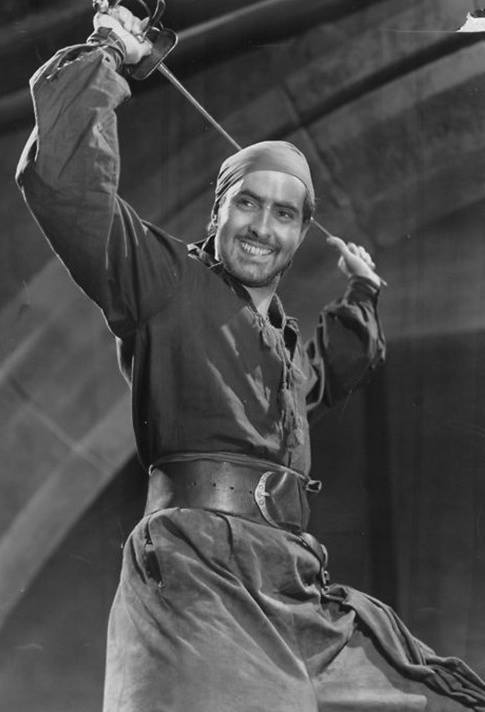
    This week on “Picture Perfect,” experience the Power of Alfred Newman – TYRONE Power, that is. It’s all music from Power swashbucklers made at 20th Century Fox, where Newman served as music director for 20 years.

    “Captain from Castile” (1947) was one of Power’s most opulent vehicles. Based on the novel by Samuel Shellabarger, the film relates Pedro de Vargas’ escape from persecution at the hands of the Inquisition and his accompaniment of Hernán Cortéz in the conquest of Mexico. Also starring Jean Peters and Cesar Romero (as Cortéz), the film capitalizes on the happenstance of a real-life erupting volcano. The climactic march, known as “Conquest,” went on to become one of Newman’s greatest hits. It’s entered the marching band repertoire and has been recorded many times.

    “The Black Swan” (1942) costars Maureen O’Hara and Laird Cregar (as Henry Morgan). Also, if you ever wanted to see George Sanders in a red beard, then this is the movie for you. This time the source material is a novel by Rafael Sabatini, who also created “Captain Blood,” “The Sea Hawk,” and “Scaramouche.”

    Of course, it was “The Mark of Zorro” (1940) that solidified Power’s reputation as 20th Century Fox’s resident swashbuckler. In its own way, the remake manages to match the delights of Douglas Fairbanks’ 1920 original, which was one of the silent era’s most thrilling adventures.

    Finally, it’s back to Shellabarger for “Prince of Foxes” (1949). This time, the setting is the Italian Renaissance. Orson Welles is Cesare Borgia, with an oddly cast Everett Sloane playing an assassin. Sloane was a veteran of Welles’ Mercury Theatre. You may remember him as Mr. Bernstein from “Citizen Kane,” or perhaps from the famous funhouse finale from “The Lady from Shanghai.”

    It’s interesting that all of the films represented this week were inspired by books. (Zorro was introduced in “The Curse of Capistrano” by Johnston McCully.) It was another day, as they say.

    I hope you’ll join me for music by Alfred Newman, written for the swashbucklers of Tyrone Power, on “Picture Perfect” – music for the movies – this Friday evening at 6:00 EST, on WWFM – The Classical Network and wwfm.org.


    A fun reminiscence of Newman (“the best conductor who ever picked up a baton in Hollywood”) by composer David Raksin:

    http://www.americancomposers.org/raksin_newman.htm


Tag Cloud

Aaron Copland (93) Beethoven (95) Composer (114) Film Music (145) Film Score (143) Film Scores (255) Halloween (94) John Williams (195) KWAX (229) Leonard Bernstein (104) Marlboro Music Festival (125) Movie Music (160) Mozart (91) Opera (213) Philadelphia Orchestra (89) Picture Perfect (174) Princeton Symphony Orchestra (109) Radio (88) Ross Amico (244) Roy's Tie-Dye Sci-Fi Corner (290) The Classical Network (101) The Lost Chord (269) Vaughan Williams (105) WPRB (397) WWFM (881)

DON’T MISS A BEAT

Receive a weekly digest every Sunday at noon by signing up here


RECENT POSTS