• Gramophone’s Decline & Vinyl’s Revenge

    Gramophone’s Decline & Vinyl’s Revenge

    by 

    in
    6 responses

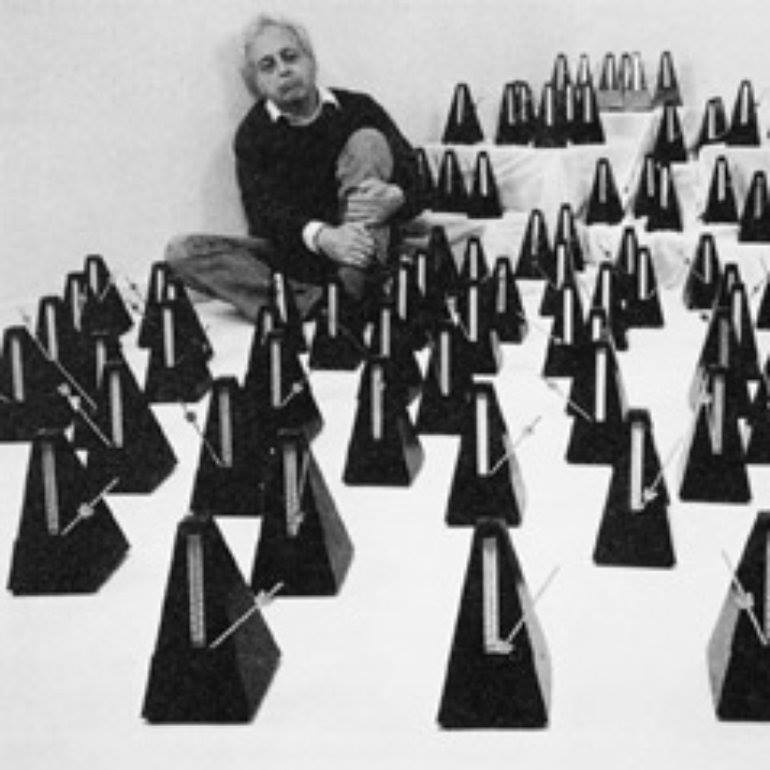
    The overall quality and sharp critical insights offered by Gramophone – “the world’s authority on classical music since 1923,” the magazine that still bills itself as offering “the world’s best classical music reviews” – have plummeted from the heights of when I first started reading it (in the early ‘90s). And I know there are codgers out there who, even then, felt that that the magazine had become a shadow of its former self.

    But contributors like John Steane and Alan Blyth were still around then, old timers who possessed encyclopedic knowledge of their respective fields and long, long memories that reached back into the 78 era. These reviewers’ assessments were invaluable – invariably erudite, articulate in a manner that is now lost, and spot-on in their ability to hone in on the most telling details expressed in often poetic ways. Performances were to be savored and records were to be cherished.

    Anxiety about format change was expressed in its pages by the magazine’s founding editor, Compton Mackenzie, all the way back in 1949 with the introduction of the 33 rpm long-playing record. While I am sure Mr. Mackenzie went on to enjoy more than his share of music released on the new format and even came to embrace it as superior to the old, we are now at a point, I feel, where a resistance to change is more than simply reactionary.

    It is dismaying to me that there are young men now at the helm of Gramophone (and just about everywhere, apparently) who are only too glad to forgo the pleasures of a hard-earned physical collection, assembled over many years – sometimes at great personal sacrifice, but not infrequently tinged with the thrill of the chase – in favor of downloads or streaming. Where the hell is the pleasure in that?

    https://www.gramophone.co.uk/blog/the-gramophone-blog/where-does-streaming-leave-your-record-collection

    Sure, their version of enjoyment saves space and spares the environment, due to the lack of packaging and physical “stuff.” But it is very far away from my happiest experiences, when I could hold an album in my hands and spend hours absorbed in concentrated listening. Does anyone really focus on anything anymore? Or are we more likely to click a mouse and use the music as background as we surf the internet, shop, pay bills, check Facebook?

    Yes, there are certain staples that could probably be left off of my shelves at this point. I didn’t even own a copy of the “Brandenburg Concertos,” beyond the set I picked up on LP back in my high school days, until perhaps the last year or two (the more recent ones I got for free). Recordings of these works are so pervasive, and they can be readily sampled online. Of course working at a classical music station, I also have access to the library there, such that it is. But I’m not about to get rid of my Bernstein Mahler Symphonies or my Boult Vaughan Williams set or the landmark Dorati Haydn just because they can be streamed.

    At any rate, there is tons of material in any collection that has been amassed over decades that will never be reissued in any form. It might be for reasons of copyright or small companies going out of business or a perceived lack of consumer interest. Whatever the case, only a fraction of what has been will ever appear again (and usually the same things over and over and over). Invariably things get “lost.”

    So I lament the constant technological “upgrades” (in most things), including the exclusion of CD players from many newer cars. It’s too often the case that the market drives consumer choice rather than the other way around. And astonishingly, people just roll with it. Then younger folks come up, and they never know the difference.

    The whippersnappers at Gramophone don’t seem to mind giving themselves over to the vagaries of a streamed catalogue from which items may be deleted at any time for whatever reason a provider sees fit. At least when I buy something, I know I own it. It may be destroyed by house fire, but it will never be retracted.

    Those who roll with change might be happier people, or think they are. For me, I’ll continue to build my collection by cherry-picking from everybody else’s cast-offs and by treasure-hunting at Princeton Record Exchange.

    Now get off my lawn.

  • Himalayan Adventures in Classic Film

    Himalayan Adventures in Classic Film

    by 

    in
    4 responses

    How many times have you felt like dropping everything, heading to the Mountain in search of peace and clarity, and returning to the world cleansed? If only it were that simple. The path to salvation is narrow and as difficult to walk as the razor’s edge.

    This week on “Picture Perfect,” we journey through the awe-inspiring landscapes of India and Tibet, even as we feel our way to the inner realms of spirit and psyche, with an hour of Himalayan adventures.

    The Himalayas, in film, have frequently been the source of enlightenment; though occasionally their overwhelming influence has also led to madness. Intriguingly the latter is the case in the Powell-Pressburger classic, “Black Narcissus” (1947). Psychological and emotional tensions abound in this tale of repressed nuns struggling to maintain their composure in a voluptuous Himalayan valley.

    The stunning cinematography was by Jack Cardiff, and Brian Easdale (of “The Red Shoes” fame) wrote the music. Incredibly, the entire film was shot in England, mostly at Pinewood Studios. From a purely visual standpoint, “Black Narcissus” must be one of the most beautiful films ever made. It’s also one of the craziest, with unlikely object-of-desire Mr. Dean driving the sisters to the brink.

    The Himalayas also form the backdrop to “Seven Years in Tibet” (1997), based on a memoir of Austrian mountaineer Heinrich Harrer. Harrer escapes from a British internment camp in India during the Second World War. He travels across Tibet to its capital, Lhasa, where he eventually becomes the tutor of the 14th Dalai Lama. In the film, Brad Pitt plays Harrer. John Williams wrote the music, and Yo-Yo Ma performs the cello solos.

    “The Razor’s Edge” (1946) tells the story of a traumatized World War I veteran, who sets off in search of some kind of transcendent meaning to his existence. He finds it in India, at a Himalayan monastery. The 1946 adaptation of W. Somerset Maugham’s novel (which he claimed was thinly-veiled fact) features Tyrone Power, Gene Tierney, and Ann Baxter. The music is by Alfred Newman, who will conduct a selection from his score.

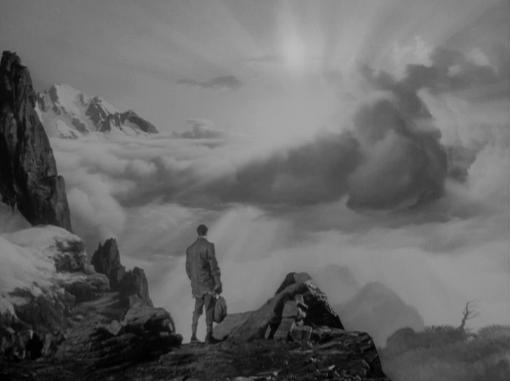
    Finally, we’ll hear a suite from the Frank Capra classic, “Lost Horizon” (1937). Based on the book by James Hilton, the film stars Ronald Colman, with a great supporting cast, including Jane Wyatt, Thomas Mitchell, Edward Everett Horton, H.B. Warner and Sam Jaffe. The novel, and the film, brought the term “Shangri-La” into popular usage, a Utopian paradise hidden in a secluded Himalayan valley, a place of ageless beauty and serenity.

    “Lost Horizon” provided composer Dimitri Tiomkin (a pupil of Alexander Glazunov) with his first major project. The result is one of his most colorful scores. The recording is one of the gems of RCA’s Classic Film Scores series, originally issued in the early 1970s. Made in the presence of the composer, it features 157 performers, with the chorus standing on a platform behind the conductor (Charles Gerhardt), and the various percussionists positioned in the encircling balcony.

    I can’t guarantee that you’ll find enlightenment, but there will be plenty to awe and inspire in these Himalayan adventures, on “Picture Perfect,” music for the movies, this Friday evening at 6:00 EST, on WWFM – The Classical Network and wwfm.org.


  • Hungary’s Forgotten Composers: Dohnányi & Ligeti

    Hungary’s Forgotten Composers: Dohnányi & Ligeti

    by 

    in
    2 responses

    When it comes to the whole Hungarian nationalist movement, Béla Bartók and Zoltán Kodály would get all the glory. Sure, they did a lot of the legwork, heading out into the field in a race against time to document authentic folk traditions before they were swept away by industrialization. But as director of the Budapest Academy of Music and music director of the Budapest Philharmonic Orchestra, Ernő Dohnányi (1877-1960) would exert as much influence over his country’s musical development as that of his folk music mad friends and contemporaries.

    On the next “Music from Marlboro,” we’ll give Dohnányi his due. We’ll also hear music by György Ligeti, a composer who survived several totalitarian regimes to become one of the leading composers of the second half of the 20th century.

    Dohnányi himself would become the target of character assassination campaigns following World War II. Painted as a Nazi sympathizer by his enemies, he would be investigated and cleared by the U.S. Military Government several times. He has since been defended as a forgotten hero of Holocaust resistance. It was through Dohnányi’s administrations that countless Jewish musicians survived. Also, between the wars, he went to bat for Kodály, a leftist, by refusing to fire him from the Budapest Academy. As a result, Dohnányi too lost his position, although he was later reinstated. Nevertheless, he continued to be eyed with suspicion, and his reputation never fully recovered.

    Equally fatal is the fact that much of his music bears a more cosmopolitan stamp than that of the more blatantly “Hungarian” output of his peers. His composition teacher, the German-born Hans von Koessler (known in Hungary as János Koessler) was a cousin of Max Reger. Of course, Koessler also taught Bartók and Kodály. But Dohnányi was perfectly happy nestled in the world of Brahms. For his international career, he adopted the name Ernst von Dohnányi.

    Dohnányi’s Piano Quintet in C minor, completed in June of 1895, one month before his 18th birthday, earned Brahms’ stamp of approval. We’ll hear it performed at the 1977 Marlboro Music Festival, by pianist Stephanie Brown, violinists Joseph Genualdi and Mayuki Fukuhara, violist Philipp Naegele, and cellist Lisa Lancaster.

    György Ligeti (1923-2006) was born in Transylvania. If anything, his hardships proved even more severe: most of his family was wiped out in the Holocaust, he was conscripted into a forced labor brigade, and he lived for a time under strict communist rule. He survived the violent Soviet putdown of the Hungarian Revolution, and finally escaped with his on-again/off-again wife in a pair of mail sacks, leaping off a night train and crawling for miles through the mud to find safety in Vienna.

    Ligeti was that rare bird: an avant-garde composer whose music could actually inspire affection. He rocketed to broader fame when some of his works were used, without permission, in Stanley Kubrick’s “2001: A Space Odyssey.”

    The first of Ligeti’s three string quartets, subtitled “Métamorphoses nocturnes,” was written in 1953-54, prior to his flight from Hungary. The work was heavily influenced by Bartók; the composer György Kurtág memorably described it as “Bartók’s seventh string quartet.” Ligeti himself characterized that phase of his career as “prehistoric.” Although performances of Bartók’s quartets were banned under the communist regime, Ligeti was familiar with them through the study of their scores.

    Ligeti’s quartet is cast in one continuous movement, but subdivided into seventeen contrasting sections. We’ll hear it performed at the 1996 Marlboro Music Festival by violinists Soovin Kim and Catherine Cho, violist Kirsten Johnson, and cellist Siegfried Palm.

    That’s two contrasting works by Hungarian composers buffeted by war and politics, on the next “Music from Marlboro,” this Wednesday evening at 6:00 EST, on WWFM – The Classical Network.

    Marlboro School of Music and Festival: Official Page


    “I am in a prison: one wall is the avant-garde, the other wall is the past, and I want to escape.” – György Ligeti


  • John Joubert Remembered on WWFM

    John Joubert Remembered on WWFM

    by 

    in
    5 responses

    South African-born British composer John Joubert died on Monday at the age of 91. We’ll lead off the 5:00 hour (EST) remembering him with a performance of his Symphony No. 1 of 1955.

    We’ll also hear some “Variations on a Theme of Handel” (from “Messiah”) by the Argentinean composer Luis Gianneo, whose birthday it is today, and one of Handel’s own concerti grossi.

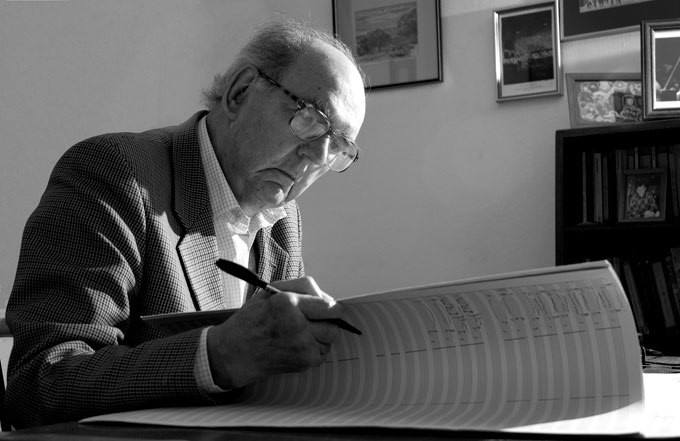
    Don’t forget, coming up at 6:00, it’s another “Music from Marlboro” – chamber music by György Ligeti and Ernő Dohnányi, from the legendary Marlboro Music Festival.

    It’s all yet to come, between now and 7:00 EST, on WWFM – The Classical Network and wwfm.org.


  • Renaissance Riddles and Musical Games on WWFM

    Renaissance Riddles and Musical Games on WWFM

    by 

    in
    7 responses

    Looking for a little diversion?

    On today’s Noontime Concert on The Classical Network, the ensemble Pomerium will present “Musical Games, Puzzles, and Riddles of the Renaissance: A Century of Musical Ingenuity, 1410-1510.” The program was designed to complement an exhibit of Renaissance playing cards mounted at The Met Cloisters in early 2016.

    Pomerium was founded in New York by Alexander Blachly in 1972. The group has fostered the careers of such outstanding early music performers as Julianne Baird, Drew Minter, and members of Anonymous 4.

    This concert was presented at St. Bartholomew’s Church, 50th Street and Park Avenue, in Midtown Manhattan, where free concerts are held every Thursday at 1:15 p.m.

    Its broadcast is made possible in part by Gotham Early Music Scene, or GEMS. GEMS is a non-profit corporation that supports and promotes artists and organizations in New York City devoted to early music – music of the Middle Ages, Renaissance, Baroque, and early Classical periods. For more information and GEMS’ events calendar, look online at gemsny.org.

    Following the Pomerium concert, we’ll continue with an afternoon of musical diversions and cryptograms, shuffling works about games (Stravinsky’s “Jeu de Cartes” – “A Card Game”) with some actual musical puzzles and codes (Elgar’s “Enigma Variations”). Among these will be “32 Cryptograms for Derek Jarman,” a nod to Philadelphia composer Robert Moran, on his birthday.

    Here’s hoping you’re game for an afternoon of great music, from 12 to 4 p.m. EST, on WWFM – The Classical Network and wwfm.org.


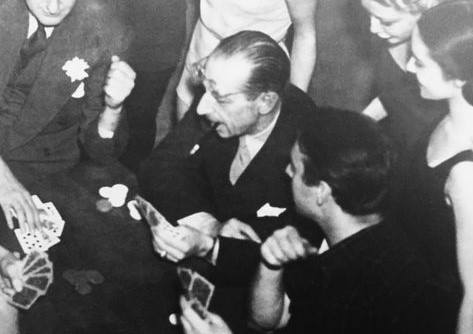
    PHOTO: Stravinsky the card sharp


Tag Cloud

Aaron Copland (93) Beethoven (95) Composer (114) Film Music (145) Film Score (143) Film Scores (255) Halloween (94) John Williams (195) KWAX (229) Leonard Bernstein (104) Marlboro Music Festival (125) Movie Music (160) Mozart (91) Opera (213) Philadelphia Orchestra (89) Picture Perfect (174) Princeton Symphony Orchestra (109) Radio (88) Ross Amico (244) Roy's Tie-Dye Sci-Fi Corner (290) The Classical Network (101) The Lost Chord (269) Vaughan Williams (105) WPRB (397) WWFM (881)

DON’T MISS A BEAT

Receive a weekly digest every Sunday at noon by signing up here


RECENT POSTS