• Orthodox Christmas Gogol Tchaikovsky Rimsky-Korsakov

    Orthodox Christmas Gogol Tchaikovsky Rimsky-Korsakov

    by 

    in
    6 responses

    Here we go again! Just as we in the West conclude the Twelve Days of Christmas, adherents of the Eastern Orthodox Church today commence their celebrations of Orthodox Christmas. Chalk it up to the old Julian calendar.

    Ukrainian Christmas Eve can be a solemn occasion, marked by fasts and sacred services. Meatless dishes are served for the Holy Night supper. But there are also carols. And the caroling is no simple singing of Christmas songs. Similar to mumming traditions of the British Isles, there is also a little play involved, with ritualistic dancing and the participation of a live goat. As in the West, pre-Christian symbols and rituals are embraced in the celebration of Christmas, to lend cheer to the shortest days and hope for a fertile spring.

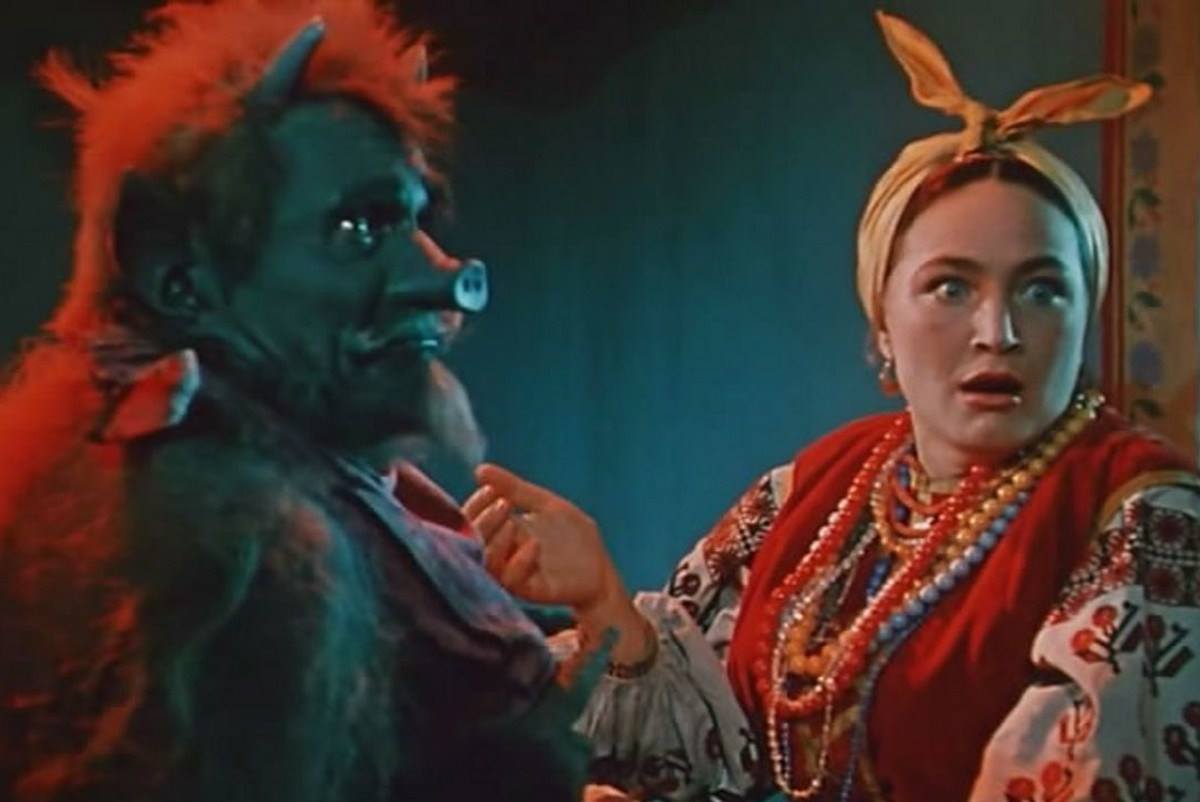
    Nikolai Gogol’s “Christmas Eve,” from his collection of stories, “Evenings on a Farm Near Dikanka,” emerges from these folk traditions. Part fairy tale and part farce, Gogol’s story features such incidentals as the theft of the moon, amorous peasants secreting themselves in burlap sacks, and a ride through the air on the Devil’s back to collect the Tsarina’s slippers.

    “Christmas Eve” drew musical responses from both Peter Ilych Tchaikovsky and Nikolai Rimsky-Korsakov. The two composers shared a complicated rivalry. In public, each was supportive of the other, while in private they were nagged by suspicion and envy. Tchaikovsky felt sufficiently threatened to swear his publisher to secrecy about his use of the then newly-minted celesta in “The Nutcracker,” lest Rimsky steal his thunder. Equally intimidated by Tchaikovsky, Rimsky held off on adapting “Christmas Eve” until 1895. Tchaikovsky had set his version ten years before, a revision of an even earlier opera, “Vakula the Smith,” written in 1871. By the time Rimsky’s “Christmas Eve” received its premiere, Tchaikovsky had been safely in the grave for two years.

    We’ll hear selections from both composer’s operas today on The Classical Network, alongside observances of the birthdays of composers William Hurlstone, Ulysses Kay, and Francis Poulenc; conductors David Porcelijn and Gunter Wand; pianist Clara Haskil; violinist and conductor Iona Brown; and choral director Robert DeCormier.

    Z Rizdvom Khrystovym! Good triumphs over evil, but the devil gets his due, from 4 to 7 p.m. EST, on WWFM – The Classical Network and wwfm.org.


    An animated version of Gogol’s tale, incorporating some of Rimsky’s music:

    https://www.wilderutopia.com/performance/literary/nikolai-gogol-witches-and-devils-on-christmas-eve/

    A fun live-action version from 1961:

    https://www.youtube.com/watch?v=9MFoyMwfnlc

    A 1913 silent version (but you’ll have to provide your own soundtrack):

  • Finnish Epic Music and the Kalevala

    Finnish Epic Music and the Kalevala

    by 

    in
    7 responses

    Whether it was due to human error or a technical glitch, my “Kalevala” program did not air as announced on December 9. Now that the holidays have (mostly) passed, we can return, like steadfast old Väinämöinen, to the world of Finnish legend and lore for a second shot at claiming the Sampo and maintaining our stoicism in the face of star-crossed love.

    This Sunday night on “The Lost Chord,” we’ll have music inspired by this disparate collection of long narrative poems. “The Kalevala” is frequently referred to as the Finnish national epic. Its fantastic and heroic tales informed the work of Finland’s greatest artists at a time when the country began its surge toward independence after 700 years of Swedish rule and another century as a duchy of the Russian Empire.

    Robert Kajanus was Sibelius’ first great champion. He conducted first performances of many of the composer’s major works and led the Helsinki Philharmonic for 50 years. He also wrote over 200 pieces himself. “Aino” was composed in 1885 for the Kalevala Society, to mark the 50th anniversary of the poem’s publication.

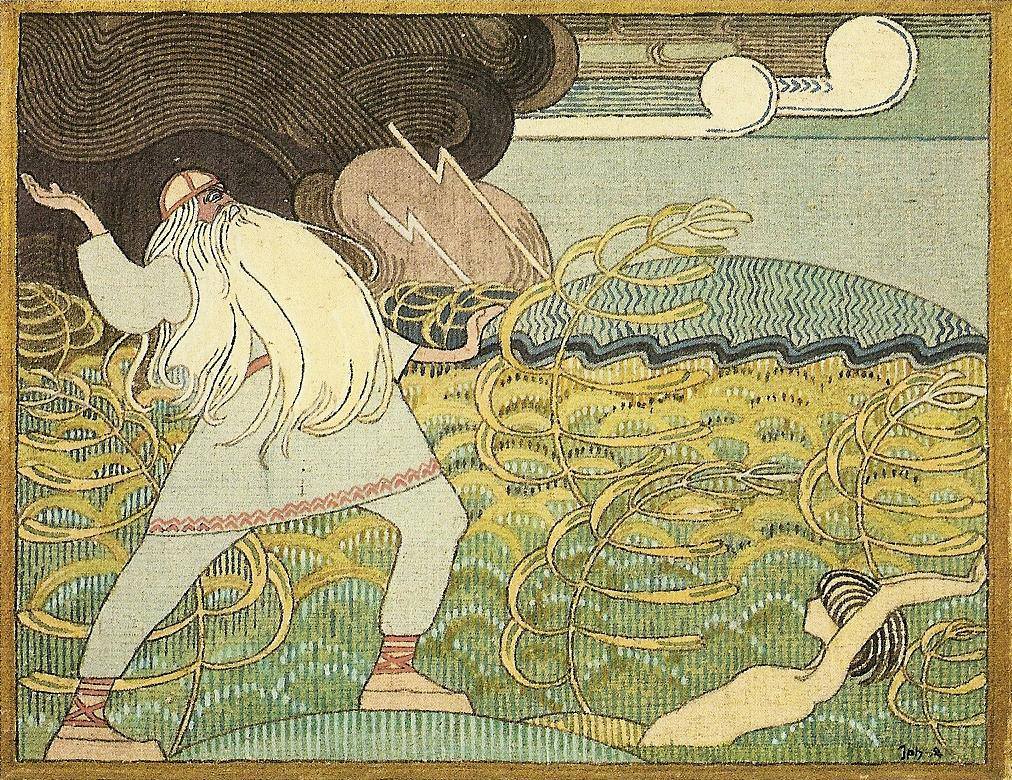
    One of the Kalevala’s heroes, Väinämöinen the wizard, always seems to be plagued by bad luck. He wins a singing contest, plunging his rival, Joukahainen, into a swamp, but when the latter promises him his sister’s hand in marriage if he will save him from drowning, the sister, Aino, drowns herself rather than submit to this seemingly intolerable fate. She returns to taunt the grieving Väinämöinen in the form of a salmon.

    Uuno Klami, one of the most important Finnish composers after Sibelius, brought a degree of French polish back from his studies in Paris, where he fell under the irreverent sway of Les Six. This led to the composition of an unusually anti-heroic take on the “Kalevala” legends, “Lemminkäinen’s Island Adventures.” However, in spite of his occasionally Gallic disposition, Klami grew into one of Finland’s most respected composers. Sibelius recognized his talent and even lobbied for a small lifetime stipend for Klami from the Finnish government.

    Unlike Sibelius’ better-known “Four Legends from the Kalevala,” Klami’s “Kalevala Suite” scrupulously avoids the more swashbuckling elements of the epic’s narrative. He opts instead to paint on a much broader canvas, with movements titled “The Creation of the Earth,” “The Sprout of Spring,” “Terhenniemi” (replete with the sounds of nature and the sunny bliss of a summer’s day), “Cradle Song for Lemminkäinen” (Lemminkäinen’s mother’s song, sung over her son’s dead body, soon to be resurrected), and “The Forging of the Sampo” (a kind of talisman everyone seems to want).

    Of course, no composer had more success drawing on the Kalevala legends than Jean Sibelius. We’ll conclude the hour with a Sibelius rarity, “A Song for Lemminkäinen,” from 1896. This follows on the heels of the composer’s “Lemminkäinen Suite” (also known as “Four Legends from the Kalevala”), written earlier in the decade.

    It’s a second chance to aquire some “Epic Finnish,” this Sunday night at 10:00 EST, on WWFM – The Classical Network and wwfm.org.


    IMAGE: “Väinämöinen Sings Joukahainen into a Fen,” by Joseph Alanen (1885–1920)


  • Epiphany Humor Funny Moments

    Epiphany Humor Funny Moments

    by 

    in
    5 responses

    A little Epiphany humor.


  • Twelfth Night Christmas Traditions and Folklore

    Twelfth Night Christmas Traditions and Folklore

    by 

    in
    4 responses

    Once they have sufficiently recovered from New Year’s, a lot of people take down their Christmas lights and dismantle their trees. (On the other hand, too many seem to leave them up until spring.) After all, Christmas is past, right? Wrong!

    December 5, the eve of Epiphany, is Twelfth Night – the Twelfth Day of Christmas – or is it? Well, it depends on when you start the count. Is Christmas Day the First Day, or should we begin counting the day after? The day after would make January 6, Epiphany (the Christian feast commemorating the visit of the three Magi to the Baby Jesus) the Twelfth Day, which would seem to make sense.

    But is Epiphany the Twelfth Day, or should Twelfth Night, a night of reveling to mark the last day of Christmas, really to be observed on the eve of Epiphany, just as Christmas Night, in England anyway, is actually Christmas Eve? The Christian world is divided – and that is only taking into account the West!

    Then there’s “Old Twelfth Night” (January 17), but that’s for another post.

    In any case, according to tradition, it’s perfectly fine to still have the tree and lights up, but it is bad luck to keep Christmas decorations on display beyond Epiphany. Apparently it was the Victorians who first said so, as a signal that it’s time for everyone to get back to work. The Tudors, on the other hand, kept partying right on through February 1, the eve of Candlemas (the presentation of the Christ Child at the Temple in Jerusalem).

    As for Shakespeare’s play, “Twelfth Night,” which would seem to have nothing at all to do with Christmas, it is a charming corollary of a season of merriment, masked balls, and misrule. The first performance took place on Candlemas, 1602.

    We may not be able to come to a consensus on the Twelfth Day, but we can say with certainty that the night of December 5 marks the arrival of Befana the Christmas witch. Befana is the wizened crone who bestows gifts and happiness upon the good children of Italy. If the children are bad, they get a lump of coal. (If the family is poor, they get a stick.) It’s traditional to leave a glass of wine and a tasty morsel for Befana. In return, she will sweep the floors with her broom, symbolically sweeping away the problems of the old year.

    Think about that when you worry that your tree is losing too many needles.


    PHOTO: Make way for the Holly Man!


  • Film Noir Shadows and Moral Ambiguity

    Film Noir Shadows and Moral Ambiguity

    by 

    in
    7 responses

    We may have already passed the shortest day, but in my heart the shadows continue to grow long.

    This week on “Picture Perfect,” we revisit the world of film noir, a genre notoriously slippery to define, but easy to know when you see it – with its long shadows and moral ambiguities; cock-eyed camera angles and snappy repartee; isolation and innuendo. It’s a genre where a pair of gams is an invitation to the gallows; where a man’s best friend – and sometimes his worst enemy – is his Colt .38; where only cigarettes and bourbon can ease the pain.

    The labyrinthine mystery at the heart of “The Big Sleep” (1946) is so disorienting, even the book’s author, Raymond Chandler, couldn’t tell whodunit. Who cares? Humphrey Bogart and Lauren Bacall get some more steamy dialogue to satisfy fans of “To Have and Have Not,” and there’s plenty of Bogey pounding the pavement and tossing off tart one-liners in pursuit of the truth. But my favorite scene involves Dorothy Malone, who runs the hottest bookstore in town. Whenever there are gallows to be built or gangsters to be beaten, Warner Brothers could be counted on to assign Max Steiner.

    “Chinatown” (1974) is one of the best of the neo-noirs of the 1970s. This time, Jack Nicholson plays private dick J.J. Gittes, who takes on a seemingly routine case that begins to spiral out of control. When producer Robert Evans rejected Philip Lambro’s original score, Jerry Goldsmith stepped in as a last-minute replacement. The composer was hired with the understanding that he had only ten days to write and record new music. For his effort, Goldsmith received an Academy Award nomination.

    The Coen Brothers clearly love noir, from their first feature, “Blood Simple,” to their Academy Award winners, “Fargo” and “No Country for Old Men,” to their unlikely and absurdly entertaining reimagining of “The Big Sleep,” “The Big Lebowski.” “Miller’s Crossing” (1990) was one of the more underappreciated of these. The film follows the well-worn device of an anti-hero playing two sides off of one another, until he is the last one standing – shades of Dashiell Hammett’s “Red Harvest,” with a healthy dose of “The Glass Key” thrown in, for good measure. The Irish-inflected score is by Coen regular Carter Burwell.

    Before he became stereotyped as a composer for epic films like “Ben-Hur,” “King of Kings” and “El Cid,” Miklos Rozsa was the king of noir, providing scores for genre classics such as “Double Indemnity” and “The Strange Love of Martha Ivers.” We’ll hear a suite assembled from three such projects: “Brute Force” (1947), a hard-hitting prison drama, starring Burt Lancaster as a desperate inmate and a contemptible Hume Cronyn as a sadistic guard; “The Killers” (1946), also starring Lancaster as a marked boxer; and “The Naked City” (1948), with Barry Fitzgerald leading a police investigation into the murder of a young model. The suite is titled “Background to Violence.”

    Put on your rumpled linen suit, draw the Venetian blinds, and play the sap for nobody this week. It’s film noir in the gritty city, on “Picture Perfect,” music for the movies, this Friday evening at 6:00 EST, on WWFM – The Classical Network and at wwfm.org.


    PHOTO: Forget it, Jake; it’s Chinatown.


Tag Cloud

Aaron Copland (93) Beethoven (95) Composer (114) Film Music (145) Film Score (143) Film Scores (255) Halloween (94) John Williams (195) KWAX (229) Leonard Bernstein (104) Marlboro Music Festival (125) Movie Music (160) Mozart (91) Opera (213) Philadelphia Orchestra (89) Picture Perfect (174) Princeton Symphony Orchestra (109) Radio (88) Ross Amico (244) Roy's Tie-Dye Sci-Fi Corner (290) The Classical Network (101) The Lost Chord (269) Vaughan Williams (105) WPRB (397) WWFM (881)

DON’T MISS A BEAT

Receive a weekly digest every Sunday at noon by signing up here


RECENT POSTS