It’s Pablo Casals’ birthday. Enjoy a beautiful Saturday morning with his pioneering traversal of the Bach cello suites, still sounding great after 80 years.
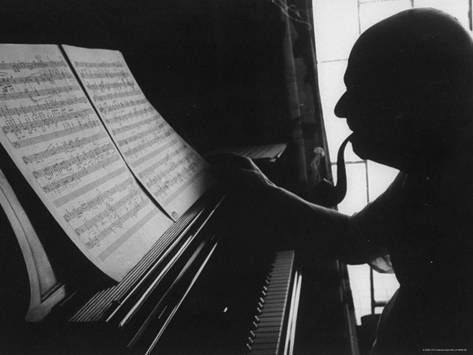
It’s hard to believe that these cornerstones of the cello repertoire were once commonly regarded as little more than etudes. The truth is, before the 20th century they were not widely known, much less understood. It is Casals who is credited with having rehabilitated them, following his discovery of the music in a Catalan bookshop at the age of 13. He cherished the suites for the rest of his life, not only playing them in public but delving into them privately every morning after a walk and a smoke. There must have been something to it: Casals died in 1973, two months shy of his 97th birthday.
He was the first cellist to record all six suites, already 60 by the time he first played Bach before a microphone.
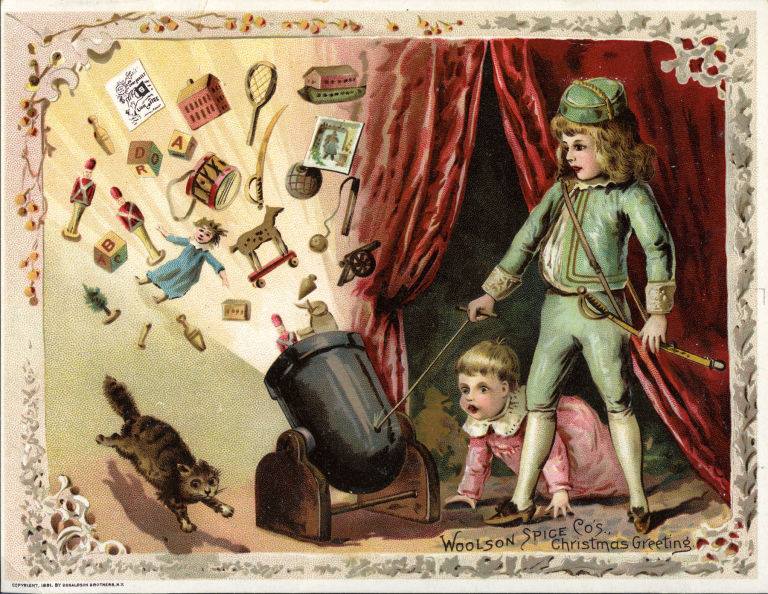
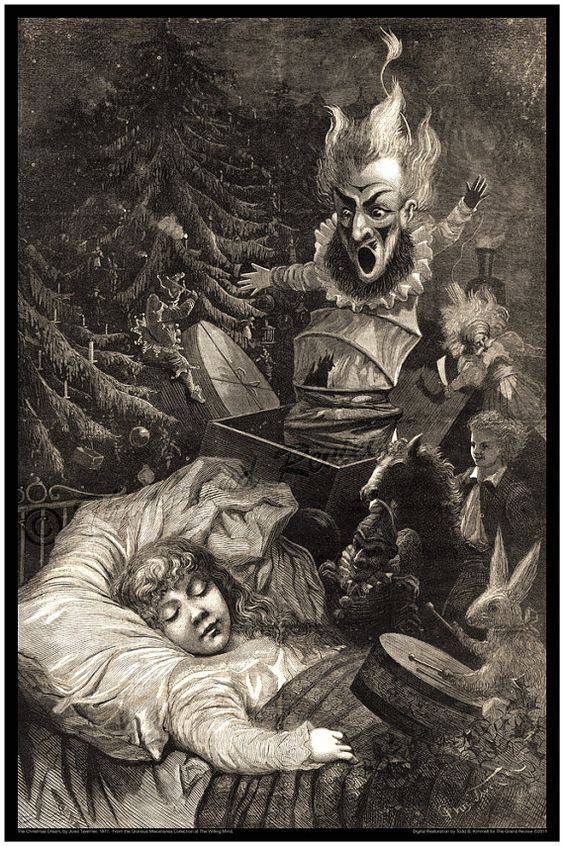
With the grand cacophony of Christmas still fresh in everyone’s ears, I thought it only appropriate this week on “Picture Perfect” to focus on music from movies about toys.
Without giving anything away, in the unlikely event you don’t already know the story’s big pay-off, “Citizen Kane” (1941) is a film flanked by toys. There’s even a snow globe in the film’s opening montage. A certain memory of Kane’s childhood provides a poignant glimpse of the larger-than-life newspaper magnate’s lost innocence. “Kane” is often cited as one of the greatest films ever made. Orson Welles triumphed in his debut as writer-director-star, even if, ultimately, his creation proved to be a bottle rocket that blew up in his face. The film also marked the Hollywood debut of composer Bernard Herrmann.
I’m not sure that “Pee-Wee’s Big Adventure” (1985) could be described as the “Citizen Kane” of the ‘80s, exactly, but this endearingly goofy sojourn into the surreal does revolve around the recovery of a lost toy, as Pee-Wee, the eternal boy, determines to make his way to “the basement of the Alamo” in an attempt to reclaim his stolen bike. The feature was director Tim Burton’s first. It was also his first collaboration with Danny Elfman, who is obviously a big fan of Nino Rota.
The husband-and-wife team of Charles and Ray Eames are better known for their contributions to architecture, industrial design, and manufacturing, but they also made short films. “Toccata for Toy Trains” (1957) was inspired by the Eames’ passion for vintage toys. The score was provided by their go-to composer, Elmer Bernstein.
Finally, in acknowledgement of the greatest toy series of our day, we’ll conclude with music from “Toy Story” (1995), the first full-length computer animated feature. The quality of the film propelled it beyond mere novelty status into the realm of instant classic, and the beloved “Toy Story” franchise has raked in hundreds of millions of dollars. Early on, it was decided by the filmmakers that they did not want “Toy Story” to be a musical, but that songs could be used to underline its emotional content. Randy Newman has provided the music for all the “Toy Story” films so far. He was recognized with an Academy Award for his work on “Toy Story 3,” for the song, “We Belong Together.”
Keep popping those aspirin. It’s “Toys Everywhere” this week, on “Picture Perfect,” music for the movies, this Friday evening at 6:00 EST, on WWFM – The Classical Network and wwfm.org.
“Happiness isn’t something you experience; it’s something you remember.”
Bearing in mind the words of Oscar Levant, I hope that you had a happy Christmas.
Levant was born in Pittsburgh on this date in 1906 to Orthodox Jewish parents from Russia. It was his father’s desire that his sons become either doctors or dentists. Ever the contrarian, Levant opted to become everything else instead.
A preternaturally talented musician, Levant studied in New York with the great Polish pedagogue Zygmunt Stojowski. By his early 20s, he was in Hollywood, where he met and befriended George Gershwin. With Gershwin’s death, Levant became regarded as the foremost interpreter of the composer’s piano music.
Levant himself was a composer of talent. In Hollywood, he scored over 20 films. He also wrote and co-wrote popular songs, including the enduring “Blame It on My Youth.” Determined to become a “serious” composer, he sought out and undertook private studies with Arnold Schoenberg. He also found work as a Broadway composer and conductor.
But it was likely through his memorable appearances on radio and television that he became best known, as a brilliant panelist possessed of impeccable timing and an acid wit. His remarks were invariably off the cuff, and this spontaneity would sometimes throw the sponsors into a panic. A show was cancelled after he remarked, “Now that Marilyn Monroe is kosher, Arthur Miller can eat her.”
Now a certified – some would say certifiable – celebrity himself, Levant appeared in a number of feature films, including “An American in Paris” (1951) and “The Band Wagon” (1953). He played himself in the Gershwin biopic “Rhapsody in Blue” (1945). He would receive a star on the Hollywood Walk of Fame in recognition of his recording career.
On top of everything else, Levant wrote three books: “A Smattering of Ignorance” (1940), “The Memoirs of an Amnesiac” (1965), and “The Unimportance of Being Oscar” (1968).
Levant was as famous for his neuroses and hypochondria as he was for any of his actual talents. He smoked prolifically, became addicted to prescription drugs, and was frequently in and out of mental institutions. He died of a heart attack in 1972, at the age of 65.
“There is a fine line between genius and insanity,” he once quipped. “I have erased this line.”
Happy birthday, Oscar Levant – even if only in remembrance.
December 26. St. Stephen’s Day. The day King Wenceslas “looked out” and trudged through snow and wind and gathering darkness to bring flesh, wine and fuel to one of his needy subjects.
This afternoon on The Classical Network, we’ll salute the good king, whose legendary deeds were immortalized in the famous Christmas carol, with Josef Suk’s “Meditation on the Old Czech Hymn, ‘St. Wenceslaus.’” We’ll also acknowledge the Irish St. Stephen’s tradition of “hunting the wren.”
As stomachs and ear drums continue to be wassailed and assailed during this perhaps too merry season, we’ll also have plenty of music about banqueting and toys.
This week’s “Music from Marlboro” (6:00 EST) will feature evergreen works by Beethoven and Wagner.
It shouldn’t require the patience of a saint to enjoy the music, from 4 to 7 p.m. EST, on WWFM – The Classical Network and wwfm.org.


3 responses