• Celebrate Mozart’s Birthday with Classical Music

    Celebrate Mozart’s Birthday with Classical Music

    by 

    in
    6 responses

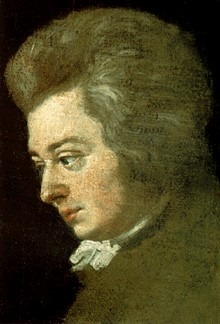
    There’s no art quite like MozArt.

    Reacquaint yourself with the astonishing facility and pervasive humanity of Mozart’s music, as we observe his birthday today (he was born on January 27, 1756) with a full playlist of his symphonies, concertos, chamber and choral works, and selections from his music for the stage.

    Yes, Mozart is good for you. Whether or not exposure to his output improves the development of babies’ brains, it has undoubtedly contributed to the world’s sentimental education. Mozart’s music is just plain good for the soul. It reassures and it keeps us in touch with the larger truths of what it means to be human. Was Mozart’s life a bed of roses? No. But he knew where to find beauty, and he devoted a substantial portion of his brief existence to shepherding it into the world.

    We at The Classical Network understand the significance of keeping great music in our lives and in our community. But we can only do it with your help and with the help of listeners just like you. If you haven’t contributed to The Classical Network, or if you haven’t contributed recently – or if you HAVE contributed, but now feel you are in a position to bestow an additional gift – please consider joining us in membership today. We have four brand new Mozart-oriented thank you gifts to hopefully entice you and certainly to demonstrate our gratitude to you for doing your part to keep classical music on the airwaves and in continued good health.

    There’s more to life than acquiring things, struggling to survive, or shouting down those who happen to disagree with us. The greatest truths and consolations are to be found in the finest music. You don’t have to “know” anything about it. All you to do is open yourself up to it and support it.

    Please call us today (between 9 a.m. and 6 p.m. EST) at 1-888-232-1212, or donate online (anytime) at wwfm.org. Then enjoy the music of Mozart right along with us, your friends, at WWFM – The Classical Network. Thank you for ALL that you do.
  • Women’s Names in Classic Film History

    Women’s Names in Classic Film History

    by 

    in
    One response

    This week on “Picture Perfect,” building a show around women’s names for titles permits us to travel across a broad of array of genres – contemporary drama, Regency Era comedy of manners, 1940s film noir, and 16th century costume picture.

    “Rachel, Rachel” (1968) stars Joanne Woodward as a repressed, small-town schoolteacher, who learns to take control of her own life. The film marked the directorial debut of Woodward’s husband, Paul Newman. “Rachel, Rachel” was nominated for four Academy Awards, including those for Best Actress and Best Picture. Newman picked up a Golden Globe and a New York Critics Circle Award for his direction. The lovely Americana score was composed by Jerome Moross.

    “Emma” (1996) was adapted from the Jane Austen novel. Gwyneth Paltrow plays the high spirited-though-somewhat-clueless matchmaker, who fails to recognize her own feelings or those of the men around her. Also among the cast are Alan Cumming, Toni Collette, Ewan McGregor and Jeremy Northam. Screenwriter and director Douglas McGrath fell in love with the book while an undergraduate at Princeton University. Rachel Portman wrote the Academy Award-winning score.

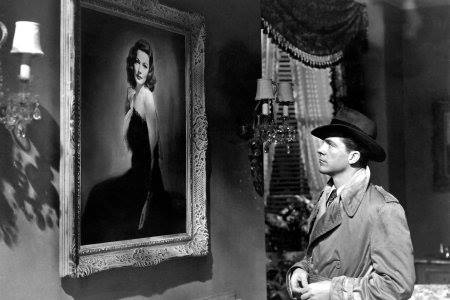
    Otto Preminger’s film noir, “Laura” (1944), features quite the cast, including Gene Tierney, Dana Andrews, Clifton Webb, Judith Anderson and Vincent Price. The equally impressive theme, which is heard in endless permutations throughout the film, was by Philadelphia-born David Raksin. Outfitted with lyrics by Johnny Mercer, it became the second most-recorded song during the composer’s lifetime, after only Hoagie Carmichael’s “Stardust.”

    Finally, “Diane” (1956) takes us back to 16th century France, with a plot concerning Diane de Poitiers (played by Lana Turner), a member of the court of Francis I, who becomes the mistress of the king’s son, Henri d’Orleon (played by a very young Roger Moore). Their illicit love unfolds against the backdrop of Medici intrigue and lust for power. Miklós Rózsa, M-G-M’s go-to-composer for its historical spectacles, wrote the music.

    I hope you’ll join me for “What’s in a Name?,” this Friday evening at 6:00 EST, on WWFM – The Classical Network and wwfm.org.


    PHOTO: Dana Andrews likes his women stiff, like his bourbon


  • E.T.A. Hoffmann Birthday: Madness & Inspiration

    E.T.A. Hoffmann Birthday: Madness & Inspiration

    by 

    in
    6 responses

    Today is the birthday of E.T.A. Hoffman (1776-1822), and what a good day for it! Mid-winter is the perfect time to enjoy Hoffmann’s tales of madness and obsession.

    Not only was Hoffmann a seminal author of dark fantasy and horror, he was also a jurist, a draftsman, a caricaturist, and of course a composer and music critic.

    Well, perhaps I shouldn’t say “of course.” Hoffmann is most famous for his writings, and justifiably so. None of his musical compositions have attained anything like repertoire status. However he did manage to turn out a lovely Harp Quintet, and his opera, about the water spirit “Undine,” certainly shows promise, though given the source – after all, he was the author of “The Sandman” and “Mademoiselle de Scuderi” – it is a mite disappointing.

    Perhaps that’s the viewpoint of someone looking back from a more jaded era, when the fantastic is routinely hammered home in all its CGI vulgarity. By contrast, Hoffmann’s tales are dream-like and insinuating in ways that still have the power to haunt across the centuries.

    Musically, from our perspective, Hoffmann is perhaps more important for having inspired other, more enduring composers, who wrote works like “Coppelia” (Delibes), “The Nutcracker” (Tchaikovsky) and of course “The Tales of Hoffmann” (Offenbach). Even so, these works seldom reflect the spirit of Hoffmann’s originals.

    Of the Romantics, surprisingly, only Robert Schumann seems to have really got it. You can really hear how Hoffmann got into his head in works like “Kreisleriana” and the “Nachtstücke.” But Schumann was perhaps one step away from “Sandman” material anyway.

    Hoffmann’s tales have had a more palpable influence on 19th century literature, firing the creative imaginations of writers from Dostoyevsky to Dumas to (least surprisingly) Edgar Allan Poe.

    If all you know is “The Nutcracker” or the Offenbach opera, you don’t really know Hoffmann. Though Tchaikovsky had an intuitive grasp of the idiom, he was working from a watered down adaptation by Dumas. It took Maurice Sendak to bring the story back to its roots.

    Sadly, Pacific Northwest Ballet discontinued its annual presentations of this gutsy production. Apparently, it was too freaky for audiences expecting to be spoon-fed sugar plums. Instead the company has taken up the insipid Balanchine version, which inexplicably thrives like fungus on a fruitcake. Is this really the same artist who choreographed “Agon?”

    Fortunately, the PNB Sendak version was made into a feature film in 1986.

    This is a “Nutcracker” that will put hair on your chest.

    Anyway, “The Nutcracker, “The Tales of Hoffmann,” and especially “Coppelia” are almost like children’s book versions of the originals. If you have a taste for such things, you owe it to yourself to at least read “The Sandman.” Here it is, though it’s really not the kind of story you should read off of a computer:

    https://germanstories.vcu.edu/hoffmann/sand_e.html

    Happy birthday, E.T.A. Hoffmann!


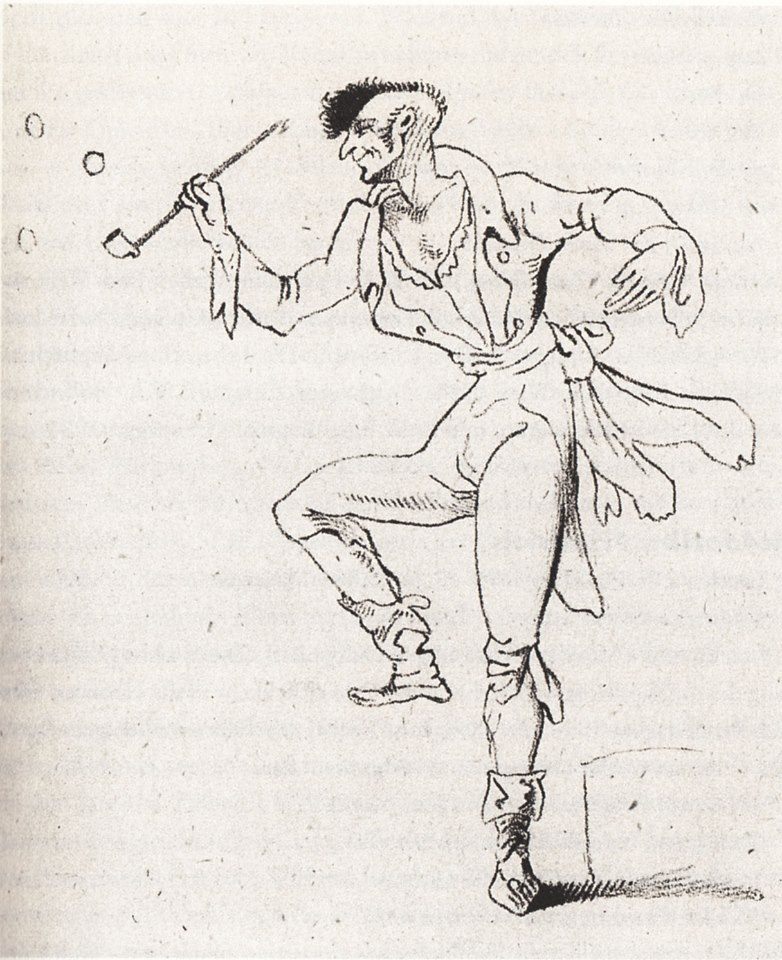
    IMAGE: One of Hoffmann’s most famous creations, Kapellmeister Kreisler, sporting a rad haircut and blowing bubbles


  • John Belushi Remembered 70th Birthday

    John Belushi Remembered 70th Birthday

    by 

    in
    2 responses

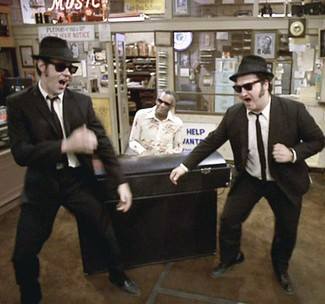
    I just realized John Belushi would have been 70 today. He died of a drug overdose in 1982. He was 33 years-old.


  • Marlboro’s Haunting Chamber Music Classics

    Marlboro’s Haunting Chamber Music Classics

    by 

    in
    3 responses

    For obvious reason, the ghost story is inextricably linked in many people’s thoughts with Hallowe’en. But there was a time when reading and sharing eldritch tales were common pastimes even at Christmas. I suppose it makes sense that during a time of year when there is less light, the skies are bleak, and the landscapes withered – a time when people are essentially housebound and comparatively isolated – the mind would be most susceptible to chilling thoughts of something sinister underlying a gust of wind or a creak on the cellar stairs.

    I thought it rather appropriate, then, to revisit a couple of chamber music classics with a supernatural bent on this week’s “Music from Marlboro.”

    French composer André Caplet was winner of the esteemed Prix de Rome in 1901, placing ahead of Maurice Ravel. He played percussion with the Colonne Orchestra and trained as a conductor under Arthur Nikisch. From 1910 to 1914, he served as director of the Boston Opera. While serving in the First World War, he was engulfed in poisonous gas, which resulted in the pleurisy that plagued him for the remainder of his short life. Caplet died in 1925, at the age of 44.

    As the Prix de Rome would suggest, Caplet composed music of considerable merit. Nonetheless, he was fated to be remembered for his work as an orchestrator for Claude Debussy. Debussy’s “Children’s Corner,” “The Martyrdom of Saint Sebastian,” “La Boiîte à joujoux,” and “Clair de lune” would all be draped in Caplet’s finery.

    Of Caplet’s original music, only his “Conte fantastique” (“Fantastic Tale”), after Edgar Allan Poe’s “The Masque of the Red Death,” retains a foothold on the repertoire. Composed in 1908 for harp and string orchestra, it was arranged for harp and string quartet in 1922. The work crackles with atmosphere, invention and suspense. In fact, the program is brought so vividly to life that one can’t help but think that Caplet would have made an excellent film composer. Savor the chill as Prince Prospero’s decadent revels are curtailed by the implacable chimes of midnight!

    The Marlboro performance, which dates from 2009, features Sivan Magen, harp; Liana Gourdjia and Bella Hristova, violins; Sally Chisolm, viola; and Paul Wiancko, cello. As an added bonus, the music will be prefaced by a reading from Poe’s creepy classic.

    Fifteen years after the death of Beethoven, the composer’s star pupil, Carl Czerny, noted that the slow movement of his Piano Trio in D, Op. 70, No.1, reminded him of the ghost of Hamlet’s father. Czerny may not have been all that far off the mark.

    Actually, at the time of the work’s composition, in 1808, Beethoven had been kicking around the idea for opera on the subject of Macbeth. The words “Macbett” and “Ende” appear near sketches for the Largo. It’s been speculated that the music may have been a working out of ideas for a proposed scene featuring the three witches. The ominous mood is heightened by eerie and mournful touches, sudden pauses and outbursts, and the use of a ghostly tremolo. The operatic project collapsed when Beethoven’s librettist, Heinrich Joseph von Collin (to whom Beethoven had dedicated the “Coriolan Overture”), begged off of the project, thinking it was too dark.

    We’ll hear Marlboro musicians Dénes Várjon, piano; Michelle Ross, violin; and Brook Speltz, cello, captured on tour in Washington, D.C., in 2015. You can learn more about this season’s tours (the next two are coming up in March) by visiting marlboromusic.org.

    Turning up your radio has been proven to drown out bumps in the night. Join me for “haunting” performances from the legendary Marlboro Music Festival, this Wednesday evening at 6:00 EST, on WWFM – The Classical Network and wwfm.org.

    Marlboro School of Music and Festival: Official Page


Tag Cloud

Aaron Copland (93) Beethoven (95) Composer (114) Film Music (145) Film Score (143) Film Scores (255) Halloween (94) John Williams (195) KWAX (229) Leonard Bernstein (104) Marlboro Music Festival (125) Movie Music (160) Mozart (91) Opera (213) Philadelphia Orchestra (89) Picture Perfect (174) Princeton Symphony Orchestra (109) Radio (88) Ross Amico (244) Roy's Tie-Dye Sci-Fi Corner (290) The Classical Network (101) The Lost Chord (269) Vaughan Williams (105) WPRB (397) WWFM (881)

DON’T MISS A BEAT

Receive a weekly digest every Sunday at noon by signing up here


RECENT POSTS