Tag: A Midsummer Night’s Dream

  • Weber Operas: 200 Years of “Oberon;” “Der Freischütz” in Concert

    Weber Operas: 200 Years of “Oberon;” “Der Freischütz” in Concert

    In this year of Carl Maria von Weber anniversaries – the influential German composer died 200 years ago (on June 25, 1826, to be exact) – it’s worthwhile to note the bicentennial of his final opera, actually a singspiel (an opera with spoken dialogue), “Oberon,” which was first performed on this date at Covent Garden, a little more than two months before his passing.

    Oberon, of course, is king of the fairies, as we all know from “A Midsummer Night’s Dream.” Weber also imports Puck and Titania. But from there James Robinson Planché’s libretto (which George Grove, of Grove Dictionary fame, described as “unmitigated awfulness”) goes its own way. The story combines elements of Christoph Martin Wieland’s German poem “Oberon” and the 13th century French romance “Huon de Bordeaux.”

    In Shakespeare, the fairy royals quarrel over the guardianship of an Indian prince (and accusations of infidelity). Here, Oberon refuses to reconcile with his queen until a faithful human couple is found. Puck directs his attention to Huon, a knight of Charlemagne, charged with assassinating the Caliph’s “right-hand man,” who is engaged to marry the Caliph’s daughter, Reiza. In the meantime, Huon and Reiza both have visions that draw them to one another. A number of trials ensue, including shipwreck, abduction by pirates, and enslavement. The plot thickens, though ultimately a happy ending is achieved, thanks to some blasts on Oberon’s magic horn.

    Weber’s “Oberon” overture still appears regularly on orchestra programs and of course on classical radio. The delicacy of some of the music anticipates Mendelssohn’s more famous treatment of the fairies. Mendelssohn pays more overt tribute to his predecessor by actually quoting a theme from the Act II finale, “Hark, the mermaids,” in his own “A Midsummer Night’s Dream” overture.

    Weber was not enthusiastic about the London production, but the opera was a great success. The first performance elicited many encores. Sadly, the composer died before he could set to work on a revision. Undoubtedly, he would have overseen the translation of text and dialogue to his native tongue (work which would be undertaken posthumously by other hands).

    “Oberon” was first performed in the United States later that year – it would be performed at the Metropolitan Opera between 1918 and 1921 – but if it’s encountered at all now, it’s often as a concert performance, bypassing the requirements of elaborate staging or scenery.

    Here’s a performance of the overture from an electric concert given in Tokyo by George Szell and the Cleveland Orchestra in 1970. Szell was fatally ill with cancer (it was his final concert), but you would never know it from what he was able to draw from his players. Their performance of Sibelius’ Symphony No. 2, on the same program, was especially stunning.

    https://www.youtube.com/watch?v=PFE0tcRDtm8

    Here it is, given the Franz Liszt treatment.

    https://www.youtube.com/watch?v=OyWGTWuBZww

    And as an arrangement for guitar quartet by Anthony Burgess (author of “A Clockwork Orange”), who was something of a composer himself.

    https://www.youtube.com/watch?v=yYetHoiCv9M

    Johann Nepomuk Hummel’s “Fantasy on Oberon’s Magic Horn”

    https://www.youtube.com/watch?v=-aKwy4BLekw

    Act II Mermaids’ chorus, transcribed by Charles-Valentin Alkan

    https://www.youtube.com/watch?v=HAbgs0osOac

    A complete recording of the opera

    https://www.youtube.com/watch?v=rht8LHy2C4Q

    A staged production (which I have yet to watch)

    https://www.youtube.com/watch?v=ImXedOZXqhw

    Weber’s most influential opera, of course, was “Der Freischütz” (“The Free-Shooter”), of 1821. With its pact with the devil, magic bullets, and lurid Wolf’s Glen sequence, replete with thunder and lightning, withered trees, skulls, and apparitions, it set the prototype for a more extreme branch of German Romantic opera. The work was a great favorite of Hector Berlioz.

    Interestingly, Berlioz’s sympathetic arrangement of “Der Freischütz,” undertaken to meet the requirements for Parisian performance – including adaptation of spoken dialogue to recitative and orchestration of Weber’s piano piece “Invitation to the Dance” for use as a ballet (de rigueur in Paris) – will be presented in concert at Carnegie Hall this Thursday by vocal soloists and the American Symphony Orchestra conducted by Leon Botstein. I’ve already got my ticket – and I didn’t have to barter my soul to Samiel!

    https://americansymphony.org/2025-2026/der-freischutz/

    More about Weber, at the very least on June 25, for the bicentennial of his passing…

    ——-

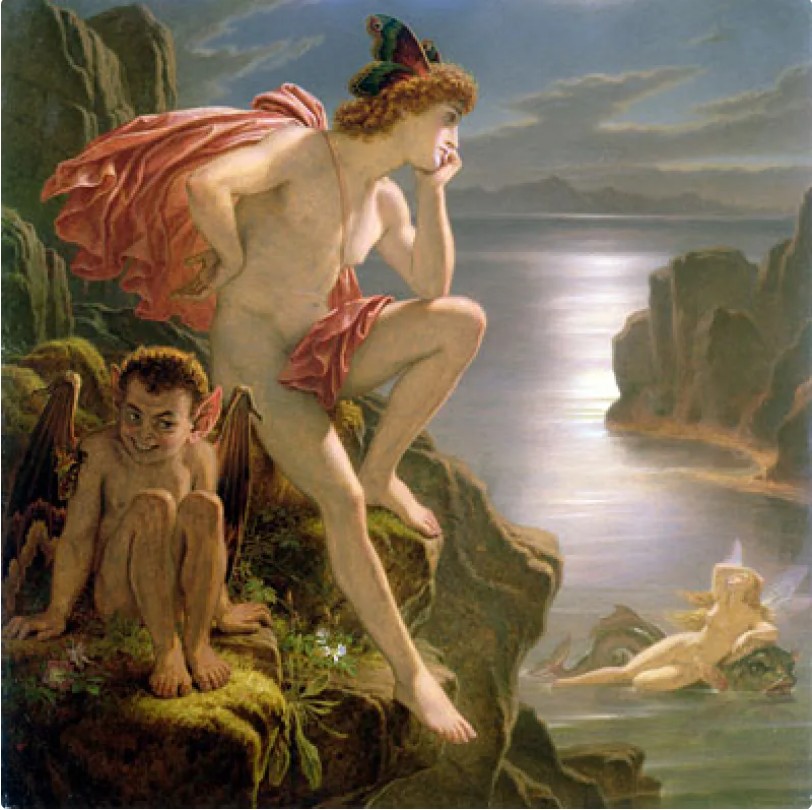
    PAINTING: “Oberon and the Mermaid” (1883), by Sir Joseph Noel Paton

  • Shakespeare’s First Folio 400th & Music

    Shakespeare’s First Folio 400th & Music

    2023 marks the 400th anniversary of the so-called First Folio, a collection of Shakespeare’s plays, published seven years after the author’s death and considered to be one of the most influential books ever issued.

    Although not quite on the same level of significance, this Sunday night on “The Lost Chord,” we’ll devote an hour to music inspired by the Bard – a topic which, of course, could fill many years of such programs – in observation of William Shakespeare’s birthday.

    First, fairy high jinks are a metaphor for the mutability and volatility of the human heart in “A Midsummer Night’s Dream.” We’ll hear two works inspired by Shakespeare’s pixilated comedy.

    English composer Walter Leigh (1905-1942) was killed in action during the Second World War, just shy of his 37th birthday. Like Paul Hindemith, who was his teacher for two years, Leigh thrived on writing music made to order for specific occasions. His incidental music for “A Midsummer Night’s Dream,” first played in open air in 1936, sounds like a throwback to the Restoration period.

    Italian-born composer Mario Castelnuovo-Tedesco (1895-1968) fled fascism in Europe to settle in California. There, he wrote concertos for Jascha Heifetz, Gregor Piatigorsky and Andrés Segovia. He is particularly well-regarded for his guitar music, having composed nearly 100 works for the instrument. He also worked on about 200 film scores. As a teacher, his students included André Previn, Nelson Riddle, Herman Stein, Henry Mancini, Jerry Goldsmith, and John Williams.

    Over the course of his career, Castelnuovo-Tedesco churned out an extraordinary amount of music inspired by the Bard. He composed an opera after “The Taming of the Shrew,” four dances for “Love’s Labour’s Lost,” 33 Shakespeare songs drawn from the plays, and settings of 35 of the sonnets.

    Between 1930 and 1953, he wrote a number of overtures on Shakespearean themes – at least 11, enough to fill two compact discs, which have been issued on the Naxos label. His overture to “A Midsummer Night’s Dream” dates from 1940.

    Czech composer Josef Bohuslav Foerster (1859-1951) lived a very long life, during which he witnessed, firsthand, many remarkable events in music history. Born in Prague, Foerster worked as a critic in Hamburg, then moved to Vienna, where he became closely acquainted with Gustav Mahler.

    Although he occasionally employed in his works musical inflections of his native land, he wasn’t truly part of the Czech nationalist school embraced by Dvořák and others. Because his music is not as overtly Czech-sounding as some, and because he spent so much of his early career in Germany and Austria, Foerster’s output and reputation were embraced only gradually by his countrymen.

    He returned to Prague in 1918, with the establishment of the Czechoslovak Republic, and found employment there at both the conservatory and university. Gradually, he attained the status of “grand old man” of Czech music.

    He composed his symphonic suite “From Shakespeare” in 1909. Made up of four portraits of prominent female characters from Shakespeare plays, the work consists of a brief introduction, followed by musical meditations on Perdita (from “The Winter’s Tale”), Viola (from “Twelfth Night”), Lady Macbeth (from – well, you know), and finally, Katherina, Petruchio and Eros (from “The Taming of the Shrew”).

    I’ll provide the whipped cream and maraschino cherries. Bring your own straws for “Great Shakes” – celebrating William Shakespeare and 400 years of the First Folio – this Sunday night at 10:00 EDT, on WWFM – The Classical Network and wwfm.org.

  • Cool Classical Music for Hot Summer Days

    Cool Classical Music for Hot Summer Days

    It’s going to be another hot one! Before air conditioning, one struck out for the country, hit the local watering hole, or staggered to the shade of the nearest grove. The 17 year-old Felix Mendelssohn composed his overture to “A Midsummer Night’s Dream” while secluding himself in the family garden. The work was completed on this date in 1826.

    Join me this afternoon as we seek relief with music inspired by gardens, fountains, and forests. We’ll think cooling thoughts, from 4 to 7 p.m. EDT, on WWFM – The Classical Network and wwfm.org.

  • St John’s Eve Midsummer Magic on Classic Ross Amico

    St John’s Eve Midsummer Magic on Classic Ross Amico

    June 23. St. John’s Eve. By the time “the iron tongue of midnight hath told twelve,” bonfires will have been lit, love potions will have been sought, and the night will be alive with supernatural beings.

    Anyway, it’s a big deal in Europe, where it pervades the folklore of the British Isles, Scandinavia, France, Italy, Spain, Poland, Hungary, Russia and elsewhere. In Sweden, Midsummer is a national holiday.

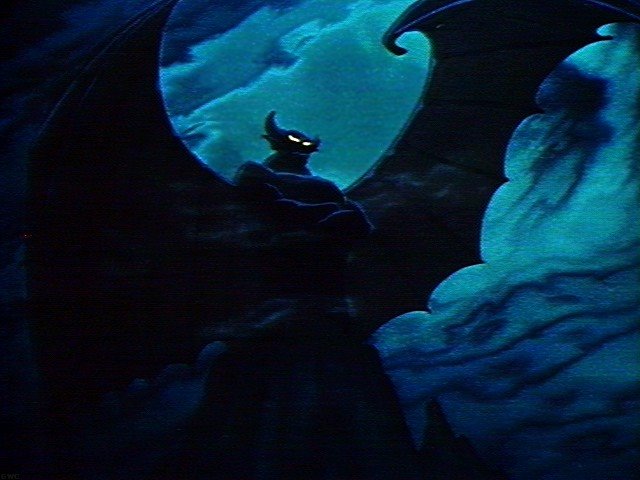
    The influence is felt vicariously in the United States by way of the “Night on Bald Mountain” sequence in Disney’s “Fantasia,” Shakespeare’s “A Midsummer Night’s Dream,” and Igmar Bergman’s “Smiles of a Summer Night.”

    Among our featured highlights this morning will be a recording of “St. John’s Eve” by Gunnar de Frumerie. The allegorical ballet features appearances by John the Baptist, Salome, the Seven Deadly Sins, Angels, and the Devil, all tied up with Swedish Midsummer traditions.

    How now, spirit! Robin Goodfellow will squeeze the juice of love-in-idleness onto sleeping eyelids, from 6 to 11 EDT on WPRB 103.3 FM and at wprb.com. We’ll be singeing our tails leaping over bonfires, on Classic Ross Amico.


    PHOTO: Young women engage in a Ukrainian St. John’s Eve ritual

  • Korngold’s Hollywood Dream: Shakespeare & Film

    Korngold’s Hollywood Dream: Shakespeare & Film

    This will likely be my last Shakespeare post for a while – the 500th anniversary of the Bard’s birth falls in 2064 – so enjoy it. We wrap up our month-long commemoration of the quadricentennial of Shakespeare’s death, on April 23, 1616, by revisiting “A Midsummer Night’s Dream.”

    Erich Wolfgang Korngold went from being one of Europe’s great musical prodigies – his works admired by Mahler, Strauss and Puccini, and performed by Schnabel, Weingartner and Klemperer – to becoming one of Hollywood’s transformative film composers. He is a link from Old World opulence to New World fantasy, his music gracing a number of Warner Brothers’ greatest historical adventures. He was also an opera composer. In fact, his opera “Die tote Stadt” was the runaway hit of 1920.

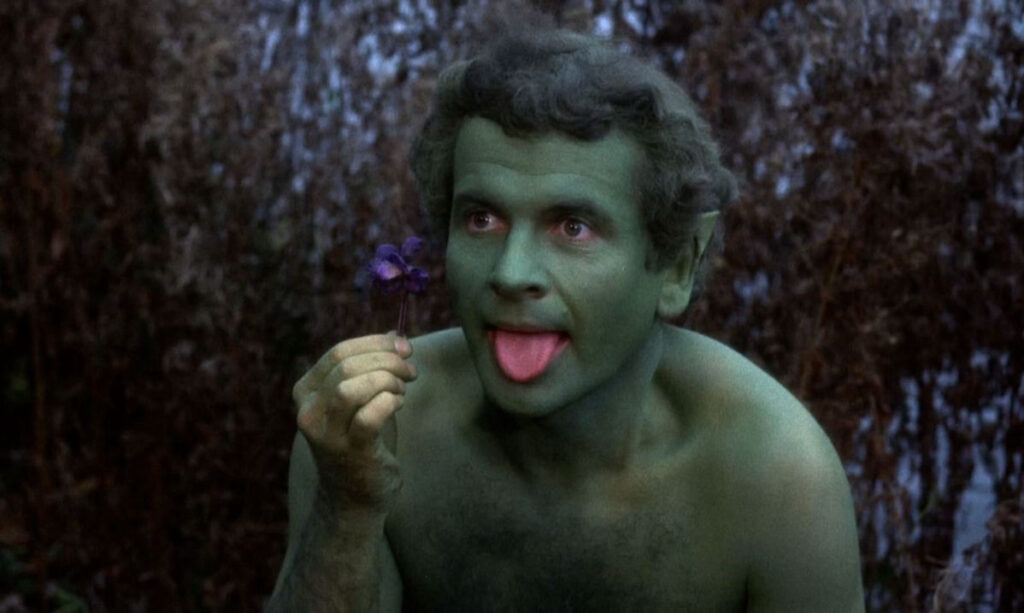
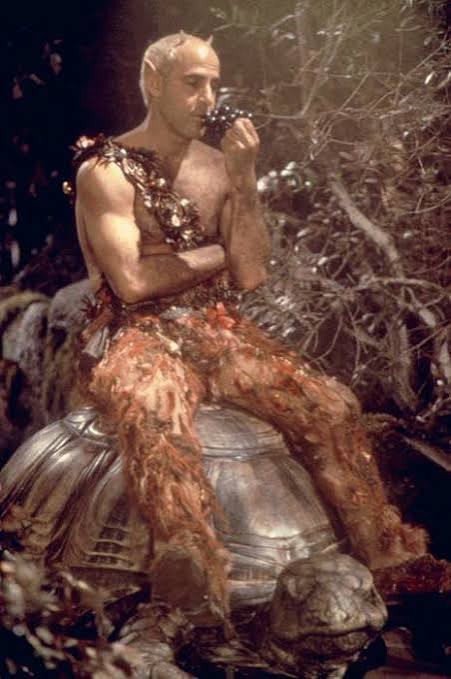
    It was at the invitation of theatrical impresario Max Reinhardt that Korngold came to Hollywood in 1934 for a big screen adaptation of “A Midsummer Night’s Dream.” The film starred James Cagney, Dick Powell and Olivia de Havilland, in her silver screen debut, with Mickey Rooney an irrepressible Puck.

    For the project, Korngold adapted the famous incidental music of Felix Mendelssohn, interweaving material from Mendelssohn’s symphonies and orchestrating some of the “Songs without Words.” Yet the music bears Korngold’s unmistakable stamp, as you’ll hear in the opening fanfare and chorus, crafted from raw material found in the “Scottish Symphony” and marked by plenty of Korngoldian pageantry and swagger.

    The composer drew on his theatrical experience, even conducting the actors as they spoke their dialogue in order to get the tempos he desired.

    Korngold’s work on “A Midsummer Night’s Dream” led to further offers from Warner Brothers, under terms he couldn’t refuse. In the meantime, the Nazis rolled into Austria, effectively sealing off his return to Europe. Vienna’s loss was Hollywood’s gain. Korngold would become the crown jewel of Warners’ music department. His excellence was recognized with two Academy Awards, for “Anthony Adverse,” in 1936, and “The Adventures of Robin Hood,” in 1938.

    I hope you’ll join me, over hill, over dale, for Korngold’s “A Midsummer Night’s Dream,” this Friday evening at 6:00 EDT, with a repeat Saturday morning at 6; or that you’ll listen to it later as a webcast at wwfm.org.

    #Shakespeare400

Tag Cloud

Aaron Copland (92) Beethoven (95) Composer (114) Film Music (123) Film Score (143) Film Scores (255) Halloween (94) John Williams (187) KWAX (229) Leonard Bernstein (101) Marlboro Music Festival (125) Movie Music (138) Opera (202) Philadelphia Orchestra (89) Picture Perfect (174) Princeton Symphony Orchestra (106) Radio (87) Ralph Vaughan Williams (85) Ross Amico (244) Roy's Tie-Dye Sci-Fi Corner (290) The Classical Network (101) The Lost Chord (268) Vaughan Williams (103) WPRB (396) WWFM (881)

DON’T MISS A BEAT

Receive a weekly digest every Sunday at noon by signing up here


RECENT POSTS