Tag: A Midsummer Night’s Dream

  • St John’s Eve Midsummer Magic on Classic Ross Amico

    St John’s Eve Midsummer Magic on Classic Ross Amico

    June 23. St. John’s Eve. By the time “the iron tongue of midnight hath told twelve,” bonfires will have been lit, love potions will have been sought, and the night will be alive with supernatural beings.

    Anyway, it’s a big deal in Europe, where it pervades the folklore of the British Isles, Scandinavia, France, Italy, Spain, Poland, Hungary, Russia and elsewhere. In Sweden, Midsummer is a national holiday.

    The influence is felt vicariously in the United States by way of the “Night on Bald Mountain” sequence in Disney’s “Fantasia,” Shakespeare’s “A Midsummer Night’s Dream,” and Igmar Bergman’s “Smiles of a Summer Night.”

    Among our featured highlights this morning will be a recording of “St. John’s Eve” by Gunnar de Frumerie. The allegorical ballet features appearances by John the Baptist, Salome, the Seven Deadly Sins, Angels, and the Devil, all tied up with Swedish Midsummer traditions.

    How now, spirit! Robin Goodfellow will squeeze the juice of love-in-idleness onto sleeping eyelids, from 6 to 11 EDT on WPRB 103.3 FM and at wprb.com. We’ll be singeing our tails leaping over bonfires, on Classic Ross Amico.


    PHOTO: Young women engage in a Ukrainian St. John’s Eve ritual

  • Korngold’s Hollywood Dream: Shakespeare & Film

    Korngold’s Hollywood Dream: Shakespeare & Film

    This will likely be my last Shakespeare post for a while – the 500th anniversary of the Bard’s birth falls in 2064 – so enjoy it. We wrap up our month-long commemoration of the quadricentennial of Shakespeare’s death, on April 23, 1616, by revisiting “A Midsummer Night’s Dream.”

    Erich Wolfgang Korngold went from being one of Europe’s great musical prodigies – his works admired by Mahler, Strauss and Puccini, and performed by Schnabel, Weingartner and Klemperer – to becoming one of Hollywood’s transformative film composers. He is a link from Old World opulence to New World fantasy, his music gracing a number of Warner Brothers’ greatest historical adventures. He was also an opera composer. In fact, his opera “Die tote Stadt” was the runaway hit of 1920.

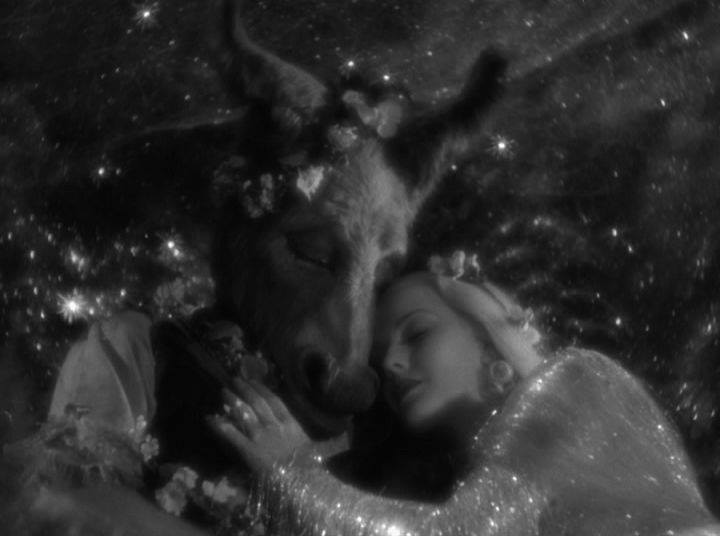
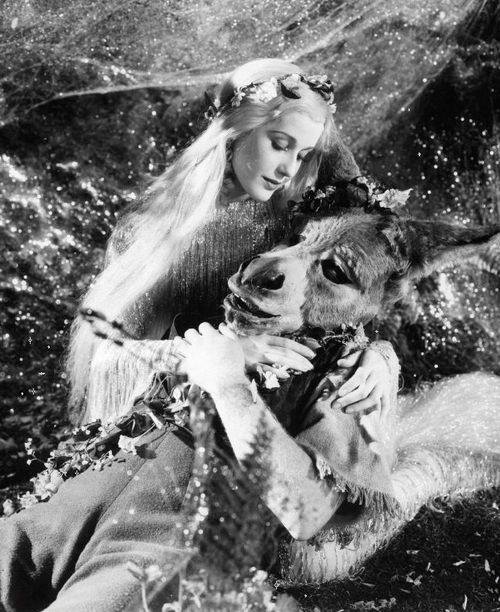
    It was at the invitation of theatrical impresario Max Reinhardt that Korngold came to Hollywood in 1934 for a big screen adaptation of “A Midsummer Night’s Dream.” The film starred James Cagney, Dick Powell and Olivia de Havilland, in her silver screen debut, with Mickey Rooney an irrepressible Puck.

    For the project, Korngold adapted the famous incidental music of Felix Mendelssohn, interweaving material from Mendelssohn’s symphonies and orchestrating some of the “Songs without Words.” Yet the music bears Korngold’s unmistakable stamp, as you’ll hear in the opening fanfare and chorus, crafted from raw material found in the “Scottish Symphony” and marked by plenty of Korngoldian pageantry and swagger.

    The composer drew on his theatrical experience, even conducting the actors as they spoke their dialogue in order to get the tempos he desired.

    Korngold’s work on “A Midsummer Night’s Dream” led to further offers from Warner Brothers, under terms he couldn’t refuse. In the meantime, the Nazis rolled into Austria, effectively sealing off his return to Europe. Vienna’s loss was Hollywood’s gain. Korngold would become the crown jewel of Warners’ music department. His excellence was recognized with two Academy Awards, for “Anthony Adverse,” in 1936, and “The Adventures of Robin Hood,” in 1938.

    I hope you’ll join me, over hill, over dale, for Korngold’s “A Midsummer Night’s Dream,” this Friday evening at 6:00 EDT, with a repeat Saturday morning at 6; or that you’ll listen to it later as a webcast at wwfm.org.

    #Shakespeare400

  • Shakespeare on WPRB This Morning

    Shakespeare on WPRB This Morning

    Roughly two hours to go in our month-of-Thursdays salute to William Shakespeare.

    Yet to come: Frank Bridge’s “There is a willow grows aslant a brook,” his atmospheric reflection on the death of Ophelia; Gerald Finzi’s “Let us Garlands bring,” song settings of some of the Bard’s memorable texts; a suite from Florent Schmitt’s “Antony and Cleopatra,” in a recent recording by the Buffalo Philharmonic Orchestra, conducted by JoAnn Falletta; and a special treat from the pen of Erich Wolfgang Korngold – his imaginative arrangements of music by Felix Mendelssohn made for a 1935 film version of “A Midsummer Night’s Dream,” which starred James Cagney, Olivia de Havilland, and a 15 year-old Mickey Rooney as Puck.

    How now, spirit! Whither wander thee? It’s all Shakespeare this morning until 11:00 EDT, on WPRB 103.3 FM and at wprb.com.

    If we shadows have offended,
    Think but this, and all is mended,
    That you have but slumber’d here
    While these visions did appear.
    And this weak and idle theme,
    No more yielding but a dream,
    Gentles, do not reprehend:
    if you pardon, we will mend…

  • Shakespeare’s Dream Music on The Lost Chord

    Shakespeare’s Dream Music on The Lost Chord

    What fools these mortals be!

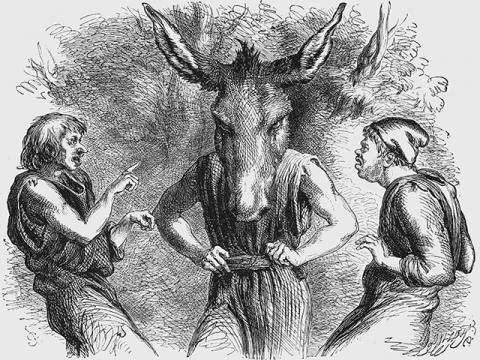
    Fairy high jinks become a metaphor for the mutability and volatility of the human heart, in “A Midsummer Night’s Dream.” This Sunday night on “The Lost Chord,” we’ll have two works inspired by Shakespeare’s pixilated comedy.

    English composer Walter Leigh (1905-1942) was killed in action during the Second World War, just shy of his 37th birthday. Like Paul Hindemith, who was his teacher for two years, Leigh thrived on writing music made to order for specific occasions. His incidental music for “A Midsummer Night’s Dream,” first played in open air in 1936, sounds like a throwback to the Restoration period.

    The Italian-born composer Mario Castelnuovo-Tedesco (1895-1968) fled fascism in Europe to settle in California. There, he wrote concertos for Jascha Heifetz, Gregor Piatigorsky and Andrés Segovia. He was probably best known for his guitar music. In all, he composed nearly 100 works for the instrument. During the war, he also worked on some 200 film scores.

    Over the course of his career, he churned out an extraordinary amount of music inspired by the Bard. He composed an opera after “The Taming of the Shrew,” four dances for “Love’s Labour’s Lost,” 33 Shakespeare songs drawn from the plays, and settings of 35 of the sonnets.

    Between 1930 and 1953, he wrote a number of overtures on Shakespearean themes – at least 11, enough to fill two compact discs, which have been issued on the Naxos label. He composed his overture to “A Midsummer Night’s Dream” in 1940.

    The Czech composer Josef Bohuslav Foerster (1859-1951) lived a very long life, during which he witnessed, firsthand, many remarkable events in music history. Born in Prague, Foerster worked as a critic in Hamburg, then moved to Vienna, where he became closely acquainted with Gustav Mahler.

    Although he occasionally employed in his works musical inflections of his native land, he wasn’t truly part of the Czech nationalist school embraced by Dvořák and others. Because his music is not as overtly Czech-sounding as some, and because he spent so much of his early career in Germany and Austria, Foerster’s output and reputation were embraced only gradually by his countrymen.

    He returned to Prague in 1918, with the establishment of the Czechoslovak Republic, and found employment there at both the conservatory and university. Gradually, he assumed the position of venerated “grand old man” of Czech music.

    He composed his symphonic suite “From Shakespeare” in 1909. Made up of four portraits of prominent female characters from Shakespeare plays, the work consists of a brief introduction, followed by musical reflections on Perdita (from “The Winter’s Tale”), Viola (from “Twelfth Night”), Lady Macbeth (from – well, you know), and finally, Katherina, Petruchio and Eros (from “The Taming of the Shrew”).

    I hope you’ll join me for “A Bier for the Bard” – commemorating the 400th anniversary of the death of William Shakespeare – this Sunday night at 10:00 EDT, with a repeat Wednesday evening at 6; or that you’ll listen to it later as a webcast, at wwfm.org.

    #Shakespeare400

  • Shakespeare’s Birthday A Midsummer Night’s Dream

    Shakespeare’s Birthday A Midsummer Night’s Dream

    Happy birthday – and lamentable death date – William Shakespeare!

    Here’s the enchanting fairies sequence from Warner Brothers’ 1935 film version of “A Midsummer Night’s Dream,” with a 15 year-old Mickey Rooney as Puck. Erich Wolfgang Korngold adapted the music of Felix Mendelssohn for the soundtrack. They just don’t make ‘em like this anymore.

    Join me for “Picture Perfect” Friday evening at 6 EDT (with a repeat next Saturday morning at 6) when we’ll sample from this fascinating hybrid of a film score on wwfm.org.

    #Shakespeare400

Tag Cloud

Aaron Copland (93) Beethoven (95) Composer (114) Film Music (129) Film Score (143) Film Scores (255) Halloween (94) John Williams (192) KWAX (229) Leonard Bernstein (103) Marlboro Music Festival (125) Movie Music (144) Mozart (88) Opera (206) Philadelphia Orchestra (89) Picture Perfect (174) Princeton Symphony Orchestra (108) Radio (88) Ross Amico (244) Roy's Tie-Dye Sci-Fi Corner (290) The Classical Network (101) The Lost Chord (268) Vaughan Williams (103) WPRB (396) WWFM (881)

DON’T MISS A BEAT

Receive a weekly digest every Sunday at noon by signing up here


RECENT POSTS