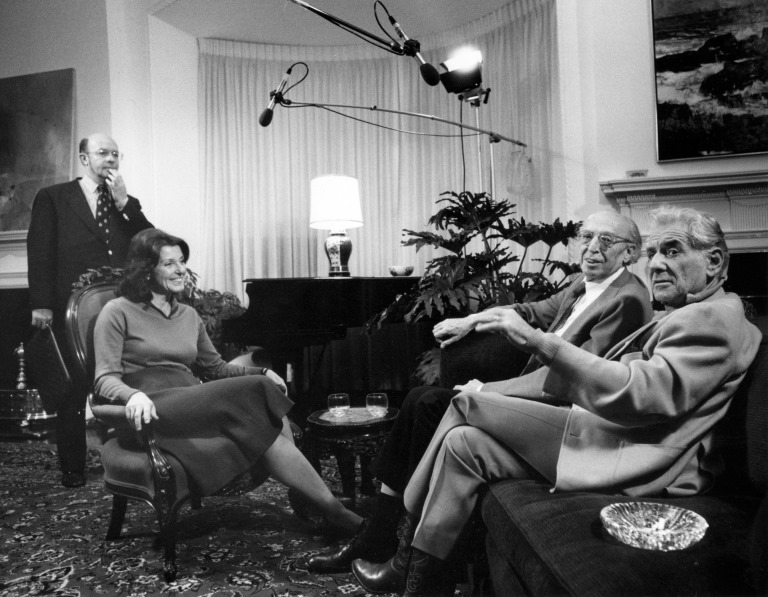
Tag: Aaron Copland

  • Nadia Boulanger Birthday & Legacy

    Nadia Boulanger Birthday & Legacy

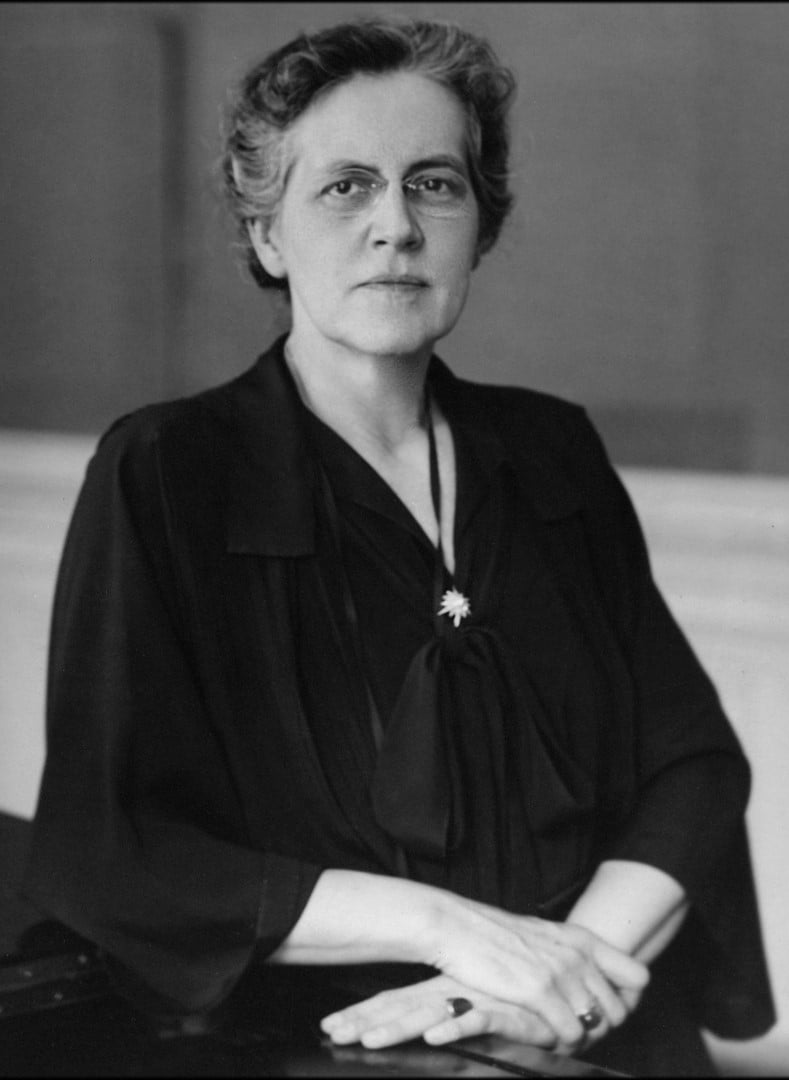
    September is really a banner month for female composers. Amy Beach (9/5), Isabella Leonarda (9/6), Joan Tower (9/6), Clara Schumann (9/13), Francesca Caccini (9/18), Vivian Fine (9/28), and who knows how many others, were all born in September. But you’d have to go a long way, in terms of the influence of women on music, to beat today, the anniversary of the birth of Nadia Boulanger.

    Nadia Boulanger’s strong will, infallible objectivity, and blunt assessments made her perhaps the greatest – certainly the most influential – musical pedagogue of the 20th century.

    Her influence on American music, in particular, is incalculable. She taught composers from Aaron Copland and Virgil Thomson to Philip Glass and even Rob Kapilow. It was Thomson who quipped, “She was a one-woman graduate school, so powerful and permeating that legend credits every United States town with two things: a five and dime and a Boulanger pupil.” The five and dimes may have faded, but not so the legacy of the “Boulangerie.”

    Hopefuls flocked to her American Conservatory at Fontainebleau, where she accepted applicants from all backgrounds, provided they were determined to learn. When some failed to show up for their lessons during the Stavisky Riots of 1934, as demonstrators were being shot in the Place de la Concorde, she remarked dismissively that they didn’t take music seriously enough.

    Her methods engendered surprising loyalty and affection in those she taught. In certain respects, she could be quite conservative, drilling her students in the “Well-Tempered Clavier,” rejecting the dodecaphony of Schoenberg and his followers, and displaying all the sartorial splendor of Whistler’s mother.

    However, dodecaphony aside, she was accepting – perhaps astonishingly so – of a broad panoply of styles. She was unusually generous to students who displayed innate talent, and she nurtured their individuality. It’s to be remembered that among her pupils were Astor Piazzolla, Quincy Jones, and Michel Legrand.

    As a woman, she was a first in many respects, not only as a teacher, but as conductor and a performer. She was the first woman to conduct the Boston Symphony Orchestra, the New York Philharmonic (at Carnegie Hall), the Philadelphia Orchestra, and the National Symphony Orchestra. Even during the Cold War, she was welcomed everywhere. She was invited to the White House by the Kennedys and to Moscow to jury the International Tchaikovsky Competition.

    Curiously, her own views on women’s rights were about as current as her manner of dress. Though she performed on a couple of concerts in support of women’s equality in the early 1920s, she expressed bitter disappointment whenever a female student dropped out of school to get married. Those who did complete their studies included such important figures as Grazyna Bacewicz, Louise Talma, and Thea Musgrave.

    Later in life Boulanger came down hard in opposition to “feminism,” going so far as to state that women should not have the right to vote, because they lacked the necessary political sophistication. That was in the 1970s! A complex and outspoken personality, to be sure.

    But her actions belie her words. Beneath those grey hairs and pince-nez lurked an iron will that brooked no nonsense and recognized no impediments.

    Join me this afternoon for music and music-making by a mere handful of Boulanger’s hundreds of notable pupils, including composer and conductor Igor Markevitch, pianist Dinu Lipatti, and her exceptionally gifted sister, the sadly short-lived Lili Boulanger.

    We’ll hear Nadia Boulanger as pianist and conductor. We’ll also hear two works premiered by her. When Igor Stravinsky was sidelined with tuberculosis, she conducted the first performance of his “Dumbarton Oaks Concerto.” She was also the soloist for the first performances of Aaron Copland’s “Symphony for Organ and Orchestra,” a work about which the conductor, Walter Damrosch, famously – and one hopes facetiously – remarked, “If a gifted young man can write a symphony like that at the age of 23, within five years he will be ready to commit murder.”

    Boulanger has been described as the most influential teacher since Socrates. The Boulangerie will be baking overtime today, as we celebrate her on her birthday, from 4 to 7 p.m. EDT, on WWFM – The Classical Network and wwfm.org.
  • Mario Davidovsky Pulitzer-Winning Composer Dies at 85

    Mario Davidovsky Pulitzer-Winning Composer Dies at 85

    It was announced by the American Academy of Arts and Letters earlier today that the composer Mario Davidovsky has died. Davidovsky, who was born in Argentina, studied with Aaron Copland and Milton Babbitt. He was a former member of the composition faculty at Columbia University and a past director of the Columbia-Princeton Electronic Music Center.

    Davidovsky emigrated to the United States in 1960. His work, “Synchronisms No. 6,” for piano and electroacoustic sounds played from tape, was honored with the Pulitzer Prize for Music in 1971. At the time of his death, on Friday, Davidovsky was 85 years-old.


    Synchronisms No. 6:


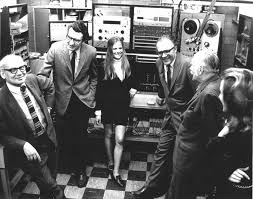
    PHOTO (left to right): CPEMC personnel Milton Babbitt, Mario Davidovsky, Pril Smiley, Vladimir Ussachevsky, Otto Luening, and Alice Shields, circa 1970

  • Barber, Antes, & Copland from Marlboro

    Barber, Antes, & Copland from Marlboro

    How many times a summer do we hear Samuel Barber’s “Summer Music?”

    Well, I ask you, then – in whose tomb would you have Grant buried? What color should we paint the White House? It’s summer! Honor your appointment with the Barber, already.

    Barber wrote his wind quintet on a commission from the Chamber Music Society of the Detroit Institute for the Arts in 1953. Unusually, in lieu of a commissioning fee, the composer agreed to accept donations from the audience, with the Chamber Music Society guaranteeing the difference up to $2000. The work is set in one continuous movement, with three subsections discernible within the neoclassical whole.

    On this week’s “Music from Marlboro,” we’ll hear “Summer Music” performed at the 1981 Marlboro Music Festival, by flutist Susan Rotholz, oboist Elaine Douvas, clarinetist Joaquin Valdepeñas, bassoonist Stefanie Przybylska, and hornist Robin Graham.

    Then we’ll turn our attention to American Moravian composer John Antes. Antes, born in Frederick, Montgomery County, PA, in 1740, is credited with being one the first composers born on American soil to write chamber music, and as the creator of perhaps the earliest surviving bowed string instrument made in the American colonies. Antes’ violin, made in 1759, is housed in the Museum of the Moravian Historical Society in Nazareth, PA. A viola, made by Antes in 1764 (again believed to be the earliest surviving of American origin), is housed in the Lititz Moravian Congregation Collection in Lancaster County. Antes created at least seven such instruments.

    In 1752, Antes attended school in Bethlehem, PA. In 1760, he was admitted into the Single Brethren’s choir there. From Bethlehem, he traveled to Herrnhut, Germany, the international center of the Moravians, to prepare for a career as a missionary. In the meantime, he also took up watchmaking. He was ordained a minister in 1769, then set out for Egypt. There, he served as a missionary to the Coptic Church in Grand Cairo. After a largely uneventful decade, he was captured and tortured by followers of Osman Bey.

    During his convalescence, he occupied himself with the composition of three string trios. He also sent a copy of six quartets to Benjamin Franklin, whom he had known in America. The quartets are lost (nice job, Ben), but the trios survive. We’ll hear Antes’ Trio in D minor, from the 1976 Marlboro Music Festival, with violinists Isadore Cohen and Kathleen Lenski, and cellist Timothy Eddy performing.

    We’ll round out the hour with Aaron Copland’s beloved and evergreen Pulitzer Prize winning ballet “Appalachian Spring,” from 1944, in its rarely-heard original version for chamber orchestra, performed by 13 Marlboro musicians in 2006.

    “Appalachian Spring” will be heard this Saturday at 8 p.m., during the fourth weekend of this year’s Marlboro Music Festival – held, as always, on the campus of Marlboro College in Marlboro, VT – alongside works by Alban Berg, Benjamin Britten, and Pulitzer Prize winner Caroline Shaw. Beethoven, Britten, and Dvořák will be performed on Sunday at 2:30 p.m. For details, look online at marlboromusic.org.

    It’s American music for two seasons, and all seasons – with a Moravian palate cleanser from the 18th century – on this week’s “Music from Marlboro,” this Wednesday evening at 6:00 EDT, on WWFM – The Classical Network and wwfm.org.
    Marlboro School of Music and Festival: Official Page


    PHOTO: Music by Aaron Copland and Samuel Barber will be heard on this week’s “Music from Marlboro”

  • Vivian Perlis Music Historian Dies at 91

    Vivian Perlis Music Historian Dies at 91

    The award winning musicologist and historian Vivian Perlis has died. In her roles as founder and director of Yale University’s Oral History of America, Perlis assembled an invaluable archive of material concerning some of the United States’ greatest artists, immeasurably enhancing the depth and range of our understanding of American music.

    One of her notable achievements was collaring Charles Ives’ insurance business partner and documenting his personal reminiscences. This spurred her to do the same with some of Ives’ other acquaintances. A selection of the material was issued as a book, “Charles Ives Remembered.”

    She also sat down with Aaron Copland during the final years of his life, and coauthored two highly readable autobiographies, “Copland: 1900-1942” and “Copland: Since 1943.” These were combined in 2013 into “The Complete Copland.”

    In 2005, she published “Composers Voices from Ives to Ellington.”

    The Oral History of America holds over 2,200 interviews and transcripts, including material on both classical and jazz musicians. Perlis retired from the project in 2010.

    At the time of her death, she was 91 years-old.


    Perlis, the interviewer, is interviewed!

    Vivian Perlis  Preserving the Voices of American Music

  • Copland’s Hollywood Struggles & Triumphs

    Copland’s Hollywood Struggles & Triumphs

    The star-spangled glare of American music doesn’t just end with the Fourth of July fireworks. This week, on “Picture Perfect,” we’ll bask in the pyrotechnic after-glow of Independence Day with an hour of film music by Aaron Copland.

    Despite his reputation as the “Dean of American Composers,” and the eventual acceptance into concert halls of his film music classics “Our Town” and “The Red Pony,” Copland’s experiences in Hollywood were not all peaches and cream. After all, if you want to work in the film industry, you’ve got to expect that once in a while somebody’s going to mess with your work, even if you’re a Pulitzer Prize winner.

    In particular Copland was not very happy with what they did to his music for “The Heiress.” Carefully-crafted cues were chopped to ribbons, dialed down and rescored without his approval. William Wyler (“Wuthering Heights,” “Friendly Persuasion,” “The Big Country,” “Ben-Hur”) was a brilliant director, but he must have had a tin ear. His films consistently sported some of the best scores of their respective eras, and yet he mostly underappreciated, if not outright disliked, their music.

    “The Heiress” was made fresh off of Wyler’s runaway success with “The Best Years of Our Lives.” The film, based on Henry James’ “Washington Square,” was nominated for eight Academy Awards. It won four, including Oscars for Olivia De Havilland and for Copland’s score, which is so strong it manages to maintain its integrity despite all of the studio tinkering.

    Wyler insisted Copland work the song “Plaisir d’Amour” into the fabric of his music, which he artfully did in three cues. But that wasn’t good enough. Without Copland’s knowledge, the main title was replaced with a garish arrangement of “Plaisir,” which was also looped in for some of the love music. André Previn, in 1949 already one of Hollywood’s bright young talents, likened the return of Copland’s original thoughts following these interpolations to “suddenly finding a diamond in a can of Heinz beans.”

    When Copland’s contribution was recognized by the Academy, it was the only instance up to that time of a score being honored after being shorn of its main title, the part of a score that generally makes the biggest impression. Copland never bothered to collect his award. “The Heiress” would be the last time he would work in Hollywood.

    He did compose one more film score, however, for the 1961 independent film, “Something Wild,” which contains some of his most insistently non-commercial music. Occasionally brutal and often thrilling, its character is worlds away from the pastoral tranquility of “Appalachian Spring.” It’s a brilliant piece of work, yet it did not receive a commercial release until 2003.

    We’ll sample music from these two underappreciated classics, as well as from the controversial pro-Soviet film “The North Star;” also a bit from the 1939 World’s Fair documentary “The City.”

    Extend your holiday weekend with a cold cone of Aaron Copland classics on “Picture Perfect,” music for the movies, this Friday evening at 6:00 EDT, on WWFM – The Classical Network and wwfm.org.
Tag Cloud

Aaron Copland (93) Beethoven (95) Composer (114) Film Music (129) Film Score (143) Film Scores (255) Halloween (94) John Williams (192) KWAX (229) Leonard Bernstein (103) Marlboro Music Festival (125) Movie Music (144) Mozart (88) Opera (206) Philadelphia Orchestra (89) Picture Perfect (174) Princeton Symphony Orchestra (108) Radio (88) Ross Amico (244) Roy's Tie-Dye Sci-Fi Corner (290) The Classical Network (101) The Lost Chord (268) Vaughan Williams (103) WPRB (396) WWFM (881)

DON’T MISS A BEAT

Receive a weekly digest every Sunday at noon by signing up here


RECENT POSTS