Tag: Aaron Copland

  • Copland Bernstein Foss Fine Discuss American Music

    Copland Bernstein Foss Fine Discuss American Music

    I found this the other day, on Aaron Copland’s birthday, but I thought I would save it for the weekend, when you might have time to actually listen to it. It’s a fascinating document of four insanely talented composers – Copland, Leonard Bernstein, Lukas Foss, and Irving Fine – gathered around a piano and engaged in a bull session about the state of American music.

    https://www.wnyc.org/story/217199-what-american-music/


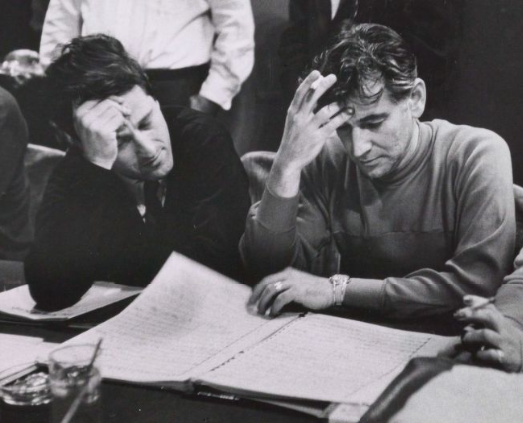
    PHOTOS: (top) Foss and Bernstein; (bottom) Copland and Fine

  • Thanksgiving Movies Celebrating American Ideals

    Thanksgiving Movies Celebrating American Ideals

    There’s more to Thanksgiving than just turkey and football. This week on “Picture Perfect,” we count our blessings and aspire to do better, with music from movies reflective of what’s best in human nature and most admirable in the American character.

    Aaron Copland’s work on “The Cummington Story” (1945), a semi-documentary produced by the Office of War Information, underscores the gradual acceptance of European war refugees into a cautious but fundamentally decent New England community. The music is pure Americana, with some of the material later finding its way into Copland’s Clarinet Concerto and “Down a Country Lane.”

    “Field of Dreams” (1989) is one of those rare films that has the ability to reduce manly men – even those without father issues – to a pool of tears. Phil Alden Robinson’s superior adaptation of W.P. Kinsella’s novel, “Shoeless Joe,” is a male wish-fulfillment fantasy, in which a man finds redemption, and a new understanding of his father, in the enchanted cornfields of America’s heartland. And it’s all brought about courtesy of America’s pastime, baseball. The evocative score, much indebted to Copland, is by James Horner.

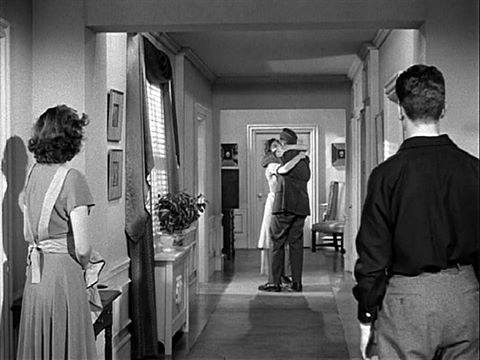
    “The Best Years of Our Lives” (1946) is one of the great American classics. This touching film tells the tale of the three WWII veterans struggling to readjust to civilian life. It isn’t easy, but with the support of family and friends, there’s plenty of hope for the future. Hugo Friedhofer wrote the Academy Award-winning score, earning the film one of its seven Oscars. The orchestrations were by Copland protégé (and composer of “The Big Country”) Jerome Moross.

    Finally, Daniel Day-Lewis elevated Steven Spielberg’s “Lincoln” (2012) to greatness with one of the most uncanny performances ever captured on film. Day-Lewis’ gentle but shrewd Man of Destiny would go to any lengths to hold the country together. John Williams tapped into America’s proud musical heritage, clearly influenced by Copland and Ives, to create a score of stirring nobility.

    I hope you’ll join me as we give thanks for family, community and country on “Picture Perfect,” music for the movies, this Friday evening at 6:00 EST, on WWFM – The Classical Network and at wwfm.org.


    And thank you, YouTube, for making “The Cummington Stoy” available online!

    Watching it again, it’s interesting to reflect on what an influence, for good or ill, media and government have had in shaping the popular consciousness.

  • Copland & Friends Birthday Concert Today

    Copland & Friends Birthday Concert Today

    I hope you’ll join me for music by Aaron Copland, Johann Nepomuk Hummel, Fanny Mendelssohn, and Leopold Mozart, on their birthday anniversaries (including Copland’s “Appalachian Spring,” in its original version for chamber ensemble of 13 instruments, on “Music from Marlboro”), today from 4 to 7 p.m. EST, on WWFM – The Classical Network and wwfm.org.
  • Copland’s Appalachian Spring: A Ballet’s Journey

    Copland’s Appalachian Spring: A Ballet’s Journey

    One might say it’s a little cool for spring. But when Aaron Copland came to write his magnum opus, he wasn’t thinking of spring or even the Appalachia, for that matter. What he had to work with were a series of impressions from Martha Graham. In fact, while composing the music, he thought of the project simply as “Ballet for Martha.”

    This week on “Music from Marlboro,” we’ll celebrate Copland’s birthday with a suite from this most durable of American ballets, since recognized as “Appalachian Spring.”

    It was Graham who came up with the title, well after Copland had finished. A phrase in a poem by Hart Crane had caught her fancy. When Copland asked her if the ballet had anything to do with the poem, Graham said, “No, I just liked the title and I took it.” Yet, as Copland loved to relate, people were always coming up to him and saying, “Mr. Copland… when I hear your music I can just see the Appalachians and I can just feel spring.” (FUN FACT: In Crane’s poem, “spring” isn’t even seasonal; it refers to a source of water.)

    Graham, every bit as concerned as Copland with forging a uniquely American art, had envisioned a ballet set during the Civil War. In her correspondence with the composer, she was quite specific in the moods she wished to evoke.

    By the time she came to choreograph the piece, Graham decided on a scenario built around the courtship and wedding of a young couple in a western Pennsylvania community in the early 19th century. One of the original dancers, Pearl Lange, remembered, “The first day we heard the music, it was like the sun spread over the floor.”

    All the themes are Copland’s own, except of course for “Simple Gifts,” the Shaker hymn that forms the basis for a series of variations at the work’s climax.

    “Appalachian Spring” was given its first performance at the Library of Congress on October 30, 1944. On V-E Day, 1945, the work was awarded the Pulitzer Prize for Music. We’ll hear it performed this evening in its original guise, for a chamber ensemble of thirteen instruments, from the 2006 Marlboro Music Festival.

    We’ll preface that with music by Heitor Villa-Lobos. In parallel with Copland’s experiments to the north, Villa-Lobos made a conscious effort in the late ‘30s to embrace a more populist style. The sixth of his seventeen string quartets was composed in Rio de Janeiro in 1938. The work received its first performance there on November 30, 1943. The quartet incorporates elements of Brazilian folk and popular music. At the same time, the composer is not at all bashful about his debt to the works of Franz Joseph Haydn.

    We’ll hear a performance of Villa-Lobos’ String Quartet No. 6, from the 2007 Marlboro Music Festival, featuring violinists Celeste Golden and Lucy Chapman, violist Kyle Armbrust, and cellist Wendy Law.

    It’s music from the Americas on this week’s “Music from Marlboro,” Wednesday evening at 6:00 EST, on WWFM – The Classical Network and wwfm.org.
    Marlboro School of Music and Festival: Official Page


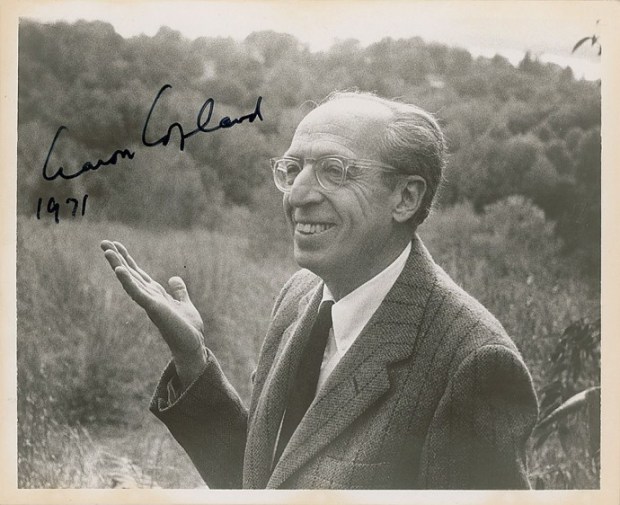
    PHOTO: Copland, feeling a little nostalgic for that Appalachian spring

  • July 4th: American Music from Marlboro

    July 4th: American Music from Marlboro

    Somewhere between the pie-eating contests and the fireworks displays comes “Music from Marlboro.” We’ve got the perfect soundtrack for your Independence Day, with an all-American hour.

    At the heart of the program will be a work by Moravian composer John Antes (1740-1811). Antes, born in Frederick, Montgomery County, PA, is credited with being one the first composers born on American soil to write chamber music, and as the creator of perhaps the earliest surviving bowed string instrument made in the American colonies. Antes’ violin, made in 1759, is housed in the Museum of the Moravian Historical Society in Nazareth, PA. A viola, made by Antes in 1764 (again believed to be the earliest surviving of American origin), is housed in the Lititz Moravian Congregation Collection in Lancaster County. Antes created at least seven such instruments.

    In 1752, Antes attended school in Bethlehem, PA. In 1760, he was admitted into the Single Brethren’s choir there. From Bethlehem, he travelled to Herrnhut, Germany, the international center of the Moravians, to prepare for a career as a missionary. In the meantime, he also took up watchmaking. He was ordained a minister in 1769, then set out for Egypt. There, he served as a missionary to the Coptic Church in Grand Cairo. After a largely uneventful decade, he was captured and tortured by followers of Osman Bey.

    During his convalescence, he occupied himself with the composition of three string trios. He also sent a copy of six quartets to Benjamin Franklin, whom he had known in America. The quartets are lost (nice job, Ben), but the trios survive. We’ll hear Antes’ Trio in D minor, from the 1976 Marlboro Music Festival.

    To open the hour, from the 1977 festival, we’ll hear a Divertimento for Nine Instruments by two-time Pulitzer Prize winner Walter Piston. In addition to being an important teacher, Piston was regarded as one of our country’s great symphonists. Finally, we’ll have the suite from Aaron Copland’s beloved Pulitzer Prize decorated ballet “Appalachian Spring,” in its original version for 13 instruments, performed at Marlboro in 2006.

    Enjoy these musical fireworks with performances from the archives of the celebrated Marlboro Music Festival, this Wednesday evening at 6:00 EDT, on WWFM – The Classical Network and wwfm.org.
    Marlboro School of Music and Festival: Official Page

Tag Cloud

Aaron Copland (92) Beethoven (95) Composer (114) Film Music (123) Film Score (143) Film Scores (255) Halloween (94) John Williams (187) KWAX (229) Leonard Bernstein (101) Marlboro Music Festival (125) Movie Music (138) Opera (202) Philadelphia Orchestra (89) Picture Perfect (174) Princeton Symphony Orchestra (106) Radio (87) Ralph Vaughan Williams (85) Ross Amico (244) Roy's Tie-Dye Sci-Fi Corner (290) The Classical Network (101) The Lost Chord (268) Vaughan Williams (103) WPRB (396) WWFM (881)

DON’T MISS A BEAT

Receive a weekly digest every Sunday at noon by signing up here


RECENT POSTS