
For Thanksgiving, here’s Aaron Copland’s “Letter from Home.” Best wishes to you and yours.
Tag: Aaron Copland
-
Thanksgiving American Music from Marlboro
Happy Thanksgiving to you! On the busiest travel day of the year, we’ve got the perfect soundtrack for your journey over the river and through the woods, with an all-American hour on this week’s “Music from Marlboro.”
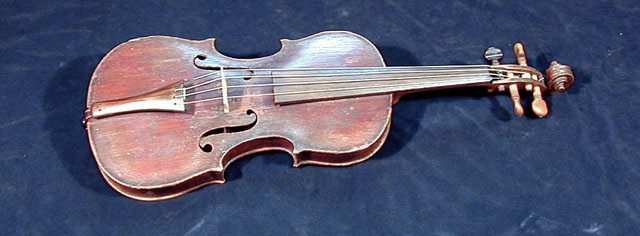
At the heart of the program will be a work by Moravian composer John Antes (1740-1811). Antes, born in Frederick, Montgomery County, PA, is credited with being one the first composers born on American soil to write chamber music, and as the creator of perhaps the earliest surviving bowed string instrument made in the American colonies. Antes’ violin, made in 1759, is housed in the Museum of the Moravian Historical Society in Nazareth, PA. A viola, made by Antes in 1764 (again believed to be the earliest surviving of American origin), is housed in the Lititz Moravian Congregation Collection in Lancaster County. Antes created at least seven such instruments.
In 1752, Antes attended school in Bethlehem, PA. In 1760, he was admitted into the Single Brethren’s choir there. From Bethlehem, he travelled to Herrnhut, Germany, the international center of the Moravians, to prepare for a career as a missionary. In the meantime, he also took up watchmaking. He was ordained a minister in 1769, then set out for Egypt. There, he served as a missionary to the Coptic Church in Grand Cairo. After a largely uneventful decade, he was captured and tortured by followers of Osman Bey.
During his convalescence, he occupied himself with the composition of three string trios. He also sent a copy of six quartets to Benjamin Franklin, whom he had known in America. The quartets are lost (nice job, Ben), but the trios survive. We’ll hear Antes’ Trio in D minor, from the 1976 Marlboro Music Festival.
To open the hour, from the 1977 festival, we’ll hear a Divertimento for Nine Instruments by two-time Pulitzer Prize winner Walter Piston. In addition to being an important teacher, Piston was regarded as one of our country’s great symphonists. Finally, we’ll have the suite from Aaron Copland’s beloved Pulitzer Prize decorated ballet “Appalachian Spring,” in its original version for 13 instruments, performed at Marlboro in 2006.
Give thanks for performances of American music from the archives of the celebrated Marlboro Music Festival, this Wednesday evening at 6 EST, on WWFM – The Classical Network and wwfm.org.
Marlboro School of Music and Festival: Official Page
PHOTO: The Antes violin (which kind of sounds more like a creation of Salvador Dali), now in Nazareth, PA
-
Thanksgiving Movie Music Picture Perfect
This week on “Picture Perfect,” we set the table for Thanksgiving.
Gary Cooper and Dorothy McGuire star in “Friendly Persuasion” (1956), based on the novel by Jessamyn West. The film’s portrayal of family and the resolution of moral conflict, as pacifist Quakers deal with issues both big and small – from the American Civil War, to the introduction of a “sinful” musical instrument into the household – make “Friendly Persuasion,” in my opinion, a good choice for this time of year.
The film was nominated for six Oscars, with Dimitri Tiomkin’s score nominated twice. The title song went on to become the popular hit “Thee I Love.” Only Dimitri Tiomkin would use balalaikas to depict Quaker life!
None other than Aaron Copland composed music for a big screen adaptation of Thorton Wilder’s “Our Town” (1940). The play, which opened at Princeton’s McCarter Theatre, won the Pulitzer Prize for Drama only two years earlier. Copland was at the height of his “populist” period. “El Salon Mexico” and “Billy the Kid” had already been written, and “Fanfare for the Common Man,” “A Lincoln Portrait,” “Rodeo” and “Appalachian Spring” would follow within just a few years.
The concert version of “Our Town” has been in circulation for decades, but it’s only fairly recently that a recording of the complete score was made available. It was issued briefly on the Naxos label, available only as a download. The recording is now extremely scarce, possibly because of copyright issues.
The film’s portrayal of small town America and the playwright’s poignant observation, “Do any human beings ever realize life while they live it? Every, every minute?,” are timely reminders that there are things we should all be thankful for, while they – and we – are here for us to appreciate them.
“Witness” (1985) may seem like an unusual choice for Thanksgiving, with its themes of police corruption and violence, but when honest cop Harrison Ford goes on the lam, he experiences the “plain” lifestyle of a close-knit Amish community. The highlight of Maurice Jarre’s score is a sequence called “Building the Barn,” in which the community comes together to raise a barn for a newly married couple.
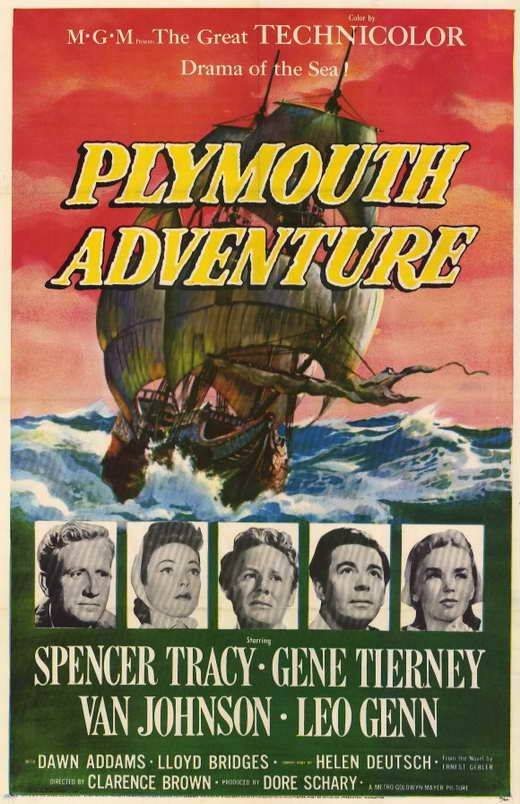
Finally, we’ll listen to selections from “Plymouth Adventure” (1952), with its depictions of William Bradford, John Alden, Miles Standish and Priscilla Mullins. Spencer Tracy stars as the cynical captain of The Mayflower, Gene Tierney is his forbidden love interest, Van Johnson appears as Alden, and Lloyd Bridges is the first mate. If you’re curious to see the film, Turner Classic Movies: TCM will broadcast it this Sunday at 2 p.m. EST.
The music is by Miklós Rózsa, who, already at this stage of his career, was MGM’s go-to composer for historical drama. Seven years later, Rózsa would take home his third Academy Award, for his classic score to “Ben-Hur.”
There’s not a turkey among them! It’s never too early to give thanks this week on “Picture Perfect” – music for the movies – this Friday evening at 6:00 EST, on WWFM – The Classical Network and wwfm.org.
-
Classical Music Rakes Over Leaf Blowers
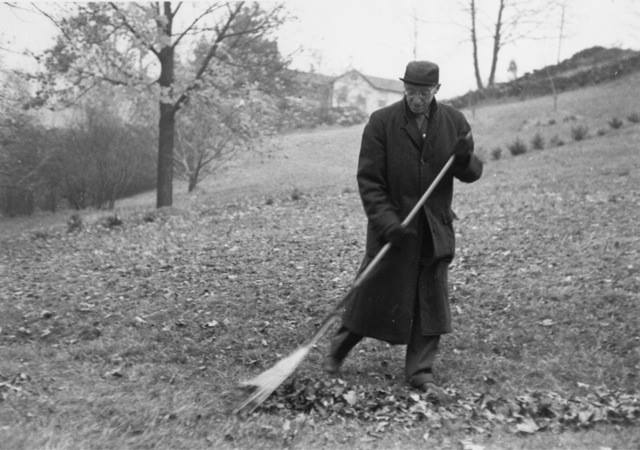
Who likes leaf blowers? Not Aaron Copland!
We’ll celebrate the birthday of the Dean of American Composers this afternoon with a performance of his Symphony No. 3. That’s the one that incorporates the “Fanfare for the Common Man,” making for a rousing quarter hour. But listen carefully to the symphony’s other 30 minutes, too – the fanfare’s intervals are all over the place.
First, we’ll enjoy another Noontime Concert on The Classical Network. Join me for a Bach birthday bash featuring The Dryden Ensemble. The program was presented twice in March of this year, within days of the anniversary of Bach’s birth. On the program will be music by Dietrich Buxtehude, Johann Jakob Froberger, Sylvius Leopold Weiss, Georg Philipp Telemann, and Bach himself. Performers will include oboist and artistic director Jane McKinley, violinist Vita Wallace, bass viola da gambist Lisa Terry, theorbist and lutenist Daniel Swenberg, and harpsichordist Webb Wiggins.
Dryden’s next program, “Bach’s French Taste” – focusing on Bach and the French composers he admired – will be presented this Saturday at 7:30 p.m., at Miller Chapel on the campus of Princeton Theological Seminary, and Sunday at 3 p.m., at Trinity Episcopal Church, Solebury, PA. The concerts launch Dryden’s 2017-2018 survey, “Bach for All Seasons.” Tickets are available at the door or online at drydenensemble.org.
Make America rake again! Also, join me from 12 to 4 p.m. EST. It’s music for common men by extraordinary composers, on WWFM – The Classical Network and wwfm.org.
-

Rosh Hashanah Creation Stories on WPRB
In the beginning… we’ll hear “In the Beginning.”
On the recommendation of Benjamin Britten, Aaron Copland set a passage from Genesis for a cappella chorus. A beautiful recording of the work, featuring the Choir of New College Oxford, will kick off five hours of musical creation stories for Rosh Hashanah on WPRB.
We’ll also hear the Adam and Eve duet from Franz Joseph Haydn’s oratorio “The Creation,” Jerome Moross’ Adam and Eve ballet “The Last Judgment,” and the “Creation Symphony” by Scottish composer William Wallace.
Not all of the selections will derive from the Judeo-Christian tradition. We’ll also hear Alberto Ginastera’s “Popol Vuh,” after the Mayan creation story; Darius Milhaud’s “La Création du monde,” inspired by African creation myths; “The Creation of the World” from the “Edda Oratorio” by Icelandic composer Jon Leifs; and Jean Sibelius’ “Luonnotar,” after a passage from the Finnish national epic, the Kalevala.
We’ll round out the morning with a collaborative curio organized by composer and conductor Nathaniel Shilkret. Shilkret managed to cajole a number of the day’s greatest talents, then living in California, into collaborating on the “Genesis Suite,” a seven movement work for narrator, chorus and orchestra. The individual movements were composed by Arnold Schoenberg, Alexandre Tansman, Mario Castelnuovo-Tedesco, Ernst Toch, Igor Stravinsky, Milhaud and Shilkret himself.
That’s a full morning of creation stories for the Jewish New Year, from 6 to 11 EDT, on WPRB 103.3 FM and wprb.com. When tempted with the Forbidden Fruit, we always ask, “Where’s the honey?,” on Classic Ross Amico.
Tag Cloud
Aaron Copland (94) Beethoven (95) Composer (114) Film Music (149) Film Score (143) Film Scores (255) Halloween (97) John Williams (197) KWAX (232) Leonard Bernstein (105) Marlboro Music Festival (125) Movie Music (164) Mozart (91) Opera (215) Philadelphia Orchestra (90) Picture Perfect (174) Princeton Symphony Orchestra (110) Radio (90) Ross Amico (244) Roy's Tie-Dye Sci-Fi Corner (290) The Classical Network (101) The Lost Chord (269) Vaughan Williams (107) WPRB (397) WWFM (881)