Tag: Alexandre Desplat

  • Steampunk Movie Scores on Picture Perfect

    Steampunk Movie Scores on Picture Perfect

    This week on “Picture Perfect,” things will get pretty steamy, though not in the way you might think. We’ll have an hour of scores from films that exemplify the science fiction subgenre known as “steampunk.”

    Generally speaking, steampunk employs forward-looking technologies and gadgetry – in many cases literally powered by steam – in incongruous, quasi-Victorian settings.

    We’ll hear selections from Martin Scorsese’s “Hugo” (2011), with its abundant gears, steam, and free-writing automaton, with music by Howard Shore; “The Golden Compass” (2007), with its carriages, old-fashioned air ships, and vintage arctic gear, with music by Alexandre Desplat; “Wild Wild West” (1999), with its cowboys, proto-James Bond gadgetry, and Gustave Eiffel-style iron spider, with music by Elmer Bernstein; and “Time After Time” (1979), with Jack the Ripper, H.G. Wells, and a time machine of his invention, with music by Miklós Rózsa.

    We’re powered by steampunk this week, on “Picture Perfect,” music for the movies, this Saturday evening at 6:00 EST, on WWFM – The Classical Network and wwfm.org.

  • Maugham’s Hollywood: Music from His Film Adaptations

    Maugham’s Hollywood: Music from His Film Adaptations

    W. Somerset Maugham is said to have been the highest paid writer of the 1930s.

    This week on “Picture Perfect,” we’ll have music from four Maugham adaptations, including the 1946 version of “Of Human Bondage” (with music by Erich Wolfgang Korngold), the 1946 version of “The Razor’s Edge” (with music by Alfred Newman), and two versions of “The Painted Veil – one from 2006 (with music by Alexandre Desplat) and one from 1957 (released as “The Seventh Sin,” with music by Miklós Rózsa).

    As a former medical student who experienced World War I, first as an ambulance driver and then in the British Secret Intelligence Service, Maugham was involved with adventures all over Europe and Asia, which he then turned to the service of his fiction.

    In 1938, he remarked, “Fact and fiction are so intermingled in my work that now, looking back on it, I can hardly distinguish one from the other.”

    Maugham also worked in Hollywood for a time, writing scripts and making a pretty penny from film adaptations of his books.

    Maugham’s the word this week, on “Picture Perfect,” music for the movies, this Saturday evening at 6:00 EST, on WWFM – The Classical Network and wwfm.org.


    PHOTO: Tyrone Power sees the light in “The Razor’s Edge”

  • Steampunk Movie Music on Picture Perfect

    Steampunk Movie Music on Picture Perfect

    Prepare to be ‘punked!

    This week on “Picture Perfect,” it’s music from movies with one foot set in the science fiction subgenre known as “steampunk.”

    Generally speaking, steampunk employs forward-looking technologies and gadgetry – in many cases literally powered by steam – in incongruous, quasi-Victorian settings.

    We’ll hear selections from Martin Scorsese’s “Hugo” (2011), with its abundant gears, steam, and free-writing automaton, with music by Howard Shore; “The Golden Compass” (2007), with its carriages, old-fashioned air ships, and vintage arctic gear, with music by Alexandre Desplat; “Wild Wild West” (1999), with its cowboys, proto-James Bond gadgetry, and Gustave Eiffel-style iron spider, with music by Elmer Bernstein; and “Time After Time” (1979), with Jack the Ripper, H.G. Wells, and a time machine of his invention, with music by Miklós Rózsa.

    That’s powered by steampunk on “Picture Perfect,” music for the movies, this Saturday evening at 6:00 EST, on WWFM – The Classical Network and wwfm.org.

  • Steampunk Movie Scores on Picture Perfect

    Steampunk Movie Scores on Picture Perfect

    This week on “Picture Perfect,” things will get pretty steamy, though not in the way you might think. We’ll have an hour of scores from films that exemplify the science fiction subgenre known as “steampunk.”

    Generally speaking, steampunk employs forward-looking technologies and gadgetry – in many cases literally powered by steam – in incongruous, quasi-Victorian settings.

    We’ll hear selections from Martin Scorsese’s “Hugo” (2011), with its abundant gears, steam, and free-writing automaton, with music by Howard Shore; “The Golden Compass” (2007), with its carriages, old-fashioned air ships, and vintage arctic gear, with music by Alexandre Desplat; “Wild Wild West” (1999), with its cowboys, proto-James Bond gadgetry, and Gustave Eiffel-style iron spider, with music by Elmer Bernstein; and “Time After Time” (1979), with Jack the Ripper, H.G. Wells, and a time machine of his invention, with music by Miklós Rózsa.

    We’re powered by steampunk this week, on “Picture Perfect,” music for the movies, this Saturday evening at 6:00 EST, on WWFM – The Classical Network and wwfm.org.


    PHOTO: Battling a giant iron spider from a flying bicycle? This must be steampunk!

  • Giant Monster Movie Music King Kong Godzilla

    Giant Monster Movie Music King Kong Godzilla

    Super size me!

    With King Kong back in theaters, in “Kong: Skull Island,” we’re thinking big this week, on “Picture Perfect,” with outsized thrills from movies featuring gargantuan creatures.

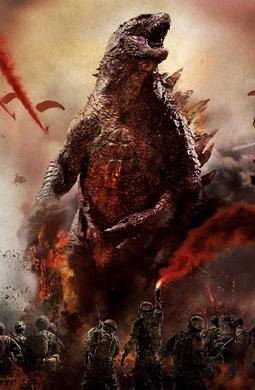
    We’ll begin with “Godzilla” (2014), the most recent incarnation of the pop-cultural icon, originally a metaphor for the destructive power of nuclear weapons, but now seemingly more of a jack-of-all-trades restorer of natural balance. Either way, it’s generally man’s overweening pride that brings on the destruction. The composer for this latest version was Alexandre Desplat.

    Then we’ll take a storm-swept hot air balloon to “Mysterious Island” (1961). Jules Verne’s novel becomes the framework for a series of battles between a band of castaways and giant creatures at an uncharted locale in the South Pacific. The great Ray Harryhausen provided the special effects – including giant bees, birds and crabs – and Bernard Herrmann underscored the outlandish situations to perfection.

    Henry Mancini gained world-fame for his breezy melodies for “Breakfast at Tiffany’s” and the “Pink Panther” films, but he got his start writing for B-movies of the 1950s. In “Tarantula” (1955), scientists conduct experiments on animals in order to develop a super food nutrient, as a preemptive strike against future overpopulation and world hunger. However, as the countryside becomes littered with cattle carcasses and pools of arachnid venom, clearly something has gone awry. Mancini collaborated on the score with 1950s science fiction maestro Herman Stein. Don’t go into it expecting “Moon River.”

    Finally, we’ll hear selections from literally the 800-pound gorilla of giant monster movies, “King Kong” (1933). Oscar Levant memorably described “Kong” as “a symphony accompanied by a movie.” The music was certainly a great part of the film’s initial – and enduring – success.

    Max Steiner’s concept and execution of the music for “Kong” was really the first of their kind. Thanks to “Kong” and other early efforts by Franz Waxman and Erich Wolfgang Korngold, a prototype of the Hollywood sound was formed, and the spectacular images onscreen, especially those characteristic of the fantasy and adventure genres, were expected to be accompanied by equally lavish and outlandish orchestras.

    No doubt, Hollywood would have figured it out eventually, yet it’s very gratifying to say, if it weren’t for “Kong,” there would be no “Ben-Hur,” there would be no “Star Wars,” there would be no “The Lord of the Rings.” At any rate, “Kong” got there first.

    I hope you’ll join me for these outsized musical adventures this week, on “Picture Perfect,” this Friday evening at 6:00 EST, on WWFM – The Classical Network and wwfm.org.

Tag Cloud

Aaron Copland (92) Beethoven (95) Composer (114) Film Music (123) Film Score (143) Film Scores (255) Halloween (94) John Williams (187) KWAX (229) Leonard Bernstein (101) Marlboro Music Festival (125) Movie Music (138) Opera (202) Philadelphia Orchestra (89) Picture Perfect (174) Princeton Symphony Orchestra (106) Radio (87) Ralph Vaughan Williams (85) Ross Amico (244) Roy's Tie-Dye Sci-Fi Corner (290) The Classical Network (101) The Lost Chord (268) Vaughan Williams (103) WPRB (396) WWFM (881)

DON’T MISS A BEAT

Receive a weekly digest every Sunday at noon by signing up here


RECENT POSTS