Tag: Amadeus

  • Salieri Beyond Amadeus The Real Story

    Salieri Beyond Amadeus The Real Story

    In the words of Wilde’s Lord Henry, there is only one thing in the world worse than being talked about, and that is not being talked about.

    While it might be true there’s no such thing as bad publicity, it would be nice if Antonio Salieri could transcend his notoriety – as the alleged murderer of Mozart and a second-rate hack – to be recognized for some of his actual achievements. Especially since none of the charges leveled against him happen to be true!

    I like “Amadeus” as much as the next guy, and while I am very happy it has served to keep Salieri’s name alive, and perhaps lent a greater degree of commercial viability to subsequent recordings of his music, it is worthwhile to examine the historical facts.

    In reality, Salieri was a generous teacher, who fostered Beethoven, Schubert, Liszt, and even Franz Xaver Mozart, his rival’s son, who was born a little more than four months before his father’s death.

    Salieri himself was a prolific and successful composer. He wrote 37 operas, in addition to orchestral works, concertos, chamber music, and sacred pieces. While he was no Mozart – who was? – his music is finely crafted and often quite enjoyable, certainly no worse than that of a majority of his contemporaries.

    Yes, Mozart believed Salieri and the Italian faction ensconced at the Viennese court (including future Mozart librettist Lorenzo Da Ponte) were against him. And there may have been something to it at first. However, beyond a rivalry pertaining to certain specific jobs, Mozart and Salieri appear often to have been better than cordial acquaintances.

    The two even collaborated on a cantata, “Per la ricuperata salute di Ofelia” (“For the recovered health of Ophelia”), rediscovered in 2016, a joint venture apparently entered into voluntarily (in contrast to an earlier contest, in which two one-act operas were juxtaposed, purely for the edification of the emperor). The cantata was written in 1785, to celebrate the recently-convalesced soprano Nancy Storace, who would soon create the role of Mozart’s Susanna in “The Marriage of Figaro.”

    When Salieri was appointed Kapellmeister in 1788, his first act was to revive “Figaro.” He was also responsible for arranging first performances of Mozart’s Piano Concerto No. 22 (K. 482), the Clarinet Quintet, and the Symphony No. 40. He was full of praise for “The Magic Flute.” And as I said, he took it upon himself to educate Mozart’s son.

    Sadly, Salieri’s enormous compositional output gradually faded from memory already during the latter years of his life. Ironically, it is the scandalmongers who kept his name alive.

    Rumors of Salieri’s involvement in Mozart’s death were codified by Alexander Pushkin in 1831, a few years after Salieri himself had passed, in the poetic drama “Mozart and Salieri.” This was later set as an opera, in 1898, by Nikolai Rimsky-Korsakov.

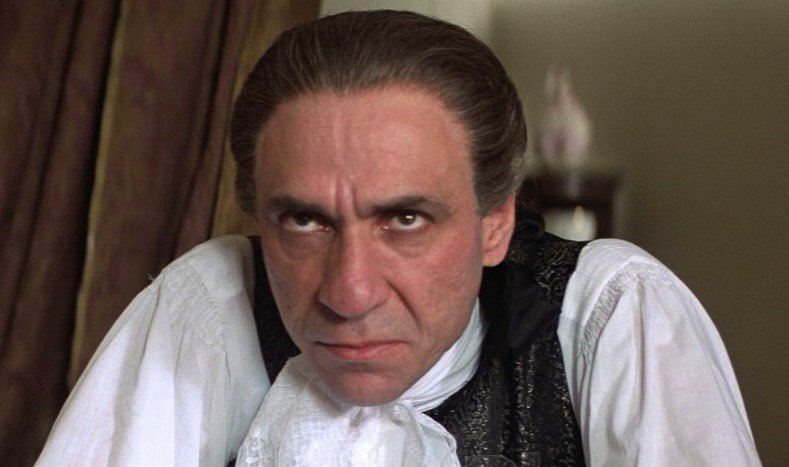
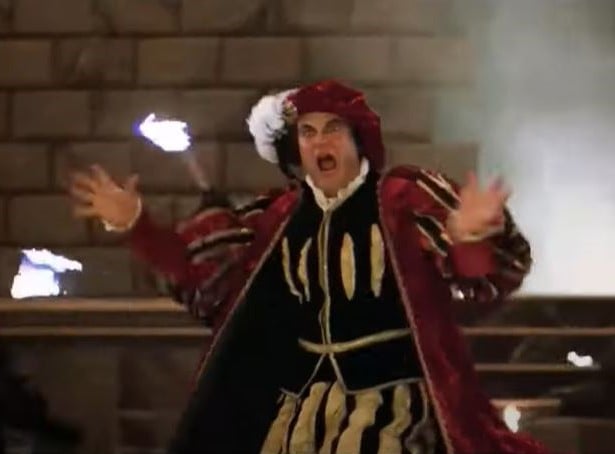
    Peter Schaffer picked up the thread in 1979, when he wrote the play “Amadeus,” which of course was adapted into the Academy Award-winning film in 1984.

    As the compact disc era progressed, more and more of Salieri’s output became available for first-hand assessment – and guess what? A lot of it is quite good!

    Happy birthday, Patron Saint of Mediocrity!


    Russian film version of Rimsky’s “Mozart and Salieri” (without subtitles):

    In English, if a bit fuzzy:

    Salieri’s Concerto for Flute, Oboe and Orchestra:

    Overture to “Les Horaces”

    “Das Lob der Musik” (“The Praise of Music”)

    A Mozart and Salieri collaborative effort, the cantata “Per la ricuperata salute di Ofelia”

    “I absolve you.”

  • Celebrating Salieri: Beyond Mozart Rivalry

    Celebrating Salieri: Beyond Mozart Rivalry

    Happy birthday, Antonio Salieri! I hope you’ll join me in celebrating 270 years of “mediocrity.”

    Salieri lives on in the popular imagination, of course, as the envious rival of Wolfgang Amadeus Mozart. But was he really?

    Rumors of Salieri’s involvement in Mozart’s death were seized upon by Alexander Pushkin as early as 1831, when he came to write the tragedy “Mozart and Salieri,” which appeared only few years after Salieri himself had passed. This was later set as an opera, in 1898, by Nikolai Rimsky-Korsakov.

    Of course, the slander has been kept alive and given even broader currency thanks to Peter Schaffer’s play, “Amadeus,” and the even more widely seen film, directed by Milos Forman. While I have no objection to dramatic license (Shakespeare would not be Shakespeare without it), it is too bad that such a generous figure – and a fine composer to boot – should live on, for the most part, in infamy.

    Salieri was a generous teacher, who fostered Beethoven, Schubert, Liszt, and even the son of the genius he was rumored to have poisoned. Franz Xaver Mozart was born four months after his father’s alleged murder.

    Salieri’s first act, when he was appointed Austrian Imperial Kapellmeister in 1788, was to revive Mozart’s “The Marriage of Figaro.” He was responsible for arranging first performances of his alleged nemesis’ Piano Concerto No. 22, the Clarinet Quintet, and the Symphony No. 40, and he had nothing but praise for “The Magic Flute.”

    Sadly, he found no one to return the favor. Already during his later years, his own enormous compositional output (37 operas, in addition to orchestral works, concertos, chamber music, and sacred pieces) gradually faded from public memory. Ironically, it is the scandalmongers who kept his name alive.

    But, as the saying goes, there is no such thing as bad publicity. In a way, “Amadeus” was the best thing to happen to Salieri in nearly 200 years. How many people remember Mozart’s string quartet partners (with Haydn), Carl Ditters von Dittersdorf and Jan Křtitel Vaňhal, both also talented and prolific composers? I’m sure they would agree – with apologies to Wilde – that the only thing worse than being talked about is not being talked about.

    Happy birthday, Patron Saint of Mediocrity!

    Russian film version of Rimsky’s “Mozart and Salieri” (without subtitles): https://www.youtube.com/watch?v=ilw7oIkrDj4

    In English, if a bit fuzzy:

    Salieri’s Concerto for Flute, Oboe and Orchestra:

    A Mozart and Salieri collaborative effort, the cantata “Per la ricuperata salute di Ofelia,” only recently rediscovered:

    “I absolve you.”

  • Mozart’s Humanity Celebrate His Birthday on WWFM

    Mozart’s Humanity Celebrate His Birthday on WWFM

    There’s a lot of art in Mozart. But also a lot of humanity.

    Join us today on The Classical Network, as we celebrate the 264th anniversary of the birth of Johannes Chrysostomus Wolfgangus Theophilus Mozart – better known as Wolfgang Amadeus Mozart.

    Current events got you down? Take the long view. This music from over two centuries ago still has the ability to touch our hearts, soothe our minds, and reach into our souls. Mozart’s music reflects what is best in Man.

    Tune in for a broad sampling of his extraordinary output, including symphonies, concertos, operas, orchestral, choral, vocal, chamber and instrumental music. If you enjoy it, please support it, with your contribution at wwfm.org.

    While you’re at it, pick up a thank you gift. Of course, we’ve a broad array of music-oriented loot. This time around, we’re adding a 2-CD set of Mozart adagios. This is the perfect collection to insulate yourself from the cares of the world.

    The saying goes that the best things in life are free, but it sure does cost money for us to bring you the music. We’ve been able to hang in there for 37 years, thanks to the generosity and perspicacity of listeners just like you.

    Please call us at 1-888-232-1212, or make your donation online at wwfm.org. Thank you for your continued support of WWFM – The Classical Network!


    FUN FACT: Mozart signed his name “Amadeus” only a few times in his life, when he was playing around in letters written in a kind of mock Latin. In fact, “Amadè,” “Amadé,” or simply “Amade” were his preference (“Amadeo” in Italy). He was fairly cavalier in the placement of the accent. It was only on his death certificate that the form “Amadeus” took root. His widow, Constanze, picked up on it and used it in her appeal to the Emperor for a pension (ultimately successful), citing Mozart’s contributions. As her late husband became increasingly venerated, “Amadeus” became the standard.

    Of course, we can be as pedantic as we like. But nothing changes the transcendent quality of the music and its enduring ability to elevate our mood.

    Find peace with Mozart on WWFM The Classical Network.

  • Mozart’s Gran Partita Marlboro Festival

    Mozart’s Gran Partita Marlboro Festival

    “This was no composition by a performing monkey. This was a music I’d never heard. Filled with such longing, such unfulfillable longing. It seemed to me that I was hearing the voice of God.”

    In Peter Schaffer’s “Amadeus,” it is the work that threw Antonio Salieri into ecstasies. “On the page it looked nothing – just a pulse, bassoons and basset-horns, like a rusty squeezebox. Then suddenly, high above it, an oboe, a single note, hanging there unwavering, until a clarinet took it over and sweetened it into a phrase of such delight!”

    Salieri (the character) had difficulty reconciling such sublime music with its composer’s vulgar personality. By extension, it’s easy to imagine Salieri smiling ruefully at the incongruity of a work of such sustained beauty being identified by the equivalent of an 18th century typo – the “Gran Partita.”

    Wolfgang Amadeus Mozart’s seven-movement tour de force will be featured on this week’s “Music from Marlboro.” We’ll hear it performed by an all-star cast of twelve wind players – and a double bassist – under the direction of Marcel Moyse, from the 1975 Marlboro Music Festival.

    Moyse was Marlboro royalty. Alongside Rudolf Serkin and Adolf Busch, the legendary flutist cofounded the Marlboro Music School and Festival in 1951. A veteran of Paris’ Opéra Comique, he would instruct his wind players to emulate the phrasings of the human voice in song.

    This summer’s Marlboro Music Festival will take place from July 13 to August 11, as always on the campus of Marlboro College in Marlboro, Vermont. This weekend will include two concerts: on Saturday at 8 p.m., featuring music by Haydn, John Harbison, Schubert, and Beethoven; and on Sunday at 2:30 p.m., with music by Ernest Chausson, Mendelssohn, and again Beethoven. More information is available at marlboromusic.org.

    Learn more about Marcel Moyse, who worked with some of the greatest artists of his time, in this generous biographical sketch by Marlboro Senior Administrator Frank Salomon:

    From the Archives: Marcel Moyse

    Then tune in and have a gran’ ol’ time with Mozart’s “Gran Partita,” on “Music from Marlboro,” this Wednesday evening at 6:00 EDT, on WWFM – The Classical Network and wwfm.org.

    Marlboro School of Music and Festival: Official Page

  • Salieri: More Than Mozart’s Rival?

    Salieri: More Than Mozart’s Rival?

    He was a generous teacher, who fostered Beethoven, Schubert, Liszt, and even the son of the genius he was rumored to have poisoned.

    His first act, when he was appointed Austrian Imperial Kapellmeister in 1788, was to revive Mozart’s “The Marriage of Figaro.” He was responsible for arranging first performances of his alleged nemesis’ Piano Concerto No. 22, the Clarinet Quintet, and the Symphony No. 40, and he had nothing but praise for “The Magic Flute.” He even took it upon himself to educate Franz Xaver Mozart, the composer’s son, who was born four months after his father’s alleged murder.

    Already during the latter years of his life, Antonio Salieri’s enormous compositional output (37 operas, in addition to orchestral works, concertos, chamber music, and sacred pieces) gradually faded from public memory. Ironically, it is the scandalmongers who kept his name alive.

    Rumors of Salieri’s involvement in Mozart’s death were codified by Alexander Pushkin in 1831 in the tragedy “Mozart and Salieri,” which appeared a few years after Salieri himself had passed. This was later set as an opera in 1898 by Nikolai Rimsky-Korsakov.

    Was this any way to treat such a generous, hard-working composer? While he was certainly no Mozart – who was? – his music is finely crafted and often quite enjoyable, certainly no worse than that of a majority of his contemporaries.

    But, as the saying goes, there’s no such thing as bad publicity. In a way, Peter Schaffer’s “Amadeus” was the best thing to happen to Salieri in nearly 200 years. How many people remember Mozart’s quartet partners (with Haydn), Carl Ditters von Dittersdorf and Jan Křtitel Vaňhal, both also talented and prolific composers?

    By coincidence (?), Rimsky-Korsakov’s chamber opera is being performed today at Bard College, on the second half of a 1:30 p.m. program titled “Domestic Music Making in Russia,” as part of the 29th Annual Bard Music Festival: Rimsky-Korsakov and His World.

    In another context, it would be a peculiar way to mark a composer’s birthday – but as I’m sure Dittersdorf and Vaňhal would agree, the only thing worse than being talked about is not being talked about.

    Happy birthday, Antonio Salieri, Patron Saint of Mediocrity!


    Russian film version of Rimsky’s “Mozart and Salieri” (without subtitles): https://www.youtube.com/watch?v=ilw7oIkrDj4

    In English, if a bit fuzzy:

    Salieri’s Concerto for Flute, Oboe and Orchestra:

    “I absolve you.”

Tag Cloud

Aaron Copland (92) Beethoven (95) Composer (114) Film Music (119) Film Score (143) Film Scores (255) Halloween (94) John Williams (185) KWAX (229) Leonard Bernstein (99) Marlboro Music Festival (125) Movie Music (134) Opera (198) Philadelphia Orchestra (87) Picture Perfect (174) Princeton Symphony Orchestra (106) Radio (87) Ralph Vaughan Williams (85) Ross Amico (244) Roy's Tie-Dye Sci-Fi Corner (290) The Classical Network (101) The Lost Chord (268) Vaughan Williams (102) WPRB (396) WWFM (881)

DON’T MISS A BEAT

Receive a weekly digest every Sunday at noon by signing up here


RECENT POSTS