Tag: Amadeus

  • Mozart’s Gran Partita Marlboro Festival

    Mozart’s Gran Partita Marlboro Festival

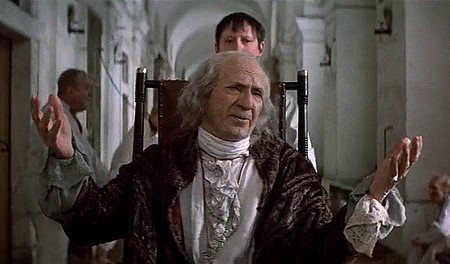
    “This was no composition by a performing monkey. This was a music I’d never heard. Filled with such longing, such unfulfillable longing. It seemed to me that I was hearing the voice of God.”

    In Peter Schaffer’s “Amadeus,” it is the work that threw Antonio Salieri into ecstasies. “On the page it looked nothing – just a pulse, bassoons and basset-horns, like a rusty squeezebox. Then suddenly, high above it, an oboe, a single note, hanging there unwavering, until a clarinet took it over and sweetened it into a phrase of such delight!”

    Salieri (the character) had difficulty reconciling such sublime music with its composer’s vulgar personality. By extension, it’s easy to imagine Salieri smiling ruefully at the incongruity of a work of such sustained beauty being identified by the equivalent of an 18th century typo – the “Gran Partita.”

    Wolfgang Amadeus Mozart’s seven-movement tour de force will be featured on this week’s “Music from Marlboro.” We’ll hear it performed by an all-star cast of twelve wind players – and a double bassist – under the direction of Marcel Moyse, from the 1975 Marlboro Music Festival.

    Moyse was Marlboro royalty. Alongside Rudolf Serkin and Adolf Busch, the legendary flutist cofounded the Marlboro Music School and Festival in 1951. A veteran of Paris’ Opéra Comique, he would instruct his wind players to emulate the phrasings of the human voice in song. Learn more about this remarkable musician, who worked with some of the greatest artists of his time, in this generous biographical sketch by Marlboro Senior Administrator Frank Salomon:

    https://www.marlboromusic.org/from-the-archive/blog/archives-marcel-moyse/

    Then tune in and have a gran’ ol’ time with Mozart’s “Gran Partita,” on “Music from Marlboro,” this Wednesday evening at 6:00 EDT, on WWFM – The Classical Network and wwfm.org.

    Marlboro School of Music and Festival: Official Page

  • Milos Forman Director of Cuckoo’s Nest Dies

    Milos Forman Director of Cuckoo’s Nest Dies

    Milos Forman, director of “One Flew Over the Cuckoo’s Nest” and “Amadeus,” has died.

    https://www.nytimes.com/2018/04/14/obituaries/milos-forman-dead.html

  • Salieri Beyond the Mozart Myth Debunked

    Salieri Beyond the Mozart Myth Debunked

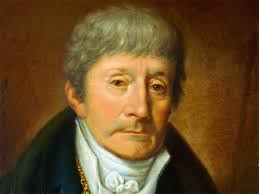
    Poor, maligned Antonio Salieri. He was a second-rate hack. He murdered Mozart. Yadda yadda yadda.

    While it’s true there’s no such thing as bad publicity, it would be nice if the man could transcend his notoriety to be recognized for his achievements. Especially since none of the charges against him happen to be true.

    I like “Amadeus” very much, and while I am happy it has served to keep Salieri’s name alive and perhaps lend a greater degree of commercial viability to subsequent recordings of his music, it is worthwhile to examine the historical facts.

    In reality, Salieri was a generous teacher, who fostered Beethoven, Schubert, Liszt and even Franz Xaver Mozart, the composer’s son, who was born a little more than four months before his father’s death.

    Salieri was also a prolific and successful composer. He wrote 37 operas, in addition to orchestral works, concertos, chamber music and sacred pieces. While he was no Mozart – who was? – his music is finely crafted and often quite enjoyable, certainly no worse than that of a majority of his contemporaries.

    Yes, Mozart believed Salieri and the Italian faction ensconced at the Viennese court (including future Mozart librettist Lorenzo Da Ponte) were against him, and there may have been something to it at first. However, beyond a rivalry over certain specific jobs, Mozart and Salieri appear to have been often better than cordial acquaintances. The two even collaborated on a cantata, “Per la ricuperata salute di Ophelia,” a venture which was apparently entered into voluntarily (as opposed to an earlier juxtaposition of one-act operas composed for the edification of the emperor). Here it is, only recently rediscovered:

    When Salieri was appointed Kapellmeister in 1788, his first act was to revive “The Marriage of Figaro.” He was responsible for arranging first performances of Mozart’s Piano Concerto No. 22, K. 482, the Clarinet Quintet and the Symphony No. 40. He was full of praise for “The Magic Flute.” And as I said, he took it upon himself to educate Mozart’s son.

    Sadly, Salieri’s enormous compositional output gradually faded from memory already during the latter years of his life. Ironically, it is the scandalmongers who kept his name alive.

    Rumors of Salieri’s involvement in Mozart’s death were codified by Alexander Pushkin in 1831, a few years after Salieri himself had passed, in the tragedy “Mozart and Salieri.” This was later set as an opera, in 1898, by Nikolai Rimsky-Korsakov.

    Peter Schaffer picked up the thread in 1979, when he wrote the play “Amadeus,” which of course was adapted into the Academy Award-winning film in 1984.

    As the compact disc era advanced, more and more of Salieri’s repertoire became available for first-hand assessment – and guess what? A lot of it is quite good!

    Join me Friday afternoon to sample some of it, among my featured selections, from 4 to 6 EDT, on WWFM – The Classical Network and wwfm.org. Then stick around, as I host “Picture Perfect,” music for the movies, at 6. I’ll have more about that in just a bit.

  • Salieri Beyond the Mozart Myth

    Salieri Beyond the Mozart Myth

    Poor, maligned Antonio Salieri. He was a second-rate hack. He murdered Mozart. You know the drill.

    While it’s true there’s no such thing as bad publicity, it would be nice if the man could transcend his notoriety to be recognized for his achievements. Especially since none of the charges happen to be true.

    I like “Amadeus” very much, and while I am happy it has served to keep Salieri’s name alive and perhaps lend a greater degree of commercial viability to subsequent recordings of his music, it is worth looking into the historical facts.

    In reality, Salieri was a generous teacher, who fostered Beethoven, Schubert, Liszt and even Franz Xaver Mozart, the composer’s son, who was born the year after his father’s death.

    Salieri was also a prolific and successful composer. He wrote 37 operas, in addition to orchestral works, concertos, chamber music and sacred pieces. While he was no Mozart – who was? – his music is finely crafted and often quite enjoyable, certainly no worse than that of a majority of his contemporaries.

    Yes, Mozart believed Salieri and the Italian faction ensconced at the Viennese court (including future Mozart librettist Lorenzo Da Ponte) were against him, and there may have been something to it at first. However, beyond a rivalry over certain specific jobs, Mozart and Salieri appeared often to be better than cordial acquaintances. The two even collaborated on a cantata (now lost), “Per la ricuperata salute di Ophelia,” a venture which was apparently entered into voluntarily (as opposed to an earlier juxtaposition of one-act operas composed for the edification of the emperor).

    When Salieri was appointed Kapellmeister in 1788, his first act was to revive “The Marriage of Figaro.” He was responsible for arranging first performances of Mozart’s Piano Concerto No. 22, K. 482, the Clarinet Quintet and the Symphony No. 40. He was full of praise for “The Magic Flute.” And as I said, he took it upon himself to educate Mozart’s son.

    Sadly, Salieri’s enormous compositional output gradually faded from memory already during the latter years of his life. Ironically, it is the scandalmongers who kept his name alive.

    Rumors of Salieri’s involvement in Mozart’s death were codified by Alexander Pushkin in 1831, a few years after Salieri himself had passed, in the tragedy “Mozart and Salieri.” This was later set as an opera, in 1898, by Nikolai Rimsky-Korsakov.

    Peter Schaffer picked up the thread in 1979, when he wrote the play “Amadeus,” which of course was adapted into the Academy Award-winning film in 1984.

    As the compact disc era progressed, more and more of Salieri’s repertoire became available for first-hand assessment – and guess what? A lot of it is quite good!

    Here’s one of my favorite Salieri works, his Concerto for Flute, Oboe and Orchestra:

    https://www.youtube.com/watch?v=cJK87k7jlHo&list=PL653040801EF6DF3A

    And Cecilia Bartoli, from the documentary “Why Salieri, Signora Bartoli?”:

    https://www.youtube.com/watch?v=eq1Fj77eqDw

    Happy birthday, Antonio Salieri!

Tag Cloud

Aaron Copland (92) Beethoven (95) Composer (114) Film Music (119) Film Score (143) Film Scores (255) Halloween (94) John Williams (185) KWAX (229) Leonard Bernstein (99) Marlboro Music Festival (125) Movie Music (134) Opera (198) Philadelphia Orchestra (87) Picture Perfect (174) Princeton Symphony Orchestra (106) Radio (87) Ralph Vaughan Williams (85) Ross Amico (244) Roy's Tie-Dye Sci-Fi Corner (290) The Classical Network (101) The Lost Chord (268) Vaughan Williams (102) WPRB (396) WWFM (881)

DON’T MISS A BEAT

Receive a weekly digest every Sunday at noon by signing up here


RECENT POSTS