Tag: American Composer

  • Charles Ives An American Original

    Charles Ives An American Original

    Today is the birthday of Charles Ives, an American original. Ives wrote the kind of music he wanted to write, stitching hymns and fiddle tunes of his youth into a brilliant crazy quilt of the American experience.

    His father had been something of an original himself, a bandmaster during the Civil War. He taught Ives to sing in one key as he played in another. This instilled in his son, perhaps, the receptivity to recognize, when standing on a street corner during a parade, the natural dissonances and rhythmic complexities that resulted from the clash of sounds as marching bands wrapped around the block.

    He was very successful at his day job in the insurance business (some of his work in the financial field laid the groundwork for modern practices in estate planning). While this would be a claim on his time, it allowed him to pursue his idiosyncratic muse. Ives composed in the evenings, on weekends, and during holidays. For a few years, in the 1890s, he was also an organist and choirmaster at a couple of New York churches.

    He retired in 1930, which finally permitted him to devote himself wholeheartedly to music. Ironically, by then, he found he was no longer able to compose. His wife recalled a day in 1927 when he came downstairs with tears in his eyes and confessed that everything sounded wrong to him. Instead he worked at revision and publication.

    By the time his works began to gain recognition, he had already stopped writing for 20 years. At the time of his death, in 1954, he was still widely misunderstood and much of his music remained unperformed. Nevertheless, he had some important champions. He was a recipient of the Pulitzer Prize for Music in 1947, for his Symphony No. 3, “The Camp Meeting,” a work he composed in 1904. The symphony was given its belated premiere, under Lou Harrison’s direction, in 1946.

    Arnold Schoenberg regarded Ives as a paragon of artistic integrity. After Schoenberg’s death, his widow found the following among his papers: “There is a great Man living in this Country – a composer. He has solved the problem of how to preserve one’s self-esteem and to learn. He responds to negligence by contempt. He is not forced to accept praise or blame. His name is Ives.”

    Here is Ives, in all his patriotic, profane glory, singing “They Are There,” from 1943. Originally written in 1917, for the Great War, the song employs an updated text.

    Ives draws on the lesson of the wrap-around marching bands for “The Fourth of July” – and dig the climactic rocket explosion fading away into sparks!

    Finally, the work that won Ives his Pulitzer, the Symphony No. 3, “The Camp Meeting”:

    Ives’ characteristically gruff reaction: “Prizes are for boys. I’m grown up.” In private, though, he proudly hung the certificate on his wall.

    Happy birthday, Charles Ives!
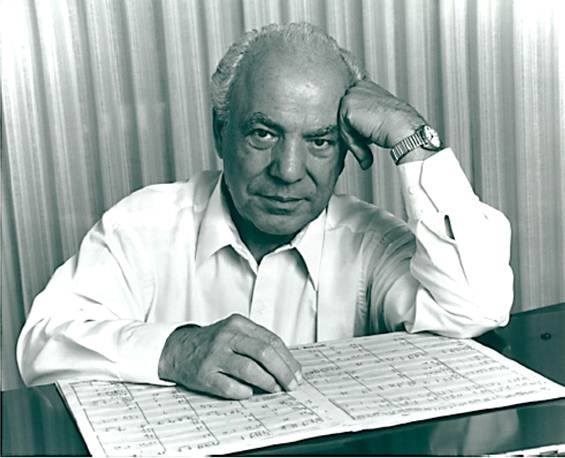
  • Paul Creston Forgotten American Composer

    Paul Creston Forgotten American Composer

    One of the composers whose music I didn’t get to play the other day during my “Neo-Baroque” show on WPRB was Paul Creston. Which is a shame, since Creston wrote so much finely-crafted music, and none of it is exactly overplayed.

    Creston was born on this date in 1906, as Giuseppe Guttoveggio. This is interesting, in that historians believe that this was also the birth date of Giuseppe Verdi (though he always celebrated on the 9th). Creston was born in New York City to Sicilian immigrants. He chose his professional name from a character he played in a high school play, named Cresspino, which led to his classmates calling him Cress. He changed his name legally in 1927, when he married Martha Graham dancer Louise Gotto.

    Creston was about as self-taught as a composer could get. He practiced after work on a ten-dollar piano purchased by his family and pored over scores of the Masters at the New York Public Library. From observing his wife, he developed an interest in rhythm and dance. He later wrote a book on the subject, “Principles of Rhythm.”

    Allegedly, during the 1950s and ‘60s, he was the most performed American symphonic composer, championed by Toscanini, Ormandy, Stokowski, and Howard Mitchell of the National Symphony Orchestra. How often do we hear his music today?

    Among his students was Gerard Schwarz, later music director of the Seattle Symphony. Schwarz returned the favor years later by recording a couple of albums of Creston’s music.

    Here’s a piece I was hoping to play the other day, his Baroque-inflected Partita for Flute, Violin and Strings:

    Creston was organist at the Chapel of St. Genesius (the patron saint of actors) for over 30 years, from 1934 to 1967. The chapel, located beneath St. Malachy’s Roman Catholic Church in Manhattan, was a primary place of worship for entertainment people since the 1920s. Parishioners included Jimmy Durante, Bob Hope, Gregory Peck, Danny Thomas and Spencer Tracy. This was the church that hosted Valentino’s funeral and Douglas Fairbanks Jr. and Joan Crawford’s wedding (both occurred before Creston’s tenure). The church’s chimes literally played “There’s No Business Like Show Business.”

    Creston considered the writing of music to be a spiritual practice.

    “To me, musical composition is as vital to my spiritual welfare as prayer and good deeds, just as good food and exercise are necessities of physical health, and thought and study are requisites of mental well-being,” he wrote. “I believe that everyone should compose and that musical composition should be a required course in our educational system, as well as literary composition – not for the purpose of training composers professionally, as we do not expect to make authors of all students of literary composition – but for the development and joy of creativity.”

    Happy birthday, Paul Creston!

  • George Perle: Celebrating a Centennial of Sound

    George Perle: Celebrating a Centennial of Sound

    You might say he was a Perle among American composers.

    Today marks the 100th anniversary of the birth of George Perle. Perle was born on this date in 1915 in Bayonne, NJ, though he grew up on farms in Wisconsin and Indiana.

    Fascinated with music from the time he was a child (he was literally transfixed when he heard his aunt play a Chopin etude), his choice of career was pretty much a given. Perle attended DePaul University and took private lessons with Ernst Krenek. Among his own students was retired Princeton University professor Paul Lansky.

    Perle fell under the spell of twelve-tone masters Arnold Schoenberg, Anton Webern and Alban Berg. In 1968, he cofounded the Alban Berg Society with Igor Stravinsky and Hans F. Redlich. Arguably his greatest musicological achievements were his discoveries that Berg’s “Lulu” was not in fact a sketch, but rather three quarters finished, and that Berg’s “Lyric Suite” contains a secret program related to a clandestine love affair.

    His own music is influenced by the twelve-tone idiom, though it is weighted to his own purposes, with certain notes of the chromatic scale given precedence to create a kind of synthetic tonality. Perle’s Fourth Wind Quintet was awarded the Pulitzer Prize for music in 1986.

    Maybe his music is not for everyone, but if you’re receptive, I think you’ll find it never wears out its welcome.

    Happy birthday, George Perle!

    Six New Etudes (1984): https://www.youtube.com/watch?v=SxDqR_23Puo

    Adagio for Orchestra (1992): https://www.youtube.com/watch?v=w-_PuCrsT9Q

    Perle in conversation with David Dubal! https://www.youtube.com/watch?v=1JGa7Jd5uEY

    Of course, you can listen to Dubal’s “The Piano Matters” Wednesday evenings at 10 and Sundays at noon at http://www.wwfm.org.

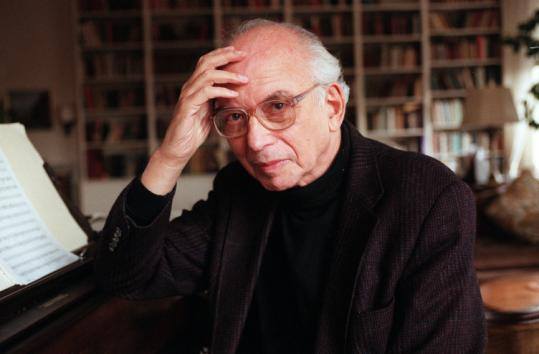
    PHOTO: Give Perle a whirl

  • John Antes American Moravian Missionary and Musician

    John Antes American Moravian Missionary and Musician

    Today is the birthday anniversary of John Antes (1740-1811), who was born in Frederick, Montgomery County, Pa.

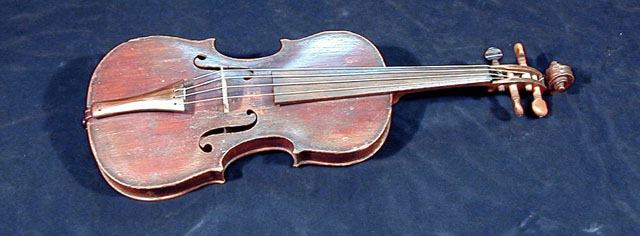
    Antes was the first American Moravian missionary to travel to Egypt. He is also credited with being one the first composers born on American soil to have written chamber music, and the creator of perhaps the earliest surviving bowed string instrument made in the American colonies. Antes’ violin, made in 1759, is housed in the Museum of the Moravian Historical Society in Nazareth, Pa. A viola, made by Antes in 1764 (again believed to be the earliest surviving of American origin) is housed in the Lititz Moravian Congregation Collection in Lancaster County. Antes created at least seven such instruments.

    In 1752, Antes attended school in Bethlehem, Pa. In 1760, he was admitted into the Single Brethren’s choir there. From Bethlehem, he travelled to Herrnhut, Germany, the international center of the Moravians, to prepare for a career as a missionary. In the meantime, he also took up watchmaking. He was ordained a minister in 1769, then set out for Egypt. There, he served as a missionary to the Coptic Church in Grand Cairo. After a largely uneventful decade, he was captured and tortured by followers of Osman Bey.

    During his convalescence, he occupied himself with the composition of three string trios. He also sent a copy of six quartets to Benjamin Franklin, whom he had known in America. The quartets are lost (nice job, Ben), but the trios survive.

    Antes returned to Germany, then England, where he married and spent the remainder of his working life in Fulneck. The best-known of his musical accomplishments are his anthems, especially “Go, Congregation, Go!” and “Surely He Hath Bourne Our Griefs.”

    PHOTO: The Antes violin (which sounds more like a creation of Salvador Dali), now in Nazareth, Pa.

  • Happy Birthday Samuel Barber His Best Music

    Happy Birthday Samuel Barber His Best Music

    March 9. Time for a trip to the Barber. Samuel Barber, that is.

    Happy birthday, Sam (born in West Chester, Pa., on this date in 1910).

    My favorite Barber pieces? The Violin Concerto. The Symphony No. 1. The Second Essay for Orchestra. “Souvenirs” (in the version for four-hand piano). Okay, and the Adagio.

    Sing it, Lenny.

    If you’re feeling a little on the bleak side, here’s some happy music to counterbalance the Adagio. It’s from his set of piano pieces titled “Excursions.”

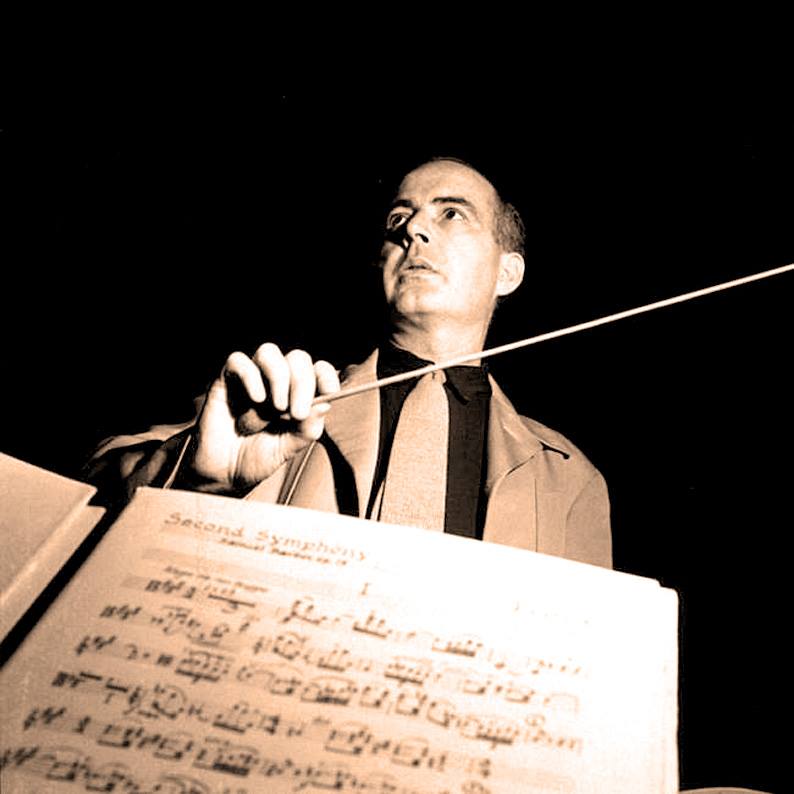
    PHOTO: What you doin’ with that black shirt and baton, Sammy? Ironically, he disliked his Second Symphony. He disliked it so much, he tried to destroy it.

Tag Cloud

Aaron Copland (92) Beethoven (95) Composer (114) Film Music (123) Film Score (143) Film Scores (255) Halloween (94) John Williams (187) KWAX (229) Leonard Bernstein (101) Marlboro Music Festival (125) Movie Music (138) Opera (202) Philadelphia Orchestra (89) Picture Perfect (174) Princeton Symphony Orchestra (106) Radio (87) Ralph Vaughan Williams (85) Ross Amico (244) Roy's Tie-Dye Sci-Fi Corner (290) The Classical Network (101) The Lost Chord (268) Vaughan Williams (103) WPRB (396) WWFM (881)

DON’T MISS A BEAT

Receive a weekly digest every Sunday at noon by signing up here


RECENT POSTS