Tag: American Composer

  • John Alden Carpenter American Composer

    John Alden Carpenter American Composer

    Like Charles Ives, the Chicago-based composer John Alden Carpenter was fairly sensible about earning a living, as opposed to starving in a garret.

    Carpenter studied music at Harvard with John Knowles Paine, then set out for London to meet Sir Edward Elgar. He finally caught up with Elgar in Rome, then returned home to finish up his formal education with Bernhard Ziehn in Chicago.

    Understanding the improbability of sustaining himself as a composer, Carpenter became vice president of the family business, a shipping supply company, where he did quite well. He composed during his time off, and especially after his retirement.

    His music is amiable, often jazzy and just a touch modernistic, though not to an extent that would have frightened the horses. His strongest piece appears to have been his construction worker ballet “Skyscrapers,” which was given its premiere at the Metropolitan Opera in 1926.

    His 1914 “Adventures in a Perambulator,” evocative of a day in the life of an infant in charming, impressionistic terms, was preserved by Howard Hanson, as part of his landmark Mercury Living Presence series of recordings of mostly lesser-known American music.

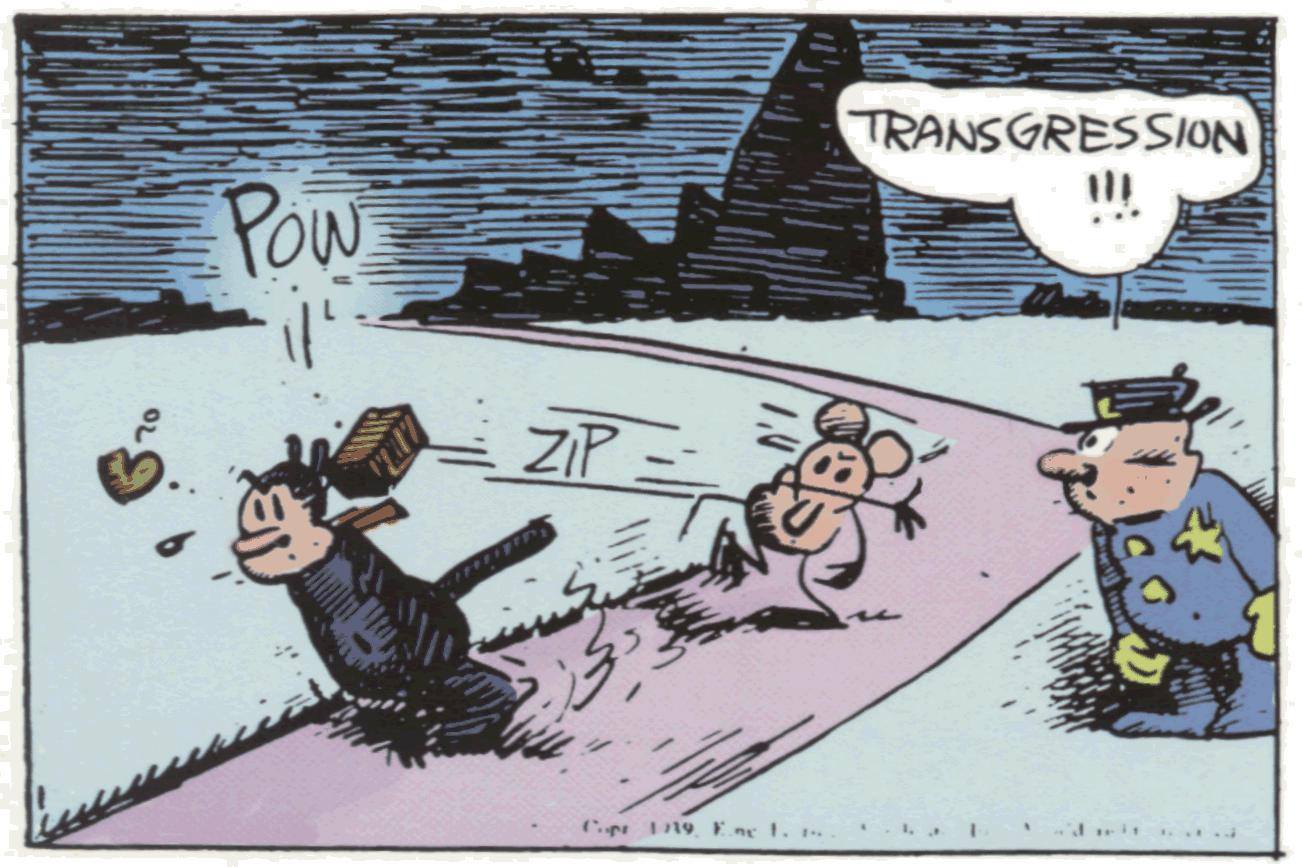
    In my opinion, Carpenter’s language is a mite too tame to tackle George Herriman’s “Krazy Kat,” but he did just that, composing a ballet after the popular comic strip, featuring Krazy, Ignaz Mouse and Offissa Pup. Ignaz even gets to hurl a brick or two.

    Sergei Prokofiev, in Chicago for the 1921 premiere of “The Love for Three Oranges,” was present for the first performance and expressed guarded admiration. In private, I seem to remember, he thought the orchestration lacking.

    Here’s music from the ballet “Krazy Kat.” I may be one of the few people alive to have actually heard this work in concert twice, performed by two totally different groups. I keep wishing it were more of a piece with the strip that inspired it.

    Happy birthday, John Alden Carpenter (1876-1951).
  • Irving Fine: Celebrating the Neglected Composer

    Irving Fine: Celebrating the Neglected Composer

    Today is the 100th birthday of Irving Fine. Who? Well, if you’ve sung in a chorus for any length of time, you may already know. Among Fine’s best-known works are arrangements of Copland’s “Old American Songs” and settings of texts from “Alice in Wonderland.”

    He also wrote a woodwind quintet that gets recorded from time to time and certainly deserves more exposure. His “Serious Song,” for string orchestra, is another among his most frequently recorded works.

    He was an American composer of the “Stravinsky school,” one of the so-called “Boston Six” (which also included Arthur Berger, Copland, Leonard Bernstein, Lukas Foss and Harold Shapero).

    In some of his later works he experimented with serial techniques, though he never wholly abandoned tonality. On the other hand, in his early pieces he never shied away from dissonance. His was a tart brand of graceful neo-classicism that occasionally bubbled over into romanticism, as in the “Serious Song” and his “Notturno for Strings and Harp.” No matter what language he embraced, he was always an elegant and attractive composer.

    Fine died of heart disease in 1962. He was only 47 years-old.

    This Sunday night on “The Lost Chord,” we’ll offer a slightly belated salute to this unjustly neglected figure. The program, titled “Everything’s Fine,” will air at 10 ET, with a repeat next Wednesday at 6. You can listen to it at http://www.wwfm.org. I’ll post more about it over the weekend.

    In the meantime, here’s a listing of Fine celebrations around the country:

    http://www.irvingfinesoc.org/#!events/c9a0

    And Fine’s “Notturno for Strings and Harp”:

    https://www.youtube.com/watch?v=0aDTULoEJQ4
    https://www.youtube.com/watch?v=PmtpyqGT8IE

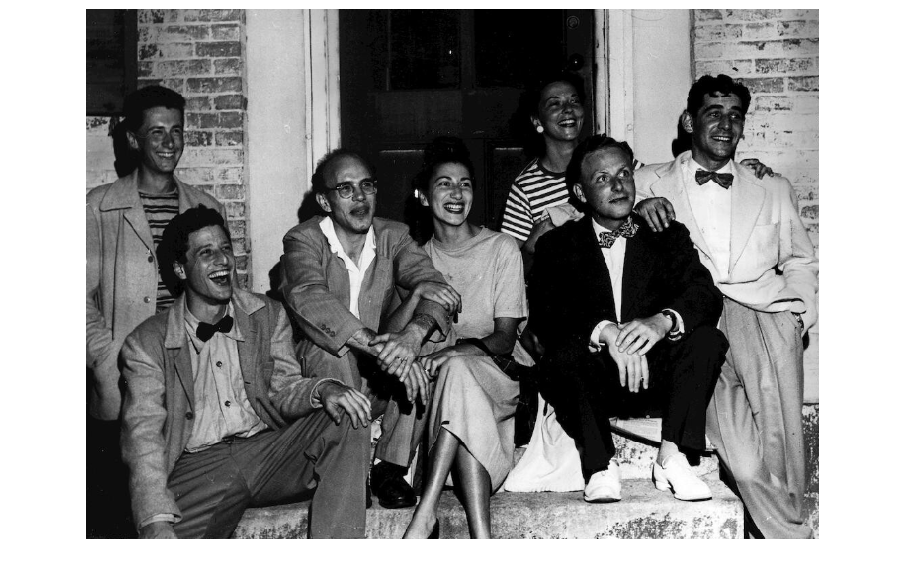
    PHOTO: Irving Fine (second from right) with (left to right) Claudio Spies, Lukas Foss, Harold Shapero, Esther Geller, Verna Fine and Leonard Bernstein, Tanglewood, 1946

  • Happy Birthday, Charles Ives: An American Original

    Happy Birthday, Charles Ives: An American Original

    “Are my ears on wrong?” remarked Charles Ives, wondering at how out of step with musical convention his own compositions could be. Yet he soldiered on, writing works of all stripes, tonalities and quasi-tonalities, even atonality, navigating with remarkable certainty for 30 years with very few performances to affirm his chosen course.

    I’m not saying anything which hasn’t been said before in declaring he was an American original and one of the great voices of our native music. Ives’ works are imbued with nostalgia and a sense of man’s humble aspirations as part of the great, ungraspable machinery of the universe.

    Yowling church choirs stand shoulder to shoulder with cranky, cracker barrel political debates. Mischievous children pull Fourth of July pranks as marching bands turn back upon themselves. Even in the heart of the city, little dramas play out under a starry, infinite sky.

    No less than Gustav Mahler – who declared a symphony must be like the world, it must contain everything – Ives embraces in his works the most unassuming folk song or popular tune. He tosses them into a box like so many wheat pennies, bottle caps, campaign buttons and marbles. The box becomes a cornerstone for a whitewashed church with an impossibly tall steeple. The steeple acts as a conveyor of invisible impulses that permeate everything.

    Today is the 140th anniversary of Ives’ birth. Join me for a verse of “Happy Birthday,” Ives-style, singing in the key of E-flat while a pianist accompanies us in C Major. Maybe we’ve had a little too much to drink, so we have a hard time keeping together. Somebody decides they’ve started too high, so midway through they take it down an octave. Another hangs on to the last note after everyone else has finished.

    Then imagine the sound joining with that of a high school band practicing in the distance. A mail carrier whistles. The strains of a violin emerge from an open window. Someone has on their car radio as they work under the hood. These expressions of humanity blend into a magnificent streamer, unfurled by unseen hands to envelop the earth and continue into the beyond.

    Happy birthday, Charles Ives!

    Here’s Ives’ “Hallowe’en” (1906): https://www.youtube.com/watch?v=emPYJGE07y0

    One of his songs, “Charlie Rutlage” (1920): https://www.youtube.com/watch?v=ahhLImmYH2Q

    “The Fourth of July” (1912): https://www.youtube.com/watch?v=dkM6GQBUrqk

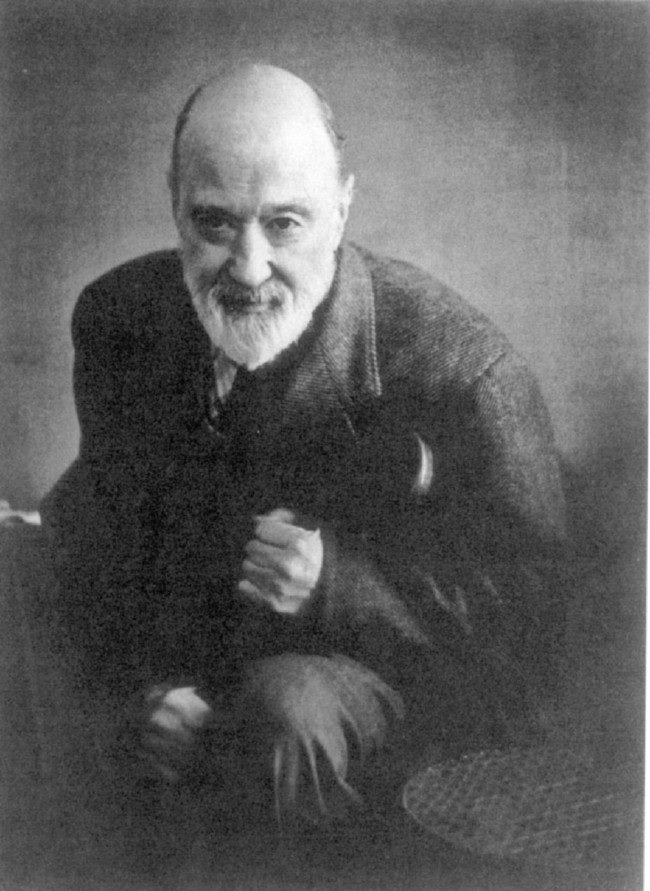
    PHOTO: “When you hear strong masculine music like this, get up and USE YOUR EARS LIKE A MAN!” – Charles Ives

  • William Henry Fry American Music Pioneer

    William Henry Fry American Music Pioneer

    Remember the big celebrations last year for the bicentennial of the birth of William Henry Fry? Neither do I.

    Fry was born in Philadelphia in 1813. A pioneering figure in American music, he was the first native-born composer to write on a large scale. He composed orchestral works and the first opera by an American to be performed publicly in his lifetime (“Leonora,” in 1845). He was an outspoken advocate of American music – that is, music composed by Americans – at a time when German imports ruled the roost. It would be decades before American music would gain a toehold in the concert halls, which makes Fry an even more remarkable figure.

    He studied music with a former bandleader in Napoleon Bonaparte’s army, who went on to become the head of Philadelphia’s Musical Fund Society. Fry himself would become the society’s secretary.

    Fry was also a journalist, a writer on music, and the first music critic to write for a major American newspaper. He was a foreign correspondent for the Philadelphia Public Ledger and acted as music critic for the New York Herald Tribune.

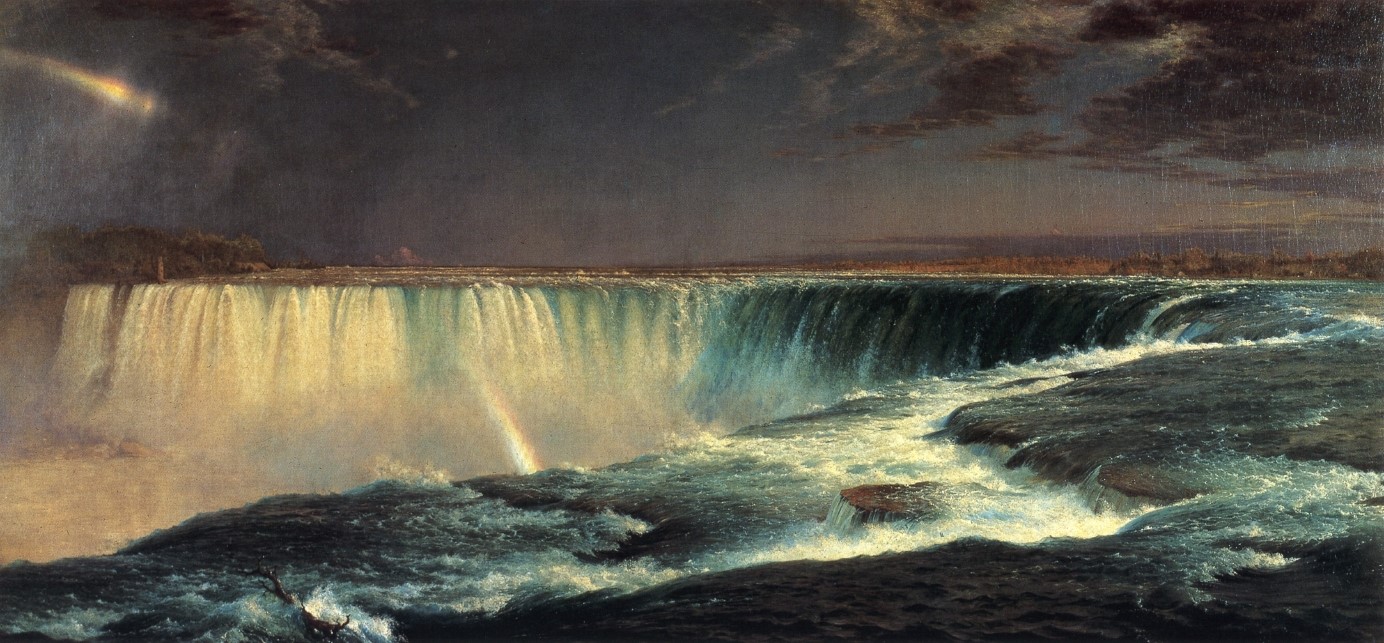
    Fry composed seven symphonies, all of them of a descriptive nature. His “Santa Claus Symphony,” after Clement Moore, is more of a Straussian tone poem. My personal favorite is the “Niagara Symphony,” written for P.T. Barnum, conceived for enormous forces augmented by a mindblowing eleven timpani.

    Fry died of tuberculosis, “accelerated by exhaustion,” in Santa Cruz (Saint Croix) in the Virgin Islands in 1864, at the age of 51.

    There is some discrepancy regarding the date of his birth, with some sources giving August 10, and others August 19.

    Happy birthday, perhaps belatedly, William Henry Fry.

    The “Niagara Symphony” (it begins quietly):

    https://www.youtube.com/watch?v=SNe4IiuMhJ0

  • Howard Hanson Bold Island Inspiration

    Howard Hanson Bold Island Inspiration

    For many people, having to work through vacation can be a real drag; but for the creative artist, vacation can be a time to really get things done.

    For 40 years, Howard Hanson was the director of the Eastman School of Music. In that capacity he nurtured and championed innumerable American composers, giving literally thousands of premieres at the helm of the Eastman-Rochester Orchestra, an ensemble he founded. The lucky ones found their way onto records, issued on the Mercury label.

    Hanson, of course, was himself a composer. He was awarded the Pulitzer Prize for Music in 1944, for his Symphony No. 4 “Requiem,” written in memory of his father. But his best known music, undoubtedly, is his Symphony No. 2 “Romantic,” composed in 1930.

    The famous “Hanson sound” is one of heart-on-the-sleeve romanticism, characterized by glowingly nostalgic melodies, though he also had his severe side. After all, he was born in Wahoo, Nebraska, to Swedish immigrants, and a certain Nordic austerity can be detected, especially in his later works.

    This Sunday night on “The Lost Chord,” we’ll be listening to three pieces inspired by Hanson’s summer home on Bold Island, which is located in the North Atlantic, off the coast of Maine. The major work will be the Symphony No. 6, written in 1967 for the New York Philharmonic and dedicated to Leonard Bernstein.

    The piece is more tightly argued than Hanson’s earlier, more famous symphonies, structured in six brief movements, built on a recurring motif. At times, it can sound a bit like Sibelius, though Hanson very much remains his own man. Hanson being Hanson, he doesn’t really skimp on the lyricism, but he doesn’t exactly indulge it to the same extent he does in the earlier works. Still, predictably, the symphony was derided as old-fashioned by the genuinely austere musical establishment of the day.

    The Bold Island connection is through Hanson’s “Summer Seascape No. 2,” written a few years earlier, and clearly the blueprint for the symphony. In fact, the opening of the symphony is identical.

    The first “Summer Seascape” was the centerpiece of the “Bold Island Suite,” a separate work composed in 1961. The suite also contains movements with the descriptive titles “Birds of the Sea” and “God in Nature.”

    For Howard Hanson, summer in the North Atlantic was clearly a time to give his Nordic sensibility free rein. Join me for “August Hanson,” tonight at 10 ET, with a repeat Friday morning at 3. You can also listen to the show later as a webcast at http://www.wwfm.org.

    PHOTO: Not-very-austere Puffins off the coast of Maine

Tag Cloud

Aaron Copland (92) Beethoven (95) Composer (114) Film Music (123) Film Score (143) Film Scores (255) Halloween (94) John Williams (187) KWAX (229) Leonard Bernstein (101) Marlboro Music Festival (125) Movie Music (138) Opera (202) Philadelphia Orchestra (89) Picture Perfect (174) Princeton Symphony Orchestra (106) Radio (87) Ralph Vaughan Williams (85) Ross Amico (244) Roy's Tie-Dye Sci-Fi Corner (290) The Classical Network (101) The Lost Chord (268) Vaughan Williams (103) WPRB (396) WWFM (881)

DON’T MISS A BEAT

Receive a weekly digest every Sunday at noon by signing up here


RECENT POSTS