Tag: American Music

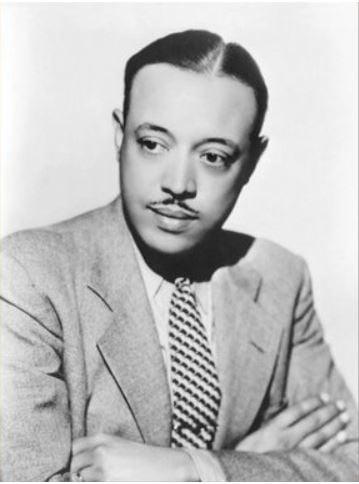
  • William Grant Still American Composer Rediscovered

    William Grant Still American Composer Rediscovered

    They say that still waters run deep.

    William Grant Still, frequently described as the “Dean of Afro-American Composers,” wrote a lot of attractive music, much of it informed by the black experience. This Sunday night on “The Lost Chord,” we’ll hear some of it, including the delightful Symphony No. 2, subtitled “Song of a New Race.” Also, a more serious work fueled by racial injustice, “And They Lynched Him on a Tree,” for double-choir, narrator and orchestra.

    Still, who lived from 1895 to 1978, emerged from unlikely circumstances – born in Woodville, Mississippi and raised in Little Rock, Arkansas – to become a major force in American music. Having abandoned a career in medicine for studies at the Oberlin Conservatory of Music and the New England Conservatory in Boston, where he studied with George Whitefield Chadwick, Still was a “first” in many respects.

    His Symphony No. 1, the “Afro-American Symphony” was the first written by a black composer to be performed by a major orchestra (the New York Philharmonic). He was the first to be given the opportunity to conduct a major orchestra (the Los Angeles Philharmonic, at the Hollywood Bowl). His opera, “Troubled Island,” became the first to be produced by a major company (the New York City Opera). Another of his operas, “A Bayou Legend,” was the first to be performed on national television (as late as 1981). His works were performed internationally by the Berlin Philharmonic, the London Symphony Orchestra, the BBC Symphony, and the Tokyo Philharmonic.

    Perhaps the least likely pupil of Edgard Varèse, Still incorporated jazz and blues elements into his concert music. He cut his teeth writing arrangements for Paul Whiteman, W.C. Handy, and Artie Shaw. According to Eubie Blake, one of Still’s improvisations in the pit during Blake’s revue “Shuffle Along” became the basis for Gershwin’s hit tune “I Got Rhythm.” (Blake conceded the appropriation was probably inadvertent.) Still and Gershwin were on friendly terms and made it a point to attend one and another’s performances.

    Listen to Still’s Symphony No. 2 – first performed in 1936 by Leopold Stokowski and the Philadelphia Orchestra – and see if you don’t agree that Gershwin could only wish that he had composed its elegant second movement.

    We’ll follow that with a very different piece, Still’s choral ballad “And They Lynched Him on a Tree,” composed in 1940. Poet Katherine G.C. Biddle, niece of Charlotte Mason, “Godmother of the Harlem Renaissance,” provided the libretto. The work is scored for contralto soloist, as mother of the victim, a “white chorus” to depict the mob, a “black chorus” to discover the lynching, a narrator (William Warfield in this recording), and small orchestra. The piece is almost exactly contemporary with Abel Meeropol’s “Strange Fruit.” It was given its first performance by the New York Philharmonic, conducted by Artur Rodzinski.

    Finally, at the end of the hour, we’ll decompress with Still’s beautiful and contemplative “Summerland.”

    I hope you’ll join me for “Still Runs Deep” – music by William Grant Still – this Sunday night at 10:00 EST, on WWFM – The Classical Network and wwfm.org.

  • Ives Quartet No 2: An American Argument

    Ives Quartet No 2: An American Argument

    Lou Harrison called it “the finest piece of American chamber music yet… Music of this kind happens only every fifty years or a century, so rich in faith and so full of a sense of completion.”

    Charles Ives’ String Quartet No. 2 (composed between 1907 and 1913) is a programmatic work. The composer envisions his musicians as four people who “converse, discuss, argue (in re ‘Politick’), fight, shake hands, shut up – then walk up the mountain side to view the firmament.” What could be more American than that?

    On this Election Day, it is my hope that the majority of Americans will be big enough to emulate those enshrined in this quartet. We’re all different, we all have our own opinions, and our own philosophies, but we are all peers under the heavens.

    We’re also flawed, but we do have the capability to reach down inside to get in touch with our best selves. It’s not about getting over on those you don’t agree with. State your piece, in peace, cast your vote, but coexist and respect your neighbors and family. It’s time for us to be better than our leaders.

    That’s all I’ve got to say. Though I am thinking of my grandfather, who once remarked, on an Election Day morning of my childhood, “Well… I’m on my way to vote the bastards out!”

    Screwing the plywood over my computer screen now. Good luck, and God bless.

    Ives’ String Quartet No. 2

    A little more about it
    http://www.musicweb-international.com/ives/wk_string_quartet_2.htm

  • Thanksgiving Music Feast on The Classical Network

    Thanksgiving Music Feast on The Classical Network

    In 1789, President George Washington issued a proclamation designating that November 26 be observed as a public day of thanksgiving. This marked the first national celebration of a holiday that has become commonplace in America’s households.

    I hope you’ll join me this afternoon on The Classical Network. On this, the anniversary of Washington’s Thanksgiving, though this year’s celebration is still two days away, you’ll find me greedily reaching for a drumstick. And a reed. And some rosin. That’s right, it will be a feast of American music, so make sure you save a little room after lunch.

    I’ll be setting the table with, among others, “American Dances” by David Amram, the String Quartet No. 1 “American Dreams” by Peter Schickele, “Fanfare on Amazing Grace” by Adolphus Hailstork, “Harvest” by Morton Gould, “Shaker Loops” by John Adams,” “The Acadian Land” by Romeo Cascarino, the Violin Sonata No. 2 by Charles Ives, and the Symphony No. 60 “To the Appalachian Mountains” by Alan Hovhaness.

    First, on today’s Noontime Concert, we’ll give thanks for a musical friendship that yielded much beauty. Clarinetist Yoonah Kim and pianist Kevin Ahfat will present a recital of works by the Schumanns and Johannes Brahms. On the program will be Brahms’ Clarinet Sonata No. 2, an arrangement of Clara Schumann’s Three Romances for Violin and Piano, and six of her songs. The concert took place last month at Kaufman Music Center’s Merkin Hall in New York City.

    So put your hands together. We’ll make a meal of great music, from 12 to 4 p.m. EST, on WWFM – The Classical Network and wwfm.org.

  • Rediscovering Copland American Music Icon

    Rediscovering Copland American Music Icon

    I am so happy to rediscover this 30-minute documentary on Aaron Copland. I remember watching it years ago. What an exciting time for American music – and for America – to say nothing of the arts in general. Not that American music does not remain vital. But Copland seems to be the last man standing, in terms of the active repertoire, of that great generation. To catch a Roy Harris or a William Schuman symphony in concert is very rare indeed.

    It is the fate of even the greatest composers to be remembered through but a handful of pieces, usually from a particular phase of his or her career. In Copland’s case, it’s pretty much the cowboy music. Some people love it; some are put off by it. Cowboys aren’t exactly “in” right now, and when someone hears “I Ride an Old Paint,” they may not trouble themselves to look beyond the trappings.

    But nearly everything Copland wrote is worth hearing – and I’ve heard most of it – even the misfires. Once you get to know him, his sound is immediately identifiable in anything he touched. He had vision, he had craft, and he had integrity.

    I love this man, and I love his music, and I love what he did for music. Would that we had someone of his caliber today. Happy birthday, Aaron Copland.

  • Aaron Copland Rediscovered American Music Legend

    Aaron Copland Rediscovered American Music Legend

    I am so happy to rediscover this 30-minute documentary on Aaron Copland. I remember watching it years ago. What an exciting time for American music – and for America – to say nothing of the arts in general. Not that American music does not remain vital. But Copland seems to be the last man standing, in terms of the active repertoire, of that great generation. To catch a Roy Harris or a William Schuman symphony in concert is very rare indeed.

    It is the fate of even the greatest composers to be remembered through but a handful of pieces, usually from a particular phase of his or her career. In Copland’s case, it’s pretty much the cowboy music. Some people love it; some are put off by it. Cowboys aren’t exactly “in” right now, and when someone hears “I Ride an Old Paint,” they may not trouble themselves to look beyond the trappings.

    But nearly everything Copland wrote is worth hearing – and I’ve heard most of it – even the misfires. Once you get to know him, his sound is immediately identifiable in anything he touched. He had vision, he had craft, and he had integrity.

    I love this man, and I love his music, and I love what he did for music. Would that we had someone of his caliber today. Happy birthday, Aaron Copland.

Tag Cloud

Aaron Copland (92) Beethoven (95) Composer (114) Film Music (119) Film Score (143) Film Scores (255) Halloween (94) John Williams (185) KWAX (229) Leonard Bernstein (99) Marlboro Music Festival (125) Movie Music (134) Opera (198) Philadelphia Orchestra (86) Picture Perfect (174) Princeton Symphony Orchestra (106) Radio (87) Ralph Vaughan Williams (85) Ross Amico (244) Roy's Tie-Dye Sci-Fi Corner (290) The Classical Network (101) The Lost Chord (268) Vaughan Williams (102) WPRB (396) WWFM (881)

DON’T MISS A BEAT

Receive a weekly digest every Sunday at noon by signing up here


RECENT POSTS