Tag: Antonin Dvořák

  • Classical Music Today on The Classical Network

    Classical Music Today on The Classical Network

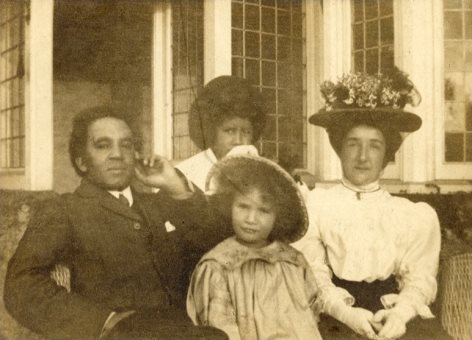
    Afro-British composer Samuel Coleridge-Taylor (1875-1912) scored his biggest hit with “Hiawatha’s Wedding Feast.” The cantata became something of a cultural phenomenon between the wars. Sir Malcolm Sargent led performances of the piece annually, from 1928 to 1939, in a costumed, semi-ballet version, featuring close to a thousand performers. Unfortunately, the composer did not live to enjoy his success, nor did his heirs receive any royalties, as he had sold the music outright (for 15 guineas – about $2160 US).

    We’ll get a taste of “Hiawatha” at 2:00 this afternoon on The Classical Network. “Hiawatha’s Wedding Feast” is the first part of a larger oratorio, “The Song of Hiawatha.” A complete recording, released on the Argo label back in 1992, features a rising star by the name of Bryn Terfel – but it is Arthur Davies who sings the work’s hit tune, “Onaway! Awake, Beloved!”

    Antonin Dvořák was also very much enamored with Longfellow’s most famous poem. It’s said that he jotted the theme for the slow movement to his Sonatina for Violin and Piano, Op. 100, onto his starched cuff during a visit to Minnehaha Falls. The melody became popularized as “Indian Lament.” Dvořák wrote the Sonatina with his children in mind. We’ll hear it performed by brother and sister Gil and Orli Shaham.

    Then stay tuned at 3:00 for William Levi Dawson’s epic “Negro Folk Symphony.” The work was introduced by Leopold Stokowski and the Philadelphia Orchestra in 1934. Dawson revamped the piece in 1952, following a trip to West Africa. It was Stokowski who made the world premiere recording of the symphony, in its revised and expanded form. We’ll hear it played in a fine modern recording by the Detroit Symphony Orchestra conducted by Neeme Järvi.

    If you happened to miss David Baker’s Cello Sonata this past Sunday night on “The Lost Chord,” tune in today for his “Jazz Suite for Clarinet and Symphony Orchestra: Three Ethnic Dances.” Clarinetist Alan Balter will perform with the Akron Symphony Orchestra.

    The afternoon will commence with today’s Noontime Concert, featuring members of the Dolce Suono Ensemble. The group’s flagship trio will present a mix of classics and commissions. The “classics” are by Mendelssohn and Martinu, and the “commissions” were fulfilled by Jeremy Gill and Zhou Tian. The broadcast will conclude with an arrangement of Leonard Bernstein’s “Candide Overture.” Flutist and founding artistic director Mimi Stillman will be joined by cellist Nathan Vickery and pianist Charles Abramovic. The concert took place on October 14 at Trinity Center for Urban Life, 22nd and Spruce Streets, in Philadelphia.

    Dolce Suono’s next concert, “Rediscoveries,” will take place tomorrow night at 7:00, again at Trinity Center for Urban Life. That program will include works by three American masters who were revered at mid-century, but whose music in recent decades has fallen into comparative neglect – Irving Fine, William Schuman, and Norman Dello Joio. Also on the program will be works by Elliot Carter, Leonard Bernstein, Shulamit Ran, and the late Katherine Hoover. For more information, look online at dolcesuono.org.

    If you’ve a tooth for “sweet sound” (or “dolce suono”), satisfy the craving from 12 to 4 p.m. EST, on WWFM – The Classical Network and wwfm.org.


    PHOTO: Coleridge-Taylor and his family, wife Jessie and children Gwendolyn and Hiawatha (rear)

  • Dvořák’s Toilet Humor A Birthday Ode

    Dvořák’s Toilet Humor A Birthday Ode

    In honor of Antonin Dvořák’s 177th birthday, today’s post is about Dvořák and bathroom humor. If you find the idea unprepossessing, or if you happen to be eating, stop reading now.

    Dvořák’s “Humoresques” are off-shoots of his time in America as director of the National Conservatory in New York, a position he held from 1892 to 1895. Here, Dvořák was like a kid in a musical candy shop. He enthusiastically embraced the songs and dances of African-Americans and Native Americans as untapped natural resources that could be pressed into building blocks for the foundation of a genuinely American sound.

    He jotted many musical sketches into notebooks – and even onto his starched sleeve, as with the “Indian lament” that came to him on a visit to Minnehaha Falls – later to be incorporated into works like his “New World” Symphony, “American” String Quartet, and Sonatina for Violin and Piano.

    The “Humoresques” were tossed off by the composer during a summer vacation back home in Prague in 1894. Many of the melodies for these seven trifles for piano were lifted from his American sketchbooks. One, easily the most famous of the collection of eight, was immortalized by a ditty that runs thus:

    “Passengers will please refrain from flushing toilets while the train is standing in or passing through a station.”

    The words were taken from a sign posted outside the toilet in a railroad car. How fortuitous that they would so perfectly fit Dvořák’s melody. How very droll.

    What I find disturbing is the implication of the sign – that somehow flushing a toilet in a station would have a very undesirable result. Was this really a thing? According to what I glean from an internet search, it may yet be. So I guess walking along the railroad tracks can be dangerous for more reasons than I had previously thought. In my half century on this earth, I had never heard this before, so I guess it’s true, we are always learning something useful.

    Dvořák would spend hours visiting the tracks and overlooking train yards, admiring the different locomotives and keeping notes of their schedules. Perhaps, as such a rail buff, the composer would have appreciated the association.

    Happy birthday, Antonin Dvořák!

    Feel free to sing along:

  • Czech Music from Marlboro Festival Schulhoff & Dvořák

    Czech Music from Marlboro Festival Schulhoff & Dvořák

    In a spirit of unusual generosity, I’ll be picking up the Czech for this week’s “Music from Marlboro.”

    That’s right, it’s an all-Czech hour.

    We’ll begin with music by Erwin Schulhoff, who was encouraged as a young man by Antonin Dvořák. A Jew, a communist, and a nose-thumbing Dadaist, Schulhoff must have been regarded as a triple threat by the Nazis. Who else but Schulhoff would set “The Communist Manifesto” to music? His promising career was cut short when he was arrested while fleeing to the Soviet Union. He died of tuberculosis in a concentration camp in 1942.

    We’ll hear Schulhoff’s cheeky “Divertissement for Wind Trio” from 1928. The 2002 performance will feature oboist Ariana Ghez, clarinetist Charles Neidich, and bassoonist Shinyee Na.

    Then kick back and enjoy Dvořák’s beloved Piano Quintet in A Major. Composed in 1887, Dvořák’s amply melodic and affirmatively gorgeous Quintet is the perfect antidote to any of your day’s cares. The 2008 performance will feature Marlboro Artistic Director Mitsuko Uchida as pianist, with Benjamin Beilman and David Bowlin, violins; Maiya Papach, viola; and Judith Serkin, cello.

    Only three weekends left to attend this year’s Marlboro Music Festival in Marlboro, VT. On Sunday at 2:30 p.m., Uchida will perform Mozart’s Piano Quartet No. 2 in E-flat, K. 493, on a program that will also include works by Schumann and Marlboro Resident Composer, Pulitzer Prize winner Shulamit Ran.

    Ran’s music will also feature on Saturday’s program, at 8 p.m., which will also include works by Beethoven and Alexander Zemlinsky. For more information or to plan your visit, look online at marlboromusic.org.

    Then join me this Wednesday evening at 6:00 EDT for an all-Czech hour, on the next “Music from Marlboro,” on WWFM – The Classical Network and wwfm.org.

    Marlboro School of Music and Festival: Official Page

  • Dvořák Wagner & Marlboro Music Festival

    Dvořák Wagner & Marlboro Music Festival

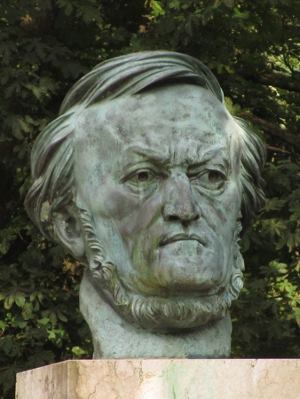
    In an interview granted in 1885, Bohemian composer Antonin Dvořák expressed his early admiration for Richard Wagner. Wagner visited Prague in 1863. Dvořák recalled, “I was perfectly crazy about him, and recollect following him as he walked along the streets to get a chance now and again of seeing the great little man’s face.” General opinion seems to be that the Czech master outgrew his infatuation by the 1870s – but perhaps not entirely.

    The two composers will be reunited in spirit on this week’s “Music from Marlboro.” Tying in with The Classical Network’s end-of-the-fiscal-year fundraiser, “Play It Again,” I’ve selected two works from the lists of favorites submitted last week by WWFM hosts and listeners. These will be performed, in their entirety, by musicians from the legendary Marlboro Music Festival.

    So as not to spoil the surprise(s), I won’t tell you what they are in advance, but I do hope you’ll tune in, and I hope you’ll support us with your financial contribution at 1-888-232-1212, or online at wwfm.org.

    We’re now in our second day of sharing YOUR playlists. You never know from one moment to the next what we’ll be playing. In the spirit of the occasion, I won’t know from one moment to the next what I’m doing – but you’re guaranteed I will execute it with such grace, beginning this afternoon at 4 p.m. EDT. “Music from Marlboro” starts at 6.

    Thank you for supporting WWFM – The Classical Network!

    Marlboro School of Music and Festival: Official Page

  • Suk’s Summer’s Tale Healing Power of Nature

    Suk’s Summer’s Tale Healing Power of Nature

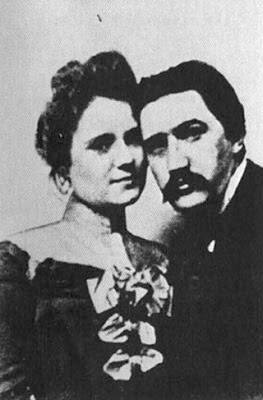
    Josef Suk was the one-time pupil and eventual son-in-law of Antonin Dvořák. In fact, his early works very much reflect Dvořák’s influence, in sunny, romantic music full of nationalistic touches.

    However, a double tragedy occurred in Suk’s 30th year, in 1905, when he lost both his father-in-law and his beloved wife – Dvořák’s older daughter – Otilie. The events directly inspired Suk’s “Asrael Symphony,” named for the Angel of Death. Not surprisingly, morbidity colors much of his mature output.

    “A Summer’s Tale” is the next step in Suk’s emotional rehabilitation. The work is a five-movement symphonic poem, the second of a four-part cycle, which contemplates death and the meaning of life. More affirmative than the grim “Asrael,” which is full of pain, loss and grief, “A Summer’s Tale” explores the healing powers of nature, in a score that at times reflects the epic romanticism of Gustav Mahler and the impressionism of Claude Debussy. It was composed over the course of just six weeks in the summer of 1907. Further tinkering took place over the next year-and-a-half. The work received its premiere in January of 1909.

    Suk later described the theme of the piece as “finding a soothing balm in nature.” Tune in tonight and see if you agree.

    That’s “Healing by Nature” – Suk’s “A Summer’s Tale” – on “The Lost Chord,” this Sunday night at 10:00 EDT, on WWFM – The Classical Network and wwfm.org.


    PHOTOS: Otilie Dvořáková and Josef Suk, in happier days

Tag Cloud

Aaron Copland (92) Beethoven (95) Composer (114) Film Music (123) Film Score (143) Film Scores (255) Halloween (94) John Williams (187) KWAX (229) Leonard Bernstein (101) Marlboro Music Festival (125) Movie Music (138) Opera (202) Philadelphia Orchestra (89) Picture Perfect (174) Princeton Symphony Orchestra (106) Radio (87) Ralph Vaughan Williams (85) Ross Amico (244) Roy's Tie-Dye Sci-Fi Corner (290) The Classical Network (101) The Lost Chord (268) Vaughan Williams (103) WPRB (396) WWFM (881)

DON’T MISS A BEAT

Receive a weekly digest every Sunday at noon by signing up here


RECENT POSTS