Tag: Antonin Dvořák

  • Josef Suk: Tragedy and Triumph

    Josef Suk: Tragedy and Triumph

    If you think your life sucks, consider that of Josef Suk.

    Suk (1874-1935) was the pupil and eventual son-in-law of Antonin Dvořák. Though he experienced a degree of anxiety before breaking to his mentor the news of his love for Dvořák’s beautiful daughter Otilie – the struggle and romance of which he channeled into his fairy tale suite, “Pohádka” – Dvořák, who respected Suk mightily, joyfully consented to their union. So everyone lived happily ever after, right?

    Unfortunately, happily ever after didn’t last very long. Over a span of 14 months, when the composer was in his early 30s, he lost both his mentor and his wife. The double-blow led to a new intensity in Suk’s work, as exemplified by the dark exploration of his “Asrael Symphony” (Azrael is the Angel of Death). Suk’s idiom, which had been steeped in the Czech nationalism of his teacher, took on a new morbidity so that he came to be regarded as one of the leading composers of Czech modernism. Austrian composers Gustav Mahler and Alban Berg began to take notice of his work. We’ll content ourselves with some of his happier stuff.

    Suk was a founding member of the Czech Quartet. His grandson was the famous violinist who shared his name.

    I hope you’ll join me today, between 4 and 7 p.m. EST, as we celebrate the birthday anniversaries of Josef Suk and Giovanni Battista Pergolesi. We’ll try not to be too morbid about it, on WWFM – The Classical Network and at wwfm.org.


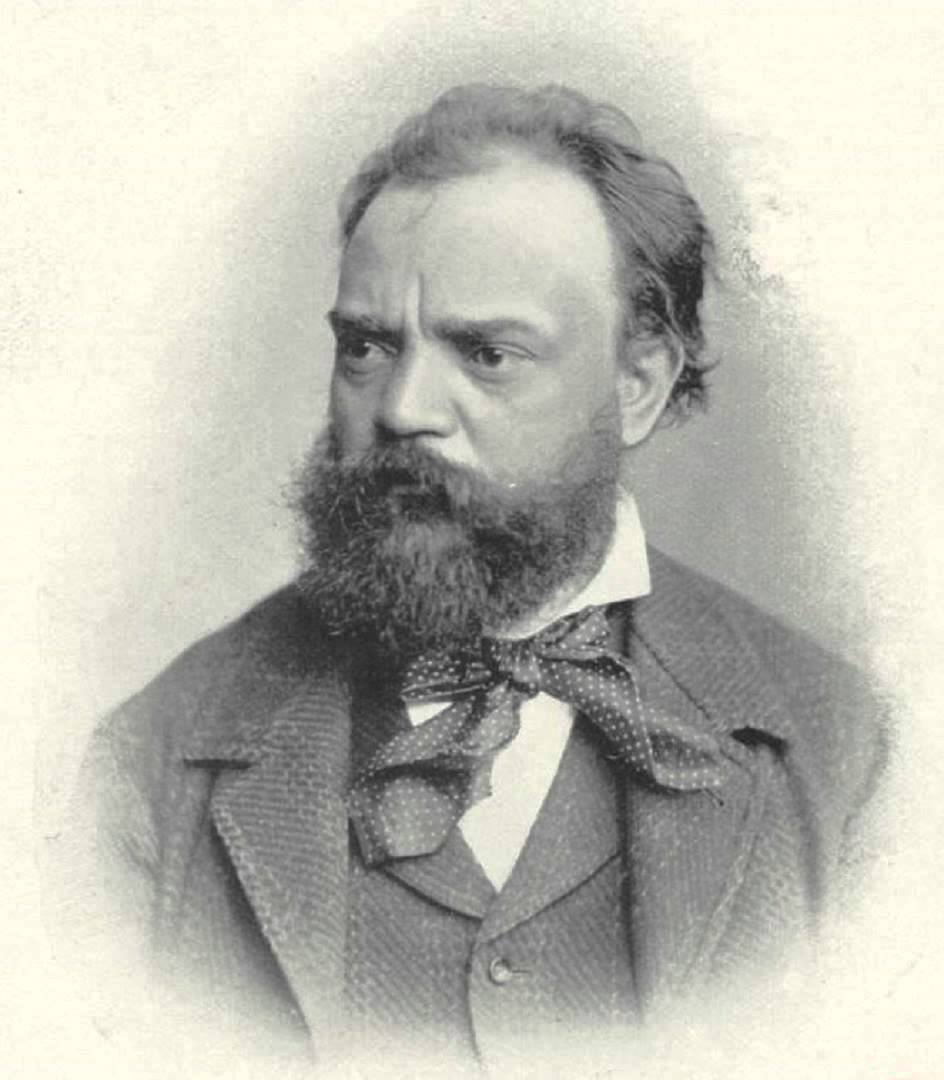
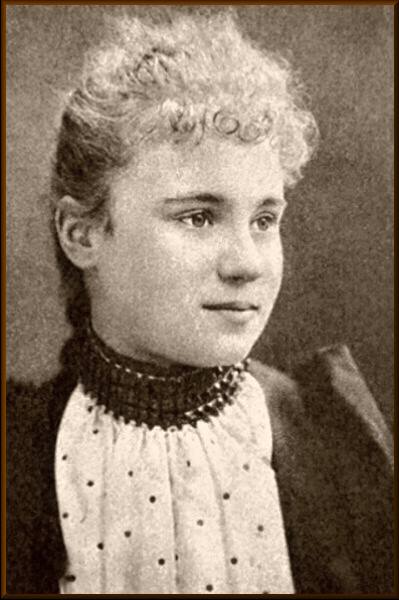
    PHOTOS: Life Suks (Otilie, left, and Josef Suk)

  • Musical Wanderlust Composers Abroad

    Musical Wanderlust Composers Abroad

    It’s music by composers abroad this morning. Yet to come, Ignaz Moscheles anticipates a trip to Scotland. Derek Bermel studies Thracian folk music in Bulgaria. Benjamin Britten and Lennox Berkeley soak up Catalan folk music in Spain. Colin McPhee is captivated by gamelan music in Bali. Reynaldo Hahn writes us some musical postcards. Michael Torke gives us “An American Abroad.” And birthday boy Sir Edward Elgar vacations in Italy.

    At 9:00, Thomas Lento of The Princeton Festival will stop by to let us know what’s on offer in terms of musical events for those of us who will remain in the Princeton area for the month of June – including chamber and instrumental music, jazz and choral concerts, musical theater (Sondheim’s “A Little Night Music”), dance, opera (Britten’s “Peter Grimes”), and a screening of the classic Carl Theodor Dreyer film “The Passion of Joan of Arc” accompanied by the Princeton Symphony Orchestra.

    We’re seized by musical wanderlust this morning until 11 EDT, on WPRB 103.3 FM and wprb.com.


    PHOTO: Antonin Dvořák’s passport

  • Summer Travel with Composers

    Summer Travel with Composers

    With Memorial Day past, the season of summer travel has unofficially begun. This morning on WPRB, composers venture abroad, traveling for study, work and leisure.

    Antonin Dvořák is lured to America with a job offer to head the National Conservatory of Music in New York. Julius Röntgen develops a friendship with Edvard Grieg that leads to spending summers with his wife in Norway. Darius Milhaud serves as secretary to the French ambassador to Brazil. Ignaz Moscheles anticipates a trip to Scotland. Derek Bermel studies Thracian folk music in Bulgaria. Benjamin Britten and Lennox Berkeley soak up Catalan folk music in Spain. Colin McPhee is captivated by gamelan music in Bali. And birthday boy Sir Edward Elgar vacations in Italy.

    In addition, Reynaldo Hahn sends some musical postcards, Johann Strauss beckons us with the polka “On Vacation,” and Michael Torke gives us a portrait of “An American Abroad.”

    At 9:00, we’ll pause to catch our breath with a visit from Thomas Lento of The Princeton Festival. He’ll drop by to let us know what’s on offer in terms of musical events for those of us who will remain home in the Princeton area for the month of June – including chamber and instrumental music, jazz and choral concerts, musical theater (“A Little Night Music”), dance, opera (“Peter Grimes”), and a screening of the classic Carl Theodor Dreyer film “The Passion of Joan of Arc” accompanied by the Princeton Symphony Orchestra.

    I hope you’re up early and already packing. We follow the composers abroad this morning, from 6 to 11 EDT, on WPRB 103.3 FM and at wprb.com. You’ll find us in rumpled linen and comfortable footwear, just in case, on Classic Ross Amico.

  • Happy Birthday Dvořák A Musical Appreciation

    Happy Birthday Dvořák A Musical Appreciation

    Oh Toni, how could I ignore the fact that today is your birthday anniversary? You, who never wrote a bad note?

    Having cut my teeth on the “New World” Symphony, I later discovered that yours is one of those peculiar cases where, looking back, I find that what attracted me to you in the first place is not necessarily what is most characteristic in your other music.

    However, having gotten to know your other works, I have to say, I may like them even better.

    Hard to believe that the composer of the Serenade for Strings and the sunny Symphony No. 8 could write those lurid potboilers based on Czech fairy tales, or that one could find so much depth and melancholy in simple children’s stories.

    Further, you virtually reinvented American music, directing young composers to forget about emulating Mendelssohn and Schumann and Brahms, since they could never hope to beat them at their own game, and focus on that which is distinctly America: Indian tunes and Negro spirituals (using the parlance of the day).

    Thanks for everything, Antonin Dvořák (1841-1904). Yours was a beautiful and generous soul.

    https://www.youtube.com/watch?v=tY79rR0k8Fc

  • Suk’s A Summer’s Tale: Healing Through Nature

    Suk’s A Summer’s Tale: Healing Through Nature

    While I appreciate supportive phone calls – and who doesn’t like compliments? – I’m often a tad self-absorbed while I’m on the air trying to figure out what exactly I’m supposed to be doing next. One enthusiastic listener who has been following me on all three (!) radio stations has been calling me up the past several weeks to talk about all sorts of unusual and neglected repertoire and how he’d love to hear certain pieces. In response to which I begin by giving my full attention, but then after several minutes my concentration becomes divided, as I try to organize pertinent background information for the next time I go on mic, and I start to reply to certain comments with a perfunctory “Hmm mmm” or “Ah!”

    However, after several such calls, one request managed to seep into my consciousness: Josef Suk’s “A Summer’s Tale.” For one, it’s seasonal; for another it’s nearly an hour long, which means I only have to write and record a single introduction! With these advantages in mind, I have decided to devote “The Lost Chord” this week to this single, sprawling symphonic poem.

    Suk was the one-time pupil and future son-in-law of Antonin Dvořák. In fact, his early works very much reflect Dvořák’s influence, in sunny, romantic music full of nationalistic touches.

    However, a double tragedy occurred in Suk’s 30th year, in 1905, when he lost both his father-in-law and his beloved wife, Otilie, Dvořák’s older daughter. The events directly inspired Suk’s “Asrael Symphony” – named for the Angel of Death. Not surprisingly, morbidity colors much of his mature output.

    “A Summer’s Tale” is the next step in Suk’s emotional rehabilitation. The work is a five-movement symphonic poem, the second of a four-part cycle, which contemplates death and the meaning of life. More affirmative than the grim “Asrael,” full of pain, loss and grief, “A Summer’s Tale” explores the healing powers of nature, in a score that at times reflects the epic romanticism of Gustav Mahler and the impressionism of Claude Debussy. It was composed over the course of just six weeks in the summer of 1907. Further tinkering took place over the next year, year-and-a-half. The work received its premiere in January of 1909.

    Suk later described the theme of the piece as “finding a soothing balm in nature.” Tune in tonight and see if you agree.

    That’s “Healing by Nature” – Suk’s “A Summer’s Tale” – on “The Lost Chord,” Sunday at 10 p.m. ET, with a repeat Wednesday evening at 6; or listen to it later as a webcast at wwfm.org.

    PHOTOS: Otilie Dvořáková and Josef Suk, in happier days

Tag Cloud

Aaron Copland (92) Beethoven (95) Composer (114) Film Music (123) Film Score (143) Film Scores (255) Halloween (94) John Williams (187) KWAX (229) Leonard Bernstein (101) Marlboro Music Festival (125) Movie Music (138) Opera (202) Philadelphia Orchestra (89) Picture Perfect (174) Princeton Symphony Orchestra (106) Radio (87) Ralph Vaughan Williams (85) Ross Amico (244) Roy's Tie-Dye Sci-Fi Corner (290) The Classical Network (101) The Lost Chord (268) Vaughan Williams (103) WPRB (396) WWFM (881)

DON’T MISS A BEAT

Receive a weekly digest every Sunday at noon by signing up here


RECENT POSTS