Tag: Antonin Dvořák

  • Marlboro Music Festival with Mitsuko Uchida

    Marlboro Music Festival with Mitsuko Uchida

    Each summer, the Marlboro Music School and Festival brings together the world’s most acclaimed artists and exceptional young talent in the foothills of rural, southern Vermont, for seven weeks of relaxed, inspired and joyful music-making.

    This year’s festival, already underway, will continue through August 13, on the campus of Marlboro College (a separate institution). More information about Marlboro Music may be found at marlboromusic.org.

    The Classical Network has been granted privileged access to the Marlboro archives, which contain many performances never before heard beyond the confines of the festival, all of them featuring chamber music luminaries and stars of tomorrow.

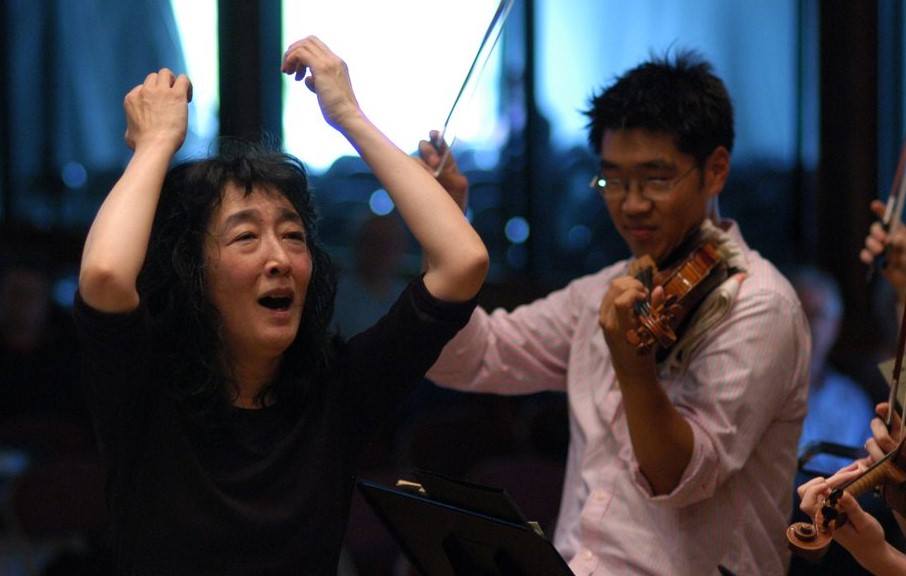
    On the next installment of “Music from Marlboro,” it will be an all-Czech program, including works by Erwin Schulhoff – his Divertissement for Oboe, Clarinet and Bassoon – and Antonín Dvořák, his beloved Piano Quintet in A major, Op. 81. Marlboro artistic director Mitsuko Uchida will be the pianist.

    I hope you’ll join me this Wednesday evening at 6 EDT, for another “Music from Marlboro,” on WWFM – The Classical Network and wwfm.org.


    Marlboro School of Music and Festival: Official Page

    PHOTO: Marlboro artistic director Mitsuko Uchida (left)
  • Flag Day on The Classical Network

    Flag Day on The Classical Network

    You’re a Grand Old Flag.

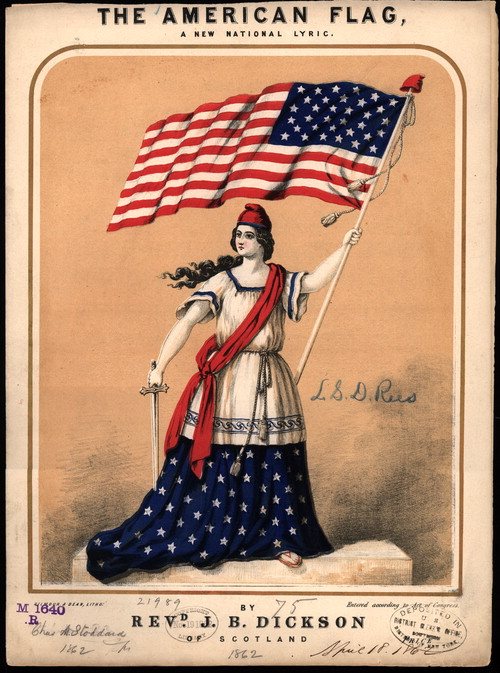
    We celebrate Old Glory on Flag Day on The Classical Network, with Antonin Dvořák’s rarely-heard cantata, “The American Flag,” and Philadelphia composer and arranger Hershy Kay’s John Philip Sousa ballet, “Stars and Stripes.”

    We’ll also mark the birthday anniversaries of composer Coleridge-Taylor Perkinson, conductor Rudolf Kempe, and tenor John McCormack.

    Join me as proudly we hail, from 4 to 7 p.m. EDT, on WWFM – The Classical Network and wwfm.org.

    Did you know, the current star pattern for the American Flag was designed by a 17 year-old? More facts for Flag Day here:

    http://www.nj.com/news/index.ssf/2017/06/flag_day_2017.html

  • Jiří Bělohlávek: Remembering a Master Conductor

    Jiří Bělohlávek: Remembering a Master Conductor

    I regret to announce that the conductor Jiři Bělohlávek has died at the age of 71. Bělohlávek was music director of the Czech Philharmonic from 1990 to 1992, and then again from 2010 to the time of his death. His contract had been extended this year through 2021-2022.

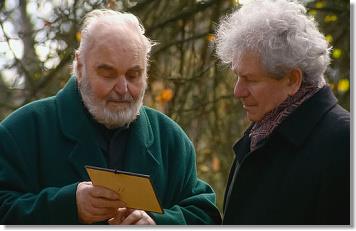
    Bělohlávek was a high-profile champion of music from his native land. I was fortunate enough to see him conduct on several occasions, most memorably leading performances of Dvořák’s “Rusalka” and the “New World Symphony.” I met him, briefly, following the latter, but I got the impression that his English was not very good. On the same occasion, I met Dvořák’s grandson, who spoke no English at all, as far as I could tell. Ironically, the grandson (also named Antonin) died earlier this week, at the age of 88.

    Join me this evening at 6:00 EDT, following a broadcast concert from The Princeton Festival with Concordia Chamber Players at 4 (for which Glenn Smith will be your host), when I’ll remember Bělohlávek with an hour of his recordings, on WWFM – The Classical Network and wwfm.org.

    His obituary in The Guardian:

    https://www.theguardian.com/music/2017/jun/01/czech-conductor-bbcso-chief-jiri-belohlavek-dies-aged-71-illness


    PHOTO: Antonin Dvořák III (left) with Jiři Bělohlávek

  • Amy Beach’s Gaelic Symphony Resounds Again

    Amy Beach’s Gaelic Symphony Resounds Again

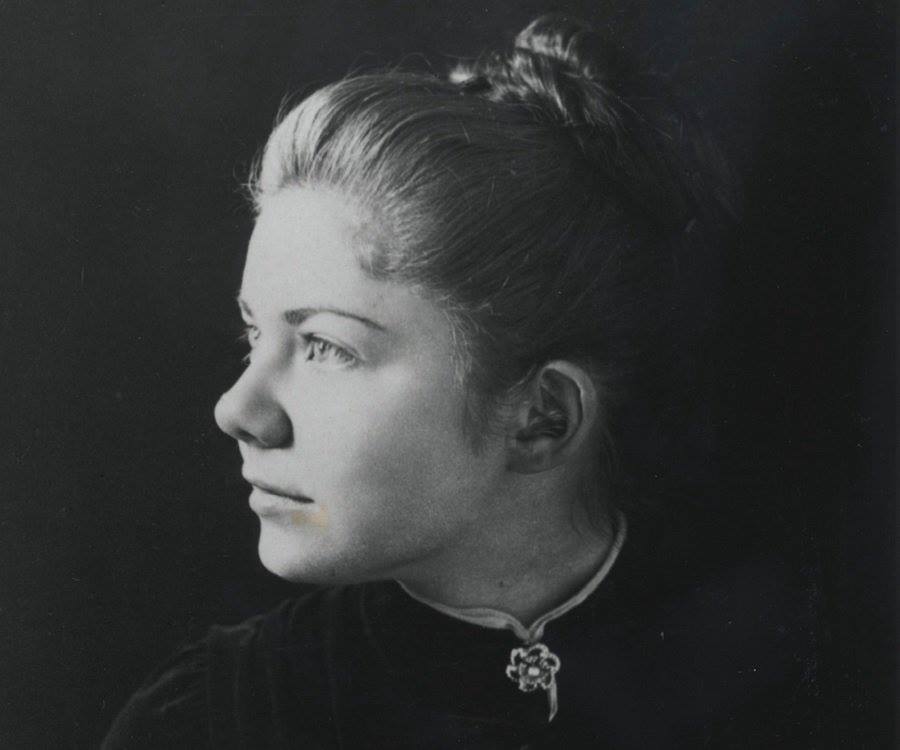
    She was an extraordinary figure of her time. 26 years before women were granted the right to vote in the United States, Amy Marcy Cheney Beach composed a symphony that conquered Boston.

    The “Gaelic Symphony,” as she titled it, was written in 1894. It was conceived in direct response to a call by prominent Czech composer Antonin Dvořák for Americans to break away from the European models they had for so long venerated. Instead, he urged Americans to open themselves up to their own surroundings, to find what was uniquely American and forge a distinctive national sound. For a Boston resident, English, Scottish, and Irish melodies would have been natural resources.

    To coincide with the 150th anniversary of Beach’s birth, the Westminster Community Orchestra will revive this rarely-heard work, on Saturday at 8 p.m. The concert will take place at Princeton Meadow Event Center. Also on the program will be Mendelssohn’s “Calm Sea and Prosperous Voyage” and a recent opus, “The Heroine’s Theme,” by Westminster Master of Music in Composition student Caeleb Tee.

    You will find my article on Amy Beach and the “Gaelic Symphony” in this week’s U.S. 1, a handsome newspaper, established in 1984, with a circulation of nearly 20,000. Copies are available up and down the Route 1 corridor of Central NJ – including, of course, Princeton. Or you can follow this link.

    http://www.princetoninfo.com/index.php/component/us1more/?Itemid=6&key=5-3-17ochs

    Ruth Ochs, conductor of the Westminster Community Orchestra for the past 12 years, will be my guest this afternoon on WWFM – The Classical Network. Tune in at 4:00 p.m. EDT to enjoy our conversation about Amy Beach and the “Gaelic Symphony.”

  • Chamber Music Concerts in Princeton & Solebury

    Chamber Music Concerts in Princeton & Solebury

    Good things come in small packages on upcoming concerts of two area chamber music ensembles. Richardson Chamber Players will present “England’s Green and Pleasant Land” at Princeton University’s Richardson Auditorium on Sunday, and Concordia Chamber Players will present “All Things Strings” at Trinity Episcopal Church, Solebury, PA, on Feb. 26. Both concerts will begin at 3 p.m.

    The Princeton University Concerts program will highlight folk-inflected works by Ralph Vaughan Williams (“Merciless Beauty,” on texts of Geoffrey Chaucer), Gerald Finzi (“Five Bagatelles” for clarinet and piano), John McCabe, and Benjamin Britten, with a classic example of the renowned English facility for writing for string orchestra, Edward Elgar’s “Serenade for Strings in E minor.”

    Concordia will present string music on a more intimate scale, with quartets by Philip Glass and Claude Debussy alongside a quintet by Antonin Dvořák.

    Glass, who turned 80 on Jan. 31, wrote his String Quartet No. 2 in 1983. It grew out of incidental music he composed for a production of Samuel Beckett’s “Company.” Debussy’s String Quartet in G minor, from 1893, is universally regarded as one of the greatest of French string quartets; it is certainly one of the most popular.

    Dvořák wrote his String Quintet No. 3 in E-flat major, also from 1893, during the same trip that yielded his more famous “American” String Quartet. The composer had been lured to the United States from Bohemia to take up the directorship of the National Conservatory of Music in New York. He summered at a Czech community in Spillville, IA. The environment obviously agreed with him, as both works share an ingratiatingly sunny disposition. The music brims with Bohemian inflections and American inspiration.

    You can read more about it in my article in today’s Trenton Times.

    http://www.nj.com/times-entertainment/index.ssf/2017/02/classical_music_richardson_cha.html


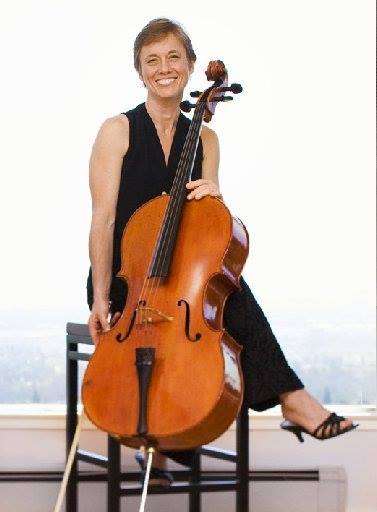
    PHOTOS (clockwise from left): Concordia artistic director Michelle Djokic, Glass, Debussy and Dvořák

Tag Cloud

Aaron Copland (92) Beethoven (95) Composer (114) Film Music (123) Film Score (143) Film Scores (255) Halloween (94) John Williams (187) KWAX (229) Leonard Bernstein (101) Marlboro Music Festival (125) Movie Music (138) Opera (202) Philadelphia Orchestra (89) Picture Perfect (174) Princeton Symphony Orchestra (106) Radio (87) Ralph Vaughan Williams (85) Ross Amico (244) Roy's Tie-Dye Sci-Fi Corner (290) The Classical Network (101) The Lost Chord (268) Vaughan Williams (103) WPRB (396) WWFM (881)

DON’T MISS A BEAT

Receive a weekly digest every Sunday at noon by signing up here


RECENT POSTS