Tag: Arnold Schoenberg

  • Alban Berg’s Romantic Revolution

    Alban Berg’s Romantic Revolution

    Had your fill of snow? Make an appointment today to sweat it out in the fin de siècle hothouse of Alban Berg.

    Berg has always been regarded as the Romantic among serialists – one critic described him as “the Puccini of twelve-tone music” – so it’s hardly surprising to find a shimmering, unresolved longing in much of his music, linking him to the more traditional-minded among his Viennese contemporaries.

    Berg’s operas, “Wozzeck” and “Lulu,” are in the standard repertoire. His “Lyric Suite” and Chamber Concerto are played with frequency. But it is his Violin Concerto of 1935 that has really entered people’s hearts.

    In this work – a response to the death of Manon Gropius, the 18-year-old daughter of Alma Mahler and Walter Gropius – Berg processes loss and grief with the kind of humanity that seems have eluded Arnold Schoenberg, his teacher, in his own dogmatic dodecaphony. Furthermore, Berg’s masterpiece offers identifiable signposts for the uninitiated, with allusions to a chorale melody employed by Johann Sebastian Bach and a Carinthian folk song.

    The concerto is a fine example of a talented artist bending the rules of a particular system to achieve his own expressive ends. Berg dedicated the piece “To the memory of an angel.” Work on the concerto proved to be a cathartic experience for the composer. He confessed in a letter to violinist Louis Krasner, who commissioned the piece, that it had actually brought him joy.

    Berg himself died of a blood poisoning, the result of an insect sting, later that year. He was 50 years-old. His output may be comparatively small, but he continues to stand tall as one of the most important musical voices of the early 20th century. He is certainly the most readily approachable of composers of the Second Viennese School.

    Happy birthday, Alban Berg.


    Lulu Suite

    Violin Concerto

    Seven Early Songs


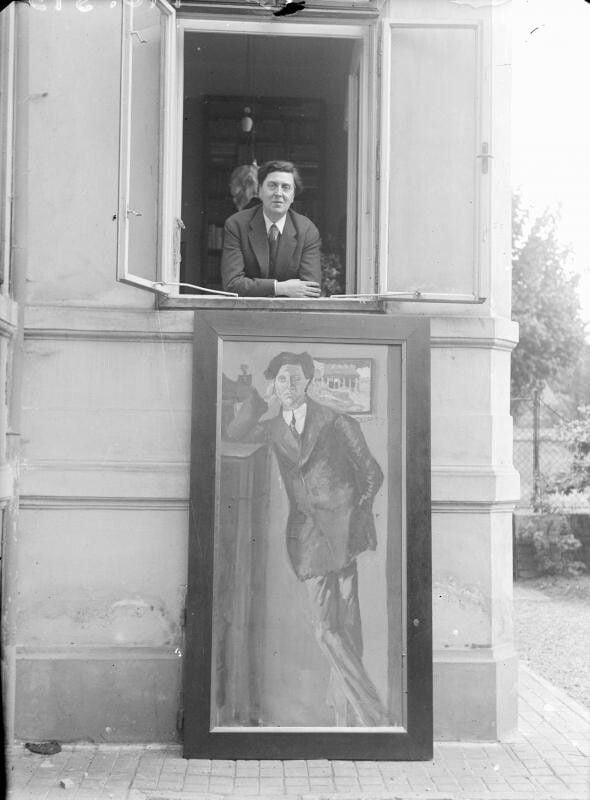
    PHOTO: Alban Berg, captured on canvas, if not in spirit, by Arnold Schoenberg

  • Kreisler & Schoenberg: Vienna’s Odd Couple

    Kreisler & Schoenberg: Vienna’s Odd Couple

    Fritz Kreisler, the sweet-toned confectioner and purveyor of violin bonbons, and Arnold Schoenberg, the dour high priest of twelve tone music. Vienna’s fin-de-siècle odd couple reunite on this week’s “Music from Marlboro.”

    Both artists were born in Vienna, only five months apart – Schoenberg on September 13, 1874, and Kreisler on February 2, 1875. Kreisler’s father was a doctor. Schoenberg’s sold shoes.

    Both had Jewish parents. Kreisler, whose mother was Catholic, was baptized into the faith at the age of 12. Schoenberg converted to Lutheranism at 24. However, just when it would have been most dangerous to do so, he roared back to Judaism and – with the rise of Hitler in 1933 – defiantly embraced his heritage.

    In general, Kreisler seems to have enjoyed the easier life. He had a more comfortable start and a happier disposition. As a musician, he was content to entertain.

    Schoenberg was a revolutionary and probably a bit of a hard-nosed contrarian. He had a turbulent marriage, seldom smiled for photos, and indulged in expressionist painting. Also, he was superstitious. He especially suffered from triskaidekaphobia, fear of the number 13.

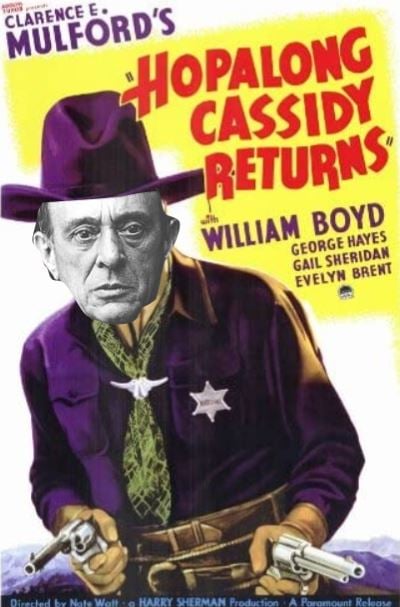
    On the other hand, he did orchestrate his share of Viennese operettas, arranged Strauss waltzes for performance with his friends, played tennis with George Gershwin, and was a fan of Hopalong Cassidy.

    Both men came to be regarded in some circles as mountebanks. Kreisler ruffled a few feathers when he let slip that many of the 18th century “rediscoveries” he had used to charm audiences, critics and musicologists were not in fact rediscoveries at all. Nor did they date from the 18th century. When the professionals complained, Kreisler made like Vinnie Barbarino. Wha-? Schoenberg triggered kneejerk reviews and outright hostility with his dismantling of tonality.

    Nevertheless, both also acquired some serious musical credentials. Kreisler gave the world premiere of the Elgar Violin Concerto and became a favorite recital partner of Sergei Rachmaninoff. Schoenberg blossomed into one the most influential composers of the 20th century.

    In 1941, Kreisler was hit by a milk truck, which fractured his skull and put him into a coma. Like something out of an early Woody Allen comedy, when he awoke he could only communicate in Latin and Greek. Thankfully, the effect was only temporary.

    It is Kreisler’s music that continues to communicate most effectively. We’ll hear his String Quartet in A minor, from 1922, performed at the 2013 Marlboro Music Festival by violinists Danbi Um and Nikki Chopi, violist Sally Chisolm, and cellist Lionel Cottet.

    That will be followed by Schoenberg’s Chamber Symphony No. 1 of 1906, a pre-serial work that nevertheless pushes harmony to the brink. It was presented at Marlboro in 1982 by an ensemble of fifteen players directed by Leon Kirchner.

    Was the glass half empty or the milk truck half full? Kreisler lived a good long life. He died in 1962 at the age of 86. Schoenberg died on his 76th birthday, Friday the 13th, 1951. Earlier in the day, he had been informed by his astrologer that 7 plus 6 equals 13.

    No matter how you tally, the performances will be top-notch on the next “Music from Marlboro,” this Wednesday evening at 6:00 EDT, on WWFM – The Classical Network and wwfm.org.

    Marlboro School of Music and Festival: Official Page


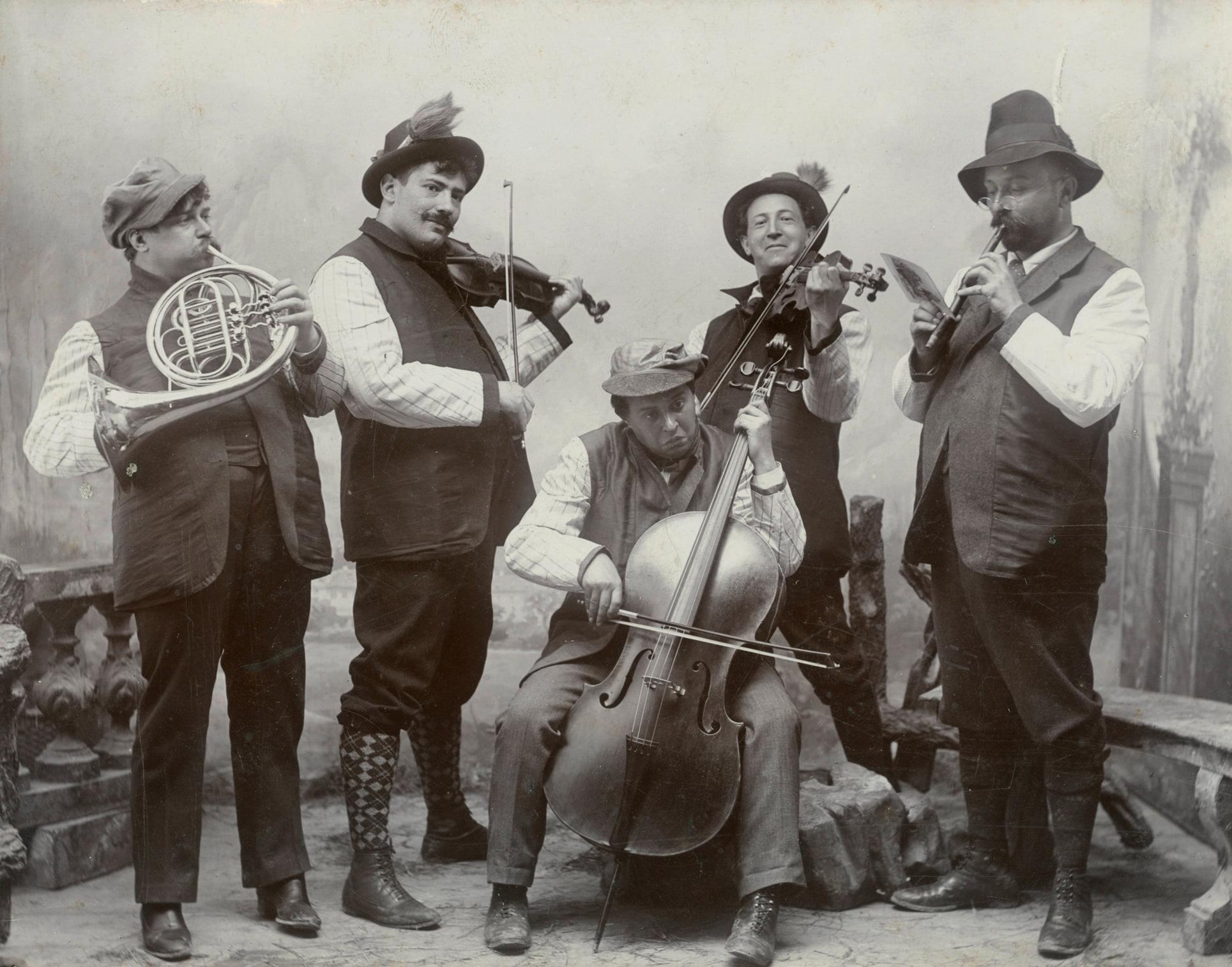
    PHOTO: Fritz Kreisler (second from left) and Arnold Schoenberg (cello) in 1900

  • Music for Casals Friends & Colleagues

    Music for Casals Friends & Colleagues

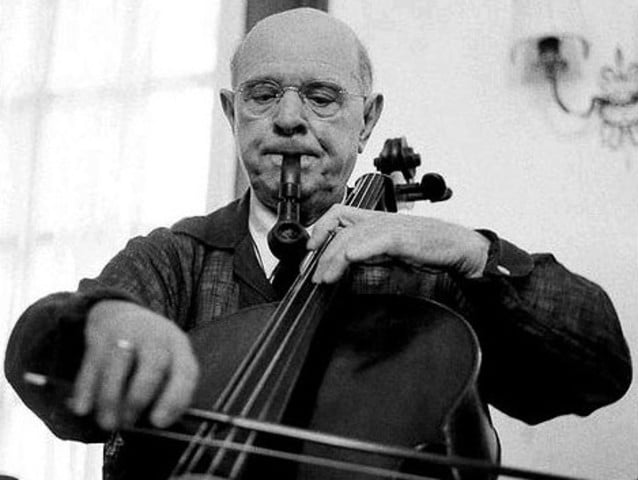
    It’s hardly surprising that anyone would be moved to write music for Pablo Casals. Regarded by many as the greatest cellist of his time, perhaps ever, he was certainly a giant-of-an-artist and of a man. Born in Catalonia, he stood up to the Franco regime, entering into self-imposed exile and refusing to perform in countries that recognized Franco’s authority. He rediscovered the Bach cello suites in a secondhand bookshop and made them famous. Over the span of his career, he played for both Queen Victoria and John F. Kennedy.

    As a conductor and administrator, he founded the Prades Festival and Casals Festival. He established the Puerto Rico Symphony and Conservatory. He gave master classes, conducted and recorded at Marlboro. He was even a talented composer.

    This Sunday night on “The Lost Chord,” we’ll hear works dedicated to Casals by three of his friends and colleagues.

    Ralph Vaughan Williams wrote his seldom-heard “Fantasia on Sussex Folk Tunes” around the time he was at work on his Piano Concerto and “Job: A Masque for Dancing.” Casals performed the piece in 1930. It was not heard again until 1983, the year of its world-premiere recording (featuring Julian Lloyd Webber). The composer later undertook a full-scale concerto for Casals. It was never completed, but the sketches for its slow movement were realized for a 2010 performance at the BBC Proms, under the title “Dark Pastoral.”

    Donald Francis Tovey, who would achieve fame as a musicologist and writer on music, wrote quite a lot of music himself, most of it now forgotten. In 1935, he composed a concerto for Casals. At nearly an hour in length, the work may be the longest cello concerto ever written.

    In 1912, Tovey was a houseguest of Casals and cellist Guilhermina Suggia, at their summer home at Playa San Salvador on the Mediterranean coast. There, he played tennis, swam and performed chamber music with the likes of Enrique Granados and Mieczyslaw Horszowski. He also made great strides on his opera, “The Bride of Dionysus.” As a show of thanks, he composed for his hosts a Sonata for Two Cellos in G major, which became part of the evenings’ entertainments. The work’s second movement is a set of variations on a Catalan folk song. We’ll hear it performed by Marcy Rosen and Frances Rowell, from a Bridge Records, Inc. release.

    Finally, Arnold Schoenberg, himself an amateur cellist, had done editorial work on three pieces by the 18th century composer Georg Matthias Monn for inclusion in the publication “Monuments of Music in Austria.” When Casals invited Schoenberg to conduct his orchestra in Barcelona, the composer set about arranging a “new” concerto, based upon a harpsichord work by Monn, written in 1746. We’ll hear Schoenberg’s transformation of the piece performed by Yo-Yo Ma.

    I hope you’ll join me for “Casals’ Pals” – music written for Casals by notable composers, friends and colleagues – this Sunday night at 10:00 EDT, on WWFM – The Classical Network and wwfm.org.

  • Schoenberg’s Birthday Celebrate 12-Tone Music

    Schoenberg’s Birthday Celebrate 12-Tone Music

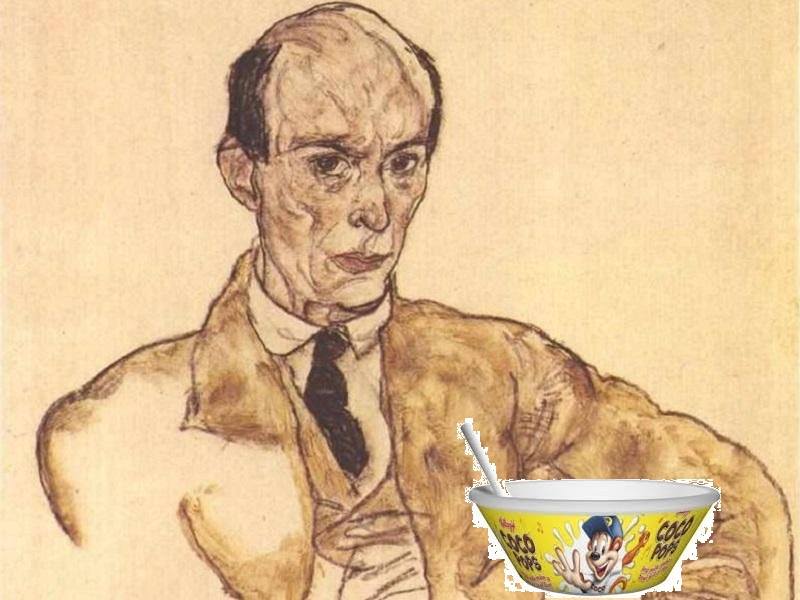
    It’s Arnold Schoenberg’s birthday! Pour yourself a nice bowl of “serial” and celebrate with this collection of twelve-tone’s greatest hits!

  • Schoenberg’s Serenade: Tradition & Tone

    Schoenberg’s Serenade: Tradition & Tone

    Don’t call him revolutionary. He didn’t care for that. Arnold Schoenberg did not see himself as a troublemaker. Rather, if you could bring yourself to ask him, he might have described himself as a traditionalist who was merely extending the legacy of an inherited past. Then he might have painted your portrait or challenged you to a game of tennis.

    On this week’s “Music from Marlboro,” we’ll hear Schoenberg’s Janus-like Serenade, Op. 24. Sure, the Serenade contains the first published example of Schoenberg’s twelve-tone method to employ multiple instruments (and human voice): a setting of Petrarch’s Sonnet No. 217, according to the composer, always so concerned with precision. In actuality, it’s the Sonnet No. 256, if we’re to go by the standard Italian edition of the poet’s works, but who’s counting?

    The other five movements push tonality beyond the breaking point, true, but they are not “twelve-tone.” If you find yourself hanging on by your fingernails at the seeming lack of identifiable landmarks, it might be better for you to just let go and allow all the colors to wash over you. Schoenberg employs, in addition to a vocal basso in the three-minute Petrarch setting, B-flat and bass clarinets, mandolin, guitar, violin, viola, and cello.

    The composer looks back to classical form through the use of repetitions in the opening “March,” the second movement “Minuet,” and the fifth movement “Dance Scene.” There is also a seeming affirmation of the past through the deliberate choice of Petrarch as a source of inspiration for the fourth movement “Sonnet.” The third movement is a set of “Variations,” and the sixth a “Song (without Words).” A “Finale” caps the piece,” which, by Schoenberg standards, is fairly light and easygoing.

    We’ll hear a performance from the 1966 Marlboro Music Festival, with Leon Kirchner directing the ensemble. Coincidentally, today is Kirchner’s birthday.

    To round off the hour, we’ll also have a delightful work by Wolfgang Amadeus Mozart – his Sonata in B-flat for Bassoon and Cello, K. 292. The 1975 performance will feature bassoonist Alexander Heller and a 19 year-old cellist named Yo Yo Ma.

    Ma plays Mozart, and we take a shine to Schoenberg, on the next “Music from Marlboro,” this Wednesday evening at 6:00, on WWFM – The Classical Network and wwfm.org.

    Marlboro School of Music and Festival: Official Page


    Arnold Schoenberg: music’s menace loved his tennis

Tag Cloud

Aaron Copland (92) Beethoven (95) Composer (114) Film Music (120) Film Score (143) Film Scores (255) Halloween (94) John Williams (185) KWAX (229) Leonard Bernstein (100) Marlboro Music Festival (125) Movie Music (135) Opera (198) Philadelphia Orchestra (88) Picture Perfect (174) Princeton Symphony Orchestra (106) Radio (87) Ralph Vaughan Williams (85) Ross Amico (244) Roy's Tie-Dye Sci-Fi Corner (290) The Classical Network (101) The Lost Chord (268) Vaughan Williams (103) WPRB (396) WWFM (881)

DON’T MISS A BEAT

Receive a weekly digest every Sunday at noon by signing up here


RECENT POSTS