Tag: Arvo Pärt

  • Arvo Pärt at 90 Exploring the Sound of Silence

    Arvo Pärt at 90 Exploring the Sound of Silence

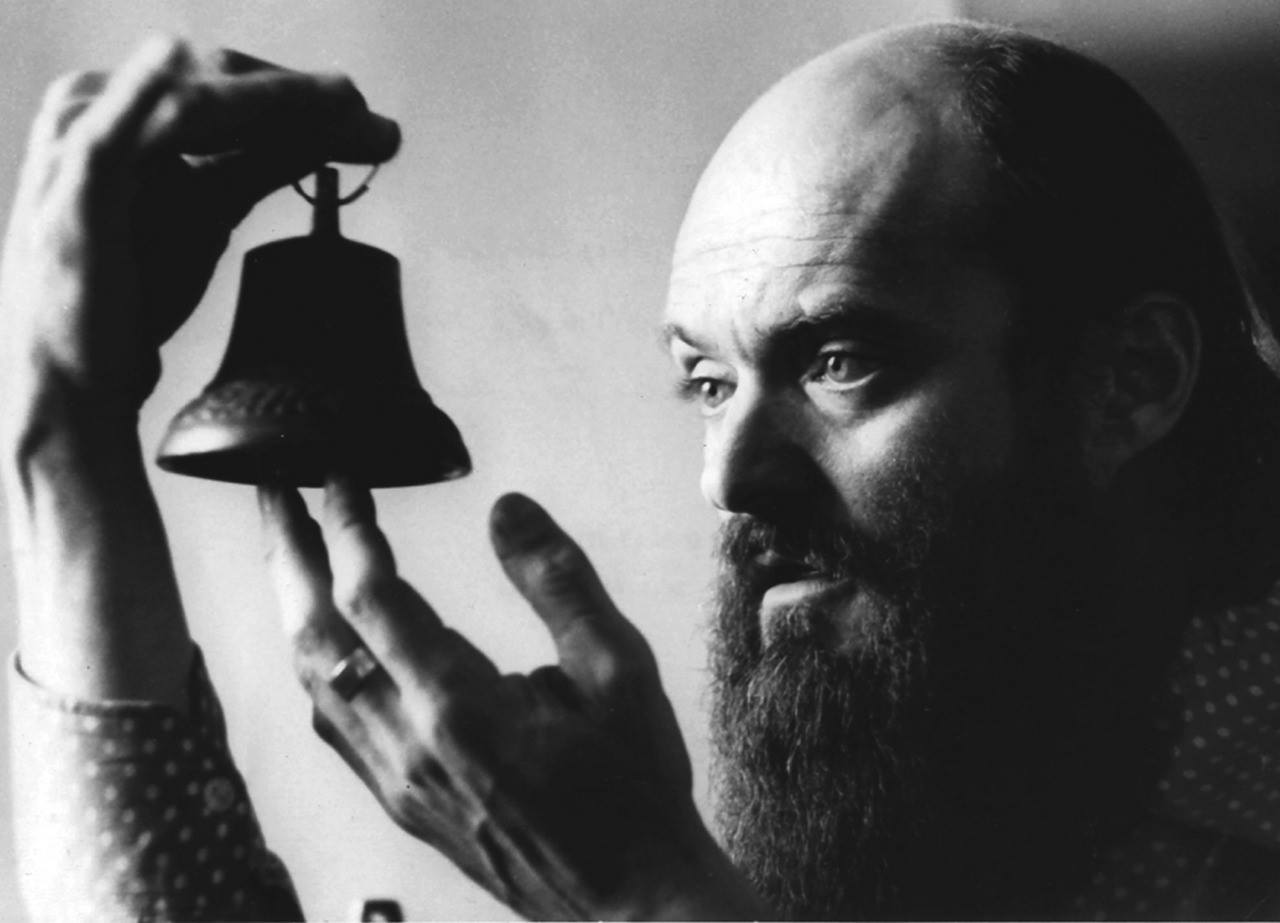
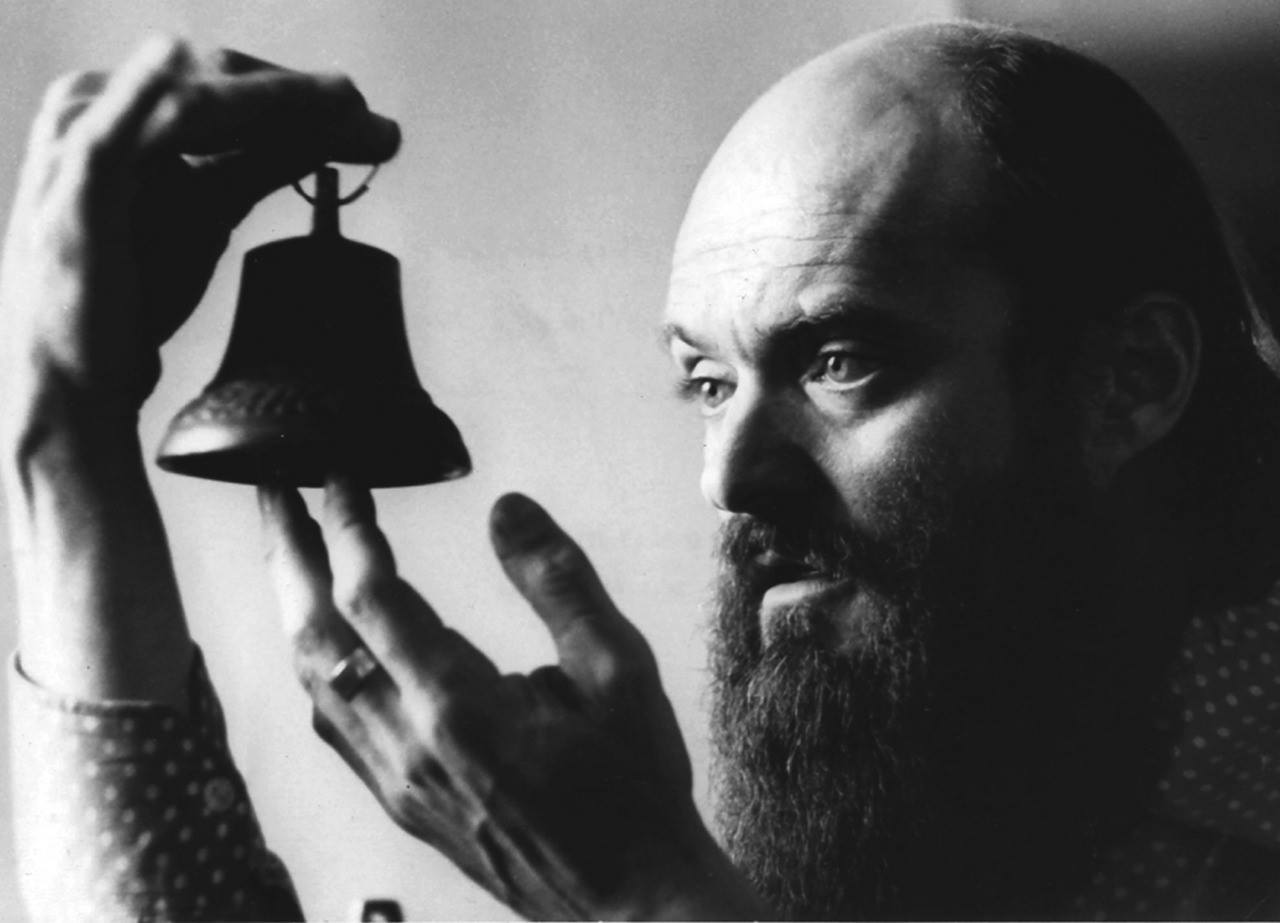
    This week on “The Lost Chord,” we ring in the 90th birthday of Arvo Pärt. Pärt was born on September 11, 1935.

    His early works were touched by neo-classicism, but by the 1960s he began to experiment with serial techniques. This put him into conflict with the Soviet authorities who were displeased with an Estonian writing in a cacophonous, cosmopolitan style. His works were banned, which had the effect of driving him into creative silence.

    Finding it impossible to compose, he immersed himself in the study of early church music. He emerged from this period with a new respect for plainsong, Gregorian chant, and polyphony, eschewing complexity, and in its place embracing serenity and beauty. It was a decision that certainly resonated with listeners, and Pärt has gone on to become one of the most performed of contemporary composers.

    According to conductor Neeme Järvi, “The music of Arvo Pärt contains a message which appeals to the deepest spiritual needs of our time.”

    Järvi is the dedicatee of Pärt’s Symphony No. 3 (1971). Although a transitional work, it shows that the composer was already very much on his way to a new simplicity in music.

    In his rejection of radical ideas, Pärt became, in a sense, more radical than the radicals. His soul-searching, study, and artistic silence bore fruit in the creation of a series of works for which he is probably best known: “Fratres” (1976), “Cantus in Memoriam Benjamin Britten,” “Tabula Rasa,” and “Summa” (1977), and “Spiegel Im Spiegel” (1978).

    What makes Pärt’s works so fascinating is the tension between that apparent simplicity, the often intricate nature of his works’ underlying organization, and rests that speak as eloquently as any of the actual notes. These have the remarkable effect of manipulating one’s perception of time and drawing the listener inward.

    At the core of Pärt’s mature style is a technique he calls “tintinnabuli” (from the Latin “tintinnabulum,” meaning “bell”), where voices – instrumental or otherwise – arpeggiate the tonic triad, in a bell-like manner, while other voices weave diatonic melody through the midst of it.

    Pärt described it thus: “Tintinnabulation is an area I sometimes wander into when I am searching for answers – in my life, my music, my work. In my dark hours, I have the certain feeling that everything outside this one thing has no meaning. The complex and many-faceted only confuses me, and I must search for unity. What is it, this one thing, and how do I find my way to it? Traces of this perfect thing appear in many guises – and everything that is unimportant falls away. Tintinnabulation is like this. . . . The three notes of a triad are like bells.”

    The work that definitively signaled the arrival of Pärt’s mature style – the acorn from which sprang “tintinnabuli” – was a modest piano piece, titled “Für Alina” (1976). The piece is dedicated to the 18-year-old daughter of a friend, who had gone to study in London. A brief but introspective work, silence plays an important role, and, yes, the individual notes are reminiscent of bells.

    Of course, the larger part of Pärt’s output involves actual human voices, the texts usually on sacred themes. A good example is “Litany” (1994). Set to prayers by St. John Chrysostom, one for each hour of the day or night, the saint’s asceticism seemingly imbues the work.

    I hope you’ll join me for “Wholly Pärt” – Arvo Pärt’s tintinnabular journey – on “The Lost Chord,” now in syndication on KWAX, the radio station of the University of Oregon!


    Clip and save the start times for all three of my recorded shows:

    PICTURE PERFECT, the movie music show – Friday at 8:00 PM EDT/5:00 PM PDT

    SWEETNESS AND LIGHT, the light music program – Saturday at 11:00 AM EDT/8:00 AM PDT

    THE LOST CHORD, unusual and neglected rep – Saturday at 7:00 PM EDT/4:00 PM PDT

    Stream them, wherever you are, at the link!
    https://kwax.uoregon.edu/

  • Veljo Tormis Estonian Choral Music Icon Dies

    Veljo Tormis Estonian Choral Music Icon Dies

    The shaman of Estonian music has died.

    Veljo Tormis was bigger at home, allegedly, than even his internationally more famous compatriot, Arvo Pärt. Extremely influential as a composer of choral music, Tormis also wrote orchestral and instrumental works, 35 film scores, and an opera.

    Making his name as a kind of neo-classicist, as exemplified by his “Overture No. 2,” he gradually turned to Estonian folk music, which he transformed through the use of modernist techniques. He breathed new life into the Estonian runo song, lending vitality to a dead tradition.

    Politically censored during the 1970s and ‘80s, Tormis nevertheless retained his popularity, celebrated throughout the Soviet Union and Eastern Europe. Since Estonia regained its independence in 1991, his music has steadily gained traction in the West. Perhaps his most famous piece is “Raua needmine” (“Curse Upon Iron”), a setting of a text from the Kalevala, which invokes shamanistic ritual as a critique of the evils of war.

    “It is not I who makes use of folk music,” Tormis once said, “it is folk music that makes use of me.”

    I hope you’ll join me today between 4 and 7:00 p.m., as we remember Veljo Tormis, alongside observances of the birthdays of composers Muzio Clementi and Rutland Boughton, on WWFM – The Classical Network and wwfm.org.


    “Raua needmine” (“Curse Upon Iron”):

    Overture No. 2:

    Live performance of “Curse Upon Iron” with the Netherlands Chamber Choir, completely up my alley!


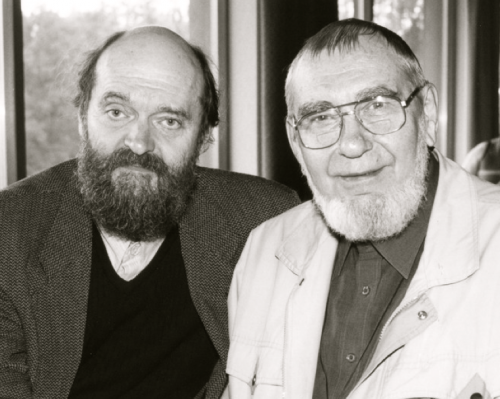
    Veljo Tormis (right) palling around with Arvo Pärt

  • Arvo Pärt Turns 80 Celebrate Fratres

    Arvo Pärt Turns 80 Celebrate Fratres

    Today is the 80th birthday of the most-performed living composer of classical music. Many happy returns to Arvo Pärt.

    Mari Samuelsen plays “Fratres”:

    An interesting article from Estonian World:

    Sounds emanating love – the story of Arvo Pärt

  • Arvo Pärt at 80 A Tintinnabular Journey

    Arvo Pärt at 80 A Tintinnabular Journey

    This Sunday night on “The Lost Chord,” we ring in the 80th birthday of Arvo Pärt.

    Pärt was born on September 11, 1935.

    His early works were touched by neo-classicism, but by the 1960s he began to experiment with serial techniques. This put him into conflict with the Soviet authorities who were displeased with an Estonian writing in a cacophonous, cosmopolitan style. His works were banned, which had the effect of driving him into creative silence.

    Finding it impossible to compose, he immersed himself in the study of early church music. He emerged from this period with a new respect for plainsong, Gregorian chant, and polyphony, eschewing complexity, and in its place embracing serenity and beauty. It was a decision that certainly resonated with listeners, and Pärt went on to become one of the most performed of contemporary composers.

    According to conductor Neeme Järvi, “The music of Arvo Pärt contains a message which appeals to the deepest spiritual needs of our time.”

    Järvi is the dedicatee of Pärt’s Symphony No. 3, written in 1971. Though a transitional work, it shows that the composer was already very much on his way to a new simplicity in music.

    In his rejection of radical ideas, Pärt became, in a sense, more radical than the radicals. His soul-searching, study, and artistic silence led to the creation of a steady stream of works for which he is probably best known: “Fratres” in 1976; “Cantus in Memoriam Benjamin Britten,” “Tabula Rasa” and “Summa” in 1977, and “Spiegel Im Spiegel” in 1978.

    What makes Pärt’s works so fascinating is the tension between that apparent simplicity, the often intricate nature of his works’ underlying organization, and rests that speak as eloquently as any of the actual notes. These have the remarkable effect of manipulating one’s perception of time and drawing the listener inward.

    At the core of Pärt’s mature style is a technique he calls “tintinnabuli” (from the Latin “tintinnabulum,” meaning “bell”), where voices – instrumental or otherwise – arpeggiate the tonic triad, in a bell-like manner, while other voices weave diatonic melody through the midst of it.

    Pärt described it thus: “Tintinnabulation is an area I sometimes wander into when I am searching for answers – in my life, my music, my work. In my dark hours, I have the certain feeling that everything outside this one thing has no meaning. The complex and many-faceted only confuses me, and I must search for unity. What is it, this one thing, and how do I find my way to it? Traces of this perfect thing appear in many guises – and everything that is unimportant falls away. Tintinnabulation is like this. . . . The three notes of a triad are like bells.”

    The work that definitively signaled the arrival of Pärt’s mature style – the acorn from which sprang “tintinnabuli” – was a modest piano piece, titled “Für Alina,” from 1976. The piece is dedicated to the 18 year-old daughter of a friend, who had gone to study in London. A brief but introspective work, silence plays an important role, and, yes, the individual notes are reminiscent of bells.

    Of course, the larger part of Pärt’s output involves actual human voices, the texts usually on sacred themes. A good example is “Litany,” from 1994. Set to prayers by St. John Chrysostom, one for each hour of the day or night, the saint’s asceticism seemingly imbues the work.

    I hope you’ll join me for “Wholly Pärt” – Arvo Pärt’s tintinnabular journey – tonight at 10 ET, with a repeat Wednesday evening at 6; or that you’ll listen to it later as a webcast at wwfm.org.

Tag Cloud

Aaron Copland (92) Beethoven (95) Composer (114) Film Music (123) Film Score (143) Film Scores (255) Halloween (94) John Williams (187) KWAX (229) Leonard Bernstein (101) Marlboro Music Festival (125) Movie Music (138) Opera (202) Philadelphia Orchestra (89) Picture Perfect (174) Princeton Symphony Orchestra (106) Radio (87) Ralph Vaughan Williams (85) Ross Amico (244) Roy's Tie-Dye Sci-Fi Corner (290) The Classical Network (101) The Lost Chord (268) Vaughan Williams (103) WPRB (396) WWFM (881)

DON’T MISS A BEAT

Receive a weekly digest every Sunday at noon by signing up here


RECENT POSTS