Tag: Composer

  • Marga Richter Obituary Remembering a Composer

    Marga Richter Obituary Remembering a Composer

    Even now, in time of COVID, with concerts being cancelled left and right, and unrelated classical music news slowing to a trickle, I still can’t seem to cover everything. One obituary I noted, but didn’t have a chance to acknowledge, was that of Marga Richter, who died on June 25 at the age of 93. News of her death reached me only last weekend.

    Richter was born in Reedsburg, WI, in 1926. She began piano lessons at the age of four, and started composing at 12. When her family moved to New York City, to be with her while she attended Juilliard, again she started out studying as a pianist, and then shifted her focus to composition. Among her teachers were William Bergsma and Vincent Persichetti.

    For much of her career, Richter found it was uphill fight to have her work taken seriously. She told the New York Times in 1981, “Conductors or musicians see a woman’s name on a score, and they won’t take a look at it.” Nevertheless, she persevered.

    Of necessity, her music was sometimes presented on self-financed concerts or featured in programs devoted exclusively to women or minorities. She was not much fond of the current trend toward such “niche” events. She remarked that composers like herself didn’t want to be “featured;” they would much rather be absorbed.

    Richter was the composer of nearly 200 works, including an opera, “Riders to the Sea.” At the time of her death, she was a resident of Barnegat, NJ.


    “Aria and Toccata” (1957), with violist Walter Trampler:

    Piano Concerto No. 1 (1955):

    “Summer Reverie on a Mountainside” for two clarinets (2009):

  • Buck Moon Twins: Antheil & Grainger’s Mad Genius

    Buck Moon Twins: Antheil & Grainger’s Mad Genius

    It’s got have something to do with that Buck Moon.

    July 8 marks the birthdays of two of music’s looniest pianist-composers.

    George Antheil, self-proclaimed “Bad Boy of Music,” was born in Trenton on this date in 1900. Antheil’s “Ballet Mécanique,” scored for player pianos, airplane propellers, siren and electric bells, inspired one of the great classical music riots at its Paris premiere in 1926.

    Antheil would practice the piano with such ferocity that he would have to pause, periodically, to thrust his hands into two fish bowls filled with ice water. Before commencing a recital, he would remove a pistol from a silk holster sewn into his jacket and ostentatiously place it atop the piano, to send a message that he would brook no nonsense.

    Later, he became a Hollywood film composer, a war correspondent, the author of a column of advice to the lovelorn, an expert in endocrinology, and co-inventor, with actress Hedy Lamarr, of a frequency-hopping system for the guidance of Allied torpedoes that would become the basis for modern spread-spectrum communications technology.

    In 1944, he scored a notable success with his Symphony No. 4, after it was taken up by Leopold Stokowski and later Sir Eugene Goossens, who recorded it. Antheil was also the author of a bestselling autobiography, “Bad Boy of Music.” He died of a heart attack at the age of 59. A third recorded cycle of his symphonies is currently underway, on the Chandos label. Not bad for a boy from Trenton.

    Wouldn’t you know, Percy Aldridge Grainger was also born on this date, outside Melbourne, Australia, in 1882. Grainger, one of classical music’s great eccentrics, was an outstanding pianist and an innovative composer, who also happened to be obsessed with physical fitness. Rather than drive or take the train between towns and engagements, it was his preference to jog. He was also known to throw a ball over one side of a house, and then race around the other side to catch it.

    Enamored with Nordic culture, he went out of his way to use only Anglo-Saxon words, avoiding in his letters anything of Norman or Latin origin. However, the dominance of German music rankled him, and he loved Duke Ellington.

    He was unusually close to his mother and exhibited sadomasochistic tendencies. He donated whips and blood-stained clothes to the Grainger Museum, which he founded in 1932. (His request to have his skeleton displayed – posthumously, of course – was denied.)

    Later, while living in White Plains, NY, he experimented with electronics and “machine music,” in a sense paralleling an obsession of Antheil, who besides “Ballet Mécanique,” wrote such works as “Airplane Sonata” and “Death of Machines.”

    Sadly, only the tiniest portion of Grainger’s output is known by the general public, and he is celebrated as the composer of such folksy trifles as “Country Gardens,” “Molly on the Shore,” and “Shepherd’s Hey.” But Grainger’s treatment of harmony and rhythm could be highly original. He was a brilliant musician, and wholly unconventional in more ways than one.

    Grainger died in White Plains in 1961 at the age of 78. His remains, including his skeleton, rest in Adelaide.

    Antheil and Grainger. What are the odds? Blame it on that old devil moon.


    Two peas in a pod: George Antheil, smoking, and Percy Grainger, smoking hot, in self-designed “toweling clothes”

  • Richard Strauss Documentary Birthday Tribute

    Richard Strauss Documentary Birthday Tribute

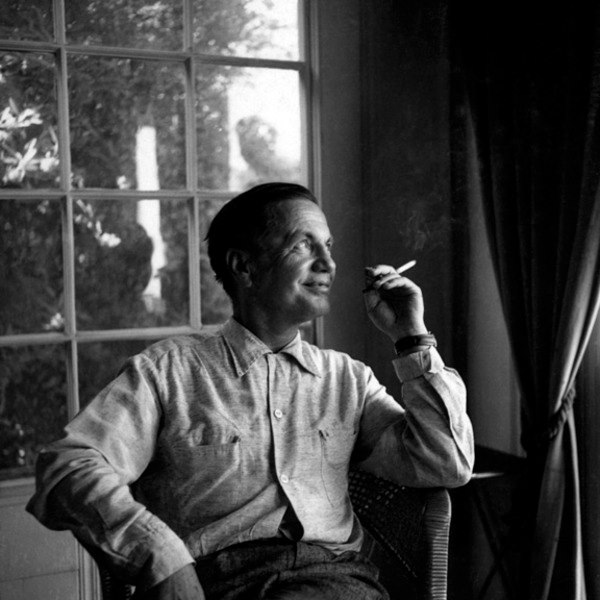
    Happy birthday, Richard Strauss! Fans of the composer will enjoy this two-hour documentary I found on YouTube, featuring commentary by prominent musicians, interviews with people who actually KNEW him, narration by Sir John Gielgud, and, not least of all, footage of Strauss himself. Strauss described himself as “a first-rate second-class composer.” He certainly lived a remarkable life.

  • Fauré Elgar Bromance

    Fauré Elgar Bromance

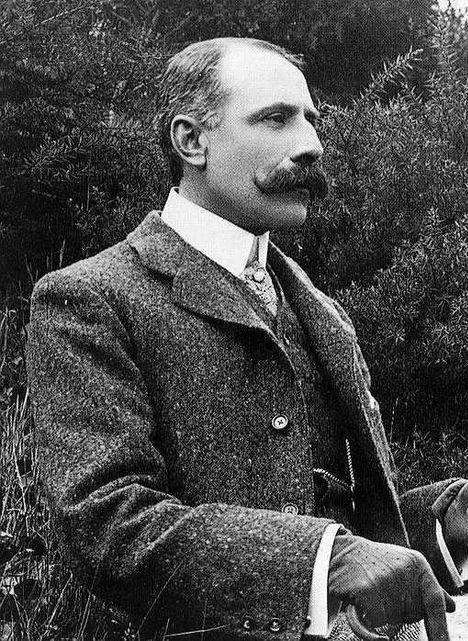
    On Gabriel Fauré’s birthday, I am fascinated to learn that the composer was not only hugely popular in England, having visited there many times, he was also greatly admired by Sir Edward Elgar.

    Fauré was staying the month with Elgar’s friend, Frank Schuster, prior to the London premiere of Elgar’s Symphony No. 1, in 1908. Following a rehearsal, the two attended a dinner party held by Schuster in their honor.

    What did the two of them talk about? Their moustaches, I hope.

  • Claudio Spies Princeton Composer Dies at 95

    Claudio Spies Princeton Composer Dies at 95

    Princeton University professor emeritus Claudio Spies has died. Born in Santiago, Chile, Spies was on the faculty of the Princeton University music department from 1970 to 1998. Prior to that, he taught at Harvard, Vassar, and Swarthmore. He also taught at Juilliard from 1998 to 2010. His own teachers included Nadia Boulanger, Harold Shapero, and Irving Fine. Conductors Erich Kleiber and Fritz Busch were also early mentors. His friendship with Igor Stravinsky facilitated the premiere of Stravinsky’s “Requiem Canticles” at McCarter Theatre in 1966. Spies was 95 years-old. Learn more about this remarkable man here:

    https://www.princeton.edu/news/2020/04/10/claudio-spies-composer-music-theorist-and-great-role-model-dies-95


    PHOTO (left to right): Claudio Spies, Lukas Foss, Harold Shapero, Esther Geller, Verna Fine, Irving Fine, and Leonard Bernstein, at Tanglewood in 1946

Tag Cloud

Aaron Copland (92) Beethoven (95) Composer (114) Film Music (123) Film Score (143) Film Scores (255) Halloween (94) John Williams (187) KWAX (229) Leonard Bernstein (101) Marlboro Music Festival (125) Movie Music (138) Opera (202) Philadelphia Orchestra (89) Picture Perfect (174) Princeton Symphony Orchestra (106) Radio (87) Ralph Vaughan Williams (85) Ross Amico (244) Roy's Tie-Dye Sci-Fi Corner (290) The Classical Network (101) The Lost Chord (268) Vaughan Williams (103) WPRB (396) WWFM (881)

DON’T MISS A BEAT

Receive a weekly digest every Sunday at noon by signing up here


RECENT POSTS