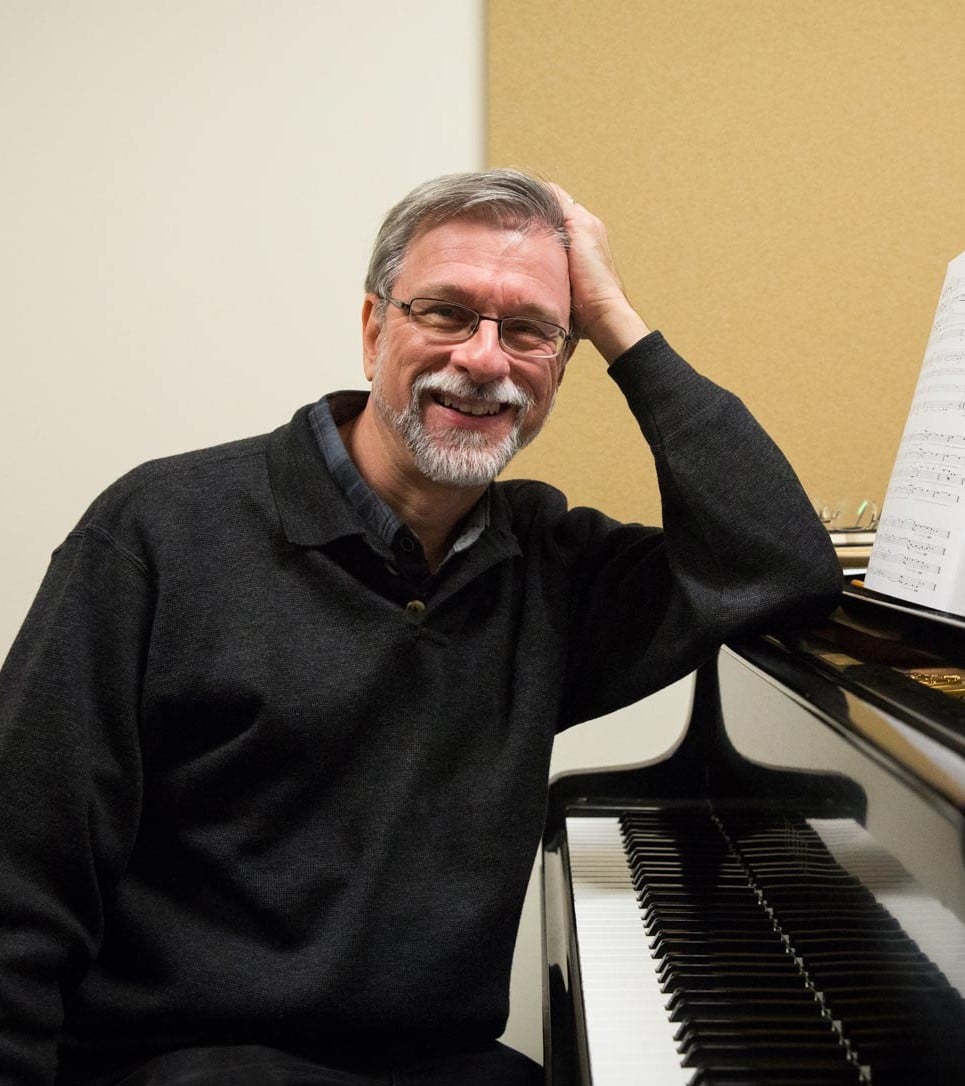
Following the sad news this morning of the death of James Primosch, I have only just learned of the passing of another Philadelphia composer. Harold Boatrite died on Monday at the age of 89.
Boatrite studied with Stanley Hollingsworth (himself a pupil of Darius Milhaud and Gian Carlo Menotti). On a scholarship, he attended Tanglewood for further lessons with Lukas Foss and Aaron Copland. In 1961, he was invited by Rudolf Serkin to serve as composer-in-residence at the Marlboro Music Festival.
Six years later, Boatrite received an honorary doctorate from Combs College of Music. He taught theory and composition at Haverford College until 1980. From 1974 to 1977, he also served on the Pennsylvania Council on the Arts.
Boatrite’s output spanned chamber and solo instrumental music to large-scale choral and orchestral works. His compositions have been performed throughout the United States and Europe, most notably at the Prague Autumn International Music Festival. A ballet, “Childermas,” was nationally broadcast on CBS television in 1969.
Boatrite served for many years as a new music consultant to the Chamber Orchestra of Philadelphia. His chamber works were recorded for the Capstone label, and his orchestral scores are housed in the Edwin A. Fleisher Collection at the Free Library of Philadelphia.
A Philadelphia presence for many years, Primosch earned his master’s degree at the University of Pennsylvania, where he was a student of George Crumb and Richard Wernick.
He went on to obtain his doctorate from Columbia, where he studied with Mario Davidovsky. He also served as a teaching assistant at the Columbia Electronic Music Center.
He returned to Philadelphia to join the faculty of U of P in 1988. There he became director of the Presser Electronic Music Studio.
Earlier, he studied at Cleveland State University. Primosch was born in Cleveland in 1956.
Acclaimed for his word-setting and poetic nuance, he composed quite a bit of music for voice. His Catholic faith informed his sacred works. He was also a jazz enthusiast. His compositional language could be angular or unabashedly lyrical. His music has been much performed, much recorded, and much honored.
Among the organizations and ensembles to have programmed his pieces are the Chicago Symphony, the Los Angeles Philharmonic, the New York Philharmonic New Music Ensemble, and the St. Paul Chamber Orchestra.
Locally, his music has been performed by The Crossing, Dolce Suono, Mendelssohn Club, Network for New Music, Orchestra 2001, the PRISM Saxophone Quartet, and Westminster Choir College.
In 1994, he served as artist-in-residence at the Marlboro Music Festival.
Primosch was diagnosed with pancreatic cancer in September 2020.
R.I.P.
Meditation on “Motherless Child,” from the Piano Quintet
From his “Mass for the Day of St. Didymus,” performed by The Crossing
Here it is complete
Oboe Quartet
“Our Revels Now Are Ended” from “Songs and Dances from ‘The Tempest’”
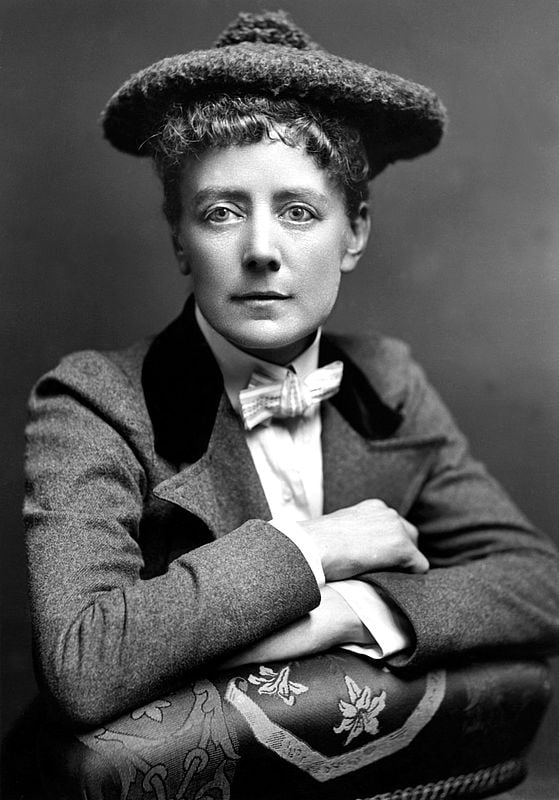
When I think of Dame Ethel Smyth (1858-1944), the first thing that springs to mind is Sir Thomas Beecham’s recollection of her leading an impromptu chorus of women, gathered in a prison courtyard for exercise, by conducting with her toothbrush between the bars of her cell.
Smyth was incarcerated for two months for smashing out the windows of politicians who opposed the female vote. Her “March of the Women” became the anthem of the women’s suffrage movement in England.
The other thing I think about is how Smyth’s opera, “Der Wald” (“The Forest”), was the only work by a female composer produced at New York’s Metropolitan Opera for over a century. That was in 1903.
Anticipating the assertion that well-behaved women seldom make history, Smyth was driven to act up from the start. And who could blame her?
She managed to outmaneuver her father, a major general in the Royal Artillery. When he objected to her pursuit of a career in music, she studied privately. This culminated in an all-out battle, in the course of which Ethel’s will proved steelier than her dad’s. The result was that she was that she was able to attend the Leipzig Conservatory.
When the conservatory didn’t measure up to her expectations, she sought out Heinrich von Herzogenberg for further polish. Her travels also brought her into contact with Dvořák, Grieg, Tchaikovsky, Clara Schumann, and Herzogenberg’s friend, Johannes Brahms.
It was at a private performance of Brahms’ Piano Quintet, with the composer in attendance, that Smyth’s St. Bernard mix, Marco, burst through a door, toppling the cellist’s music stand, which, much to everyone’s relief, the notoriously prickly Brahms found hilarious. Later, when Tchaikovsky wrote to Smyth, he never failed to ask after Marco.
Her first piece to be played in public was her String Quintet in E major (1884).
Her first orchestral work, the Serenade in D (1889) – written with the encouragement of Tchaikovsky – is better than just about anything composed by Sir Hubert Parry (whose music I happen to enjoy) and much more compelling than the symphonies of Sir Charles Villiers Stanford. Smyth’s serenade is a symphony in all but name, with some pretty good tunes.
Even so, it was only in 1893, after her Mass in D was favorably received by George Bernard Shaw that her father’s objection to her chosen career began to thaw. (Shaw had declared the Mass “magnificent.”)
While she met with considerable success in her lifetime, as a woman, she was still often marginalized and had to push for almost everything. In her mid-50s, she began to lose her hearing. Undeterred, she commenced a second career as a writer, producing ten books. She was made a Dame Commander of the Order of the British Empire in 1922 .
The next time a music director is looking for an alternative to Elgar (himself not exactly overplayed in this U.S.), he or she could do worse than to consider Ethel Smyth. The overture to her opera “The Wreckers” (1906) would make for a dynamic curtain-raiser.
“The Wreckers” was presented at Bard College, in a series of performances, under the direction of Leon Botstein, in 2015. Botstein led a concert performance of the piece at Carnegie Hall in 2007. Happily, the Bard production was filmed.
It may be Haydn’s birthday, but one of my favorite stories about the composer actually involves his remains. Marvel at the weird tale of Haydn’s skull and how it was kept separate from his body for 145 years – and about how the Father of the Symphony currently rests with two heads.
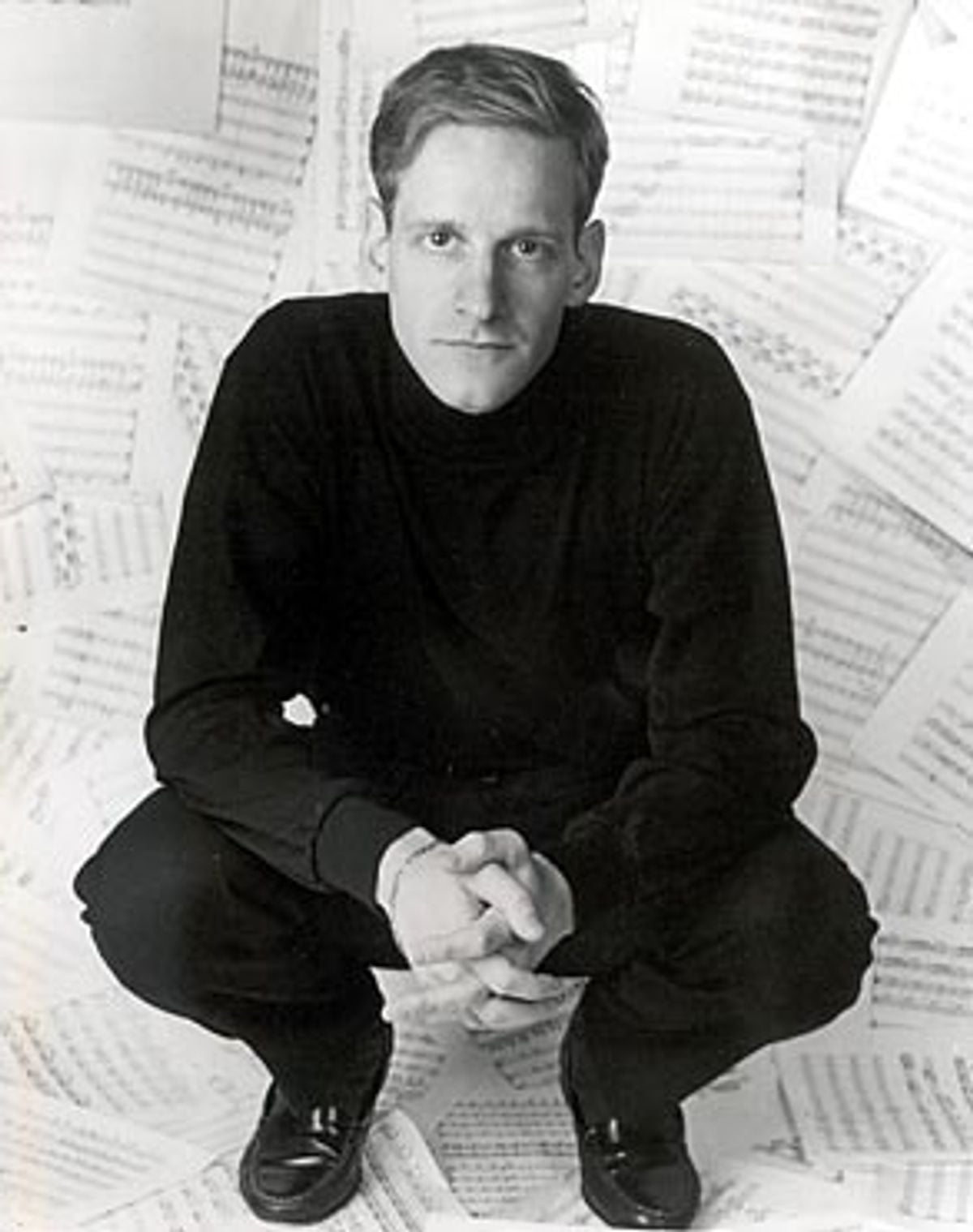
I’m sure it will surprise no one to learn that, back in the days when I ran a book shop in Philadelphia, I amassed a veritable trove of music inventory. Since a lot of my business was conducted online, I had musicians contacting me from all over the word. One of these was Lowell Liebermann. When, in the course of our correspondence, I asked if he was any relation to the composer, he quipped, “If you mean Rolf Liebermann, no.”
If you don’t get the joke, Rolf Liebermann wrote this:
Years later, I interviewed Liebermann for the Trenton Times. His Flute Concerto (1992) was twice performed by the Princeton Symphony Orchestra – once by Eugenia Zukerman, in 2012, and later by Met principal flute (and former Princeton principal) Chelsea Knox, in 2019. In fact, the concerto may be Liebermann’s most frequently-played orchestral work. Here’s Zukerman’s world premiere recording of the piece (written for James Galway), with the Dallas Symphony Orchestra:
His Flute Sonata (1987) is, if anything, even more popular, if only because a flutist need only collaborate with a pianist. There are 11 recordings of it in the current catalogue. Here’s one I like with principal flutist of the Philadelphia Orchestra, Jeffrey Khaner. The work falls into two movements, so let it play to the next screen.
Liebermann’s “Gargoyles” is a popular showpiece for pianists. Here it is, performed by Yuja Wang.
I also had the privilege to hear Liebermann’s opera, “The Picture of Dorian Gray,” in 2007. The world premiere was conducted in Monte Carlo in 1996, by Benjamin Britten champion Steuart Bedford (who died last week at the age of 81). I heard it at the Kimmel Center for the Performing Arts in Philly, in a version for chamber orchestra, with Center City Opera Theater, who did a bang-up job with it. Here’s just a taste, in a semi-staged performance, with the Boston Modern Orchestra Project (BMOP) and Odyssey Opera.
Liebermann serves on the composition faculty of Mannes College The New School of Music and is director of the Mannes American Composers Ensemble.
Happy birthday, Lowell Liebermann!
My interview with Liebermann in The Times of Trenton