Tag: Composer

  • Lalo Schifrin Awe Inspiring Film Music at 90

    Lalo Schifrin Awe Inspiring Film Music at 90

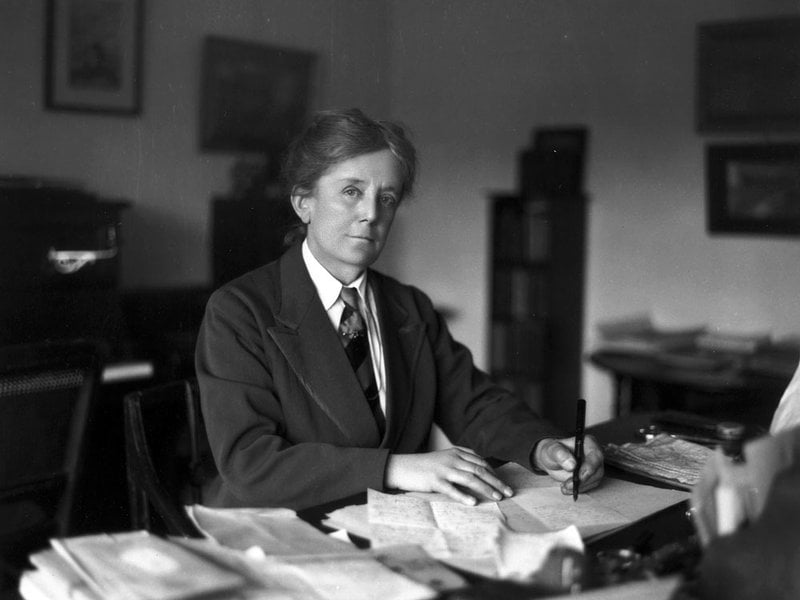
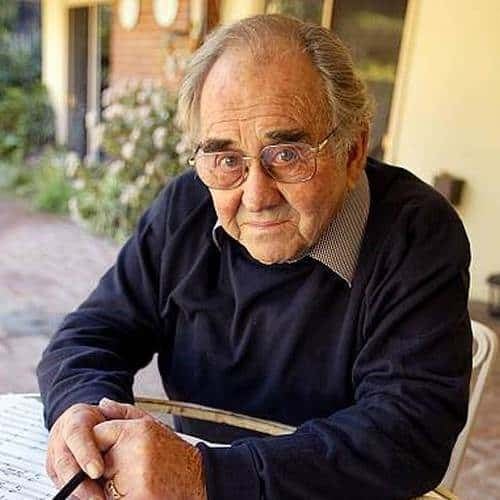
    Is he a classical composer who writes jazz, or a jazz musician who writes classical? He’s certainly one of the most distinctive composers of film and television music.

    On Lalo Schifrin’s 90th birthday, check out this documentary, which is full of rare footage, film clips, eyewitness accounts, and of course music.

    As I was watching I kept thinking the first few minutes alone should fill you with sufficient awe at Schifrin’s unique talent. But then the accomplishments just kept piling up!

    Thank you, Lalo Schifrin, and happy birthday!

  • Remembering Vincent Persichetti

    Remembering Vincent Persichetti

    Vincent Persichetti was born in Philadelphia on this date in 1915. He died there in 1987. Although he seems to have had more of a lasting influence as a teacher – having molded legions of budding composers through his work at Combs College of Music, the Philadelphia Conservatory, and the Juilliard School – his own compositions are invariably well-crafted and certainly well worth listening to.

    Somewhere, I’ve got one of his manuscripts in a box of musical collectibles I acquired at Freeman’s Auction House, back in the day when, if no one bid on a lot, it would go down to a dollar. It may have been in with a box of conductor James De Preist’s homework. I ought to make a point to dig that out. Nothing major, maybe a fanfare or something, a short work for brass.

    The Philadelphia Orchestra used to play his work from time to time, but I haven’t seen any of Persichetti’s music on their programs for years. There is a document from the Muti era, on New World Records, a CD of live performances of the Symphony No. 5 for strings and the Piano Concerto, with Robert Taub as soloist. Frankly, I prefer this symphony, recorded by Ormandy and posted here in four movements:

    I. https://www.youtube.com/watch?v=Ajw4Ayhd1AA

    II. https://www.youtube.com/watch?v=2hkAvb3Gx7A

    III. https://www.youtube.com/watch?v=7BASajjHG08

    IV. https://www.youtube.com/watch?v=_rONwSSdlDE

    A 1983 documentary on Persichetti

    An interview with Bruce Duffie

    http://www.bruceduffie.com/persichetti.html

    An afternoon with Tim Page

    https://www.wnyc.org/story/an-afternoon-with-vincent-persichetti/

    Happy birthday, Vincent Persichetti!


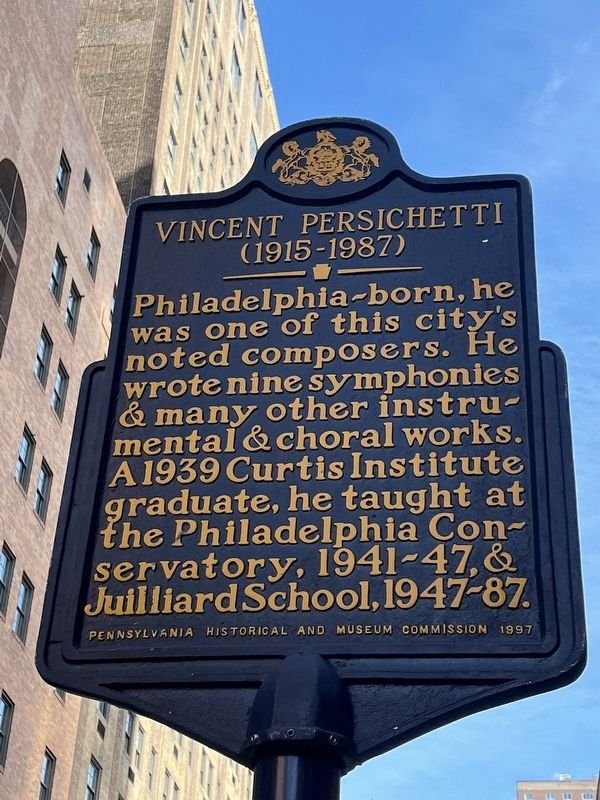
    PHOTO: The Vincent Persichetti historical marker outside the Curtis Institute of Music, from which he graduated in 1939

  • Ethel Smyth’s Memoirs and Musical Legacy

    Ethel Smyth’s Memoirs and Musical Legacy

    Well, I finally finished reading Dame Ethel Smyth’s memoirs a few days ago. In fact, I wrote this the following morning, but am only just getting around to smoothing it out.

    While I wouldn’t modify my assessment that, for a published work, Smyth takes up an awful lot of space bringing in way too many names of people we never get to know, so that it becomes a chore for the reader to try to keep most of them straight – as I indicated, the memoirs have been distilled from multiple volumes, so the effect might have been exacerbated in part by the book’s editors (who try to make up for it with the inclusion of a glossary of “biographical notes”) – I did indeed find the concluding sections especially poignant.

    Smyth struggled her entire life to get her music heard, and in my opinion, she did an amazing job for the era, and with so much stacked against her. Her foremost impediment, of course, was that she was a woman, which automatically restricted her acceptance in a male-dominated profession. I mean, women didn’t even have the right to vote. (At a point, she would become passionately involved with the women’s suffrage movement.)

    She also enjoyed actually having a life. So while by no means unproductive, she made time whenever she could to engage in sport and walk with her dogs and plant her garden and bicycle and visit with friends. For these reasons, among others, she preferred to live outside the musical center of London, which she found both physically and psychologically restrictive. She couldn’t bear the thought of prolonged city life. She adored her pets, and her account of her relationship with her last sheepdog, Pan the Fourth, will move anyone who has ever loved an animal.

    Of course, she also had other distractions. She virtually walked away from composition for two years to devote herself to the cause of women’s suffrage in England (for which she served time in prison for knocking out windows with stones). And personality-wise, she was always very forthright and wouldn’t take no for an answer. I would argue, for the era, it helped her more than it hurt her, but she felt it alienated some who might have helped her. Certainly it did not put off Thomas Beecham or Henry Wood or Bruno Walter or any number of other important musical figures who championed her music along the way.

    Unquestionably, she was a celebrity. If her contemporaries heard comparatively little of her music, they knew of her character and exploits. Furthermore, she wrote prolifically, issuing ten autobiographical volumes (from which the one-volume “Memoirs” was extracted). She received a laudatory entry in the 1908 edition of “Grove’s Dictionary of Music and Musicians,” for her 50th year. In 1922, she became the first female composer to be honored with a damehood. And in 1934, at 75, a festival was organized of her music, which again was conducted by Beecham. Unfortunately, by then, she was stone deaf.

    She pursued opera in a country without a strong operatic tradition, and therefore spent too much time in foreign lands, especially Germany, chasing down and creating opportunities. Her opera “Der Wald” was heard at New York’s Metropolitan Opera before it was ever heard in England. She had two of her operas all set to go in reputable opera houses in Germany, when Archduke Ferdinand was assassinated in Sarajevo, precipitating World War I. This was very bad luck indeed. But as Smyth observes, “Life has taught me one thing: when people fail to get over (or round) obstacles, it is never wholly the fault of other people.”

    In fact, she is as clear-eyed about any personal shortcomings as she is the external factors that weighed against her. She is reflective and articulate, as any memoirist must be. There is an eerily prescient passage in which she speculates as to whether or not her music will ever be revived in future years.

    “… [I]t amuses me to think that someday after my death, when all traces of my sex have been reduced to ashes at the Woking Crematorium (so handy!) someone will very likely take me up as a stunt – no extravagant assumption, seeing what subjects attain Stunt Rank these days! Then, together with the assembling of my musical remains, this Annex will be available, and the Stunt Raiser, lifting his eyebrows, can either burst out laughing (“O, come! You can’t put that across in England!”) or he can have those pages made into a fan and therewith fan the flame of the Stunt. And thus, someday, I may make friends, musically, with those I cannot get at in my lifetime.”

    Keep in mind, this was an era when neglected scores were not digitized or maintained, but left to molder, if not in archives or libraries, then at home in drawers or on high shelves. She also muses wistfully that reviews that appeared in the foreign press were all but inaccessible to those of influence in her native land.

    But she remained philosophical, and always grateful. The chapter “A Life Summed Up” conveys it best. “Blessed with friends, with health, spared the most wearing, the most disheartening form of the inevitable struggle for existence, what has or has not been achieved the days have been gloriously spent in the open. And if, digging from morn till eve, one has not unearthed exactly what one expected, all the while the treasure was being found.”

    Smyth died on May 8, 1944, at the age of 86. What would she think now that so much of her music has been recorded, I wonder? All these years later, I am moved to think that she would never know. I am not one to promote music merely for political reasons, or to suit current trends in fashion. Smyth was a composer of merit, who felt acutely that she had something genuine to say. Her assessment was backed up by enough notable musicians of her time. Certainly, she was impeded by professional politics and social norms and current events and severe illness and just plain bad luck.

    But even with all that stacked against her, she managed to make her mark. Ethel Smyth was a force to be reckoned with. And now, in the present day, the stage is set for a fairer assessment of her worth.

  • Dame Ethel Smyth A Spirited Birthday

    Dame Ethel Smyth A Spirited Birthday

    Today is the birthday of Dame Ethel Smyth.

    By coincidence, I am getting close to the end of Smyth’s memoirs (abridged from nine volumes). While I don’t find her the most compelling writer, she does offer some fun glimpses of Brahms, Tchaikovsky, Grieg, Mahler, Arthur Nikisch, and Sir Thomas Beecham, among others. Also, she was a great lover of dogs.

    However, too often the narrative, such that it is, devolves into a blur of name-dropping. Fine for a diary; not so much for a reader. After a while, I just gave up trying to keep everyone straight. It’s all the same anyway. Whether or not this “shortcoming” was exacerbated by editorial decisions, I don’t know.

    That’s not to say the book is not worthwhile. Smyth’s personality definitely comes through. She was indefatigable, I’ll say that for her, and spirited. Often almost giddy. This is a person who would never take no for a definitive answer, but kept looking for new solutions, and when she couldn’t find any, she picked herself up, and peddled her music elsewhere.

    Though she regrets that her pieces hardly ever get programmed, it seems she managed to have her operas and orchestral works played all over Germany and, to a slightly lesser extent, England. Her opera “Der Wald” was picked up by New York’s Metropolitan Opera (though she deemed the performances less-than-satisfactory). Gabriel Fauré even helped to organize a concert of her chamber music in Paris.

    What is striking is how impromptu the concert programming seemed to be back then. In Leipzig (at the Gewandhaus, no less), in Weimar, Berlin, and Prague, it seems like one could get an opera picked up fairly quickly, on a whim, almost. Of course, the commitment could just as rapidly fall through.

    While history, and, to some extent, even her contemporaries, may have undervalued her, I’d say, all in all, she did pretty well – if having to wait 30 years for some of her works to be revived is tolerable. Happily, she never seemed to let it get her down, and she was always writing new things. Now her music is being performed again.

    I wrote more about her, only just last month. If you’re interested, you can read it here, with plenty of links to her music:

    Happy birthday, Dame Ethel!

  • William Kraft Composer Performer Conductor

    William Kraft Composer Performer Conductor

    Whether as a composer, a performer, or a conductor, he was all Kraft.

    William Kraft, a triple threat, died on Saturday at the age of 98.

    Born in Chicago in 1923, he was raised in Santa Barbara, and it was on the West Coast that he made his greatest mark for over 40 years.

    Already as a young man and freelance musician in Manhattan, he was rubbing shoulders with some of the most remarkable musicians of his day.

    He studied composition at Columbia with Otto Luening, Vladimir Ussachevsky, and Jack Beeson. Closer to home, he also took lessons with Henry Cowell. He learned orchestration from Henry Brant, percussion with Morris Goldenberg, and timpani with Saul Goodman, for 50 years principal timpanist of the New York Philharmonic. He also studied conducting with Rudolph Thomas and Fritz Zweig.

    After a brief stint with the Dallas Symphony Orchestra, he returned to California, where from 1955 to 1985, he served as percussionist with the Los Angeles Philharmonic. He later became its first composer-in-residence. For several seasons, he also served as regular guest conductor and assistant conductor. In 1991, he began teaching at the University of California.

    He organized and directed the Los Angeles Percussion Ensemble, a group that gave first performances and made first recordings of works by Alberto Ginastera, Lou Harrison, Ernst Krenek, Igor Stravinsky, and Edgard Varèse.

    Kraft was in charge of all percussion activities for Stravinsky in Los Angeles and appeared on some of the composer’s own recordings, including “L’Histoire du soldat.” As a soloist, Kraft performed in the American premieres of Karlheinz Stockhausen’s “Zyklus” and Pierre Boulez’ “Le marteau sans maître.”

    Also, as one of the more unlikely composers to score a success with the Boston Pops, Kraft was enlisted alongside Sir Peter Maxwell Davies, Oliver Knussen, Joseph Schwantner, and John Adams to write works to be premiered under the baton of John Williams. Come to think of it, these Boston Pops commissions would make a terrific album! (To my knowledge only Maxwell Davies’ “An Orkney Wedding with Sunrise” was ever recorded by them and issued commercially.)

    Kraft composed “Vintage Renaissance” for the Pops in 1989. The work incorporates two Renaissance melodies: “Danza” by Francesco de la Torre, and an anonymous “bransle” (pronounced “brawl”).

    Like Williams, Kraft sometimes worked in film, although his projects as composer tended to be a little less prestigious. He wrote music for the slasher flick “Psychic Killer” (1975), the risible “Avalanche” (1978), and Ralph Bakshi’s “Fire and Ice.”

    However, was also active in the music departments on more reputable fare, appearing as a percussionist on the soundtracks to “North by Northwest,” “None But the Brave” (scored by Williams), “Inside Daisy Clover,” “The War Wagon,” “A Man Called Horse,” “The Life and Times of Judge Roy Bean,” and “The Great Santini.” As a conductor, he led studio orchestras in recording the music for “Dead Again,” “Indochine,” and “Carlito’s Way.”

    Kraft was chair of the composition department at USC. He retired in 2002.


    “Vintage Renaissance”

    Concerto for Four Percussion Soloists and Orchestra

    “French Suite”

    Bakshi’s “Fire and Ice”

    Kraft on percussion in Stravinsky’s “The Soldier’s Tale”

    An interview with Bruce Duffie

    http://www.bruceduffie.com/wm-kraft.html

Tag Cloud

Aaron Copland (92) Beethoven (95) Composer (114) Film Music (123) Film Score (143) Film Scores (255) Halloween (94) John Williams (187) KWAX (229) Leonard Bernstein (101) Marlboro Music Festival (125) Movie Music (138) Opera (202) Philadelphia Orchestra (89) Picture Perfect (174) Princeton Symphony Orchestra (106) Radio (87) Ralph Vaughan Williams (85) Ross Amico (244) Roy's Tie-Dye Sci-Fi Corner (290) The Classical Network (101) The Lost Chord (268) Vaughan Williams (103) WPRB (396) WWFM (881)

DON’T MISS A BEAT

Receive a weekly digest every Sunday at noon by signing up here


RECENT POSTS