Tag: Composers

  • Hugh Wood & R Murray Schafer: Composers Remembered

    Hugh Wood & R Murray Schafer: Composers Remembered

    The weekend has been a costly one for the world of art music. Two estimable composers – England’s Hugh Wood and Canada’s R. Murray Schafer – have gone silent.

    Though Wood earned much of his daily bread as a teacher of composition, at Cambridge and elsewhere, he yet managed to complete something in the ballpark of 65 pieces.

    Given that much of his music reflects his interest in the 12-tone school of Arnold Schoenberg, I am astonished – and delighted – to have discovered this, his last completed work, which at times sounds positively Waltonian (as in William Walton). I wonder if he ever before composed such an “English”-sounding piece?

    “Epithalamion” is a setting of John Donne’s 1613 “marriage song,” written for the wedding of Princess Elizabeth Stuart, daughter of King James I, and Frederick V, Elector Palatine of the Rhine in the Holy Roman Empire (1610 to 1623) and “winter king” of Bohemia (1619 to 1620).

    Wood first conceived the work in 1955, but carried it through to completion only in 2014. This recording is from a performance at the BBC Proms in 2015.

    Wood’s Cello Concerto, composed between 1965 and 1969, is much more characteristic. He once claimed he was less interested in serial technique than in the philosophy behind it.

    An interview with Hugh Wood on the occasion of his 70th birthday:

    https://www.classicalsource.com/article/hugh-wood-at-70-bill-newman-interviews-the-composer/

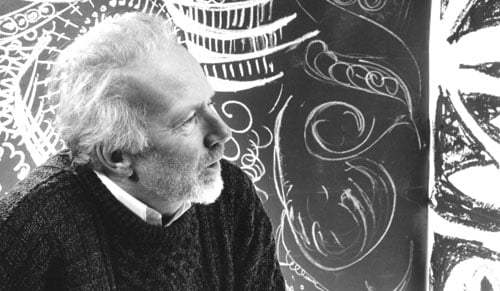
    Sadly, we’ve also lost the grand old man of Canadian music. R. Murray Schafer died on Saturday at the age of 88. Schafer developed some fascinating ideas about, and interesting insights into, the relation of sound and music to the environment. His is not music for the morning rush hour, perhaps, but it is undeniably stimulating.

    The composer walks us around his property, plays with our heads a little bit, and directs us to listen:

    “Mimiwanka” (1971), employing American Indian texts, is meant to reflect on the various states of water. This video is particularly interesting in that it also displays Schafer’s unique style of graphic notation.

    A selection from “Music for Wilderness Lake” (1979)

    “Bird calls” infuse his String Quartet No. 8 (2000-01)

    This obituary and appreciation, assembled by the CBC, encompasses the man and the artist much more satisfyingly than I ever could.

    https://www.cbc.ca/music/r-murray-schafer-composer-writer-and-acoustic-ecologist-has-died-at-88-1.5404868

    Lives well spent. R.I.P.


    PHOTOS: Schafer (top) and Wood

  • Facebook Fail Correcting Composers Photo

    Facebook Fail Correcting Composers Photo

    Okay, I admit it. I over-edit my posts. I reread them and alter them until I think they read best. I especially edit them if I happen to notice a factual error.

    I was scrolling through some old posts last week, and paused when I came to an amazing photo, taken after a New York Philharmonic concert in 1977, of all the contemporary composers whose works Pierre Boulez programmed during his tenure as music director of the orchestra.

    I had previously identified one of them, in the front row, as Hershy Kay, but glancing at it again, I realize, to my embarrassment, that it is actually Ulysses Kay. So even though the post was committed over a year ago (on April 14, 2020), I hit the “edit” option to correct it. And, wouldn’t you know it, the photo disappeared.

    You see, it’s one of the quirks of “New Facebook” that when you attempt to edit a post with forwarded content as the image, the image goes away. I’ll never be able to get the photo back on the old post, but since it’s a slow news day, I figured I’d plug it in again today.

    I actually discovered it for the first time after it was shared on the Aaron Copland page, from a post by composer Daniel Plante, over at the Pierre Boulez Appreciation Group.

    Here are the names of the subjects (hopefully now correct), with Boulez standing in the foreground, proudly displaying his trophies.

    First row (left to right): Milton Babbitt, Lucia Dlugoszewski, Ulysses Kay, George Rochberg, and Mario Davidovsky.

    Second Row: David Gilbert, Stephen Jablonsky, Jacob Druckman, Roger Sessions, William Schuman, and Aaron Copland.

    Third Row: Donald Martino, Donald Harris, Daniel Plante, Morton Gould, Vincent Persichetti, and Roy Harris.

    Fourth Row: Charles Wuorinen, Carmen Moore, Sydney Hodkinson, David Del Tredici, Earle Brown, Harley Gaber, Stanley Silverman, John Cage, and Elliott Carter.

    It will surprise no one (except me, apparently) that we are living in a disposable world, and that Facebook is no place for perfectionism!

  • Bastille Day: Composers of the Revolution

    Bastille Day: Composers of the Revolution

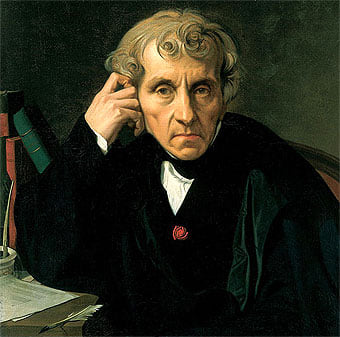
    It’s Bastille Day. A French toast for breakfast, and a nod to two of France’s greatest composers of the Revolutionary Era.

    On top of the usual burden of trying to cobble together a living as working musicians, both Étienne-Nicolas Méhul (1763-1817) and Luigi Cherubini (1760-1842) bore the additional stress of having to navigate an incendiary political environment.

    When Méhul’s opera “Adrien” was banned, he quickly figured out which side his baguette was buttered on and began writing propaganda pieces and patriotic songs. Vive la France! He was rewarded by being the first composer named to the newly-established Institute de France in 1795. He was also installed as an inspector at the Paris Conservatory.

    Allegedly, he was one of the favorite composers of Napoleon, with whom he was on friendly terms. He became one of the first recipients of Napoleon’s Légion d’honneur. According to musicologist and Berlioz biographer David Cairns, Méhul was also the first composer to be classified as “Romantic.”

    Cherubini was born in Florence. He arrived in France in 1785. There, he was introduced to Marie Antoinette and, of necessity, as a musician, had many interactions with the aristocracy – which likely caused sweat to bead on his forehead in 1789.

    Following the Revolution, Cherubini (born Maria Luigi Carlo Zenobio Salvatore Cherubini) adopted the French version of his name (Marie-Louis-Charles-Zénobi-Salvador Cherubini). It was during this period that his music began to really take flight. His works became more adventurous, more dynamic, more heroic. It’s not for no reason that Beethoven claimed him as an influence. His rescue opera “Lodoiska” served as a model for Beethoven’s “Fidelio.” Beethoven is also said to have found inspiration in Cherubini for the writing of his Fifth Symphony.

    Following the Revolution, Cherubini took great care to play down his former aristocratic connections and cleave to the prevailing government. Every year for over a decade, he was mindful of composing at least one overtly patriotic work.

    While Napoleon is said to have disliked Cherubini’s music, finding it “too complex,” he did appoint him director of music in Vienna. Perhaps Cherubini’s best-known work, the comic opera “Les deux journée” (“The Two Days”), was written in an intentionally simplified style and became an enormous hit. Beethoven kept Cherubini’s score on his desk at the time he was engaged in the writing of “Fidelio.” The incident upon which the opera is based allegedly occurred during the time of the Revolution, but again, treading lightly, Cherubini and his librettist, Jean-Nicolas Bouilly, erred on the side of caution, setting the action in a safely remote 1647.

    Gradually, as Cherubini’s operas began to fall out of fashion, he transitioned to writing church music. His Requiem in C minor, again, was particularly admired by Beethoven (also Schumann and Brahms).

    In 1822, Cherubini became director of the Paris Conservatory. There he came into conflict with a young firebrand by the name of Hector Berlioz. Berlioz’s withering and amusing portrayal of Cherubini in his “Mémoires,” as a hidebound pedant, has colored the elder composer’s reputation to the present day, more indelibly than has any of Cherubini’s own music.

    However, during his lifetime, the composer enjoyed fame and fortune and was the recipient of France’s highest and most prestigious honors.

    Méhul, Symphony No. 3

    Méhul, “Le chant du départ”

    Cherubini, “Anacréon” Overture

    Cherubini, “Hymn du Panthéon”

    Berlioz’s arrangement of “La Marseillaise”


    They kept their heads: Luigi Cherubini (top) and Étienne-Nicolas Méhul

  • Mozart Genius Obscenity & His Enduring Music

    Mozart Genius Obscenity & His Enduring Music

    He was one of the few composers to excel in every category: symphony, concerto, chamber, choral, instrumental, opera and song. In less than 35 years, he created over 600 works, starting around the age of five. The masterpiece quotient is high. Even so, he seldom had two thalers to rub together. Such are the priorities of this world.

    Happy birthday, Johannes Chrysostomus Wolfgangus Theophilus Mozart. We know him better as Wolfgang Amadeus.

    Haydn wrote that “posterity will not see such a talent again in 100 years.”

    Of course, he had his earthy side too. Here’s some of that Mozart they don’t teach you at school.

    Lick my *** nicely,
    lick it nice and clean,
    nice and clean, lick my ***.
    That’s a greasy desire,
    nicely buttered,
    like the licking of roast meat, my daily activity.
    Three will lick more than two,
    come on, just try it,
    and lick, lick, lick.
    Everybody lick their *** for themselves.

    Want to plumb deeper? Sound off on your favorite Mozart pieces below.

  • Fauré and Elgar A Musical Meeting

    Fauré and Elgar A Musical Meeting

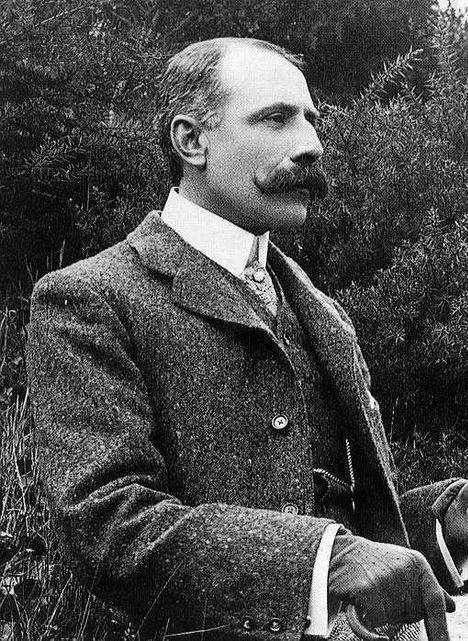
    On Gabriel Fauré’s birthday, I am fascinated to learn that the composer was not only hugely popular in England, having visited there many times, he was also greatly admired by Sir Edward Elgar.

    Fauré was staying the month with Elgar’s friend, Frank Schuster, prior to the London premiere of Elgar’s Symphony No. 1, in 1908. Following a rehearsal, the two attended a dinner party held by Schuster in their honor.

    What did the two of them talk about? Their moustaches, I hope.

Tag Cloud

Aaron Copland (92) Beethoven (95) Composer (114) Film Music (123) Film Score (143) Film Scores (255) Halloween (94) John Williams (187) KWAX (229) Leonard Bernstein (101) Marlboro Music Festival (125) Movie Music (138) Opera (202) Philadelphia Orchestra (89) Picture Perfect (174) Princeton Symphony Orchestra (106) Radio (87) Ralph Vaughan Williams (85) Ross Amico (244) Roy's Tie-Dye Sci-Fi Corner (290) The Classical Network (101) The Lost Chord (268) Vaughan Williams (103) WPRB (396) WWFM (881)

DON’T MISS A BEAT

Receive a weekly digest every Sunday at noon by signing up here


RECENT POSTS