Tag: Composers

  • Hollywood’s Golden Age Remembered on WPRB

    Hollywood’s Golden Age Remembered on WPRB

    What the hell happened to Hollywood? As those of us who remember “the way it used to be” brace ourselves for another year of insipid red carpet banter, I thought we’d take a look back, this Sunday morning on WPRB, and revisit a lost era of glamour and dreams by way of recordings of music from Hollywood’s Golden Age.

    Join me for highlights from a concert originally broadcast on CBS Television back in 1963. The program, “Music from Hollywood,” was made up of classic film scores mostly conducted by the composers themselves at the Hollywood Bowl. These included “How the West Was Won” (Alfred Newman), “Laura” (David Raksin), “Cleopatra” (Alex North), “Raintree County” (Johnny Green), “A Place in the Sun” (Franz Waxman), “North by Northwest” (Bernard Herrmann), “High Noon” (Dimitri Tiomkin), and “Ben-Hur” (Miklos Rozsa). You couldn’t find that much compositional talent in Hollywood now if you tried.

    We’ll also hear a rare 1938 recording of selections from Erich Wolfgang Korngold’s Academy Award winning music from “The Adventures of Robin Hood,” with Sir Guy of Gisborne himself, Basil Rathbone, the narrator, and Korngold conducting.

    And Sir Thomas Beecham will take the podium for award-winning music by Brian Easdale written for the unnerving Powell-Pressburger classic, “The Red Shoes.”

    Get ready to steel yourself for the Oscars with relics of bygone quality, this Sunday morning from 7 to 11 EST, on WPRB 103.3 FM and wprb.com. At what point did they call “class dismissed,” wonders Classic Ross Amico?

  • “Inner Emigration” Composers Under the Nazis

    “Inner Emigration” Composers Under the Nazis

    Is it really “emigration” when you don’t go anywhere?

    This Sunday night on “The Lost Chord,” we’ll have music by flagrantly anti-fascist composers who remained in Germany during the Nazi regime. This type of opposition was described by Thomas Mann as “inner emigration.”

    There were plenty of opportunists who joined the Nazi Party as a means to curry favor, in the hopes of securing prominent posts. Then there were those who, while critical of the Nazis, nevertheless joined the Party to protect their families and to continue working.

    A group which seems to have faded from memory is that made up of composers who remained, opposed the regime, and yet somehow survived. These artists were condemned by the Nazis, their music labeled degenerate and banned from performance. They were either prevented from escape or remained of their own accord. Some justified the decision to stay as an act of social consciousness. Some were active in resistance circles. Others simply withdrew into ostentatious silence.

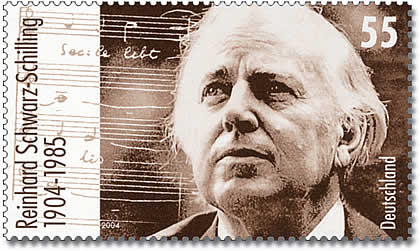
    Reinhard Schwarz-Schilling is not a terribly well-known composer, largely for the reasons I just mentioned. Schwarz-Schilling had been a professor of music at the Berlin Academy of Music. During Hitler’s reign, his family was subjected to frequent interrogations by the Gestapo. Luckily, it was never found out that Schwarz-Schilling’s wife, the concert pianist Dusza von Hakrid, was of Jewish descent. It was only through the beneficence and courage of a sympathetic official who falsified documents that the Schwarz-Schillings escaped arrest.

    Schwarz-Schilling may have survived the Nazis, but following the war, he had to deal with the musical establishment, which had grown hostile to such flagrantly tonal music. Something like his Violin Concerto of 1953 couldn’t be taken seriously. It starts out sounding a bit like Hindemith, but embraces Korngoldian sentiment at its candy core. If you can’t stick around for the whole show, I hope at least you’ll stay tuned for the gorgeous slow movement of this concerto.

    We’ll also hear music by Karl Amadeus Hartmann, regarded in some circles as the most important German symphonist of the mid-20th century, yet is now largely overlooked. In his 30s, Hartmann was viewed as politically undesirable in his homeland. He completely withdrew from musical life during the Nazi era. On the rare occasion any of his works would have been permitted performance, Hartmann would not allow it. Alas, most of his greatest champions were also his contemporaries. Therefore, performances of his music nearly died with them.

    After the war, Hartmann was one of the few prominent surviving anti-fascists in Bavaria whom the Allied Forces could promote to a position of responsibility. Hartmann used that trust to reintroduce the world to music which had been banned since 1933 under National Socialist aesthetic policy. He remained in Munich for the rest of his life, where his administrative duties cut heavily into what would have been his compositional time and energy. He died in 1963. We’ll hear Hartmann’s Symphony No. 6, composed between 1951 and 1953.

    I hope you’ll join me for “Staying Power” – music by anti-fascist composers who remained in Nazi Germany – this Sunday night at 10:00 EST, on WWFM – The Classical Network and wwfm.org.

  • Conductors Composing Beyond the Podium

    Conductors Composing Beyond the Podium

    The best conductors are more than just interpreters. They are partners in creation, who will secret mansions into existence from the mere blueprint of a score. Many have had experience creating such worlds from scratch. This Thursday morning on WPRB, we’ll focus on original compositions by artists that have become better known for their reputations on the podium.

    Skipping over, for the moment, musicians who have received plaudits as recognized composer-conductors (Leonard Bernstein, Pierre Boulez), or those from the distant past (Felix Mendelssohn, Gustav Mahler), we’ll hear neglected music by Victor de Sabata, Antal Doráti, Sir Eugene Goossens, Otto Klemperer, Igor Markevitch, Jean Martinon, Paul Paray, André Previn, Evgeny Svetlanov, George Szell, and Wilhelm Furtwängler (on his birthday).

    Join me for original works by conductors who genuinely know the score, this Thursday morning from 6 to 11 EST, on WPRB 103.3 FM and wprb.com. The conductors are always properly grounded, on Classic Ross Amico.

  • Columbus Day Classical Composers

    Columbus Day Classical Composers

    On this Columbus Day, discover music by Johann Wilhelm Hertel, Camille Saint-Saëns, Janis Ivanovs, and Einojuhani Rautavaara. We’ll celebrate the birthday anniversaries of this very interesting assortment, from 4 to 7 p.m. EDT, on WWFM – The Classical Network and wwfm.org.


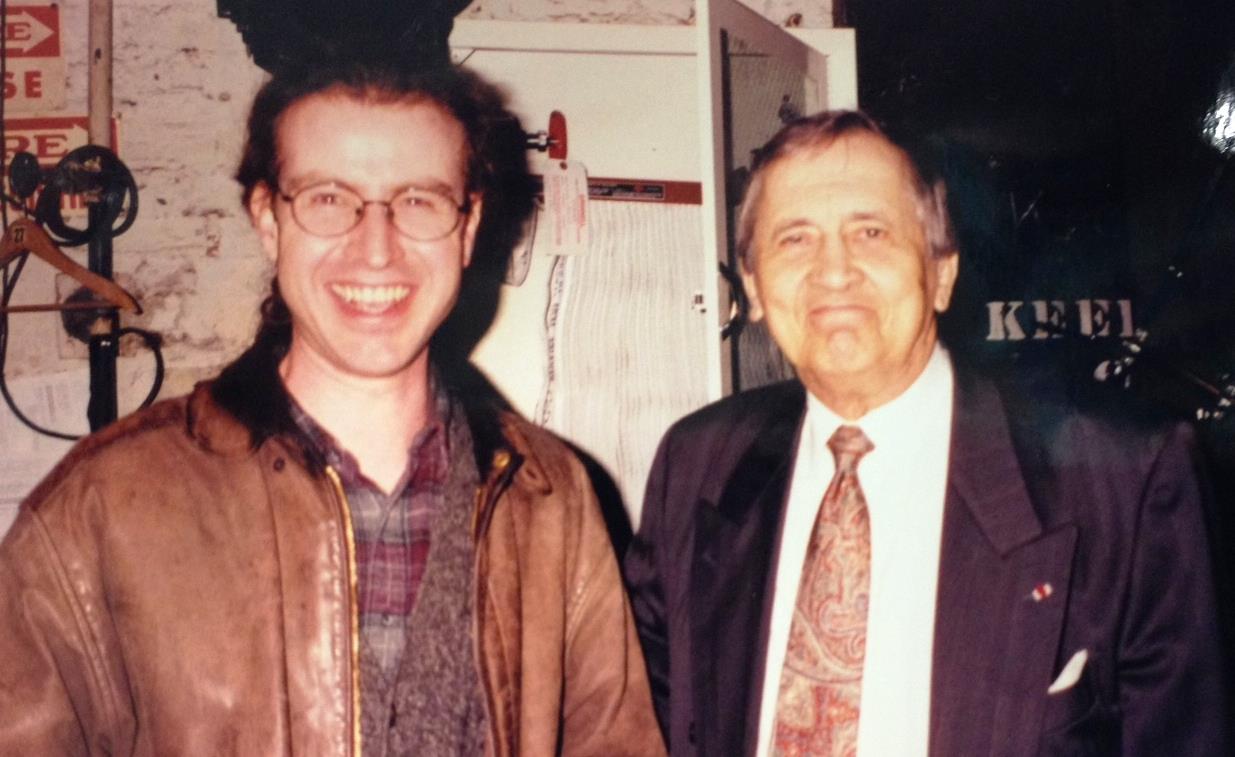
    PHOTO: A callow Classic Ross Amico backstage with Einojuhani Rautavaara at Philadelphia’s Academy of Music in 2000, following the premiere of the composer’s Symphony No. 8 “The Journey.” The photo was taken by Anssi Blomstedt, grandson of Jean Sibelius.

  • Nadia Boulanger: Influential Music Teacher

    Nadia Boulanger: Influential Music Teacher

    Today is the anniversary of the birth of Nadia Boulanger (1887-1979), pedagogue and Patron Saint of American – some might argue “20th Century” – Music. Certainly, her influence continues to be felt into our own time.

    Among Boulanger’s hundreds of pupils: Daniel Barenboim, Idil Biret, Elliot Carter, Aaron Copland, John Eliot Gardiner, Philip Glass, H. Wiley Hitchcock, Quincy Jones, Robert Kapilow, Dini Lipatti, Igor Markevitch, Astor Piazzolla, Walter Piston, Stanislaw Skrowaczewski, Virgil Thomson and George Walker.

    Writes Ned Rorem (the rare American who did not study with Boulanger), “Myth credits every American town with two things: a 10-cent store and a Boulanger student.”

    Here is Rorem writing about Boulanger in the New York Times in 1982:

    http://www.nytimes.com/1982/05/23/books/the-composer-and-the-music-teacher.html?pagewanted=all&mcubz=3


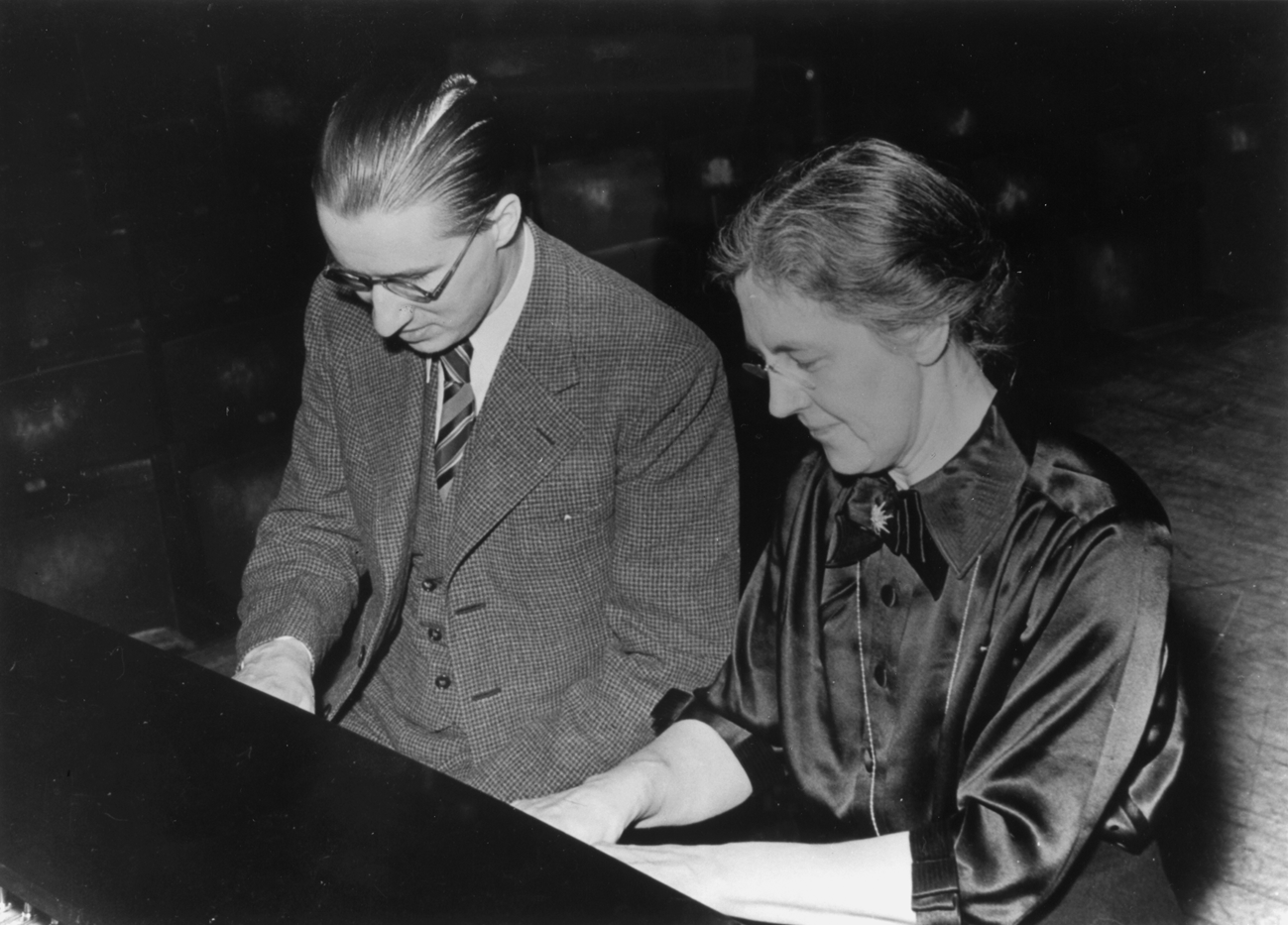
    PHOTO: Boulanger with one of her pupils, the composer Jean Françaix

Tag Cloud

Aaron Copland (92) Beethoven (95) Composer (114) Film Music (123) Film Score (143) Film Scores (255) Halloween (94) John Williams (187) KWAX (229) Leonard Bernstein (101) Marlboro Music Festival (125) Movie Music (138) Opera (202) Philadelphia Orchestra (89) Picture Perfect (174) Princeton Symphony Orchestra (106) Radio (87) Ralph Vaughan Williams (85) Ross Amico (244) Roy's Tie-Dye Sci-Fi Corner (290) The Classical Network (101) The Lost Chord (268) Vaughan Williams (103) WPRB (396) WWFM (881)

DON’T MISS A BEAT

Receive a weekly digest every Sunday at noon by signing up here


RECENT POSTS