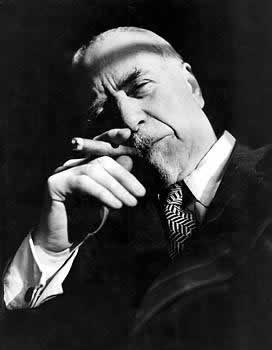
Pedagogical legend Jorma Panula is 90-years-old today. For decades a sought-after mentor to aspiring Finnish conductors, Panula has flooded the world with his estimable apprentices, which include, among their number, Esa-Pekka Salonen, Mikko Franck, Sakari Oramo, Jukka-Pekka Saraste, and Osmo Vänskä.
Panula himself served as chief conductor of the Turku Philharmonic, the Helsinki Philharmonic, and the Aarhus Symphony Orchestras. Today he continues to teach, albeit with a mask. Here are selections from an interview he gave in 2018.
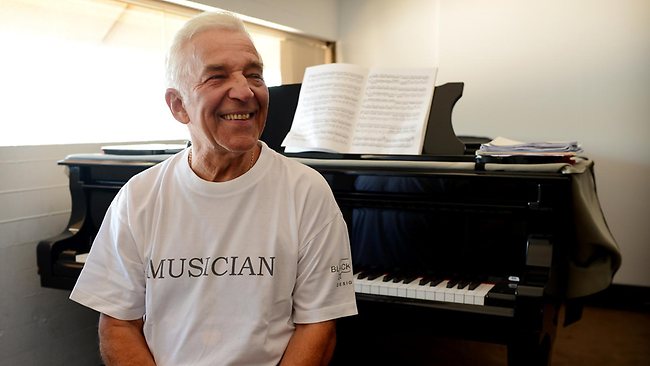
I don’t think I’m exaggerating when I say the music world was stunned by the news on January 17 that Vladimir Ashkenazy is now retired, effective immediately. The announcement came with no advance notice. There will be no farewell tour, and all engagements for 2020 have been cancelled.
This afternoon on The Classical Network, we’ll celebrate the legacy of this superb and beloved artist, with nearly three hours of his recordings.
Ashkenazy, who is indisputably one of the greatest pianists of his time – which is to say, of the past half century – is also a conductor of merit. We’ll hear him in both capacities, performing music by Beethoven, Boris Blacher, André Previn, Jean Sibelius, and of course Sergei Rachmaninoff.
First, on today’s Noontime Concert, rising musicians of Philadelphia’s Astral Artists will perform Johannes Brahms’ String Sextet No. 2 in G major and Sibelius’ String Quartet in D minor “Voces Intimae.”
After that, it’s all-Ashkenazy. The music-making will Rach your world, between 12 and 4 p.m. EST, on WWFM – The Classical Network and wwfm.org.
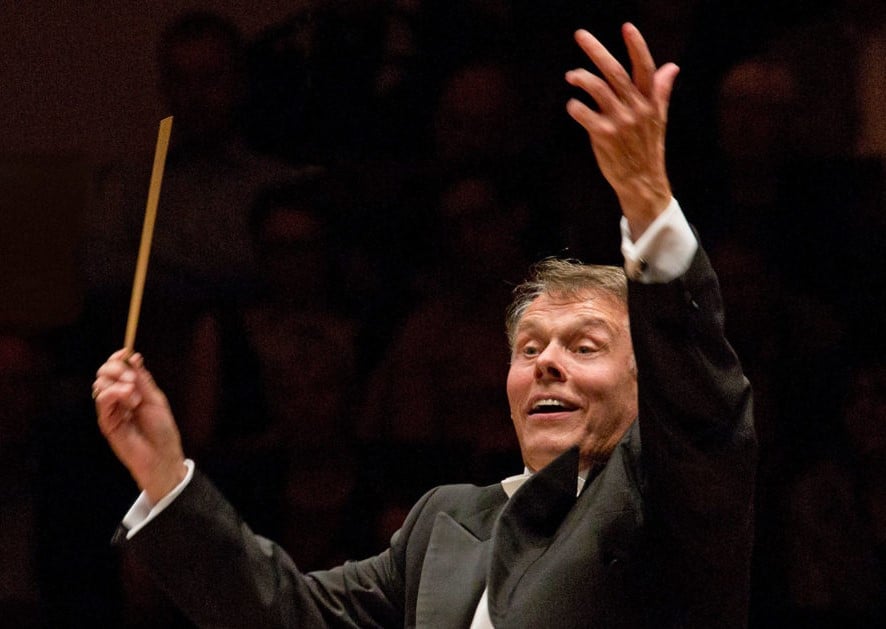
Jansons was born in hiding during the Nazi occupation of Latvia. His mother, the soprano Iraida Jansone, was smuggled out of Riga. His grandfather and uncle were not so lucky. Both were murdered by the Nazis.
It was Mariss’ father, Arvids Jansons, who introduced him to the violin. Arvids was selected by Yevgeny Mravinsky to serve as assistant conductor of the Leningrad Philharmonic. Mariss studied in Leningrad, Vienna and Salzburg (with Herbert von Karajan). Karajan wanted the young man as his assistant in Berlin, but the appointment was nixed by the Soviet authorities.
Instead, he became associate conductor of the Leningrad Philharmonic. In 1979, he was installed as music director of the Oslo Philharmonic. He became a familiar presence in London, as a guest conductor with the London Symphony Orchestra and principal guest conductor of the London Philharmonic.
In the United States, he served as music director of the Pittsburgh Symphony Orchestra, from 1997 to 2004. In 2003, he became chief conductor of the Bavarian Radio Symphony Orchestra. He held the post in Bavaria until his death.
He also served as chief conductor of the Royal Concertgebouw Orchestra, from 2004 to 2015. Twice, he conducted the internationally popular Vienna Philharmonic New Year’s Concert.
Jansons cheated death a second time when he survived a serious heart attack in 1996, while conducting a concert in Oslo. Prompt medical attention saved his life. It was the heart that would get him in the end.
Jansons died yesterday at his home in St. Petersburg. He leaves behind first-rate recordings of Tchaikovsky, Shostakovich and Sibelius, among others. He was 76 years-old. Though he struggled against ill-health, especially for the past year or so, he lived a full life in music, which is what he loved.
Jansons conducts the Symphony No. 2 by Johan Svendsen:
After 40 years, Stephen Gunzenhauser is stepping down as music director of the Lancaster Symphony Orchestra. The conductor has announced that the 2019-2020 season will be his last.
Gunzenhauser’s name may be a familiar one far beyond his stomping grounds of Pennsylvania and Delaware, thanks to his tireless work on behalf of the Marco Polo and Naxos labels. With over a hundred releases in the current catalogue, Gunzenhauser has recorded works by Ernest Bloch, Antonin Dvořák, Reinhold Gliere, Karl Goldmark, Anton Rubinstein, and many others, carving out a niche for himself by documenting lesser-known repertoire and offering low-cost options to the bigger-named competition, especially at a time when there weren’t many budget alternatives to the “majors.”
Gunzenhauser worked as an assistant to Igor Markevitch in Monte Carlo and Leopold Stokowski in New York before becoming executive and artistic director of the Wilmington Music School in 1974. Five years later, he was appointed music director of both the Delaware Symphony Orchestra and the Lancaster Symphony. Gunzenhauser led the Delaware Symphony through the end of the 2001-2002 season. He was named principal conductor of the Bogota Philharmonic in 2004.
Naxos and Marco Polo have sold more than two million copies of his recordings, lending credence to his assertion that he is the fifth most recorded American conductor.
Gunzenhauser raised the level of the Lancaster Symphony Orchestra from community to professional status. Following his retirement, he plans to focus on the Endless Mountain Music Festival, with which he has been closely involved since its inception in 2006.
The Lancaster Symphony was founded in 1947. Gunzenhauser is only the second music director in the orchestra’s 72 year history.
More information about the Lancaster Symphony at lancastersymphony.org.
Gunzenhauser conducts Anton Rubinstein’s “Ocean” Symphony: